Kirjojen hintavertailu – 12 903 737 kirjaa ja 27 kauppaa

Kirjailija

Indira Ghose

Kirjat ja teokset yhdessä paikassa: 11 kirjaa, julkaisuja vuosilta 2003–2025, suosituimpiin kuuluu Much Ado About Nothing: Language and Writing. Vertaile teosten hintoja ja tarkista saatavuus suomalaisista kirjakaupoista.

11 kirjaa

Kirjojen julkaisuvuodet: 2003–2025.

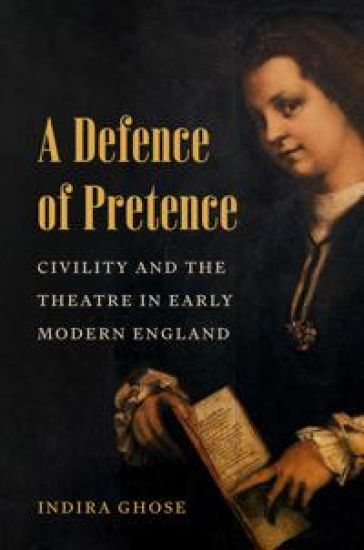
A Defence of Pretence

A Defence of Pretence

Indira Ghose

PRINCETON UNIVERSITY PRESS
2025
pokkari
How the drama of Shakespeare’s time demonstrates the tensions within civilityIs civility merely a matter of reinforcing status and excluding others? Or is it a lubricant in a polarised world, enabling us to overcome tribal loyalties and cooperate for the common good? In A Defence of Pretence, Indira Ghose argues that it is both. Ghose turns to the drama of Shakespeare’s time to explore the notion of civility. The theatre, she suggests, was a laboratory where many of the era’s conflicts played out. The plays test the precepts found in treatises on civility and show that, in the complexity and confusion of human life, moral purity is an illusion. We are always playing roles. In these plays, as in social life, pretence is inescapable. Could it be a virtue? Civility, Ghose finds, is radically ambiguous. The plays of Shakespeare, Jonson and Middleton, grappling with dissimulation, lies and social performance, question the idea of a clear-cut boundary between sincerity and dissembling, between truth and lies. What is decisive is the use to which our play-acting is put. A pretence of mutual respect might serve an ethical end: to foster a sense of common purpose. In life, as in drama, the concept of the common good might be a fiction, but one that is crucial for human society.
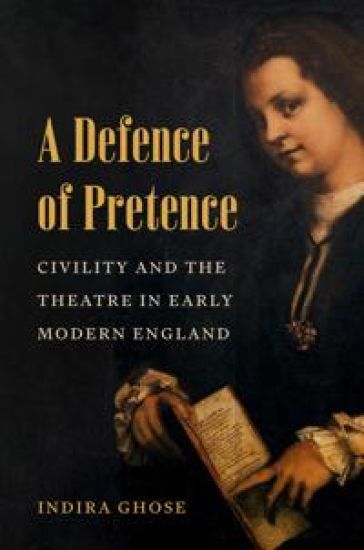
A Defence of Pretence

A Defence of Pretence

Indira Ghose

PRINCETON UNIVERSITY PRESS
2025
sidottu
How the drama of Shakespeare’s time demonstrates the tensions within civilityIs civility merely a matter of reinforcing status and excluding others? Or is it a lubricant in a polarised world, enabling us to overcome tribal loyalties and cooperate for the common good? In A Defence of Pretence, Indira Ghose argues that it is both. Ghose turns to the drama of Shakespeare’s time to explore the notion of civility. The theatre, she suggests, was a laboratory where many of the era’s conflicts played out. The plays test the precepts found in treatises on civility and show that, in the complexity and confusion of human life, moral purity is an illusion. We are always playing roles. In these plays, as in social life, pretence is inescapable. Could it be a virtue? Civility, Ghose finds, is radically ambiguous. The plays of Shakespeare, Jonson and Middleton, grappling with dissimulation, lies and social performance, question the idea of a clear-cut boundary between sincerity and dissembling, between truth and lies. What is decisive is the use to which our play-acting is put. A pretence of mutual respect might serve an ethical end: to foster a sense of common purpose. In life, as in drama, the concept of the common good might be a fiction, but one that is crucial for human society.
Shakespeare in Jest

Shakespeare in Jest

Indira Ghose

Routledge
2021
sidottu
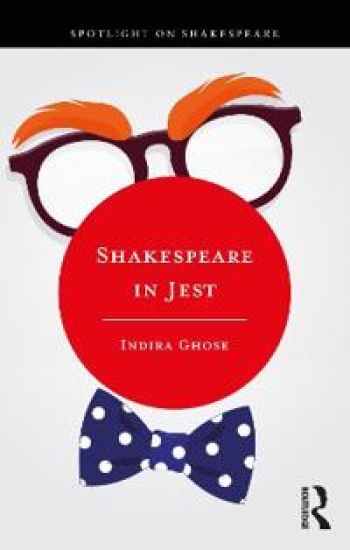
Shakespeare in Jest draws fascinating parallels between Shakespeare's humour and contemporary humour. Indira Ghose argues that while many of Shakespeare's jokes no longer work for us, his humour was crucial in shaping comedy in today's entertainment industry. The book looks at a wide variety of plays and reads them in conjunction with examples from contemporary culture, from stand-up comedy to late night shows. Ghose shows the importance of jokes, the functions of which are remarkably similar in Shakespeare’s time and ours. Shakespeare's wittiest characters are mostly women, who use wit to puncture male pretensions and to acquire cultural capital. Clowns and wise fools use humour to mock their betters, while black humour trains the spotlight on the audience, exposing our collusion in the world it skewers. In a discussion of the ethics of humour, the book uncovers striking affinities between Puritan attacks on the theatre and contemporary attacks on comedy. An enjoyable and accessible read, this lively book will enlighten and entertain students, researchers, and general readers interested in Shakespeare, humour, and popular culture.
Shakespeare in Jest

Shakespeare in Jest

Indira Ghose

Routledge
2021
nidottu
Shakespeare in Jest draws fascinating parallels between Shakespeare's humour and contemporary humour. Indira Ghose argues that while many of Shakespeare's jokes no longer work for us, his humour was crucial in shaping comedy in today's entertainment industry. The book looks at a wide variety of plays and reads them in conjunction with examples from contemporary culture, from stand-up comedy to late night shows. Ghose shows the importance of jokes, the functions of which are remarkably similar in Shakespeare’s time and ours. Shakespeare's wittiest characters are mostly women, who use wit to puncture male pretensions and to acquire cultural capital. Clowns and wise fools use humour to mock their betters, while black humour trains the spotlight on the audience, exposing our collusion in the world it skewers. In a discussion of the ethics of humour, the book uncovers striking affinities between Puritan attacks on the theatre and contemporary attacks on comedy. An enjoyable and accessible read, this lively book will enlighten and entertain students, researchers, and general readers interested in Shakespeare, humour, and popular culture.
Much Ado About Nothing: Language and Writing

Much Ado About Nothing: Language and Writing

Indira Ghose

The Arden Shakespeare
2017
sidottu
Much Ado About Nothing presents a world of glittering surfaces and exquisite social performances. The language of the play sparkles with a fireworks of wit and dazzling bouts of repartee, most memorably in the "merry war" of words between the reluctant lovers, Benedick and Beatrice. A closer look at the language of the play, however, reveals it to be laced with violence and charged with the desire to humiliate others. Wit is deployed as a weapon to ridicule one's opponent; much of the humour circulates incessantly around the theme of cuckoldry, a major source of male anxiety in the period. The most drastic use of language is to slander Hero by accusing her of a lack of chastity - an accusation that spelt social death for a woman in the early modern age. The death that Hero feigns mirrors accurately the devastating effects of the assassination of her character by the smart set of young noblemen in the play. This study guide focuses on examining the array of the uses of language that the play displays, and probes into the ideas about language that it explores. The book looks at key film versions of the play by Kenneth Branagh and Joss Whedon which are often used on courses, whilst also offering practical questions and tips to help students develop their own critical writing skills and deepen their understanding of the play.
Much Ado About Nothing: Language and Writing

Much Ado About Nothing: Language and Writing

Indira Ghose

The Arden Shakespeare
2017
nidottu
Much Ado About Nothing presents a world of glittering surfaces and exquisite social performances. The language of the play sparkles with a fireworks of wit and dazzling bouts of repartee, most memorably in the "merry war" of words between the reluctant lovers, Benedick and Beatrice. A closer look at the language of the play, however, reveals it to be laced with violence and charged with the desire to humiliate others. Wit is deployed as a weapon to ridicule one's opponent; much of the humour circulates incessantly around the theme of cuckoldry, a major source of male anxiety in the period. The most drastic use of language is to slander Hero by accusing her of a lack of chastity - an accusation that spelt social death for a woman in the early modern age. The death that Hero feigns mirrors accurately the devastating effects of the assassination of her character by the smart set of young noblemen in the play. This study guide focuses on examining the array of the uses of language that the play displays, and probes into the ideas about language that it explores. The book looks at key film versions of the play by Kenneth Branagh and Joss Whedon which are often used on courses, whilst also offering practical questions and tips to help students develop their own critical writing skills and deepen their understanding of the play.
Shakespeare and Laughter

Shakespeare and Laughter

Indira Ghose

Manchester University Press
2011
nidottu
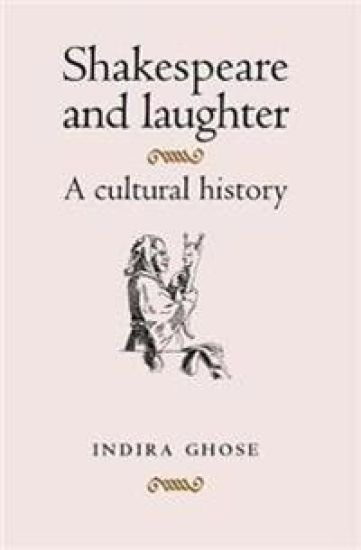
This book examines laughter in the Shakespearean theatre, in the context of a cultural history of early modern laughter. Aimed at an informed readership as well as graduate students and scholars in the field of Shakespeare studies, it is the first study to focus specifically on laughter, not comedy. It looks at various strands of the early modern discourse on laughter, ranging from medical treatises and courtesy manuals to Puritan tracts and jestbook literature. It argues that few cultural phenomena have undergone as radical a change in meaning as laughter. Laughter became bound up with questions of taste and class identity. At the same time, humanist thinkers revalorised the status of recreation and pleasure. These developments left their trace on the early modern theatre, where laughter was retailed as a commodity in an emerging entertainment industry. Shakespeare´s plays both reflect and shape these changes, particularly in his adaptation of the Erasmian wise fool as a stage figure, and in the sceptical strain of thought that is encapsulated in the laughter evoked in the plays.