
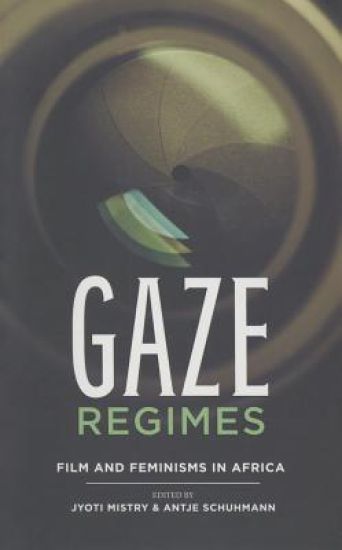
Gaze Regimes
Annas Max; Ellerson Beti; Gunkel Henriette; Katarina Hedrén; Ines Kappert; Khanna Anita; Nobunye Levin; Mistry Jyoti; Schuhmann Antje; Christina Braun; Dorothee Wenner; Walsh Shannon; Djo Tunda wa Mung; Katharina von Ruckteschell; Isabel Noronha; Arya Lalloo; Rumbi Katedza; El-Tahri Jihan; Taghreed Elsanhouri; Dangarembga Tsitsi
Wits University Press
2015
nidottu
Gaze Regimes is a bricolage of essays and interviews showcasing the experiences of women working in fi lm, either directly as practitioners or in other areas such as curators, festival programme directors or fundraisers. It does not shy away from questioning the relations of power in the practice of filmmaking and the power invested in the gaze itself. Who is looking and who is being looked at, who is telling women’s stories in Africa and what governs the mechanics of making those films on the continent? The interviews with Tsitsi Dangarembga, Taghreed Elsanhouri, Jihan El-Tahri, Anita Khanna, Djo Tunda wa Munga, Rumbi Katedza, Katarina Hedrén, Isabel Noronhe, Arya Lalloo and Shannon Walsh demonstrate the contradictory points of departure of women in film – from their understanding of feminisms in relation to lived-experiences and the realpolitik of women working as cultural practitioners. The disciplines of gender studies, postcolonial theory, and film theory provide the framework for the book’s essays. Beti Ellerson, Jyoti Mistry, Antje Schuhmann, Nobunye Levin, Dorothee Wenner and Christina von Braun are some of the contributors who provide valuable context, analysis and insight into, among other things, the politics of representation, the role of fi lm festivals and the collective and individual experiences of trauma and marginality which contribute to the layered and complex fi lmic responses of Africa’s film practitioners.