Kirjojen hintavertailu – 12 859 829 kirjaa ja 27 kauppaa

Kirjailija

Ingeborg Schwenzer

Kirjat ja teokset yhdessä paikassa: 11 kirjaa, julkaisuja vuosilta 2006–2026, suosituimpiin kuuluu CISG Part II Conference, Stockholm, 4-5 September 2008. Vertaile teosten hintoja ja tarkista saatavuus suomalaisista kirjakaupoista.

11 kirjaa

Kirjojen julkaisuvuodet: 2006–2026.

CISG Part II Conference, Stockholm, 4-5 September 2008

CISG Part II Conference, Stockholm, 4-5 September 2008

Jan Kleineman; Michael Bridge; Torsten Iversen; Tom Madell; Joseph Lookofsky; Ulrich Magnus; Jan Ramberg; Carolina Saf; Ingeborg Schwenzer; Pascal Hachem; Leif Sevón; Lena Sisula-Tulokas

Stockholm Centre for Commercial Law
2009
nidottu
The CISG Part II Conference was held in Stockholm on 4–5 September 2008. The Conference was held in honour and remembrance of the late Supreme Court Justice Hans-Gunnar Solerud, the first chairman of the Stockholm Centre for Commercial Law. The Conference was organised by the Stockholm Centre for Commercial Law in co-operation with the Swedish Ministry of Justice. CONTENTS: - The CISG from a Common Law Perspective Michael Bridge - Scandinavian Contract Law and its Implication on CISG – the Danish Approach Torsten Iversen - Changes proposed in the Nordic stance on the CISG Jan Kleineman and Tom Madell - CISG Case Law and the Scandinavian Part II Reservations - Some Reflections on the CISG Part II Conference at the University of Stockholm, 4–5 September 2008 Joseph Lookofsky - The Scandinavian Reservation under Art. 92 CISG Ulrich Magnus - The Effect of CISG on Swedish Contract Law – now and in the Future Jan Ramberg - CISG – a Uniform Law within the Sphere of Conflict of Laws Carolina Saf - The CISG – A Story of Worldwide Success Ingeborg Schwenzer and Pascal Hachem - Scandinavian Contract Law and its Implication on CISG – The Finnish Approach Leif Sevón - Nordic hesitancy regarding Part II of the CISG Lena Sisula-Tulokas

International Sales Law

International Sales Law

Ingeborg Schwenzer; Christiana Fountoulakis; Mariel Dimsey; Maren Wibke Weigl; Patrick Wittum; Aydin Sari

BLOOMSBURY PUBLISHING PLC
2026
sidottu
The 4th edition of this casebook provides an article-by-article analysis of the CISG Convention. Offering a fully updated range of materials, the casebook is an excellent starting point for learning about the CISG Convention and is particularly useful for students, international trade lawyers, and practitioners. The commentary on each article is accompanied by extracts from cases and associated comparative materials, as well as references to important trade usages such as the INCOTERMS® 2020. The book features an updated selection of the most significant cases, each of which has been abridged to enable the reader to focus on its essential features and the relevant questions arising from it. The case extracts are accompanied by a comprehensive overview of parallel provisions in other international instruments, uniform projects, and domestic laws. A companion website provides sample questions and answers, which students can use to test their knowledge. The analyses, cases, texts, and questions are designed to draw attention to the particular issues surrounding specific CISG provisions and to provoke careful consideration of possible solutions. For this reason, the book is especially suitable for students preparing for the Willem C Vis International Commercial Arbitration Moot.
International Sales Law

International Sales Law

Ingeborg Schwenzer; Christiana Fountoulakis; Mariel Dimsey; Maren Wibke Weigl; Patrick Wittum; Aydin Sari

BLOOMSBURY PUBLISHING PLC
2026
nidottu
The 4th edition of this casebook provides an article-by-article analysis of the CISG Convention. Offering a fully updated range of materials, the casebook is an excellent starting point for learning about the CISG Convention and is particularly useful for students, international trade lawyers, and practitioners. The commentary on each article is accompanied by extracts from cases and associated comparative materials, as well as references to important trade usages such as the INCOTERMS® 2020. The book features an updated selection of the most significant cases, each of which has been abridged to enable the reader to focus on its essential features and the relevant questions arising from it. The case extracts are accompanied by a comprehensive overview of parallel provisions in other international instruments, uniform projects, and domestic laws. A companion website provides sample questions and answers, which students can use to test their knowledge. The analyses, cases, texts, and questions are designed to draw attention to the particular issues surrounding specific CISG provisions and to provoke careful consideration of possible solutions. For this reason, the book is especially suitable for students preparing for the Willem C Vis International Commercial Arbitration Moot.
Global Commercial Contracts

Global Commercial Contracts

Ingeborg Schwenzer

Oxford University Press
2025
nidottu
This concise work by the leading global expert on sale of goods law provides the perfect starting point for anyone requiring an introduction to international commercial contracts. The book's comprehensive but accessible structure provides the reader with analysis of the relevant international law together with consideration of the practical issues relating to international contracts. Providing all elements necessary for understanding international contract law, consideration is given to unified and harmonized law alongside general principles found in Common and Civil Law legal systems. The book begins by considering issues of applicable law and conflicts of laws before analysing the main initiatives and instruments of harmonisation. There is considerable focus on the two main instruments (The United Nations Convention on Contracts for the International Sale of Goods (CISG); and The Principles of International Commercial Contracts (PICC)) including analysis of the scope of their application. Other international instruments considered include the UN Convention on the Use of Electronic Communications in International Commercial Contracts, and the UN Convention on Limitation, as well as the main forms used in practice: the Incoterms© 2010; and UCP 600. All relevant law and practice is examined through a series of topic based chapters covering all relevant areas from freedom, interpretation, formation and validity of contract to sellers' and buyers obligations. There are also specific chapters on aspects relevant to disputes such as remedies, unwinding of contracts and limitation of actions.
Global Commercial Contracts

Global Commercial Contracts

Ingeborg Schwenzer

Oxford University Press
2025
sidottu
This concise work by the leading global expert on sale of goods law provides the perfect starting point for anyone requiring an introduction to international commercial contracts. The book's comprehensive but accessible structure provides the reader with analysis of the relevant international law together with consideration of the practical issues relating to international contracts. Providing all elements necessary for understanding international contract law, consideration is given to unified and harmonized law alongside general principles found in Common and Civil Law legal systems. The book begins by considering issues of applicable law and conflicts of laws before analysing the main initiatives and instruments of harmonisation. There is considerable focus on the two main instruments (The United Nations Convention on Contracts for the International Sale of Goods (CISG); and The Principles of International Commercial Contracts (PICC)) including analysis of the scope of their application. Other international instruments considered include the UN Convention on the Use of Electronic Communications in International Commercial Contracts, and the UN Convention on Limitation, as well as the main forms used in practice: the Incoterms© 2010; and UCP 600. All relevant law and practice is examined through a series of topic based chapters covering all relevant areas from freedom, interpretation, formation and validity of contract to sellers' and buyers obligations. There are also specific chapters on aspects relevant to disputes such as remedies, unwinding of contracts and limitation of actions.
Global Sales and Contract Law

Global Sales and Contract Law

Ingeborg Schwenzer; Edgardo Muñoz

Oxford University Press
2022
sidottu
The second edition of Global Sales and Contract Law continues to provide comparative analysis of domestic laws of sale and contract in over sixty countries, delivering a global view of national and international sales law. The book is grounded in the practical realities of sales law, reflecting the day-to-day issues faced by practitioners. Complex questions of the obligations under a sales contract, the ways in which these are established, as well as the remedies following the breach of obligations, are all analysed. In addition to coverage of the CISG and various national regimes, the book examines regional projects, like the the UNIDROIT PICC, the PECL, the DCFR and the PLACL, and compares differences in domestic legal approach where the CISG would not apply. The new edition covers all the relevant case law, and factors in developments such as changes to the law of contract in Argentina, France, Hungary, and Japan, a raft of countries which have adopted the CISG since the first edition, updates to the UNIDROIT PICC, and new editions of the ICC's INCOTERMS© and force majeure and hardship clauses in 2020. International or multilateral developments that were envisaged in the original edition have now either evolved or disappeared, for example, the European Union's plan for a Common European Sales Law (CESL), as reflected in the new edition. Encompassing all aspects of sale of goods transactions, and examining the process of a sale with relation to general contract law, the book gives practitioners invaluable insight into judicial trends and possible solutions in different legal systems, whether preparing for litigation or drafting an international contract. Global Sales and Contract Law remains the most comprehensive and thorough compilation of legal analysis in the field of the sale of goods and is a source for any practitioner dealing in international commerce.
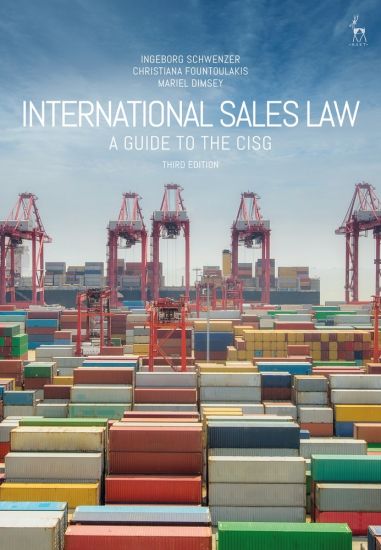
International Sales Law

International Sales Law

Ingeborg Schwenzer; Christiana Fountoulakis; Mariel Dimsey

Hart Publishing
2019
nidottu
This is the third edition of the casebook providing an article-by-article analysis of the CISG Convention. Offering a fully updated range of materials, this casebook is an excellent starting point for learning about the Convention and will be particularly useful for international trade lawyers, practitioners and students. The commentary on each article is accompanied by extracts from cases and associated comparative materials, as well as references to important trade usages such as the INCOTERMS® 2010. The book features an updated selection of the most significant cases, each of which has been abridged to enable the reader to focus on its essential features and the relevant questions arising from it. The case extracts are accompanied by a comprehensive overview of parallel provisions in other international instruments, uniform projects and domestic laws. The analyses, cases, texts and questions are intended to aid readers in their comparative law and international sales law studies. They are designed to draw attention to the particular issues surrounding specific CISG provisions and to provoke careful consideration of possible solutions. The book is a reference work as well as an introduction to the individual problem areas. In particular, it acts as a preparatory work for the Willem C Vis International Commercial Arbitration Moot. Sample questions and answers are also included, which make it particularly helpful for self-study purposes.
A common frame of reference for European contract law

A common frame of reference for European contract law

Paul Abbiati; Christian von Bar; Hugh Beale; Jean-Marie Bockel; Michael Joachim Bonell; Tomáš Brichácek; Alain Brun; Bénédicte Fauvarque-Cosson; Friedrich Graf von Westphalen; Johnny Herre; Ole Lando; Klaus-Heiner Lehne; Tanja Rasmusson; Ingeborg Schwenzer; Pascal Hachem; Leif Sevón; Lena Sisula-Tulokas; Matthias E. Storme; Stefan Vogenauer

Jure Förlag
2011
nidottu
Stockholm Centre for Commercial Law (SCCL) arranged a meeting in Stockholm on 23–24 October 2009 following the Swedish presidency CFR conference, which was held in Stockholm on 22–23 October and organized by the Swedish government. The topic at the meeting was to discuss a proposal from Professor Christian von Bar and Professor Hans Schulte-Nölke, on how to continue the important work conducted by, inter alia, the Study Group on a European Civil Code and the Acquis Group. The continuance of this work could be organized by establishing either a European Law Forum or an informal organisation. The form for this continued work has, for some considerable time, been the subject of lively discussions amongst those interested. This publication contains writings concerning the themes presented and discussed during the meeting. Many of the leading experts in the field attended the meeting. Table of Contents Does business want a Common Frame of Reference? Paul Abbiati Is the Draft Frame of Reference compatible with the Position of the Council? - How should the Academic Research be continued? Christian von Bar Topic 2: The Content of the political CFR – how to prioritise Hugh Beale Discours d’ouverture, conférence « un cadre commun de référence pour le droit européen des contrats »Jean-Marie Bockel Do we need specifically European optional instruments for international business transactions? Michael Joachim Bonell Why the “optional instrument” is not our optionTomáš Brichácek Informations d’ordre général sur le travail de la Commission relatif au cadre de Référence, ainsi que la voie à suivreAlain Brun The relationship between the Political frame of reference (PFR) and the consumer acquisBénédicte Fauvarque-Cosson Some Aspects on the Position of the CCBE on the DCFRFriedrich Graf von Westphalen The Common Frame of Reference as a basis for future harmonisation of the law of sale and lease of goodsJohnny Herre A Plea for a Binding InstrumentOle Lando Erwartungen an den politischen Referenzrahmen Klaus-Heiner Lehne The results of the discussions in the Council and the future political work with the frame of referenceTanja Rasmusson Drafting new model rules on sales: CFR as an alternative to the CISG? Ingeborg Schwenzer & Pascal Hachem Do we need a codification? Leif Sevón Is non-contractual liability arising out of damage caused to another a natural part of a political frame of reference? Lena Sisula-Tulokas The (Draft) Common Frame of Reference as a toolbox and as a basis for an optional instrumentMatthias E. Storme Common Frame of Reference and UNIDROIT Principles of International Commercial Contracts: Coexistence, Competition, or Overkill of Soft Law? Stefan Vogenauer
Jan Hellner in memoriam  Commercial Law Challenges in the 21st Century

Jan Hellner in memoriam Commercial Law Challenges in the 21st Century

Michael Bogdan; Ross Cranston; Roy Goode; Lars Gorton; Attila Harmathy; Ewoud Hondius; Boris Kozolchyk; Ulrich Magnus; Pilar Perales Viscasillas; Jan Ramberg; Peter Schlechtriem; Ingeborg Schwenzer; Benjamin Leisinger; Jacob Ziegel

Stockholm Centre for Commercial Law
2007
sidottu
Contents: Conflict of Laws Regarding Liability Allocation between Insurers in Cases of Double Insurance by Michael Bogdan The Rise and Rise of Standard Form Contracts: International Commodity Sales 1800-1970 by Ross Cranston Is the Lex Mercatoria Autonomous? by Roy Goode Letters of commitment and loan agreements by Lars Gorton Law of business in transition in Hungary by Attila Harmathy Commercial Law: is it Special? by Ewoud Hondius A Roadmap to Economic Development through Law: Third Parties and Comparative Legal Culture by Boris Kozolchyk Last Shot vs. Knock Out – Still Battle over the Battle of Forms Under the CISG by Ulrich Magnus Directive 2000/35 of 29 June 2000 on combating late payment in commercial transactions: the period for payment (art. 3.1 b) by Pilar Perales Viscasillas Electronic Communications and Incoterms 2000 by Jan Ramberg Calculation of damages in case of anticipatory breach under the CISG by Peter Schlechtriem Ethical Values and International Sales Contracts by Ingeborg Schwenzer & Benjamin Leisinger The Globalization of Law and its Limitations, with Particular Reference to the Globalization of Commercial Law by Jacob Ziegel
Model Family Code

Model Family Code

Ingeborg Schwenzer; Mariel Dimsey

Intersentia Publishers
2006
nidottu
In extensive areas of private law, namely in the law of obligations, endeavours to comprehensively harmonize and unify different legal systems were already commenced in the second half of the twentieth century. However, family law has only followed suit in very recent times. This Model Family Code aims at contributing to future discussion on the harmonization, and hopefully even unification of family law. The Model Family Code has attempted to address all aspects of Partnerships and of Parents and Children, which constitute the core areas of any family law. It is elaborated from a global, rather than a European perspective. In many cases, it was explicitly inspired by solutions offered under Canadian, Australian, and New Zealand legal systems. Furthermore, it goes beyond the common core of the solutions found in domestic laws in search of the best solution, and removes all discrepancies existing in these laws due to somewhat patchwork development, thereby creating a wholly autonomous and consistent system of family law based on modern solutions. The Model Family Code offers a mere framework for discussion, a skeleton that enables different family policies and realities, as well as cultural systems and values, to be incorporated. It expressly seeks to utilise new terminology, thereby consciously departing from the myriad of national legal terms, which are burdened with historical connotations in the respective countries.