Kirjojen hintavertailu – 12 903 725 kirjaa ja 27 kauppaa

Kirjailija

Ingvar Johansson

Kirjat ja teokset yhdessä paikassa: 7 kirjaa, julkaisuja vuosilta 2008–2026, suosituimpiin kuuluu Plato's neglected problem and the property view of numbers : back to Euclid with some differences. Vertaile teosten hintoja ja tarkista saatavuus suomalaisista kirjakaupoista.

7 kirjaa

Kirjojen julkaisuvuodet: 2008–2026.

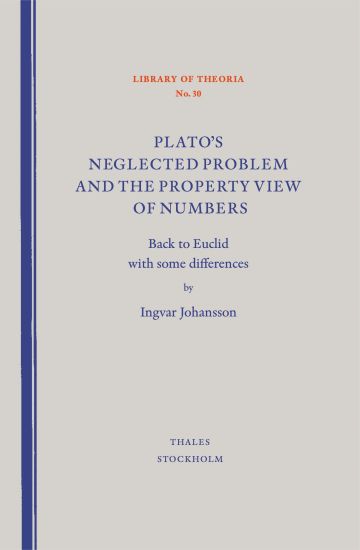
Plato's neglected problem and the property view of numbers : back to Euclid with some differences
It is seldom noted in the philosophy of mathematics that Plato divides his world of forms or ideas into two different realms. In the higher realm, each pure number exists only as a unique entity, but in the lower realm it exists as a multiplicity. Such a bifurcation of numbers is not usually made in modern philosophy of mathematics, but this book argues that it needs to be made. Otherwise, the philosophical analysis of numbers cannot explain how, for instance, an addition such as 3 + 3 = 6 can refer to two distinct numbers 3. One way to account for this bifurcation is by means of the usually neglected property view of numbers. This book defends a version of this view, according to which the natural numbers are properties of collections, and the real numbers are properties of proportion-relations. It is also argued that the property view of numbers harmonizes well with the findings of modern empirical research on numerical cognition. Central to the book is Euclid´s notion of ratio, which is put forward in his Elements – here it is called proportion-relation . It is claimed that we need to revive Euclid´s distinction between numbers and magnitudes, as a distinction between two number lines, one for the original natural numbers and one for the real numbers. Strictly speaking, the original natural numbers cannot be regarded as a subclass of the real numbers. The line for the real numbers contains, however, numbers that are counterparts of the original natural numbers. Ingvar Johansson is emeritus professor of theoretical philosophy at Umeå University, Sweden. Most of his writings are centered around questions in the philosophy of science and ontology.
Free Will and Evolution

Free Will and Evolution

Ingvar Johansson

BoD - Books on Demand
2023
nidottu
The book Free Will and Evolution defends the old notion of free will, according to which such a will is incompatible with determinism and not identical with mere indeterminism. The defense is made from an entirely secular evolutionary perspective. The theory of evolution - properly considered - is argued to be fully compatible with a belief in in a little bit of free will. Moreover, it is claimed that a complete denial normally contains a kind of contradiction. Not a logical contradiction, but a so-called performative contradiction. The denial argued for contradicts the very existence of argumentative discourses.
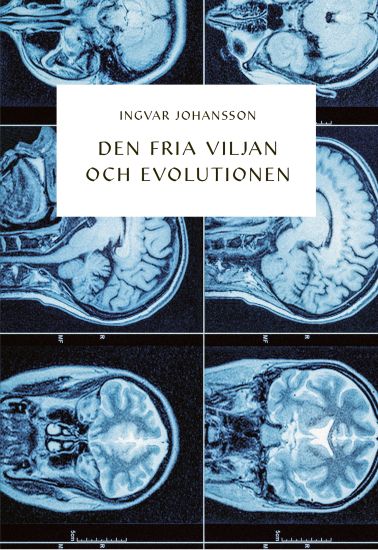
Den fria viljan och evolutionen

Den fria viljan och evolutionen

Ingvar Johansson

Bokförlaget Daidalos
2022
nidottu
De flesta människor funderar då och då över vad de tänker göra härnäst – och tar för givet att de inom vissa ramar har en viss vilje- och handlingsfrihet. Denna vardagsåsikt står emellertid inte högt i kurs bland dagens filosofer och vetenskapsmän. Här är istället den dominerande uppfattningen att alla händelser och processer i världen kan förklaras med olika orsaksfaktorer. Någon viljefrihet i traditionell bemärkelse finns inte. Den ståndpunkten har absurda konsekvenser, menar Ingvar Johansson, professor emeritus i filosofi vid Umeå universitet. I essän "Den fria viljan och evolutionen" försvarar Johansson den fria viljan från ett helt igenom naturalistiskt, evolutionärt och sekulärt perspektiv. Evolutionsläran är – ordentligt genomtänkt – fullt förenlig med åsikten att det finns fria viljor. Den säger uttryckligen att det successivt under evolutionens gång uppkommit nya typer av fysikalisk-kemiska objekt och biologiska organismer, och den tillåter åsikten att det också uppkommit nya lagbundenheter. Inget principiellt hindrar, menar Johansson, att det i evolutionen också uppkommit fenomen som inte i alla sina detaljer är lagbundna. Det är en oerhörd skillnad mellan att anse att viljans frihet har överdrivits, vilket den moderna vetenskapen har visat, och att förneka den helt. Det är totalförnekelsen som leder till absurditeter. Ingvar Johansson är professor emeritus i filosofi vid Umeå universitet. Centralt i hans filosofiska tänkande har varit ontologi och vetenskapsfilosofi. Båda områdena är centrala för frågan hur vi bör se på den fria viljan i ljuset av evolutionen och modern vetenskap.
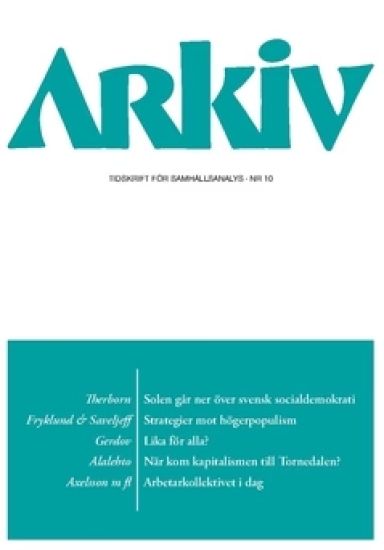
Arkiv. Tidskrift för samhällsanalys nr 10

Arkiv. Tidskrift för samhällsanalys nr 10

Egil J. Skorstad; Ingvar Johansson; Jonas Axelsson; Jan Ch Karlsson; Tage Alalehto; Christian Gerdov; Sigrid Saveljeff; Björn Fryklund; Göran Therborn

Arkiv förlag tidskrift
2019
nidottu
Arkiv. Tidskrift för samhällsanalys samlar samhällsvetenskaplig och historisk forskning från Sverige och världen. Alla artiklar finns fritt tillgängliga, gratis att läsa och ladda ned, på www.tidskriftenarkiv.se. För dem som hellre vill läsa mellan två pärmar tillhandahåller vi den här tryckta utgåvan. I detta nummer: Om riksdagsvalet 2018: Göran Therborn, ”Solen går ner över svensk socialdemokrati” Björn Fryklund & Sigrid Saveljeff, ”Det politiska etablissemangets strategier gentemot högerpopulistiska partier” Christian Gerdov, ”Lika för alla?” Artiklar: Tage Alalehto, ”När kom kapitalismen till Tornedalen?” Jonas Axelsson, Jan Ch. Karlsson & Egil J. Skorstad, ”Arbetarkollektivet i dag – ny studie och teoretisk utveckling” Kommentar: Ingvar Johansson, ”Popper och marxismen” Recension: Christian Berggren, ”Handelshögskolan – en framgångsmodell?” (om Holmqvist, Handels. Maktelitens skola)
Philosophy and botany : essays on Ivar Segelberg

Philosophy and botany : essays on Ivar Segelberg

Jan Almäng; Dick A. R. Haglund; Herbert Hochberg; Ingvar Johansson; Helge Malmgren; Anna-Sofia Maurin; Torgny Nordin; Sandro Pignatti; Ivar Segelberg; Christer Svennerlind; Thomas Wetterström; Erika Pignatti Wikus

Bokförlaget Thales
2014
sidottu
Ivar Segelberg (19141987), between 1951 and 1979 professor of philosophy in Gothenburg, is an important figure in Swedish philosophy but still only known within a rather narrow circle. Trained in both phenomenology and analytical philosophy, Segelberg developed highly original theories about time con­sciousness, the unity of consciousness, and general ontology. He published his three main works in Swedish, and only in 1999 were they (collectively) made available in English. The present volume will hopefully help make Segelbergs work more widely known. It is partly based on a 2008 symposium in Gothenburg, also called Philosophy and Botany, but contains several independent contributions including a newly written biography.
Ontological Investigations

Ontological Investigations

Ingvar Johansson

De Gruyter
2012
sidottu
This volume is devoted to problems within analytic metaphysics. It defends an ontology and theory of categories inspired by Aristotle, but revised in such a way as to be compatible with modern science. The ontology of both natural and social reality is addressed, starting out from the view that universals exist but only in the spatiotemporal world (immanent realism). In attempting to bring Aristotle's ontology up-to-date, the author relies very much on the thinking of Edmund Husserl, conceiving the cement of the universe as Husserlian relations of existential dependence and regarding intentionality as a non-reducible category in the ontology of mind. The work is thoroughly realistic in spirit, but large parts of it should nonetheless be of interest to conceptualists and nominalists, too.
Medicine & Philosophy

Medicine & Philosophy

Ingvar Johansson; Niels Lynøe

De Gruyter
2008
isokokoinen pokkari
This textbook introduces the reader to basic problems in the philosophy of science and ethics, mainly by means of examples from medicine. It is based on the conviction that philosophy, medical science, medical informatics, and medical ethics are overlapping disciplines. It claims that the philosophical lessons to learn from the twentieth century are not that nature is a ‘social construction’ and that ‘anything goes’ with respect to methodological and moral rules. Instead, it claims that there is scientific knowledge, but that it is never completely secure; that there are norms, but that they are situation-bound; and that, therefore, it makes good sense to search for scientific truths and try to act in a morally decent way. Using philosophical catchwords, the authors advocate ‘fallibilism’ and ‘particularism’; a combination that might be called ‘pragmatic realism’.