Kirjojen hintavertailu – 12 859 828 kirjaa ja 27 kauppaa

Kirjailija

Inocent Moyo

Kirjat ja teokset yhdessä paikassa: 9 kirjaa, julkaisuja vuosilta 2017–2026, suosituimpiin kuuluu Cross Border Security in the Southern African Region. Vertaile teosten hintoja ja tarkista saatavuus suomalaisista kirjakaupoista.

9 kirjaa

Kirjojen julkaisuvuodet: 2017–2026.

Indigenous Knowledge Systems, Entrepreneurship and Sustainable Development in Africa

Indigenous Knowledge Systems, Entrepreneurship and Sustainable Development in Africa

Inocent Moyo; Samuel Ojo Oloruntoba; Zainab Monisola Olaitan; Jabulile H Mzimela

ANTHEM PRESS
2026
sidottu
This book engages with the idea and philosophy of entrepreneurship in Africa from the position of several Indigenous communities in Africa. It advances that there is poverty in the current understanding and implementation of entrepreneurship in Africa, which is couched within a Eurocentric frame. It is argued that far from liberating Indigenous epistemologies toward the creation of sustainable entrepreneurship leading to, among others, socio-economic development, such a Eurocentrically monologous idea of entrepreneurship is limiting and limited. It is now time to transcend the Eurocentric monologue of entrepreneurship to an understanding of how Indigenous communities in various parts of Africa conceptualize and practice entrepreneurship, leading to inclusive and meaningful socio-economic development.
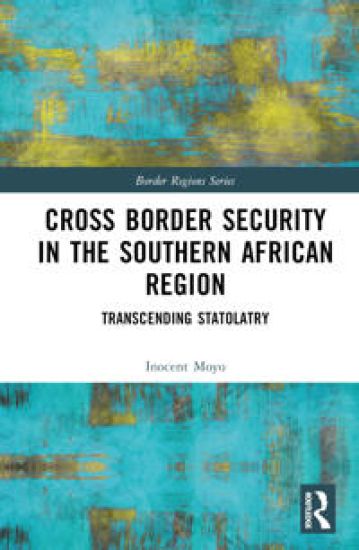
Cross Border Security in the Southern African Region
This book provides a sophisticated analysis of cross-border challenges and problems in the southern African region. It advances explanations that transcend the state-centric narrative that has nationalised cross-border security. It provides insights from non-state actors such as informal cross-border traders (ICBTs), informal cross-border transporters, undocumented migrants, and cross-border communities. It argues that security needs to be understood beyond a state-centric paradigm by focusing on the political, economic, environmental, and societal threats at macro, meso, and micro levels. The book suggests that at the core of cross-border security challenges in the Southern African region is a post-colonial governmentality. This drives the nationalisation of cross-border security as though it is the only security leading to nation-states, in turn depoliticising and invisibilising the security and livelihoods of ordinary people, even when nation-states claim to be protecting the same. The book will be a useful resource for students, scholars, and researchers of African Studies, Border Studies, Human Geography, Migration Studies, Development Studies, International Studies, International Relations, Political Science, and Security Studies.
Regional Economic Communities and Integration in Southern Africa

Regional Economic Communities and Integration in Southern Africa

Leon Mwamba Tshimpaka; Christopher Changwe Nshimbi; Inocent Moyo

SPRINGER VERLAG, SINGAPORE
2022
nidottu
This book examines regional integration in Africa, with a particular focus on the Southern African Development Community (SADC). It argues that the SADC’s pursuit of a rationalist and state-centric form of integration for Southern Africa is limited, as it overlooks the contributory role and efficacy of non-state actors, who are relegated to the periphery. The book demonstrates that civil society networks in Southern Africa constitute well-governed, self-organised entities that function just like formal regional arrangements driven by state actors and technocrats. The book amplifies this point by deploying New Institutionalism and the New Regionalism Approach to examine the role and efficacy of non-state actors in building regions from below. The book develops a unique typology that shows how Southern African regional civil society networks adopt strategies, norms and rules to establish an efficient form of alternative integration in the region. Based on a critical analysis of this self-organised regionalism, the book projects the reality that alternative regionalism driven by non-state actors is possible. This book expands the study of regionalism in the SADC, and makes a significant and innovative contribution to the study of contemporary regionalism.
Urban Informality in South Africa and Zimbabwe

Urban Informality in South Africa and Zimbabwe

Inocent Moyo; Trynos Gumbo

Springer Nature Switzerland AG
2022
nidottu
This book adds to the research of urban informality in the Global South with a specific focus on South Africa and Zimbabwe. It addresses the agency and the potential transformative capacity of the phenomenon of urban informality in connection with Southern African cities and towns. It adopts a political economy approach to analyse the evolution of informality in cities and its implications for urban planning. It brings to bear how the South African and Zimbabwean historical and/or ideological and contemporary political and economic trajectories have impacted on the ever changing nature of urban informality, both spatially and structurally and/or compositionally; thus resulting in unique urban materialities, which are aspects that have scarcely been studied or discussed in the extant literature. This book, therefore, seeks to close the academic gap by dealing with the dearth of literature on spatial (re)locational discourses of urban informality. The work positions urban informality as a resilient force with potency in terms of political mobilisation and (re) shaping urban spaces. Though these are fundamental issues, they have received comparatively little attention, especially in literature that focuses on the Southern African region. Accordingly, undergraduate and post-graduate students, as well as academics in the fields of Urban Geography, Political Science, Development Studies, Sociology, Town and Regional Planning among others, will find the range of topics and depth of coverage in this book particularly valuable. Similarly, practitioners and activists on issues of urban informality and urban governance will find the book very useful.
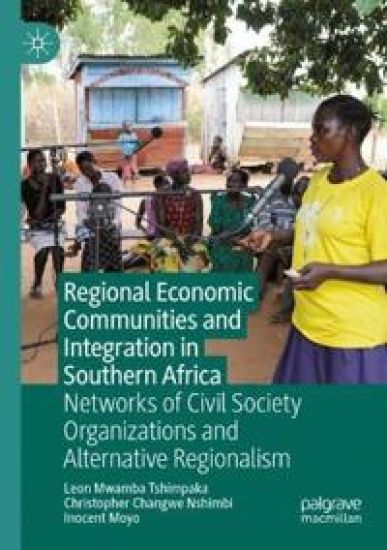
Regional Economic Communities and Integration in Southern Africa

Regional Economic Communities and Integration in Southern Africa

Leon Mwamba Tshimpaka; Christopher Changwe Nshimbi; Inocent Moyo

Springer Verlag, Singapore
2021
sidottu
This book examines regional integration in Africa, with a particular focus on the Southern African Development Community (SADC). It argues that the SADC’s pursuit of a rationalist and state-centric form of integration for Southern Africa is limited, as it overlooks the contributory role and efficacy of non-state actors, who are relegated to the periphery. The book demonstrates that civil society networks in Southern Africa constitute well-governed, self-organised entities that function just like formal regional arrangements driven by state actors and technocrats. The book amplifies this point by deploying New Institutionalism and the New Regionalism Approach to examine the role and efficacy of non-state actors in building regions from below. The book develops a unique typology that shows how Southern African regional civil society networks adopt strategies, norms and rules to establish an efficient form of alternative integration in the region. Based on a critical analysis of this self-organised regionalism, the book projects the reality that alternative regionalism driven by non-state actors is possible. This book expands the study of regionalism in the SADC, and makes a significant and innovative contribution to the study of contemporary regionalism.
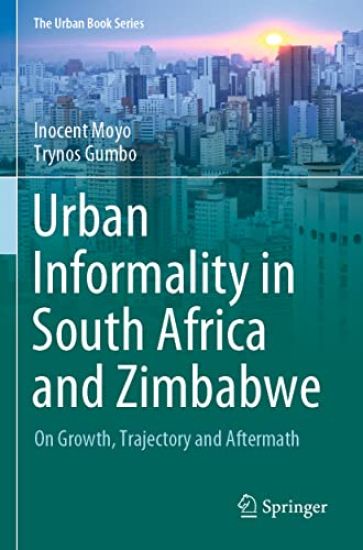
Urban Informality in South Africa and Zimbabwe

Urban Informality in South Africa and Zimbabwe

Inocent Moyo; Trynos Gumbo

Springer Nature Switzerland AG
2021
sidottu
This book adds to the research of urban informality in the Global South with a specific focus on South Africa and Zimbabwe. It addresses the agency and the potential transformative capacity of the phenomenon of urban informality in connection with Southern African cities and towns. It adopts a political economy approach to analyse the evolution of informality in cities and its implications for urban planning. It brings to bear how the South African and Zimbabwean historical and/or ideological and contemporary political and economic trajectories have impacted on the ever changing nature of urban informality, both spatially and structurally and/or compositionally; thus resulting in unique urban materialities, which are aspects that have scarcely been studied or discussed in the extant literature. This book, therefore, seeks to close the academic gap by dealing with the dearth of literature on spatial (re)locational discourses of urban informality. The work positions urban informality as a resilient force with potency in terms of political mobilisation and (re) shaping urban spaces. Though these are fundamental issues, they have received comparatively little attention, especially in literature that focuses on the Southern African region. Accordingly, undergraduate and post-graduate students, as well as academics in the fields of Urban Geography, Political Science, Development Studies, Sociology, Town and Regional Planning among others, will find the range of topics and depth of coverage in this book particularly valuable. Similarly, practitioners and activists on issues of urban informality and urban governance will find the book very useful.
African Immigrant Traders in Inner City Johannesburg

African Immigrant Traders in Inner City Johannesburg

Inocent Moyo

Springer International Publishing AG
2018
nidottu
This book contests the negative portrayal of African immigrants as people who are not valuable members of South African society. They are often perceived as a threat to South Africa and its patrimony, accused of committing crime, taking jobs and competing for resources with South African citizens. Unique in its deployment of a deconstructionist theoretical and analytical framework, this work argues that this is a simplistic portrayal of a complex reality. Inocent Moyo lays bare, not only the failings of an exclusivist narrative of belonging, but also a complex social reality around migration and immigration politics, belonging and exclusion in contemporary South Africa. Over seven chapters he introduces new perspectives on the negative portrayal of African immigrants and argues that to sustain a negative view of them as the ‘threatening other’ ignores complex people-place-space dynamics. For these reasons, the analytical, empirical and theoretical value of the project is that it broadens the study of migration related contexts in a South African setting. Academics, students, policy makers and activists focusing on the migration and immigration debate will find this book invaluable.
African Immigrant Traders in Inner City Johannesburg

African Immigrant Traders in Inner City Johannesburg

Inocent Moyo

Springer International Publishing AG
2017
sidottu
This book contests the negative portrayal of African immigrants as people who are not valuable members of South African society. They are often perceived as a threat to South Africa and its patrimony, accused of committing crime, taking jobs and competing for resources with South African citizens. Unique in its deployment of a deconstructionist theoretical and analytical framework, this work argues that this is a simplistic portrayal of a complex reality. Inocent Moyo lays bare, not only the failings of an exclusivist narrative of belonging, but also a complex social reality around migration and immigration politics, belonging and exclusion in contemporary South Africa. Over seven chapters he introduces new perspectives on the negative portrayal of African immigrants and argues that to sustain a negative view of them as the ‘threatening other’ ignores complex people-place-space dynamics. For these reasons, the analytical, empirical and theoretical value of the project is that it broadens the study of migration related contexts in a South African setting. Academics, students, policy makers and activists focusing on the migration and immigration debate will find this book invaluable.