Kirjojen hintavertailu – 12 903 725 kirjaa ja 27 kauppaa

Kirjailija

Ioan D. Marinescu

Kirjat ja teokset yhdessä paikassa: 4 kirjaa, julkaisuja vuosilta 2012–2021, suosituimpiin kuuluu Handbook of Machining with Grinding Wheels. Vertaile teosten hintoja ja tarkista saatavuus suomalaisista kirjakaupoista.

4 kirjaa

Kirjojen julkaisuvuodet: 2012–2021.

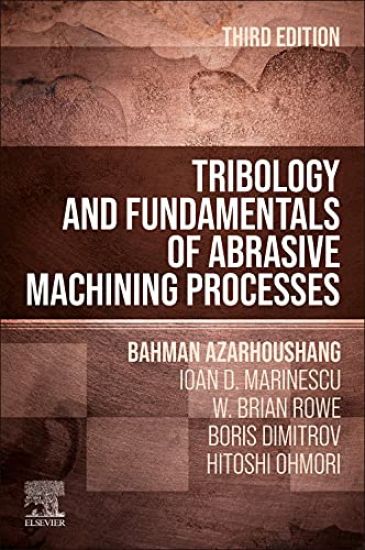
Tribology and Fundamentals of Abrasive Machining Processes

Tribology and Fundamentals of Abrasive Machining Processes

Bahman Azarhoushang; Ioan D. Marinescu; W. Brian Rowe; Boris Dimitrov; Hitoshi Ohmori

William Andrew Publishing
2021
sidottu
This new edition draws upon the fundamentals of abrasive machining processes and the science of tribology to understand, predict, and improve abrasive machining processes. Each of the main elements of the abrasive machining system is looked at alongside the tribological factors that control the efficiency and quality of the processes described. The new edition has been updated to include a variety of industrial applications. Grinding and conditioning of grinding tools are dealt with in particular detail, and solutions are proposed for many of the most commonly experienced industrial problems, such as poor accuracy, poor surface quality, rapid tool wear, vibrations, workpiece burn, and high process costs. The entire book has been rewritten and restructured, with ten completely new chapters. Other new features include:
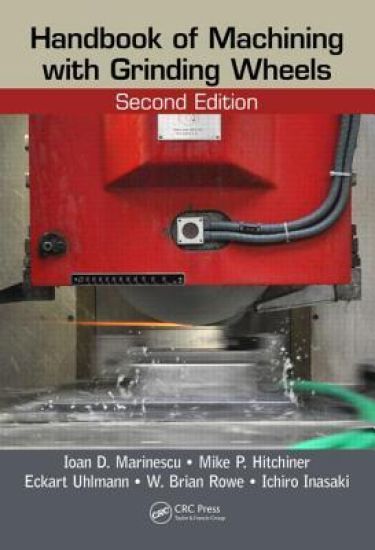
Handbook of Machining with Grinding Wheels

Handbook of Machining with Grinding Wheels

Ioan D. Marinescu; Mike P. Hitchiner; Eckart Uhlmann; W. Brian Rowe; Ichiro Inasaki

CRC Press
2019
nidottu
Grinding is a crucial technology that employs specific abrasive processes for the fabrication of advanced products and surfaces. Handbook of Machining with Grinding Wheels, Second Edition highlights important industry developments that can lead to improved part quality, higher productivity, and lower costs. Divided into two parts, the book begins with an explanation of grinding behavior and ends with a focus on new and emerging industrial applications. While the first edition focused on the basics of abrasive machining technology and presented a unified approach to machining with grinding wheels, the second edition ties in the continued need for traditional processes in conjunction with the latest applications. This book highlights new research topics that include: nanotechnology, alternative energy, and additive manufacturing, compares related approaches, and provides numerous references throughout the book. New in the Second Edition: Contains the latest information on abrasives, bonds, and dressingUpdates classic stability lobes for grindingIntroduces a new method for tracking dynamic instability in centerless grindingProvides a section in the chapter on ultrasonic-assisted grinding, which contains recent work on modelling of the processAdds material on fluid cooling Presents experimental results for in-process feedback to the grinding process Includes new examples on grinding machine technology (particularly for dressing) A single source reference covering every aspect of the grinding process, Handbook of Machining with Grinding Wheels functions as a definitive guide to grinding technology for both practicing engineers and students studying graduate-level courses (such as abrasive machining; grinding R&D; metal removal processes; machining of brittle materials; and principles of
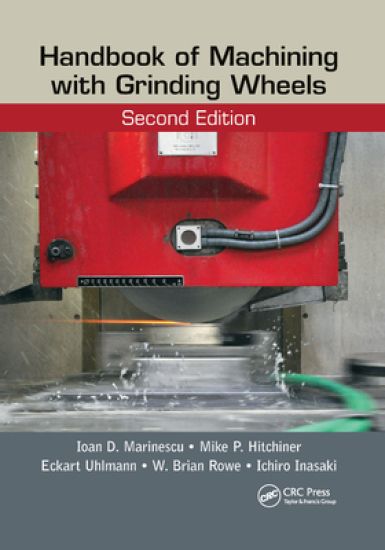
Handbook of Machining with Grinding Wheels

Handbook of Machining with Grinding Wheels

Ioan D. Marinescu; Mike P. Hitchiner; Eckart Uhlmann; W. Brian Rowe; Ichiro Inasaki

Apple Academic Press Inc.
2016
sidottu
Grinding is a crucial technology that employs specific abrasive processes for the fabrication of advanced products and surfaces. Handbook of Machining with Grinding Wheels, Second Edition highlights important industry developments that can lead to improved part quality, higher productivity, and lower costs. Divided into two parts, the book begins with an explanation of grinding behavior and ends with a focus on new and emerging industrial applications. While the first edition focused on the basics of abrasive machining technology and presented a unified approach to machining with grinding wheels, the second edition ties in the continued need for traditional processes in conjunction with the latest applications. This book highlights new research topics that include: nanotechnology, alternative energy, and additive manufacturing, compares related approaches, and provides numerous references throughout the book. New in the Second Edition: Contains the latest information on abrasives, bonds, and dressingUpdates classic stability lobes for grindingIntroduces a new method for tracking dynamic instability in centerless grindingProvides a section in the chapter on ultrasonic-assisted grinding, which contains recent work on modelling of the processAdds material on fluid cooling Presents experimental results for in-process feedback to the grinding process Includes new examples on grinding machine technology (particularly for dressing)A single source reference covering every aspect of the grinding process, Handbook of Machining with Grinding Wheels functions as a definitive guide to grinding technology for both practicing engineers and students studying graduate-level courses (such as abrasive machining; grinding R&D; metal removal processes; machining of brittle materials; and principles of cutting).
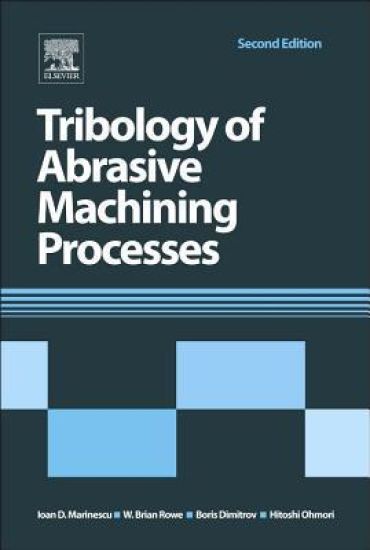
Tribology of Abrasive Machining Processes

Tribology of Abrasive Machining Processes

Ioan D. Marinescu; W. Brian Rowe; Boris Dimitrov; Hitoshi Ohmori

William Andrew Publishing
2012
sidottu
This book draws upon the science of tribology to understand, predict and improve abrasive machining processes. Pulling together information on how abrasives work, the authors, who are renowned experts in abrasive technology, demonstrate how tribology can be applied as a tool to improve abrasive machining processes. Each of the main elements of the abrasive machining system are looked at, and the tribological factors that control the efficiency and quality of the processes are described. Since grinding is by far the most commonly employed abrasive machining process, it is dealt with in particular detail. Solutions are posed to many of the most commonly experienced industrial problems, such as poor accuracy, poor surface quality, rapid wheel wear, vibrations, work-piece burn and high process costs. This practical approach makes this book an essential tool for practicing engineers.