Kirjojen hintavertailu – 12 859 828 kirjaa ja 27 kauppaa

Kirjailija

Ira Berlin

Kirjat ja teokset yhdessä paikassa: 10 kirjaa, julkaisuja vuosilta 1992–2018, suosituimpiin kuuluu Free At Last. Vertaile teosten hintoja ja tarkista saatavuus suomalaisista kirjakaupoista.

10 kirjaa

Kirjojen julkaisuvuodet: 1992–2018.

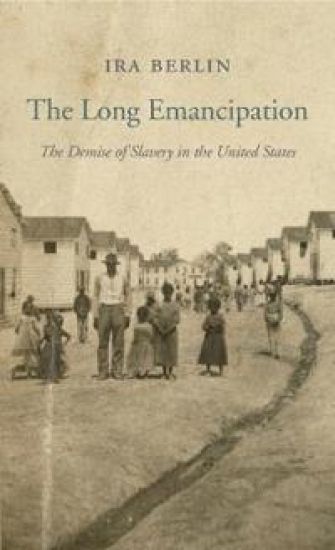
The Long Emancipation

The Long Emancipation

Ira Berlin

Harvard University Press
2018
nidottu
Perhaps no event in American history arouses more impassioned debate than the abolition of slavery. Answers to basic questions about who ended slavery, how, and why remain fiercely contested more than a century and a half after the passage of the Thirteenth Amendment. In The Long Emancipation, Ira Berlin draws upon decades of study to offer a framework for understanding slavery’s demise in the United States. Freedom was not achieved in a moment, and emancipation was not an occasion but a near-century-long process—a shifting but persistent struggle that involved thousands of men and women.“Ira Berlin ranks as one of the greatest living historians of slavery in the United States… The Long Emancipation offers a useful reminder that abolition was not the charitable work of respectable white people, or not mainly that. Instead, the demise of slavery was made possible by the constant discomfort inflicted on middle-class white society by black activists. And like the participants in today’s Black Lives Matter movement, Berlin has not forgotten that the history of slavery in the United States—especially the history of how slavery ended—is never far away when contemporary Americans debate whether their nation needs to change.”—Edward E. Baptist, New York Times Book Review
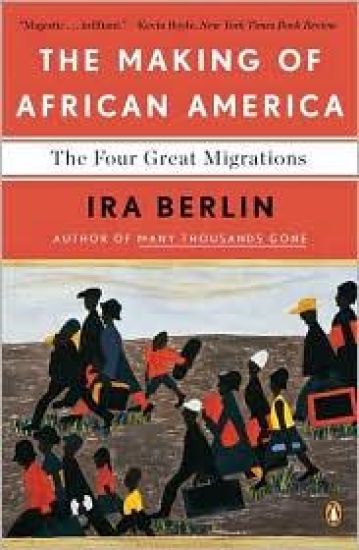
The Making of African America: The Four Great Migrations
An award-winning historian's sweeping new interpretation of the African American experience. In this masterful account, Ira Berlin, one of the nation's most distinguished historians, offers a revolutionary-and sure to be controversial-new view of African American history. In The Making of African America, Berlin challenges the traditional presentation of a linear, progressive history from slavery to freedom. Instead, he puts forth the idea that four great migrations, between the seventeenth and twenty-first centuries, lie at the heart of black American culture and its development. With an engrossing, accessible narrative, Berlin traces the transit from Africa to America, Virginia to Alabama, Biloxi to Chicago, Lagos to the Bronx, and in the process finds the essence of black American life.
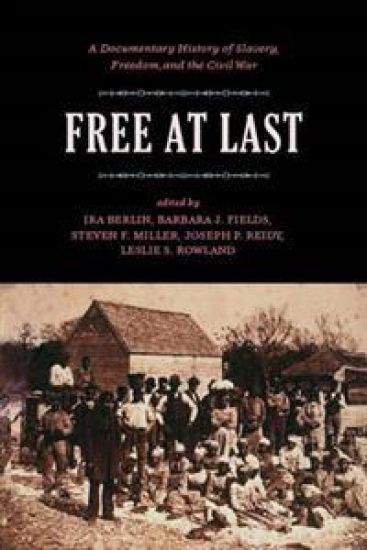
Free At Last

Free At Last

Ira Berlin

The New Press
2007
nidottu
Berlin uses letters, personal testimonies, official transcripts and other records to unravel the history of emancipation, explaining how people with little power and few weapons secured freedom. Vividly demonstrating how emancipation transformed the lives of both black and white people, this volume represents a collection of some of the most remarkable correspondence ever written. Edited by legendary author Ira Berlin.
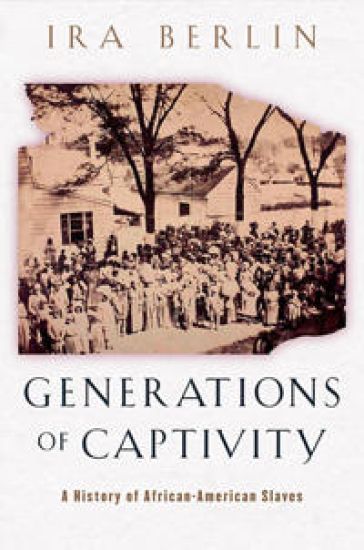
Generations of Captivity

Generations of Captivity

Ira Berlin

The Belknap Press
2004
nidottu
Ira Berlin traces the history of African-American slavery in the United States from its beginnings in the seventeenth century to its fiery demise nearly three hundred years later. Most Americans, black and white, have a singular vision of slavery, one fixed in the mid-nineteenth century when most American slaves grew cotton, resided in the deep South, and subscribed to Christianity. Here, however, Berlin offers a dynamic vision, a major reinterpretation in which slaves and their owners continually renegotiated the terms of captivity. Slavery was thus made and remade by successive generations of Africans and African Americans who lived through settlement and adaptation, plantation life, economic transformations, revolution, forced migration, war, and ultimately, emancipation. Berlin's understanding of the processes that continually transformed the lives of slaves makes Generations of Captivity essential reading for anyone interested in the evolution of antebellum America. Connecting the "Charter Generation" to the development of Atlantic society in the seventeenth century, the "Plantation Generation" to the reconstruction of colonial society in the eighteenth century, the "Revolutionary Generation" to the Age of Revolutions, and the "Migration Generation" to American expansionism in the nineteenth century, Berlin integrates the history of slavery into the larger story of American life. He demonstrates how enslaved black people, by adapting to changing circumstances, prepared for the moment when they could seize liberty and declare themselves the "Freedom Generation." This epic story, told by a master historian, provides a rich understanding of the experience of African-American slaves, an experience that continues to mobilize American thought and passions today.
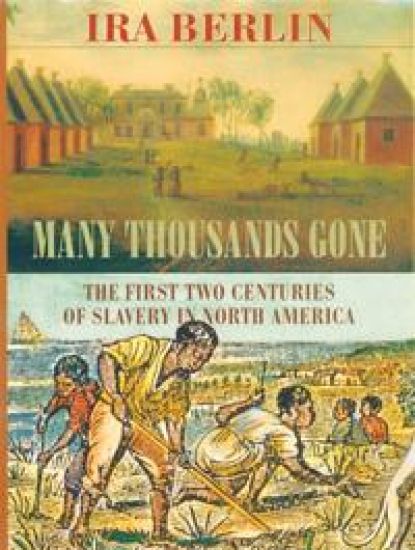
Many Thousands Gone

Many Thousands Gone

Ira Berlin

The Belknap Press
2000
nidottu
Today most Americans, black and white, identify slavery with cotton, the deep South, and the African-American church. But at the beginning of the nineteenth century, after almost two hundred years of African-American life in mainland North America, few slaves grew cotton, lived in the deep South, or embraced Christianity. Many Thousands Gone traces the evolution of black society from the first arrivals in the early seventeenth century through the Revolution. In telling their story, Ira Berlin, a leading historian of southern and African-American life, reintegrates slaves into the history of the American working class and into the tapestry of our nation. Laboring as field hands on tobacco and rice plantations, as skilled artisans in port cities, or soldiers along the frontier, generation after generation of African Americans struggled to create a world of their own in circumstances not of their own making. In a panoramic view that stretches from the North to the Chesapeake Bay and Carolina lowcountry to the Mississippi Valley, Many Thousands Gone reveals the diverse forms that slavery and freedom assumed before cotton was king. We witness the transformation that occurred as the first generations of creole slaves—who worked alongside their owners, free blacks, and indentured whites—gave way to the plantation generations, whose back-breaking labor was the sole engine of their society and whose physical and linguistic isolation sustained African traditions on American soil. As the nature of the slaves’ labor changed with place and time, so did the relationship between slave and master, and between slave and society. In this fresh and vivid interpretation, Berlin demonstrates that the meaning of slavery and of race itself was continually renegotiated and redefined, as the nation lurched toward political and economic independence and grappled with the Enlightenment ideals that had inspired its birth.
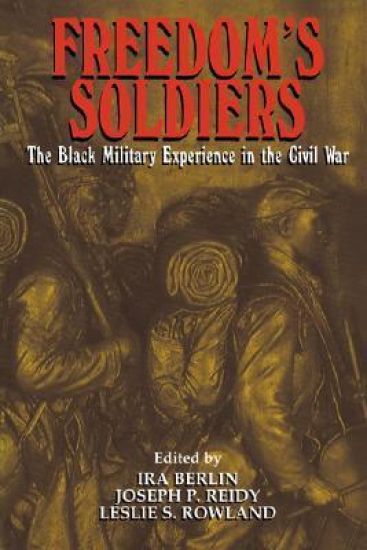
Freedom's Soldiers

Freedom's Soldiers

Ira Berlin; Joseph Patrick Reidy; Leslie S. Rowland

Cambridge University Press
1998
pokkari
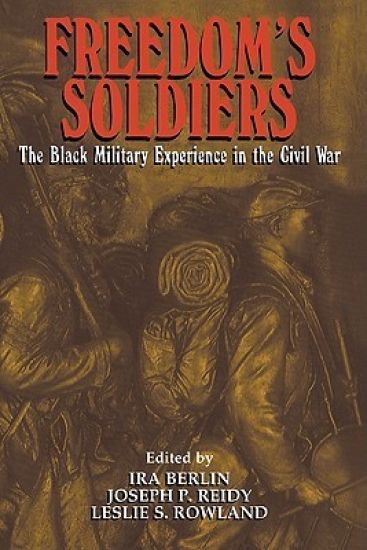
When nearly 200,000 black men, most of them former slaves, entered the Union army and navy, they transformed the Civil War into a struggle for liberty and changed the course of American history. Freedom’s Soldiers tells the story of those men in their own words and the words of other eyewitnesses. These moving letters, affidavits, and memorials - drawn from the records of the National Archives - reveal the variety and complexity of the African-American experience during the era of emancipation.
Freedom's Soldiers

Freedom's Soldiers

Ira Berlin; Joseph Patrick Reidy; Leslie S. Rowland

Cambridge University Press
1998
sidottu
When nearly 200,000 black men, most of them former slaves, entered the Union army and navy, they transformed the Civil War into a struggle for liberty and changed the course of American history. Freedom's Soldiers tells the story of those men in their own words and the words of other eyewitnesses. These moving letters, affidavits, and memorials - drawn from the records of the National Archives - reveal the variety and complexity of the African-American experience during the era of emancipation.
The Slaves' Economy

The Slaves' Economy

Ira Berlin; Philip D. Morgan

Routledge
1995
nidottu
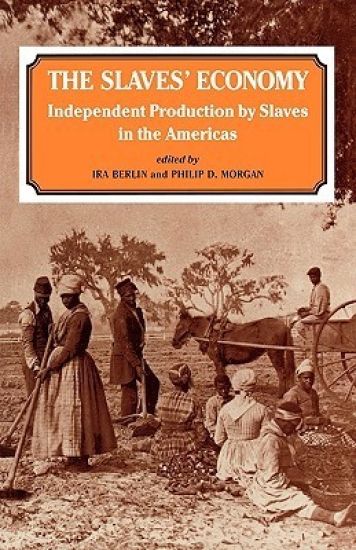
Slaves achieved a degree of economic independence, producing food, tending cash crops, raising livestock, manufacturing furnished goods, marketing their own products, consuming and saving the proceeds and bequeathing property to their descendants. The editors of this volume contend that the legacy of slavery cannot be understood without a full appreciation of the slaves' economy.
Slaves No More

Slaves No More

Ira Berlin; Barbara J. Fields; Steven F. Miller; Joseph P. Reidy; Leslie S. Rowland

Cambridge University Press
1992
pokkari
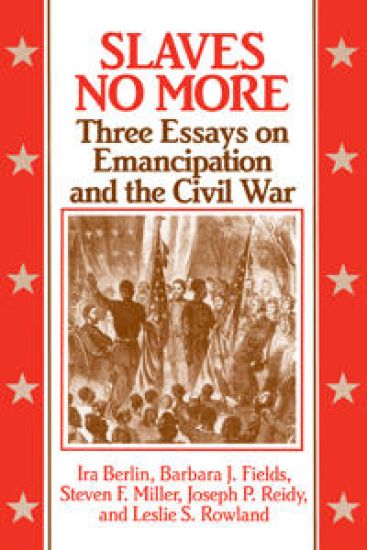
The three essays in this volume present an introduction and history of the emancipation of the slaves during the Civil War. The first essay traces the destruction of slavery by discussing the shift from a war for the Union to a war against slavery. The slaves are shown to have shaped the destiny of the nation through their determination to place their liberty on the wartime agenda. The second essay examines the evolution of freedom in occupied areas of the lower and upper South. The struggle of those freed to obtain economic independence in difficult wartime circumstances indicates conflicting conceptions of freedom among former slaves and slaveholders, Northern soldiers and civilians. The third essay demonstrates how the enlistment and military service of nearly 200,000 slaves hastened the transformation of the war into a struggle for universal liberty, and how this experience shaped the lives of these former slaves long after the war had ended.
Slaves No More: Three Essays on Emancipation and the Civil War
The three essays in this volume present an introduction to history of the emancipation of the slaves during the Civil War. The first essay traces the destruction of slavery by discussing the shift from a war for the Union to a war against slavery. The slaves are shown to have shaped the destiny of the nation through their determination to place their liberty on the wartime agenda. The second essay examines the evolution of freedom in occupied areas of the lower and upper South. The struggle of those freed to obtain economic independence in difficult wartime circumstances indicates conflicting conceptions of freedom among former slaves and slaveholders, Northern soldiers and civilians. The third essay demonstrates how the enlistment and military service of nearly 200,000 slaves hastened the transformation of the war into a struggle for universal liberty, and how this experience shaped the lives of former slaves long after the war had ended.