
Kirjojen hintavertailu – 12 859 818 kirjaa ja 27 kauppaa

Kirjailija

Ira Martina Drupady

Kirjat ja teokset yhdessä paikassa: 2 kirjaa, julkaisuja vuosilta 2012–2016, suosituimpiin kuuluu Energy Access, Poverty, and Development. Vertaile teosten hintoja ja tarkista saatavuus suomalaisista kirjakaupoista.

2 kirjaa

Kirjojen julkaisuvuodet: 2012–2016.

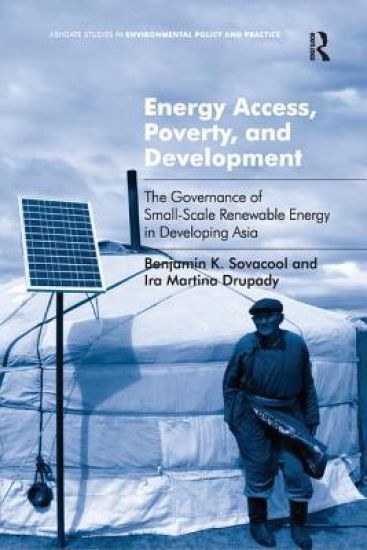
Energy Access, Poverty, and Development

Energy Access, Poverty, and Development

Benjamin K. Sovacool; Ira Martina Drupady

Routledge
2016
nidottu
This book showcases how small-scale renewable energy technologies such as solar panels, cookstoves, biogas digesters, microhydro units, and wind turbines are helping Asia respond to a daunting set of energy governance challenges. Using extensive original research this book offers a compendium of the most interesting renewable energy case studies over the last ten years from one of the most diverse regions in the world. Through an in-depth exploration of case studies in Bangladesh, China, India, Laos, Indonesia, Malaysia, Mongolia, Nepal, Papua New Guinea, and Sri Lanka, the authors highlight the applicability of different approaches and technologies and illuminates how household and commercial innovations occur (or fail to occur) within particular energy governance regimes. It also, uniquely, explores successful case studies alongside failures or "worst practice" examples that are often just as revealing as those that met their targets. Based on these successes and failures, the book presents twelve salient lessons for policymakers and practitioners wishing to expand energy access and raise standards of living in some of the world's poorest communities. It also develops an innovative framework consisting of 42 distinct factors that explain why some energy development interventions accomplish all of their goals while others languish to achieve any.
Energy Access, Poverty, and Development

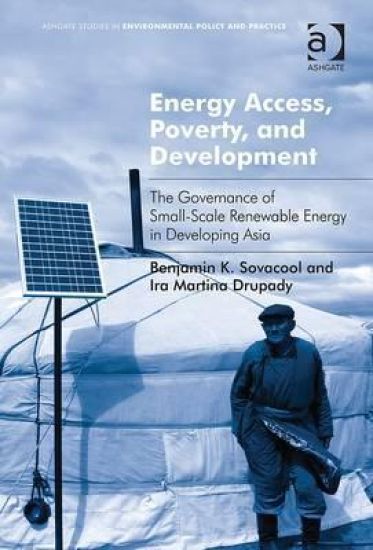
Energy Access, Poverty, and Development

Benjamin K. Sovacool; Ira Martina Drupady

Ashgate Publishing Limited
2012
sidottu
This book showcases how small-scale renewable energy technologies such as solar panels, cookstoves, biogas digesters, microhydro units, and wind turbines are helping Asia respond to a daunting set of energy governance challenges. Using extensive original research this book offers a compendium of the most interesting renewable energy case studies over the last ten years from one of the most diverse regions in the world. Through an in-depth exploration of case studies in Bangladesh, China, India, Laos, Indonesia, Malaysia, Mongolia, Nepal, Papua New Guinea, and Sri Lanka, the authors highlight the applicability of different approaches and technologies and illuminates how household and commercial innovations occur (or fail to occur) within particular energy governance regimes. It also, uniquely, explores successful case studies alongside failures or "worst practice" examples that are often just as revealing as those that met their targets. Based on these successes and failures, the book presents twelve salient lessons for policymakers and practitioners wishing to expand energy access and raise standards of living in some of the world's poorest communities. It also develops an innovative framework consisting of 42 distinct factors that explain why some energy development interventions accomplish all of their goals while others languish to achieve any.