Kirjojen hintavertailu – 12 903 725 kirjaa ja 27 kauppaa

Kirjailija

Irene L. Gendzier

Kirjat ja teokset yhdessä paikassa: 8 kirjaa, julkaisuja vuosilta 2015–2020, suosituimpiin kuuluu Dying to Forget. Vertaile teosten hintoja ja tarkista saatavuus suomalaisista kirjakaupoista.

Nimi esiintyy myös muodoissa: Irene L Gendzier

8 kirjaa

Kirjojen julkaisuvuodet: 2015–2020.

Notes From The Minefield

Notes From The Minefield

Irene L Gendzier

Routledge
2020
nidottu

Halvin toimitettuna 58,10 €

This book situates the origins of U. S. policy in Lebanon in post-World War II and U. S. policy in the eastern Mediterranean and Middle East. It identifies the earliest expression of U. S. economic interests in Beirut in terms of postwar U. S. policies on oil and aviation.
Managing Political Change: Social Scientists and the Third World
For nearly three decades, policymakers and students have been concerned with Third World societies in transition. Conventional interpretations of political change, formalized in studies of political development, have dominated approaches to analyzing such changes. Yet, argues the author, these interpretations have been justly criticized as bankrupt and irrelevant to Third World realities. Why are they reproduced? How can one explain the belief that these approaches remain viable? These are some of the questions addressed in this wideranging review of the literature of political development and the paradigms that have guided analysis of political change over the past thirty years. Examining how political development theories are rooted in U. S. foreign policy, domestic political trends, and changes in postwar political science, Dr. Gendzier grounds the traditional approach to political development in recent history and politics. Her analysis raises questions about how development doctrine is related to foreign policy, as well as noting development theory's debt to cold war ideology and revisionist theories of liberal democracy. Dr. Gendzier's interpretation sheds light on the reasons for the current theoretical bias that favors approaching politics in terms of psychology and culture—an approach that, she states, has had devastating effects on our understanding of politics.
Notes From The Minefield

Notes From The Minefield

Irene L Gendzier

Routledge
2019
sidottu
Irene Gendzier's critically acclaimed, wide-reaching analysis of post-World War II U. S. policy in Lebanon posits that the politics of oil and pipelines figured far more significantly in U. S. relations with Lebanon than previously believed. In 1958 the United States sent thousands of troops to shore up the Lebanese regime in the face of domestic opp
Development Against Democracy

Development Against Democracy

Irene L. Gendzier; Thomas Ferguson

Pluto Press
2017
sidottu
This new, updated edition of the influential Development Against Democracy is a critical guide to postwar studies of modernisation and development. In the mid-twentieth century, models of development studies were products of postwar American policy. They focused on newly independent states in the Global South, aiming to assure their pro-Western orientation by promoting economic growth, political reform and liberal democracy. However, this prevented real democracy and radical change. Today, projects of democracy have evolved in a radically different political environment that seems to have little in common with the postwar period. Development Against Democracy, however, testifies to a revealing continuity in foreign policy, including in justifications of 'humanitarian intervention' that echo those of counterinsurgency decades earlier in Latin America, the Middle East and Southeast Asia. Irene L. Gendzier argues that the fundamental ideas on which theories of modernisation and development rest have been resurrected in contemporary policy and its theories, representing the continuity of postwar US foreign policy in a world permanently altered by globalisation and its multiple discontents, the proliferation of 'failed states,' the unprecedented exodus of refugees, and Washington's declaration of a permanent war against terrorism.
Development Against Democracy

Development Against Democracy

Irene L. Gendzier; Thomas Ferguson

Pluto Press
2017
pokkari
This new, updated edition of the influential Development Against Democracy is a critical guide to postwar studies of modernisation and development. In the mid-twentieth century, models of development studies were products of postwar American policy. They focused on newly independent states in the Global South, aiming to assure their pro-Western orientation by promoting economic growth, political reform and liberal democracy. However, this prevented real democracy and radical change. Today, projects of democracy have evolved in a radically different political environment that seems to have little in common with the postwar period. Development Against Democracy, however, testifies to a revealing continuity in foreign policy, including in justifications of 'humanitarian intervention' that echo those of counterinsurgency decades earlier in Latin America, the Middle East and Southeast Asia. Irene L. Gendzier argues that the fundamental ideas on which theories of modernisation and development rest have been resurrected in contemporary policy and its theories, representing the continuity of postwar US foreign policy in a world permanently altered by globalisation and its multiple discontents, the proliferation of 'failed states,' the unprecedented exodus of refugees, and Washington's declaration of a permanent war against terrorism.
Dying to Forget

Dying to Forget

Irene L. Gendzier

Columbia University Press
2016
pokkari
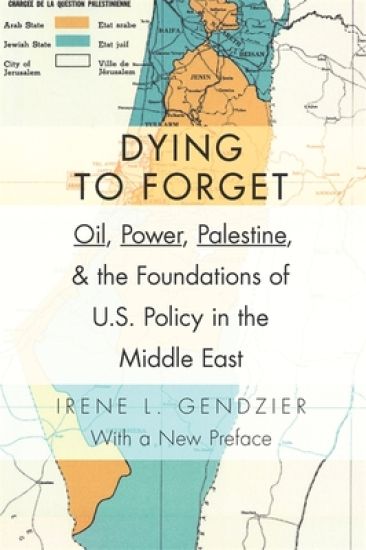
Irene L. Gendzier presents incontrovertible evidence that oil politics played a significant role in the founding of Israel, the policy then adopted by the United States toward Palestinians, and subsequent U. S. involvement in the region. Consulting declassified U. S. government sources, as well as papers in the H. S. Truman Library, she uncovers little-known features of U. S. involvement in the region, including significant exchanges in the winter and spring of 1948 between the director of the Oil and Gas Division of the Interior Department and the representative of the Jewish Agency in the United States, months before Israel's independence and recognition by President Truman. Gendzier also shows that U. S. consuls and representatives abroad informed State Department officials, including the Secretary of State and the President, of the deleterious consequences of partition in Palestine. Yet the attempt to reconsider partition and replace it with a UN trusteeship for Palestine failed, jettisoned by Israel's declaration of independence. The results altered the regional balance of power and Washington's calculations of policy toward the new state. Prior to that, Gendzier reveals the U. S. endorsed the repatriation of Palestinian refugees in accord with UNGA Res 194 of Dec. 11, 1948, in addition to the resolution of territorial claims, the definition of boundaries, and the internationalization of Jerusalem. But U. S. interests in the Middle East, notably the protection of American oil interests, led U. S. officials to rethink Israel's military potential as a strategic ally. Washington then deferred to Israel with respect to the repatriation of Palestinian refugees, the question of boundaries, and the fate of Jerusalem-issues that U. S. officials have come to realize are central to the 1948 conflict and its aftermath.

Dying to Forget

Dying to Forget

Irene L. Gendzier

Columbia University Press
2015
sidottu
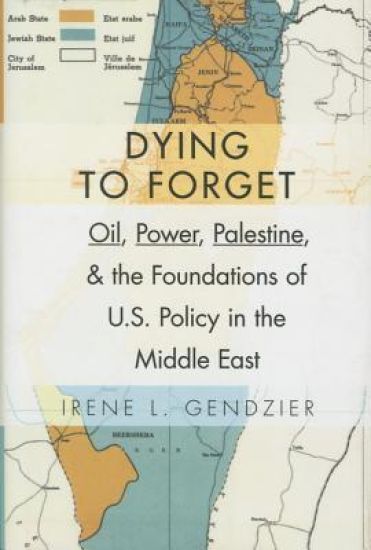
Irene L. Gendzier presents incontrovertible evidence that oil politics played a significant role in the founding of Israel, the policy then adopted by the United States toward Palestinians, and subsequent U. S. involvement in the region. Consulting declassified U. S. government sources, as well as papers in the H. S. Truman Library, she uncovers little-known features of U. S. involvement in the region, including significant exchanges in the winter and spring of 1948 between the director of the Oil and Gas Division of the Interior Department and the representative of the Jewish Agency in the United States, months before Israel's independence and recognition by President Truman. Gendzier also shows that U. S. consuls and representatives abroad informed State Department officials, including the Secretary of State and the President, of the deleterious consequences of partition in Palestine. Yet the attempt to reconsider partition and replace it with a UN trusteeship for Palestine failed, jettisoned by Israel's declaration of independence. The results altered the regional balance of power and Washington's calculations of policy toward the new state. Prior to that, Gendzier reveals the U. S. endorsed the repatriation of Palestinian refugees in accord with UNGA Res 194 of Dec. 11, 1948, in addition to the resolution of territorial claims, the definition of boundaries, and the internationalization of Jerusalem. But U. S. interests in the Middle East, notably the protection of American oil interests, led U. S. officials to rethink Israel's military potential as a strategic ally. Washington then deferred to Israel with respect to the repatriation of Palestinian refugees, the question of boundaries, and the fate of Jerusalem-issues that U. S. officials have come to realize are central to the 1948 conflict and its aftermath.