Kirjojen hintavertailu – 12 903 725 kirjaa ja 27 kauppaa

Kirjailija

Irina Sirotkina

Kirjat ja teokset yhdessä paikassa: 4 kirjaa, julkaisuja vuosilta 2002–2026, suosituimpiin kuuluu Dancing Freedom. Vertaile teosten hintoja ja tarkista saatavuus suomalaisista kirjakaupoista.

4 kirjaa

Kirjojen julkaisuvuodet: 2002–2026.

Dancing Freedom

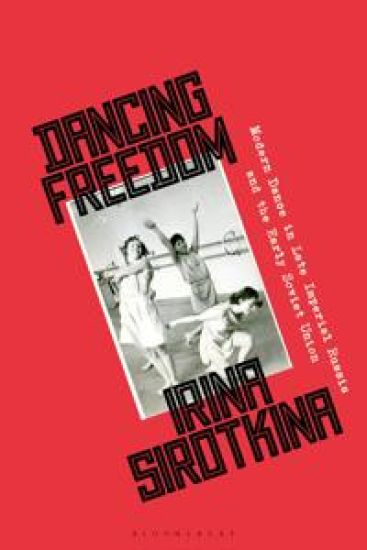
Dancing Freedom

Irina Sirotkina

BLOOMSBURY PUBLISHING PLC
2026
sidottu
For a long time, dance scholars and the public were hardly aware that modern dance existed in this part of the world. This book, however, delves into its presence, significance and survival in this era, going to show the positive contribution Russia and later the Soviet Union made into the history of modern dance during this time. A creation of liberal body politics, ‘free’ or ‘modern’ dance flourished in late Imperial Russia and the early Soviet Union, before the hardening of communist regimes. An ideal embodiment of emancipation, free dance attracted dancers and audiences, including a significant number of modernist artists and intellectuals. This book looks in particular at Isadora Duncan and her impact on Stanislavsky's methods, as well as on ballet choreographer Michel Fokine. The modern dance studios of the time are discussed, their role in creating new systems of training - different from ballet - and their creation of a modern dance 'body'. The author discusses the subsequent introduction of a 'rationalisation' of movement, aimed at controlling the body and underplaying the erotic very present in modern dance. Finally, the book follows free dance into the years of Stalin's Cultural Revolution, where choreographers had to adapt to the new ideological environment, with modern dance choreographers now staging sport parades showcasing the ideal Soviet body - athletic, vigorous and disciplined. A far cry from the freedom of modern dance.
The Sixth Sense of the Avant-Garde

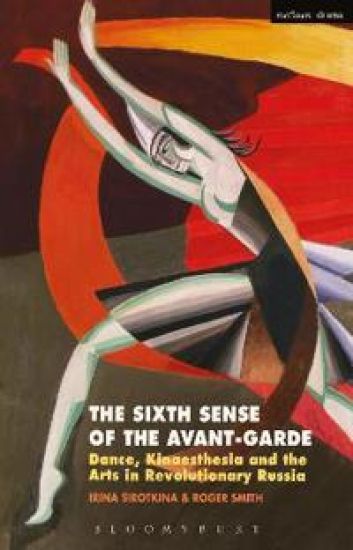
The Sixth Sense of the Avant-Garde

Irina Sirotkina; Roger Smith

Methuen Drama
2018
nidottu
This book turns to history to show just how significant movement and the sense of movement were to pioneers of modernism at the turn of the 20th century. It makes this history vivid through a picture of movement in the lives of an extraordinary generation of Russian artists, writers, theatre people and dancers bridging the last years of the tsars and the Revolution. Readers will gain a new perspective on the relation between art and life in the period 1890-1920 in great innovators like the poets Mayakovsky and Andrei Bely, the theatre director Meyerhold, the dancer Isadora Duncan and the young men and women in Russia inspired by her lead, and esoteric figures like Gurdjieff. Movement, and the turn to the body as a source of natural knowledge, was at the centre of idealistic creativity and hopes for a new age, for a ‘new man’, and this was true both for those who looked forward to the technology of the future and those who looked back to the harmony of Ancient Greece. The book weaves history and analysis into a colourful, thoughtful affirmation of movement in the expressive life.
The Sixth Sense of the Avant-Garde

The Sixth Sense of the Avant-Garde

Irina Sirotkina; Roger Smith

Methuen Drama
2017
sidottu
The touch and movement senses have a large place in the modern arts. This is widely discussed and celebrated, often enough as if it represents a breakthrough in a primarily visual age. This book turns to history to show just how significant movement and the sense of movement were to pioneers of modernism at the turn of the 20th century. It makes this history vivid through a picture of movement in the lives of an extraordinary generation of Russian artists, writers, theatre people and dancers bridging the last years of the tsars and the Revolution. Readers will gain a new perspective on the relation between art and life in the period 1890-1920 in great innovators like the poets Mayakovsky and Andrei Bely, the theatre director Meyerhold, the dancer Isadora Duncan and the young men and women in Russia inspired by her lead, and esoteric figures like Gurdjieff. Movement, and the turn to the body as a source of natural knowledge, was at the centre of idealistic creativity and hopes for a new age, for a ‘new man’, and this was true both for those who looked forward to the technology of the future and those who looked back to the harmony of Ancient Greece. The book weaves history and analysis into a colourful, thoughtful affirmation of movement in the expressive life.
Diagnosing Literary Genius

Diagnosing Literary Genius

Irina Sirotkina

Johns Hopkins University Press
2002
sidottu
The vital place of literature and the figure of the writer in Russian society and history have been extensively studied, but their role in the evolution of psychiatry is less well known. In Diagnosing Literary Genius: A Cultural History of Psychiatry in Russia, 1880-1930, Irina Sirotkina explores the transformations of Russian psychiatric practice through its relationship to literature. During this period, psychiatrists began to view literature as both an indicator of the nation's mental health and an integral part of its well-being. By aligning themselves with writers, psychiatrists argued that the aim of their science was not dissimilar to the literary project of exploring the human soul and reflecting on the psychological ailments of the age. Through the writing of pathographies (medical biographies), psychiatrists strengthened their social standing, debated political issues under the guise of literary criticism, and asserted moral as well as professional claims. By examining the psychiatric engagement with the works of Fyodor Dostoevsky, Nikolai Gogol, Leo Tolstoy, and the decadents and revolutionaries, Sirotkina provides a rich account of Russia's medical and literary history during this turbulent revolutionary period.