Kirjojen hintavertailu – 12 903 725 kirjaa ja 27 kauppaa

Kirjailija

Iris H-Y Chiu

Kirjat ja teokset yhdessä paikassa: 12 kirjaa, julkaisuja vuosilta 2010–2026, suosituimpiin kuuluu Regulating the Crypto Economy. Vertaile teosten hintoja ja tarkista saatavuus suomalaisista kirjakaupoista.

Nimi esiintyy myös muodoissa: Iris H.-Y. Chiu

12 kirjaa

Kirjojen julkaisuvuodet: 2010–2026.

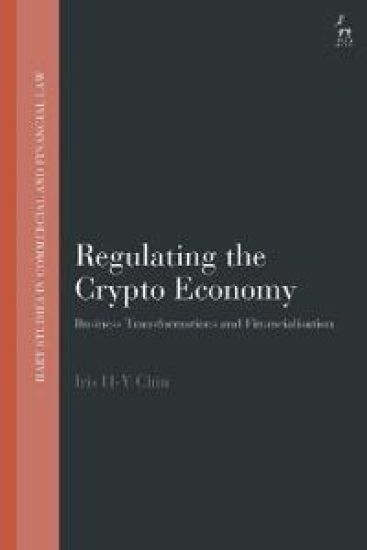
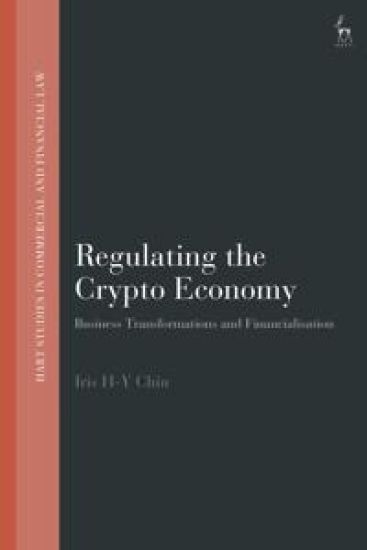
Regulating the Crypto Economy

Regulating the Crypto Economy

Iris H-Y Chiu

BLOOMSBURY PUBLISHING PLC
2026
sidottu
The 2nd edition of this acclaimed book provides an updated analysis of the developments in the onchain crypto economy, crypto industries and regulatory reforms in key jurisdictions, focusing on the EU and UK. The onchain crypto economy has grown to cater for niche activities such as digital art, gaming and Decentralised Finance, while crypto service providers have innovated significantly on financialising the crypto economy for access and participation. This area has attracted much financial regulation, and the book provides the first and leading comparative account, especially between the EU’s and UK’s regulatory frameworks. The book’s key argument is that financial regulatory approaches have been path dependent and limited in terms of regulatory innovation, engaging mostly with crypto service providers who have offchain relationships with crypto asset holders, avoiding many issues pertaining to onchain transactions and activities. The regulatory approaches are an incomplete picture and are limited in providing an enabling framework for the crypto economy. The 2nd edition continues to adhere to the extension of ‘regulatory capitalism’ to the crypto economy and argues that appropriate and innovative regulation can be enabling for innovative productivities in this alternative economic space. It critically explores the achievements and drawbacks of the primacy of financial regulation for the crypto economy, especially with its current limitations. It also offers proposals and normative perspectives for constructively regulating the crypto economy.
Regulating the Crypto Economy

Regulating the Crypto Economy

Iris H-Y Chiu

BLOOMSBURY PUBLISHING PLC
2023
nidottu
This book focuses on the building of a crypto economy as an alternative economic space and discusses how the crypto economy should be governed. The crypto economy is examined in its productive and financialised aspects, in order to distil the need for governance in this economic space. The author argues that it is imperative for regulatory policy to develop the economic governance of the blockchain-based business model, in order to facilitate economic mobilisation and wealth creation. The regulatory framework should cater for a new and unique enterprise organisational law and the fund-raising and financing of blockchain-based development projects. Such a regulatory framework is crucially enabling in nature and consistent with the tenets of regulatory capitalism. Further, the book acknowledges the rising importance of private monetary orders in the crypto economy and native payment systems that do not rely on conventional institutions for value transfer. A regulatory blueprint is proposed for governing such monetary orders as 'commons' governance. The rise of Decentralised Finance and other financial innovations in the crypto economy are also discussed, and the book suggests a framework for regulatory consideration in this dynamic landscape in order to meet a balance of public interest objectives and private interests. By setting out a reform agenda in relation to economic and financial governance in the crypto economy, this forward-looking work argues for the extension of ‘regulatory capitalism’ to this perceived ‘wild west’ of an alternative economic space. It advances the message that an innovative regulatory agenda is needed to account for the economically disruptive and technologically transformative developments brought about by the crypto economy.
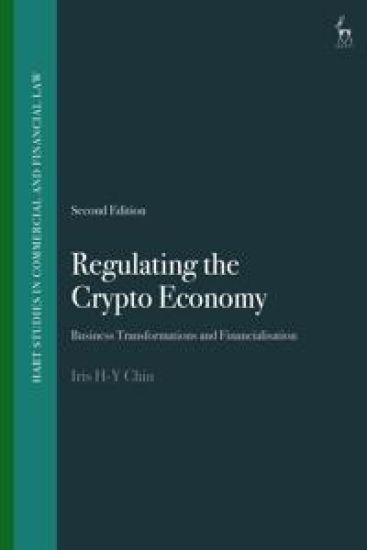
Regulating the Crypto Economy

Regulating the Crypto Economy

Iris H-Y Chiu

Hart Publishing
2021
sidottu
This book focuses on the building of a crypto economy as an alternative economic space and discusses how the crypto economy should be governed. The crypto economy is examined in its productive and financialised aspects, in order to distil the need for governance in this economic space. The author argues that it is imperative for regulatory policy to develop the economic governance of the blockchain-based business model, in order to facilitate economic mobilisation and wealth creation. The regulatory framework should cater for a new and unique enterprise organisational law and the fund-raising and financing of blockchain-based development projects. Such a regulatory framework is crucially enabling in nature and consistent with the tenets of regulatory capitalism. Further, the book acknowledges the rising importance of private monetary orders in the crypto economy and native payment systems that do not rely on conventional institutions for value transfer. A regulatory blueprint is proposed for governing such monetary orders as 'commons' governance. The rise of Decentralised Finance and other financial innovations in the crypto economy are also discussed, and the book suggests a framework for regulatory consideration in this dynamic landscape in order to meet a balance of public interest objectives and private interests. By setting out a reform agenda in relation to economic and financial governance in the crypto economy, this forward-looking work argues for the extension of ‘regulatory capitalism’ to this perceived ‘wild west’ of an alternative economic space. It advances the message that an innovative regulatory agenda is needed to account for the economically disruptive and technologically transformative developments brought about by the crypto economy.
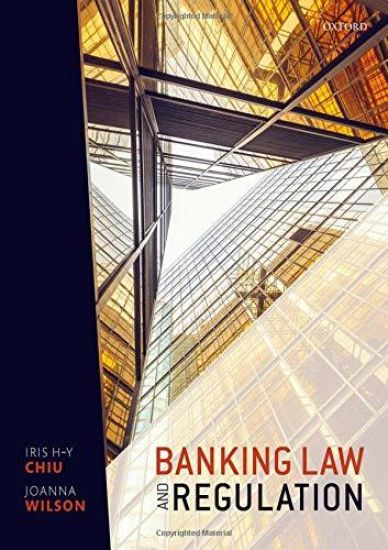
Banking Law and Regulation

Banking Law and Regulation

Iris H-Y Chiu; Joanna Wilson

Oxford University Press
2019
nidottu
Banking Law and Regulation is the ideal textbook to accompany a modern course at undergraduate and post-graduate levels. A truly contemporary textbook, it fully addresses the current landscape of banking law and regulation post the 2008 financial crisis. Coverage is expertly balanced between transactional, regulatory, and private law topics across UK banking law, as well as European and international law, ensuring that this book covers everything needed for a full understanding. Packed with features, including diagrams, questions, key takeaways, and key bibliographies, student learning is supported and consolidated. _ Digital formats and resources This textbook is available for students and institutions to purchase in a variety of formats, and is supported by online resources The e-book offers a mobile experience and convenient access, along with functionality tools, navigation features, and links that offer extra learning support: www.oxfordtextbooks.co.uk/ebooks The text is also supported by online resources, which include web links to enhance research and updates to the law.
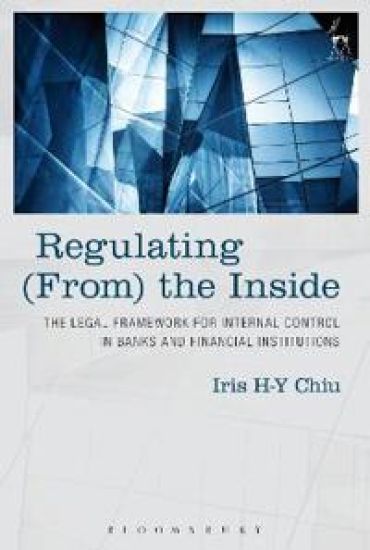
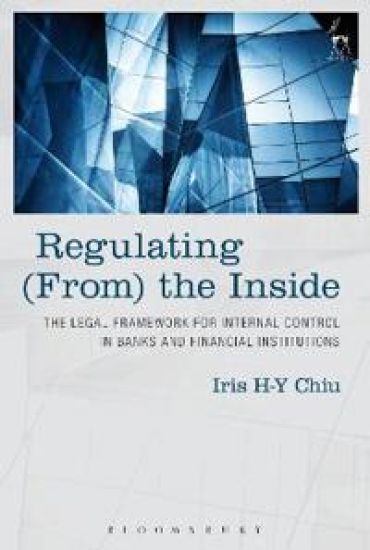
Regulating (From) the Inside

Regulating (From) the Inside

Iris H-Y Chiu

Hart Publishing
2018
nidottu
This book examines a key aspect of the post-financial crisis reform package in the EU and UK—the ratcheting up of internal control in banks and financial institutions. The legal framework for internal controls is an important part of prudential regulation, and internal control also constitutes a form of internal gate-keeping for financial firms so that compliance with laws and regulations can be secured. This book argues that the legal framework for internal control, which is a form of meta-regulation, is susceptible to weaknesses, and such weaknesses are critically examined by adopting an interdisciplinary approach. The book discusses whether post-crisis reforms adequately address the weaknesses in regulating internal control and proposes an alternative strategy to enhance the ‘governance’ effectiveness of internal control.
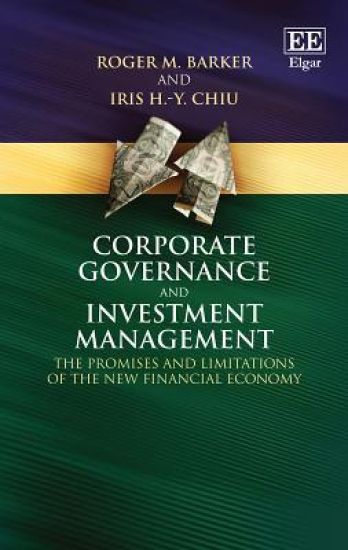
Corporate Governance and Investment Management

Corporate Governance and Investment Management

Roger M. Barker; Iris H.-Y. Chiu

Edward Elgar Publishing Ltd
2017
sidottu
Shareholder engagement with publicly listed companies is often seen as a key means to monitor corporate performance and behavior. In this book, the authors examine the corporate governance roles of key institutional investors in UK corporate equity, including pension funds, insurance companies, collective investment funds, hedge and private equity funds and sovereign wealth funds. The authors argue that institutions' corporate governance roles are an instrument ultimately shaped by private interests and market forces, as well as law and regulatory obligations, and that policy-makers should not readily make assumptions regarding their effectiveness, or their alignment with public interest or social good. They critically discuss the possibilities and limitations of shareholder stewardship i.e. the UK Stewardship Code and the EU Shareholder Rights Directive 2017 as well as explore various reforms of the UK pension fund structures, including the Local Government Pension Funds reform, the move from defined benefit to defined contribution schemes and implications for funds' asset allocation, investment management and corporate governance roles. This book will be of interest to academics in corporate law and governance as well as those in the corporate governance industry, such as institutions, trade associations, proxy advisors and other corporate governance service providers. Think tanks and research institutes tied to institutional investment, corporate governance, law and business may also be a key audience.
Regulating (From) the Inside

Regulating (From) the Inside

Iris H-Y Chiu

Hart Publishing
2015
sidottu
This book examines a key aspect of the post-financial crisis reform package in the EU and UK—the ratcheting up of internal control in banks and financial institutions. The legal framework for internal controls is an important part of prudential regulation, and internal control also constitutes a form of internal gate-keeping for financial firms so that compliance with laws and regulations can be secured. This book argues that the legal framework for internal control, which is a form of meta-regulation, is susceptible to weaknesses, and such weaknesses are critically examined by adopting an interdisciplinary approach. The book discusses whether post-crisis reforms adequately address the weaknesses in regulating internal control and proposes an alternative strategy to enhance the ‘governance’ effectiveness of internal control.
The Law on Corporate Governance in Banks

The Law on Corporate Governance in Banks

Iris H.-Y. Chiu; Michael McKee

Edward Elgar Publishing Ltd
2015
sidottu
Corporate governance in financial institutions has come under the spotlight since the banking crisis in the UK in 2008-9. In many respects, the banking business raises unique problems for corporate governance that are not found in other corporate sectors. The Law on Corporate Governance in Banks is the first work to provide a detailed survey and practical examination of key topical issues in the corporate governance of banks and financial institutions. Combining the insight and expertise of leading corporate lawyers in the field with rigorous academic analysis, the book unpicks and clarifies the legal issues that confront corporate and banking law practitioners when advising banks and financial institutions, including; governance structure, collective board responsibility, directors liability, the role of shareholders, corruption control mechanisms, remuneration, corporate accountability, and risk management. With its practical focus and strong theoretical platform, this book will be an important resource for corporate and financial lawyers seeking to understand and advise on the changing and dynamic legal landscape. Key features of the book include:An author team of senior practitioners and leading academic expertsDetailed treatment of all the key corporate governance issues in financial sectorComprehensive and up-to-date legislative analysis of latest reforms.
The Foundations and Future of Financial Regulation

The Foundations and Future of Financial Regulation

Mads Andenas; Iris H-Y Chiu

Routledge
2013
sidottu
Financial regulation has entered into a new era, as many foundational economic theories and policies supporting the existing infrastructure have been and are being questioned following the financial crisis. Goodhart et al’s seminal monograph "Financial Regulation: Why, How and Where Now?" (Routledge:1998) took stock of the extent of financial innovation and the maturity of the financial services industry at that time, and mapped out a new regulatory roadmap. This book offers a timely exploration of the "Why, How and Where Now" of financial regulation in the aftermath of the crisis in order to map out the future trajectory of financial regulation in an age where financial stability is being emphasised as a key regulatory objective. The book is split into four sections: the objectives and regulatory landscape of financial regulation; the regulatory regime for investor protection; the regulatory regime for financial institutional safety and soundness; and macro-prudential regulation. The discussion ranges from theoretical and policy perspectives to comprehensive and critical consideration of financial regulation in the specifics. The focus of the book is on the substantive regulation of the UK and the EU, as critical examination is made of the unravelling and the future of financial regulation with comparative insights offered where relevant especially from the US. Running throughout the book is consideration of the relationship between financial regulation, financial stability and the responsibility of various actors in governance. This book offers an important contribution to continuing reflections on the role of financial regulation, market discipline and corporate responsibility in the financial sector, and upon the roles of regulatory authorities, markets and firms in ensuring the financial health and security of all in the future.
The Foundations and Future of Financial Regulation

The Foundations and Future of Financial Regulation

Mads Andenas; Iris H-Y Chiu

Routledge
2013
nidottu
Financial regulation has entered into a new era, as many foundational economic theories and policies supporting the existing infrastructure have been and are being questioned following the financial crisis. Goodhart et al’s seminal monograph "Financial Regulation: Why, How and Where Now?" (Routledge:1998) took stock of the extent of financial innovation and the maturity of the financial services industry at that time, and mapped out a new regulatory roadmap. This book offers a timely exploration of the "Why, How and Where Now" of financial regulation in the aftermath of the crisis in order to map out the future trajectory of financial regulation in an age where financial stability is being emphasised as a key regulatory objective. The book is split into four sections: the objectives and regulatory landscape of financial regulation; the regulatory regime for investor protection; the regulatory regime for financial institutional safety and soundness; and macro-prudential regulation. The discussion ranges from theoretical and policy perspectives to comprehensive and critical consideration of financial regulation in the specifics. The focus of the book is on the substantive regulation of the UK and the EU, as critical examination is made of the unravelling and the future of financial regulation with comparative insights offered where relevant especially from the US. Running throughout the book is consideration of the relationship between financial regulation, financial stability and the responsibility of various actors in governance. This book offers an important contribution to continuing reflections on the role of financial regulation, market discipline and corporate responsibility in the financial sector, and upon the roles of regulatory authorities, markets and firms in ensuring the financial health and security of all in the future.
Corporate Governance and Complexity Theory

Corporate Governance and Complexity Theory

Marc Goergen; Christine A. Mallin; Eve Mitleton-Kelly; Ahmed Al-Hawamdeh; Iris H.-Y. Chiu

Edward Elgar Publishing Ltd
2010
sidottu
This multidisciplinary book takes an innovative approach to corporate governance by linking governance and complexity theory. It provides important new insights into why governance systems are failing and what may be done to improve this situation. A key issue that scholars, practitioners and regulators of corporate governance face is the complexity of the relationships between a company and its shareholders, as well as its stakeholders and gatekeepers. The authors, who are corporate governance specialists from a variety of disciplines including law, finance and economics, propose an innovative approach and key insights on corporate governance. In the process they also address some significant gaps in the literature and deal with methodological limitations. This new approach uses concepts from complexity theory to deal with the frequently complex relationships between the corporation and its stakeholders and gatekeepers. The holistic approach to the study of corporate governance will prove invaluable to academics and postgraduate students in accounting, economics, finance, law or complexity theory with an interest in corporate governance. This book will be also prove to be an essential resource for regulators and practitioners interested in corporate governance issues.
The Foundations and Anatomy of Shareholder Activism
"The Foundations and Anatomy of Shareholder Activism" examines the landscape of contemporary shareholder activism in the UK. The book focuses on minority shareholder activism in publicly listed companies. It argues that contemporary shareholder activism in the UK is dominated by two groups; one, the institutional shareholders whose shareholder activism is largely seen as a driving force for good corporate governance, and two, the hedge funds whose shareholder activism is based on value extraction and exit. The book provides a detailed examination of both types of shareholder activism, and discusses critically the nature of, motivations for and consequences following both types of shareholder activism. The book then locates both types of shareholder activism in the theory of the company and the fabric of company law, and argues that institutional shareholder activism based on exercising a voice at general meetings is well supported in theory and law. The call for institutions to engage in more informal forms of activism in the name of 'stewardship' may bring about challenges to the current patterns of activism that institutions engage in. The book argues, however, that a more cautious view of hedge fund activism and the pattern of value extraction and exit should be taken. More empirical evidence is likely to be necessary, however, to weigh up the long terms benefits and costs of hedge fund activism.