
Kirjailija
Irving Babbitt
Kirjat ja teokset yhdessä paikassa: 26 kirjaa, julkaisuja vuosilta 1979–2026, suosituimpiin kuuluu Rousseau and Romanticism (Cram Edition). Vertaile teosten hintoja ja tarkista saatavuus suomalaisista kirjakaupoista.
26 kirjaa
Kirjojen julkaisuvuodet: 1979–2026.
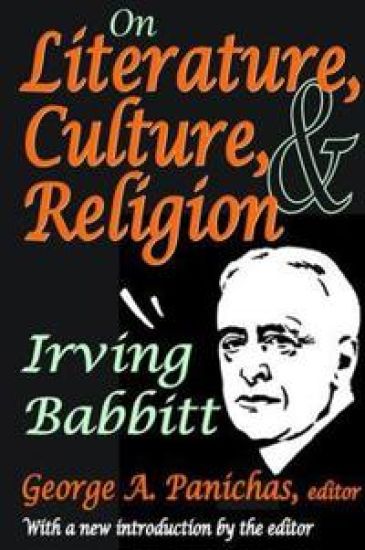
Irving Babbitt was a giant of American criticism. His writings from the 1890s to the 1930s helped advance American criticism and scholarship to international esteem. More than seventy years after his death his intellectual staying power remains undiminished. On Literature, Culture, and Religion is an ideal introduction to this seminal American thinker. Babbitt's opinions were uncompromising, and his vocal allies and opponents included almost every name in American literature and scholarship: T. S. Eliot, Edmund Wilson, Paul Elmer More, H. L. Mencken, and Sinclair Lewis. A founder of New Humanism, Babbitt was best known for his indictment of Romanticism and his insistence that the modern age had gone wrong. Babbitt argued for a renewal of humanistic values and standards--which he found best articulated in classical Greece, Hinduism, and Buddhism. The selections cover topics central to Babbitt: criticism, Romanti-cism, classical literature, French literature, education, democracy, and Buddhism. They typify Babbitt's method: recondite allusion, penetrating insight and analysis, impeccable scholarship, and unrelenting pursuit of the furthest ramification and the profoundest implication. The original annotation is retained. Brief introductions to the essays place them in the Babbitt canon. A major introductory essay by George A. Panichas surveys Babbitt's career and critical reception and summarizes the concepts that inform Babbitt's writing. Panichas raises again controversial issues that were not really resolved in Babbitt's time. The essay will challenge those long familiar with Babbitt and New Humanism and those newly introduced thereto.
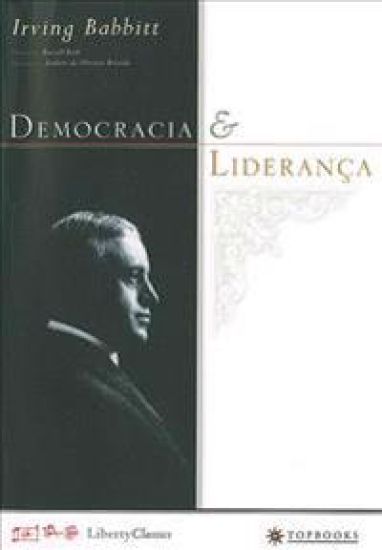
Pref cio Russell Kirk Tradu o Joubert de Oliveira Br zida Quando Democracia e Lideran a foi publicado em 1924, o cr tico Herbert Read afirmou, com justi a, que a motiva o de Irving Babbitt (1865-1933) era "o restabelecimento de padr es humanistas no lugar das confus es utilit rias humanit rias ou rom nticas", ent o muito em voga. O livro tornou-se um marco do pensamento pol tico moderno, o mais representativo do pensador da cultura e ensa sta americano, que n o deixou uma obra extensa porque gastou grande parte da sua vida em controv rsias p blicas, contestando os valores e convic es mais arraigados nos meios acad micos de sua poca e atacando fil sofos como Rousseau, Francis Bacon, Karl Marx e John Dewey. Babbitt nunca hesitou em remar contra a corrente dos movimentos intelectuais de seu tempo, submetendo a exame cr tico implac vel todas as convic es morais e est ticas de seus contempor neos. Combateu o marxismo, o freudismo, o instrumentalismo e o naturalismo. Desdenhava o sucesso f cil e a popularidade. J na est tica, op s-se violentamente s diversas doutrinas que defendiam a arte pela arte, afirmando o prop sito moral e a dimens o tica da experi ncia art stica. Como te rico da educa o, combateu com fervor a decad ncia da universidade americana. Seu diagn stico da eros o dos padr es ticos e culturais da Am rica e sua defesa do autodom nio moral contra o culto despreocupa o s o temas que permanecem atuais.
Character and Culture by Irving Babbitt is the latest volume in the Library of Conservative Thought. Babbitt was the leader of the twentieth-century intellectual and cultural movement called American Humanism or the New Humanism. More than half a century after his death his intellectual staying power remains undiminished. The qualities that marked Irving Babbitt as a thinker and cultural critic of the first rank are richly represented in Character and Culture. First published togetherin 1940 (under the misleading title Spanish Character), these essays span his scholarly career and cover a wide range of subjects. The diverse topics discussed here—aesthetics, ethics, religion, politics, literature—are illuminated by the same unifying vision of human existence that informs and structures all of Babbitt's writing. Babbitt never took up a subject out of idle curiosity. All of his books and articles grew out of a desire to address certain fundamental questions of life and letters. The essaysin this volume are as worthy of attention now as when they were originally written. Set in then- philosophical and historical context by Claes G. Ryn's new introduction, they are a good place to start for persons who wish to acquaint themselves not only with Babbitt's central ideas but with the scope of his mind and interests. Readers familiar with other books by Babbitt may recognize particular ideas and formulations but will also find much new material to ponder. Ryn's introduction provides a comprehensive look at Irving Babbitt's life, career, writings, and influence. He shows how Babbitt has survived and sustained often harsh criticism from representatives of dominant trends. Ryn describes his writing style as having "a kind of rugged American elegance." The substantial critical introduction also elucidates Babbitt's central ideas in relation to the volume. Character and Culture will be of interest to scholars of literature, philosophers, historians, theologians, and political theorists. The extensive index to all of Babbitt's books, including this one, increases the value of the volume.
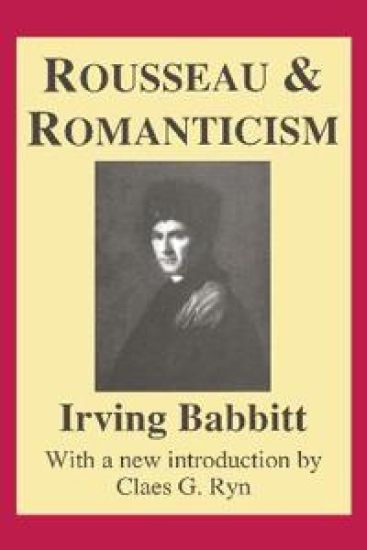
This volume is the best-known and most widely discussed work of the influential scholar and critic Irving Babbitt (1865-1933), intellectual leader of the movement known as the New Humanism. It is also the work that best conveys the ethical and aesthetic core of his thought. Broad in scope, it examines a variety of manifestations of romanticism and presents a typology of the imaginative inclinations of that movement Rousseau is analyzed as paradigmatic of the ethical and aesthetic sensibility that is replacing the classical and Christian outlook in the Western world. For Babbitt, works of imagination are integral to human life in general. He explores romanticism with a view to its implications for Western civilization. Babbitt identifies serious ethical, religious, aesthetic, and philosophical problems in the modern world, but he also shows how remedies to those problems must incorporate the best insights of modernity. First published in 1919, the book is strikingly relevant to today's discussion of the crisis of American and Western culture and education. Babbitt anticipated and analyzed dangerous cultural trends whose consequences are now widely bemoaned. He applies to these phenomena an intellectual breadth and depth rare today. At the end of the twentieth century his prescriptions for dealing with the central problems of Western civilization have acquired an acute urgency. At a time of much renewed interest in Rousseau, Babbitt's book offers a penetrating commentary that challenges widely held beliefs and interpretations. Graced with a lengthy and wide-ranging new introduction by Claes G. Ryn, Rousseau and Romanticism is simultaneously a work of literary history, criticism, and a theory of civilization. In addressing its special subject, this classic study reflects the main themes of Babbitt's thought, making it representative of his work as a whole. Ryn explicates and critically assesses Babbitt's central ideas, refutes widely circulating misinterpretations, and demonstrates the relevance of his writing in the intellectual and cultural circumstances of today.
Irving Babbitt was a leader of the intellectual movement called American Humanism, or the New Humanism, and a distinguished professor of French literature at Harvard. "Democracy and Leadership", first published in 1924, is his only directly political book, and in it he applies the principles of humanism to the civil social order. Babbitt rejects all deterministic philosophies of history, whether they be the older type found in Saint Augustine or Bossuet, which tends to make of man the puppet of God, or the new type, which tends in all its varieties to make of man the puppet of nature. He offers a compelling critique of unchecked majoritarianism and addresses the great problem of how to discover leaders with standards.