Kirjojen hintavertailu – 12 876 114 kirjaa ja 26 kauppaa
Kirjailija
Irving (Yitz) Greenberg
Kirjat ja teokset yhdessä paikassa: 9 kirjaa, julkaisuja vuosilta 2004–2026, suosituimpiin kuuluu The Heart of Torah, Gift Set. Vertaile teosten hintoja ja tarkista saatavuus suomalaisista kirjakaupoista.
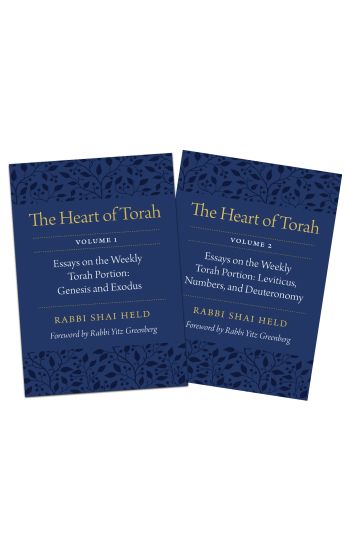
A two-volume hardcover set In The Heart of Torah, Rabbi Shai Held’s Torah essays-two for each weekly portion-open new horizons in Jewish biblical commentary. Held probes the portions in bold, original, and provocative ways. He mines Talmud and midrashim, great writers of world literature, and astute commentators of other religious backgrounds to ponder fundamental questions about God, human nature, and what it means to be a religious person in the modern world. Along the way, he illuminates the centrality of empathy in Jewish ethics, the predominance of divine love in Jewish theology, the primacy of gratitude and generosity, and God’s summoning of each of us-with all our limitations-into the dignity of a covenantal relationship.
“Shai Held is one of the most important teachers of Torah in his generation.” -Rabbi David Wolpe, author of David: The Divided HeartIn The Heart of Torah, Rabbi Shai Held’s Torah essays-two for each weekly portion-open new horizons in Jewish biblical commentary. Held probes the portions in bold, original, and provocative ways. He mines Talmud and midrashim, great writers of world literature, and astute commentators of other religious backgrounds to ponder fundamental questions about God, human nature, and what it means to be a religious person in the modern world. Along the way he illuminates the centrality of empathy in Jewish ethics, the predominance of divine love in Jewish theology, the primacy of gratitude and generosity, and God’s summoning of each of us-with all our limitations-into the dignity of a covenantal relationship.
In The Heart of Torah, Rabbi Shai Held’s Torah essays-two for each weekly portion-open new horizons in Jewish biblical commentary. Held probes the portions in bold, original, and provocative ways. He mines Talmud and midrashim, great writers of world literature, and astute commentators of other religious backgrounds to ponder fundamental questions about God, human nature, and what it means to be a religious person in the modern world. Along the way he illuminates the centrality of empathy in Jewish ethics, the predominance of divine love in Jewish theology, the primacy of gratitude and generosity, and God’s summoning of each of us-with all our limitations-into the dignity of a covenantal relationship.
Winner of the National Jewish Book Award's Lifetime Achievement AwardWinner of the Natan Fund’s 2024 Natan PrizeThe Triumph of Life is Rabbi Irving Greenberg’s magnum opus-a narrative of the relationship between God and humanity as expressed in the Jewish journey through modernity, the Holocaust, the creation of Israel, and the birth of Judaism’s next era. Greenberg describes Judaism’s utopian vision of a world created by a God who loves life, who invites humans to live on the side of life, and who enables the forces of life to triumph over death. The Bible proclaims our mission of tikkun olam, repairing the world, such that every human image of God is sustained in the fullness of our dignity. To achieve this ideal, Judaism offers the method of covenant-a realistic, personal, incremental partnership between God and humanity across generations in which human beings grow ever more responsible for world repair. Greenberg calls on us to redirect humanity’s unprecedented power in modernity to overcome poverty, oppression, inequality, sickness, and war. The work of covenant requires an ethic of power-one that advances life collaboratively and at a human pace-so that the Jewish people and all humanity can bring the world toward the triumph of life.
Why do we watch movies? If we read in search of more life, as Harold Bloom is fond of saying, then we watch movies, this book proposes, in search of wonder. We watch movies in search of awe-inspiring visions, transformative experiences, and moments of emotional transcendence and spiritual sublimity. We watch movies for many of the same reasons that we engage in religion: to fill our ordinary evenings and weekends with something of the extraordinary; to connect our isolated, individual selves to something that is greater than ourselves; and because we yearn for something that is ineffable but absolutely indispensable. This book, through an exploration of some of the most intriguing films of the past two decades, illustrates how movies are partners with religion in inspiring, conveying, and helping us experience what Abraham Joshua Heschel refers to as "radical amazement": the sense that our material universe and our ordinary lives are filled with more wonders than we can ever imagine, and that it takes spiritually—as well as cinematically—trained eyes to uncover these ever-present ocular gems. In addition to illustrating how films utilize religious themes and theological motifs to convey a sense of wonder, this book offers new interpretations of key films from canonical American directors such as Martin Scorsese, Terrence Malick, Richard Linklater, Wes Anderson, and the Coen brothers.
Rabbi Greenberg's book makes an invaluable contribution to interfaith conversation. He calls for Christians and Jews to come together in their continuously evolving partnership with God—dual covenants that demand "openness to each other, learning from each other, and a respect for the distinctiveness of the ongoing validity of each other." Now, when the resurgence of anti-Semitism poses a threat to Jews here and around the world, this powerful book presents a new opportunity to heed the call first put forward by Rabbi Greenberg nearly four decades ago: a call for people of all faiths and cultures to work together to create a world in which everyone can live with dignity and equality—the deserved inheritance of a humanity created in the image of God. In the first half of his book, Rabbi Greenberg takes us on his personal journey to a rethinking of Christianity, which ultimately gave rise to his belief that Christianity, Judaism (and every religion that works to repair the world and advance the triumph of life) are valid expressions of the pact between God and humankind. In Part 2 he brings together for the first time his seven most important essays on the new encounters between Judaism and Christianity. Ideal for study groups and course adoption, the book contains a study guide as well as endnotes, an index, and thought-provoking responsive essays by leading Catholic, Protestant, and Jewish commentators, including James Carroll, Krister Stendahl, and Michael Novak. Readers, students, and scholars of Judaism, Christianity, and comparative religions will find this to be one of the most important books of our time on the Christian—Jewish relationship.