Kirjailija
Isaac Asimov
Kirjat ja teokset yhdessä paikassa: 236 kirjaa, julkaisuja vuosilta 1920–2026, suosituimpiin kuuluu Martian Way. Vertaile teosten hintoja ja tarkista saatavuus suomalaisista kirjakaupoista.
236 kirjaa
Kirjojen julkaisuvuodet: 1920–2026.
The fourth novel in Isaac Asimov's classic science-fiction masterpiece, the Foundation series THE EPIC SAGA THAT INSPIRED THE APPLE TV+ SERIES FOUNDATION At last, the costly and bitter war between the two Foundations has come to an end. The scientists of the First Foundation have proved victorious, and now they return to Hari Seldon's long established plan to build a new Empire on the ruins of the old. But rumors persist that the Second Foundation is not destroyed after all--and that its still-defiant survivors are preparing their revenge. Now two exiled citizens of the Foundation--a renegade Councilman and a doddering historian--set out in search of the mythical planet Earth . . . and proof that the Second Foundation still exists. Meanwhile someone--or something--outside of both Foundations seems to be orchestrating events to suit its own ominous purpose. Soon representatives of both the First and Second Foundations will find themselves racing toward a mysterious world called Gaia and a final, shocking destiny at the very end of the universe.
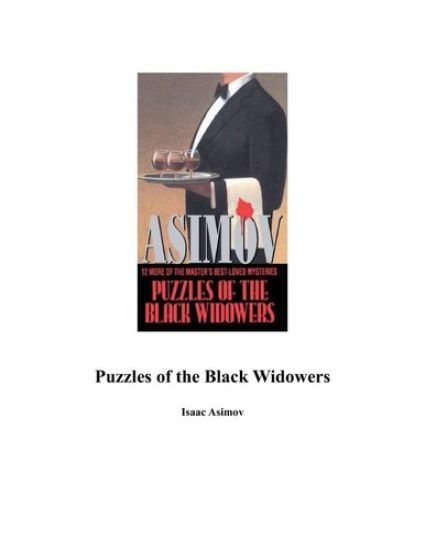
Once a month, the seven members of the Black Widowers Club gather for dinner at their favourite restaurant. To each dinner a guest is invited, and each guest has a problem too large and complex to solve on his own. This is the fifth collection of the "Black Widowers" stories.
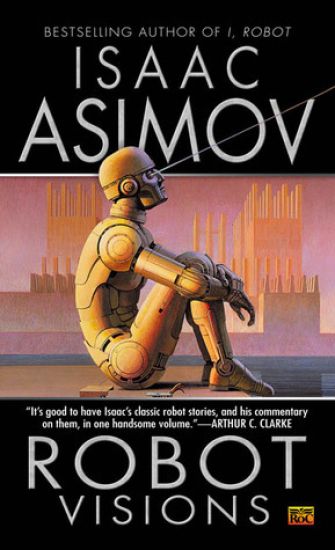
From Isaac Asimov, the Hugo Award-winning Grand Master of Science Fiction, comes five decades of robot visions: thirty-four landmark stories and essays--including three rare tales--gathered together in one volume. Meet all of Asimov's most famous creations including: Robbie, the very first robot that his imagination brought to life; Susan Calvin, the original robot psychologist; Stephen Byerley, the humanoid robot; and the famous human/robot detective team of Lije Bailey and R. Daneel Olivaw, who have appeared in such bestselling novels as The Robots of Dawn and Robots and Empire. Let the master himself guide you through the key moments in the fictional history of robot-human relations--from the most primitive computers and mobile machines to the first robot to become a man. "It's good to have Isaac's classic robot stories, and his commentary on them, in one handsome volume."--Arthur C. Clarke
Nemesis
Isaac Asimov
Bantam Doubleday Dell Publishing Group
1990
pokkari
Halvin toimitettuna 14,80 €
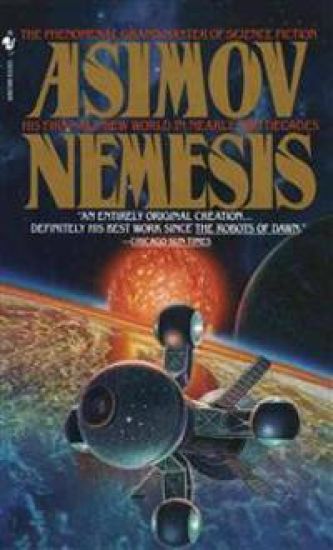
In the twenty-third century pioneers have escaped the crowded earth for life in self-sustaining orbital colonies. One of the colonies, Rotor, has broken away from the solar system to create its own renegade utopia around an unknown red star two light-years from Earth: a star named Nemesis. Now a fifteen-year-old Rotorian girl has learned of the dire threat that nemesis poses to Earth's people--but she is prevented from warning them. Soon she will realize that Nemesis endangers Rotor as well. And so it will be up to her alone to save both Earth and Rotor as--drawn inexorably by Nemesis, the death star--they hurtle toward certain disaster. "A totally new and original work that stretches his talents to their fullest. . .welcome back, champ!"--The Detroit News
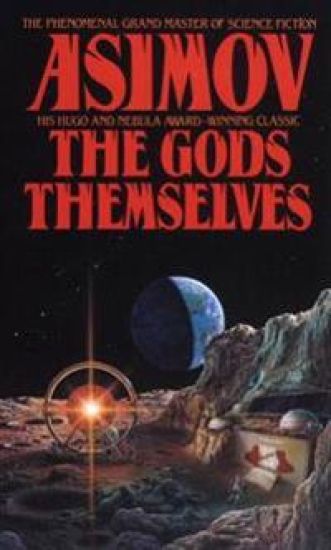
In the twenty-second century Earth obtains limitless, free energy from a source science little understands: an exchange between Earth and a parallel universe, using a process devised by the aliens. But even free energy has a price. The transference process itself will eventually lead to the destruction of the Earth's Sun--and of Earth itself. Only a few know the terrifying truth--an outcast Earth scientist, a rebellious alien inhabitant of a dying planet, a lunar-born human intuitionist who senses the imminent annihilation of the Sun. They know the truth--but who will listen? They have foreseen the cost of abundant energy--but who will believe? These few beings, human and alien, hold the key to Earth's survival.
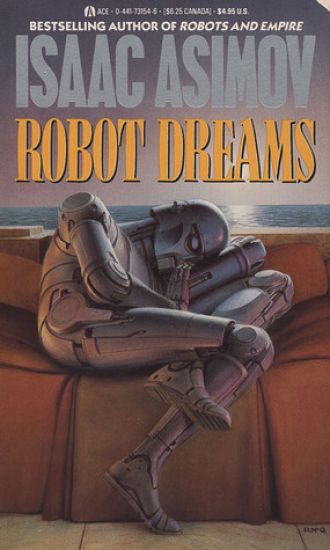
From Isaac Asimov--the bestselling author of I, Robot and Foundation--comes a collection of 20 of his best science fiction stories. "His name is synonymous with all that is best in science fiction."--The New York Times In a career spanning nearly fifty years, Isaac Asimov--science writer, historian, and futurist--accurately predicted how technological breakthroughs would be developed and utilized, years before they became reality. His foresight envisioned calculators, computerized cars, and advances in the field of robotics. Robot Dreams spans the body of his fiction from the 1940s to the mid-1980s, featuring all of the classic Asimovian themes--from the scientific puzzle and the extraterrestrial thriller to the psychological discourse--presented by the author in an introductory essay. In addition to the title story (a Locus poll winner, and Hugo and Nebula Award finalist), this collection features several of Asimov's robot tales. A robopsychologist must outwit a machine determined to stay hidden in "Little Robot Lost;" a woman's talent for "Light Verse" overshadows her true accomplishments with her robot servants; and "The Last Question" presented to computer after computer over a hundred billion years may remain forever unanswered.
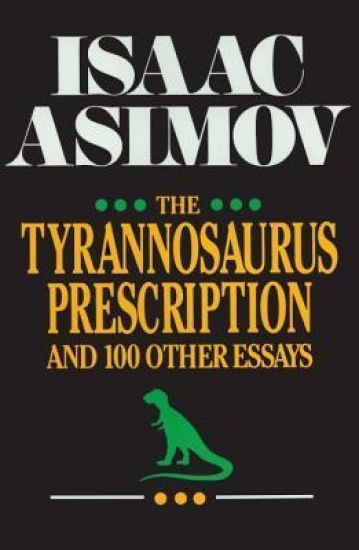
America's most revered science writer is represented here by one hundred and one previously uncollected essays and ruminations. The Tyrannosaurus Prescription demonstrates the full range of Isaac Asimov's imagination: his lively discussions of science fiction, future space adventures, inner space discoveries, rediscoveries of our hidden past, and even what to do when the present state of the world is just too oppressive - his "Tyrannosaurus Prescription." Asimov fans will find gems of every kind in this far-roving collection. The section on "Science" provides thirteen pieces on the planets; unstable atomic nuclei; Einstein, "the one-man revolution"; and dinosaurs. "SciQuest" includes twenty of Asimov's best columns for SciQuest magazine, many of which vividly describe the inspiring struggles of great scientists - William Herschel, Michael Faraday, Joseph Henry, Ernest Rutherford, and others. Asimov's awesome grasp of culture - ancient and modern - is on display in "Foreword by Isaac Asimov." A special treat are two highly personal autobiographical essays, co-authored with his wife, Janet, that reveal the writer to be as eccentric as he is sane, as all-here as he is visionary.
It was dark by the time Lucas stopped his taxi in the driveway of the Wheeler home and lumbered up the path to the front entrance. He still wore his heavy boots, despite the spring thaw; his mackinaw and knitted cap were reminders of the hard winter that had come and gone. When Geraldine Wheeler opened the door, wearing her lightweight traveling suit, she shivered at the sight of him. "Come in," she said crisply. "My trunk is inside." Lucas went through the foyer to the stairway, knowing his way around the house, accustomed to its rich dark textures and somber furnishings; he was Medvale's only taxi driver. He found the heavy black trunk at the foot of the stairs, and hoisted it on his back. "That all the luggage, Miss Wheeler?" "That's all. I've sent the rest ahead to the ship. Good heavens, Lucas, aren't you hot in that outfit?" She opened a drawer and rummaged through it. "I've probably forgotten a million things. Gas, electricity, phone . . . Fireplace! Lucas, would you check it for me, please?" "Yes, miss," Lucas said. He went into the living room, past the white-shrouded furniture. There were some glowing embers among the blackened stumps, and he snuffed them out with a poker. A moment later the woman entered, pulling on long silken gloves. "All right," she said breathlessly. "I guess that's all. We can go now." "Yes, miss," Lucas said.
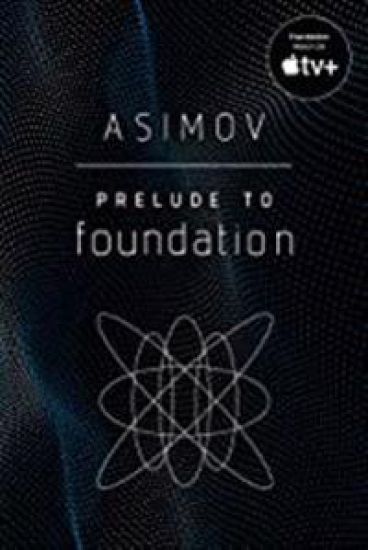
The first of two prequel novels in Isaac Asimov's classic science-fiction masterpiece, the Foundation seriesTHE EPIC SAGA THAT INSPIRED THE APPLE TV+ SERIES FOUNDATION It is the year 12,020 G. E. and Emperor Cleon I sits uneasily on the Imperial throne of Trantor. Here in the great multidomed capital of the Galactic Empire, forty billion people have created a civilization of unimaginable technological and cultural complexity. Yet Cleon knows there are those who would see him fall--those whom he would destroy if only he could read the future. Hari Seldon has come to Trantor to deliver his paper on psychohistory, his remarkable theory of prediction. Little does the young Outworld mathematician know that he has already sealed his fate and the fate of humanity. For Hari possesses the prophetic power that makes him the most wanted man in the Empire . . . the man who holds the key to the future--an apocalyptic power to be known forever after as the Foundation.
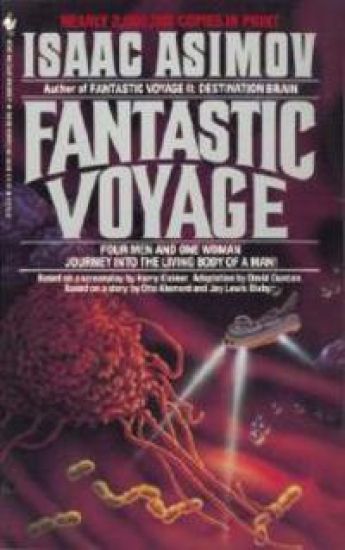
Fantastic Voyage
Isaac Asimov
Bantam Doubleday Dell Publishing Group
1988
pokkari
Halvin toimitettuna 13,70 €
Four men and a woman are reduced to a microscopic fraction of their original size, sent in a miniaturized atomic sub through a dying man's carotid artery to destroy a blood clot in his brain. If they fail, the entire world will be doomed.
Isaac Asimov, one of the world’s best-selling authors, a scientist, academic, romantic, and original thinker, here jousts and jests with his old opponent in the war of the words, John Ciardi. Ciardi, of course, is a poet, world authority on and premier translator of Dante, teacher, critic, and formidable manufacturer and wielder of the word-weapon.
From the use of metals by prehistoric man to the alchemical experiments of medieval and renaissance man to the complex chemical skills of contemporary man, Asimov traces the development of this building block of our technological world.
The science fiction short story "Youth" by Isaac Asimov explores themes of innocence, discovery as well as interstellar relations, woven with an underlying story about beauty and alien life. Red and Slim, two boys, encounter a couple of eerie creatures in the woods. These creatures are actually alien ambassadors that arrived on Earth to negotiate a treatiy, unknowingly. The boys say the creatures are animals and are considering selling them to a circus to earn money. The aliens are having high stakes diplomatic talks alongside the parents of the boys. The adults are concerned since the ambassadors have seemingly vanished, not realizing that these are really the same creatures the boys have discovered. The narrative reveals the adults have no clue who the ambassadors actually are, highlighting the theme of innocence and the absence and interaction between adults and children. The boys find the "animals" beautiful as well as beneficial since they're unique, whereas the grownups are engrossed in their preconceptions as well as anxieties about aliens. The end of the story is unexpected, since the creatures are revealed to both kids and grownups alike, resulting in an informative and hilarious resolution to the diplomatic crisis. Asimov displays his ability to merge complicated concepts into seemingly straightforward narratives, employing the perspective of youth to deliver brand new perspectives on previously encountered problems." Let's Get Together" by Isaac Asimov is a brief story which explores issues of paranoia and the Cold War fear of imminent destruction. The story happens in a scenario where the U. S. along with an additional power are in the edge of war with incredibly advanced robotic technology. Kenneth Pellig and Irra Fisher are specialists in robotics working on a secret project to develop a network of robots which can not be hurt by a single attack'. The story reveals that these robots can be used offensively, possibly causing a full blown war as tensions mount. Pellig finds the robot from the rival power has already been integrated into the American system under the cloak of diplomacy, possedging a grave risk of internal espionage, leading to a remarkable twist in the story.
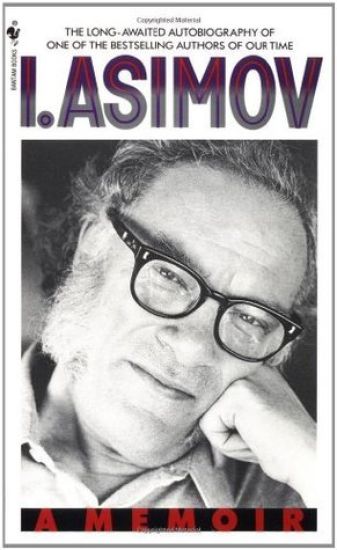
Arguably the greatest science fiction writer who ever lived, Isaac Asimov also possessed one of the most brilliant and original minds of our time. His accessible style and far-reaching interests in subjects ranging from science to humor to history earned him the nickname "the Great Explainer." I. Asimov is his personal story--vivid, open, and honest--as only Asimov himself could tell it. Here is the story of the paradoxical genius who wrote of travel to the stars yet refused to fly in airplanes; who imagined alien universes and vast galactic civilizations while staying home to write; who compulsively authored more than 470 books yet still found the time to share his ideas with some of the great minds of our century. Here are his wide-ranging thoughts and sharp-eyed observations on everything from religion to politics, love and divorce, friendship and Hollywood, fame and mortality. Here, too, is a riveting behind-the-scenes look at the varied personalities--Campbell, Ellison, Heinlein, Clarke, del Rey, Silverberg, and others--who along with Asimov helped shape science fiction. As unique and irrepressible as the man himself, I. Asimov is the candid memoir of an incomparable talent who entertained readers for nearly half a century and whose work will surely endure into the future he so vividly envisioned.