Kirjojen hintavertailu – 12 903 725 kirjaa ja 27 kauppaa

Kirjailija

Isaac Elishakoff

Kirjat ja teokset yhdessä paikassa: 14 kirjaa, julkaisuja vuosilta 2003–2025, suosituimpiin kuuluu Non-Classical Problems in the Theory of Elastic Stability. Vertaile teosten hintoja ja tarkista saatavuus suomalaisista kirjakaupoista.

14 kirjaa

Kirjojen julkaisuvuodet: 2003–2025.

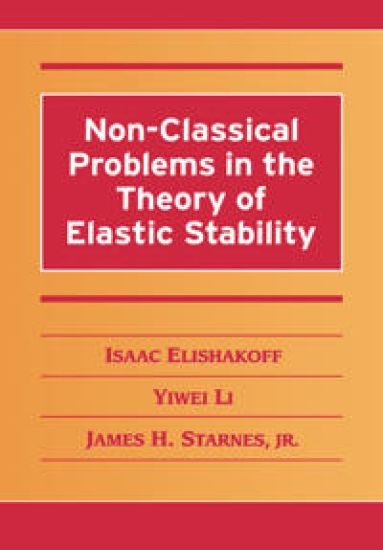
Non-Classical Problems in the Theory of Elastic Stability

Non-Classical Problems in the Theory of Elastic Stability

Isaac Elishakoff; Yiwei Li; Jr Starnes

Cambridge University Press
2005
pokkari
When a structure is put under an increasing compressive load, it becomes unstable and buckling occurs. Buckling is a particularly significant concern in designing shell structures such as aircraft, automobiles, ships, or bridges. This book discusses stability analysis and buckling problems and offers practical tools for dealing with uncertainties that exist in real systems. The techniques are based on two complementary theories which are developed in the text. First, the probabilistic theory of stability is presented, with particular emphasis on reliability. Both theoretical and computational issues are discussed. Secondly, the authors present the alternative to probability based on the notion of 'anti-optimization', a theory that is valid when the necessary information for probabilistic analysis is absent, that is, when only scant data are available. Design engineers, researchers, and graduate students in aerospace, mechanical, marine, and civil engineering who are concerned with issues of structural integrity will find this book a useful reference source.

Fair Share

Fair Share

Isaac Elishakoff

Springer International Publishing AG
2025
nidottu
Kofi Annan, former Secretary General of the United Nations, argued that “We need to create a world that is equitable, that is stable and a world where we bear in mind the needs of others, and not only what we need immediately. We are all in the same boat.” American businessman, John Landgraf stated: “I hope that most of us believe that we actually would all benefit from living in a more equitable society. If that's not happening, we're squandering human potential.” For the world to be fair, one needs to know how to divide. Without the mathematics of division, humankind cannot function…Marie Antoinette, Queen of France (infamously) said “If people have no bread, let them eat cake,” and while Ahmes - the scribe of the Rhind Mathematical Papyrus - dealt with loaves of bread, prosperous people in the twentieth century dealt with cake division, although bread is also uniformly available. You’ll be surprised, but there are at least four books and over 200 scientific (not gastronomical!) papers on cake division. Those authors were not overly concerned with obesity, one can guess, but whether distributing loaves, cakes, chores, or dividends, one needs to master division. This book deals with a wide spectrum of division problems, and provides the historical background, giving a sense of how pervasive division is in our lives. In particular, the second part focuses on a problem that remained open until 1985, when Professor Robert John Aumann (Nobel laureate in Economics, 2005) and Professor Michael Maschler solved it using game-theoretic techniques. Simple alternative solutions are given, which are suitable for high schools and other educational institutions.
Multifaceted Uncertainty Quantification

Multifaceted Uncertainty Quantification

Isaac Elishakoff

De Gruyter
2024
isokokoinen pokkari
The book exposes three alternative and competing approaches to uncertainty analysis in engineering. It is composed of some essays on various sub-topics like random vibrations, probabilistic reliability, fuzzy-sets-based analysis, unknown-but-bounded variables, stochastic linearization, possible difficulties with stochastic analysis of structures.
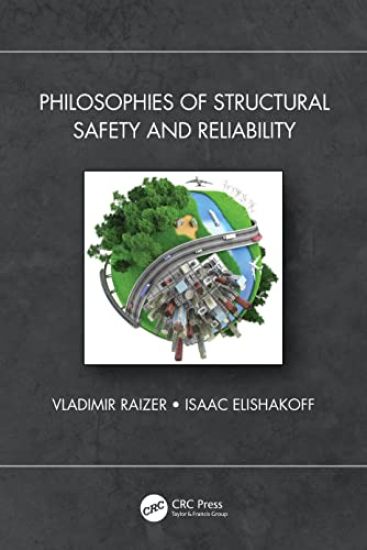
Philosophies of Structural Safety and Reliability

Philosophies of Structural Safety and Reliability

Vladimir Raizer; Isaac Elishakoff

TAYLOR FRANCIS LTD
2024
nidottu
Uncertainty is certain to be found in structural engineering, making it crucial to structure design. This book covers three competing philosophies behind structural safety and reliability: probabilistic analysis, fuzzy set-based treatments, and the convex approach. Explaining the theory behind probabilistic analysis, fuzzy set-based treatments, and the convex approach in detail, alongside their implementation, use, and benefits, the book compares and contrasts these methods, enabling the reader to solve problems associated with uncertainty. These uncertainty issues can be seen in civil engineering structures, risk of earthquakes, impact of rough seas on ships, and turbulence affecting aerospace vehicles. Building on the authors’ many years of experience in the field, Philosophies of Structural Safety and Reliability is an essential guide to structural uncertainty. Topics covered in the book include properties of materials and their structural deterioration, safety factor and reliability, risk evaluation and loads, and their combinations. This book will be of interest to students and professionals in the fields of aerospace, civil, mechanical, marine, and ocean engineering.
Fair Share

Fair Share

Isaac Elishakoff

Springer International Publishing AG
2024
sidottu
Kofi Annan, former Secretary General of the United Nations, argued that “We need to create a world that is equitable, that is stable and a world where we bear in mind the needs of others, and not only what we need immediately. We are all in the same boat.” American businessman, John Landgraf stated: “I hope that most of us believe that we actually would all benefit from living in a more equitable society. If that's not happening, we're squandering human potential.” For the world to be fair, one needs to know how to divide. Without the mathematics of division, humankind cannot function…Marie Antoinette, Queen of France (infamously) said “If people have no bread, let them eat cake,” and while Ahmes - the scribe of the Rhind Mathematical Papyrus - dealt with loaves of bread, prosperous people in the twentieth century dealt with cake division, although bread is also uniformly available. You’ll be surprised, but there are at least four books and over 200 scientific (not gastronomical!) papers on cake division. Those authors were not overly concerned with obesity, one can guess, but whether distributing loaves, cakes, chores, or dividends, one needs to master division. This book deals with a wide spectrum of division problems, and provides the historical background, giving a sense of how pervasive division is in our lives. In particular, the second part focuses on a problem that remained open until 1985, when Professor Robert John Aumann (Nobel laureate in Economics, 2005) and Professor Michael Maschler solved it using game-theoretic techniques. Simple alternative solutions are given, which are suitable for high schools and other educational institutions.
Philosophies of Structural Safety and Reliability

Philosophies of Structural Safety and Reliability

Vladimir Raizer; Isaac Elishakoff

TAYLOR FRANCIS LTD
2022
sidottu
Uncertainty is certain to be found in structural engineering, making it crucial to structure design. This book covers three competing philosophies behind structural safety and reliability: probabilistic analysis, fuzzy set-based treatments, and the convex approach. Explaining the theory behind probabilistic analysis, fuzzy set-based treatments, and the convex approach in detail, alongside their implementation, use, and benefits, the book compares and contrasts these methods, enabling the reader to solve problems associated with uncertainty. These uncertainty issues can be seen in civil engineering structures, risk of earthquakes, impact of rough seas on ships, and turbulence affecting aerospace vehicles. Building on the authors’ many years of experience in the field, Philosophies of Structural Safety and Reliability is an essential guide to structural uncertainty. Topics covered in the book include properties of materials and their structural deterioration, safety factor and reliability, risk evaluation and loads, and their combinations. This book will be of interest to students and professionals in the fields of aerospace, civil, mechanical, marine, and ocean engineering.
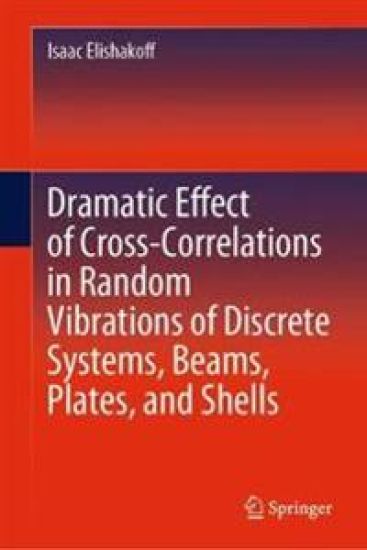
Dramatic Effect of Cross-Correlations in Random Vibrations of Discrete Systems, Beams, Plates, and Shells
This volume explains the dramatic effect of cross-correlations in forming the structural response of aircraft in turbulent excitation, ships in rough seas, cars on irregular roads, and other dynamic regimes. It brings into sharp focus the dramatic effect of cross correlations often neglected due to the analytical difficulty of their evaluation. Veteran author Professor Isaac Elishakoff illustrates how neglect of cross correlations could result in underestimation of the response by tens or hundreds of percentages the effect of the random vibrations of structures’ main elements, including beams, plates, and shells.
Eigenvalues of Inhomogeneous Structures
The engineering community generally accepts that there exists only a small set of closed-form solutions for simple cases of bars, beams, columns, and plates. Despite the advances in powerful computing and advanced numerical techniques, closed-form solutions remain important for engineering; these include uses for preliminary design, for evaluation of the accuracy of approximate and numerical solutions, and for evaluating the role played by various geometric and loading parameters. Eigenvalues of Inhomogeneous Structures: Unusual Closed-Form Solutions offers the first new treatment of closed-form solutions since the works of Leonhard Euler over two centuries ago. It presents simple solutions for vibrating bars, beams, and plates, as well as solutions that can be used to verify finite element solutions. The closed solutions in this book not only have applications that allow for the design of tailored structures, but also transcend mechanical engineering to generalize into other fields of engineering. Also included are polynomial solutions, non-polynomial solutions, and discussions on axial variability of stiffness that offer the possibility of incorporating axial grading into functionally graded materials. This single-package treatment of inhomogeneous structures presents the tools for optimization in many applications. Mechanical, aerospace, civil, and marine engineers will find this to be the most comprehensive book on the subject. In addition, senior undergraduate and graduate students and professors will find this to be a good supplement to other structural design texts, as it can be easily incorporated into the classroom.
Dramatic Effect of Cross-Correlations in Random Vibrations of Discrete Systems, Beams, Plates, and Shells
This volume explains the dramatic effect of cross-correlations in forming the structural response of aircraft in turbulent excitation, ships in rough seas, cars on irregular roads, and other dynamic regimes. It brings into sharp focus the dramatic effect of cross correlations often neglected due to the analytical difficulty of their evaluation. Veteran author Professor Isaac Elishakoff illustrates how neglect of cross correlations could result in underestimation of the response by tens or hundreds of percentages the effect of the random vibrations of structures’ main elements, including beams, plates, and shells.
Carbon Nanotubes and Nanosensors

Carbon Nanotubes and Nanosensors

Isaac Elishakoff; Kevin Dujat; Giuseppe Muscolino; Simon Bucas; Toshiaki Natsuki; Chien Ming Wang; Demetris Pentaras; Claudia Versaci; Joel Storch; Noël Challamel; Yingyan Zhang; Guillaume Ghyselinck

ISTE Ltd and John Wiley Sons Inc
2012
sidottu
The main properties that make carbon nanotubes (CNTs) a promising technology for many future applications are: extremely high strength, low mass density, linear elastic behavior, almost perfect geometrical structure, and nanometer scale structure. Also, CNTs can conduct electricity better than copper and transmit heat better than diamonds. Therefore, they are bound to find a wide, and possibly revolutionary use in all fields of engineering. The interest in CNTs and their potential use in a wide range of commercial applications; such as nanoelectronics, quantum wire interconnects, field emission devices, composites, chemical sensors, biosensors, detectors, etc.; have rapidly increased in the last two decades. However, the performance of any CNT-based nanostructure is dependent on the mechanical properties of constituent CNTs. Therefore, it is crucial to know the mechanical behavior of individual CNTs such as their vibration frequencies, buckling loads, and deformations under different loadings. This title is dedicated to the vibration, buckling and impact behavior of CNTs, along with theory for carbon nanosensors, like the Bubnov-Galerkin and the Petrov-Galerkin methods, the Bresse-Timoshenko and the Donnell shell theory.
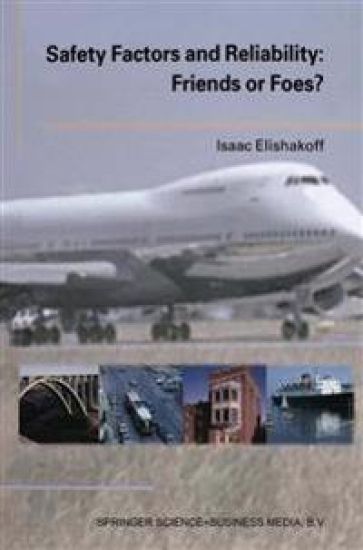
Safety Factors and Reliability: Friends or Foes?
Have you ever wondered where the safety factors come from? Why is it that deterministic analysis has reached a very sophisticated level, but in the end empirical factors are still needed? Is there a way to select them, rather than assigning them arbitrarily as is often done? This book clearly shows that safety factors are closely related with the reliability of structures, giving yet another demonstration of Albert Einstein's maxim that "It is incomprehensible that Nature is comprehensible". The book shows that the safety factors are much more comprehensible if they are seen in a probabilistic context. Several definitions of the safety factors are given, analytical results on insightful numbers are presented, nonprobabilistic safety factors are shown, as well as their estimates derived by the inequalities of Bienayme, Markov, Chebushev and Camp-Meidell. A special chapter is devoted to important contributions by Japanese experts. This volume will help to critically re-think the issue of safety factors, which can create a false feeling of security. The deterministic paradigm can be enhanced by incorporating probabilistic concepts wisely where they are needed without treating all variables as probabilistic ones. The book shows that there is a need of their integration rather than separation. This book is intended for engineers, graduate students, lecturers and researchers.
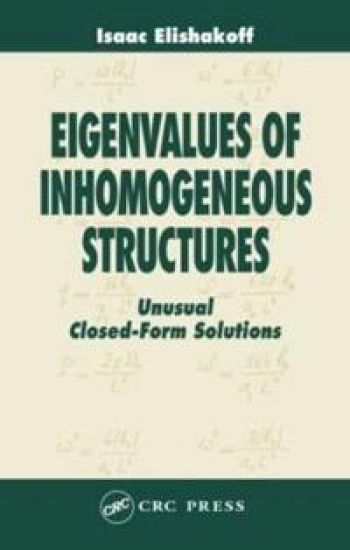
Eigenvalues of Inhomogeneous Structures

Eigenvalues of Inhomogeneous Structures

Isaac Elishakoff

CRC Press Inc
2004
sidottu
The engineering community generally accepts that there exists only a small set of closed-form solutions for simple cases of bars, beams, columns, and plates. Despite the advances in powerful computing and advanced numerical techniques, closed-form solutions remain important for engineering; these include uses for preliminary design, for evaluation of the accuracy of approximate and numerical solutions, and for evaluating the role played by various geometric and loading parameters. Eigenvalues of Inhomogeneous Structures: Unusual Closed-Form Solutions offers the first new treatment of closed-form solutions since the works of Leonhard Euler over two centuries ago. It presents simple solutions for vibrating bars, beams, and plates, as well as solutions that can be used to verify finite element solutions. The closed solutions in this book not only have applications that allow for the design of tailored structures, but also transcend mechanical engineering to generalize into other fields of engineering. Also included are polynomial solutions, non-polynomial solutions, and discussions on axial variability of stiffness that offer the possibility of incorporating axial grading into functionally graded materials. This single-package treatment of inhomogeneous structures presents the tools for optimization in many applications. Mechanical, aerospace, civil, and marine engineers will find this to be the most comprehensive book on the subject. In addition, senior undergraduate and graduate students and professors will find this to be a good supplement to other structural design texts, as it can be easily incorporated into the classroom.
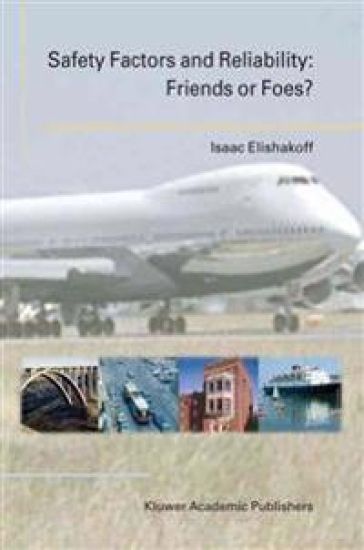
Safety Factors and Reliability: Friends or Foes?

Safety Factors and Reliability: Friends or Foes?

Isaac Elishakoff

Springer-Verlag New York Inc.
2004
sidottu
Have you ever wondered where the safety factors come from? Why is it that deterministic analysis has reached a very sophisticated level, but in the end empirical factors are still needed? Is there a way to select them, rather than assigning them arbitrarily as is often done? This book clearly shows that safety factors are closely related with the reliability of structures, giving yet another demonstration of Albert Einstein's maxim that "It is incomprehensible that Nature is comprehensible". The book shows that the safety factors are much more comprehensible if they are seen in a probabilistic context. Several definitions of the safety factors are given, analytical results on insightful numbers are presented, nonprobabilistic safety factors are shown, as well as their estimates derived by the inequalities of Bienayme, Markov, Chebushev and Camp-Meidell. A special chapter is devoted to important contributions by Japanese experts. This volume will help to critically re-think the issue of safety factors, which can create a false feeling of security. The deterministic paradigm can be enhanced by incorporating probabilistic concepts wisely where they are needed without treating all variables as probabilistic ones. The book shows that there is a need of their integration rather than separation. This book is intended for engineers, graduate students, lecturers and researchers.
Finite Element Methods for Structures with Large Stochastic Variations

Finite Element Methods for Structures with Large Stochastic Variations

Isaac Elishakoff; Yongjian Ren

Oxford University Press
2003
sidottu
The finite element method (FEM) can be successfully applied to various field problems in solid mechanics, fluid mechanics and electrical engineering. FEM is a numerical method widely used in computer aided engineering, which allows for modelling and analysis of engineering and mathematical problems, e.g. safety testing. This reference text is the first to discuss finite element methods for structures with large stochastic variations. Stochastic variations are those that follow a random probability distribution or pattern and whose behaviour may be analysed statistically but not predicted precisely. Graduate students, lecturers, and researchers in mathematics, engineering, and scientific computation will find this a very useful reference. This book is the latest in the Oxford Texts in Applied and Engineering Mathematics series, which includes texts based on taught courses that explain the mathematical or computational techniques required for the resolution of fundamental applied problems, from the undergraduate through to the graduate level. Other books in the series include: Jordan & Smith: Nonlinear Ordinary Differential Equations: an introduction to dynamical systems; Sobey: Introduction to Interactive Boundary Layer Theory; Scott: Nonlinear Science: emergence and dynamics of coherent structures; Tayler: Mathematical Models in Applied Mechanics; Ram-Mohan: Finite Element and Boundary Element Applications in Quantum Mechanics.