Kirjojen hintavertailu – 12 859 819 kirjaa ja 27 kauppaa

Kirjailija

Ishay Rosen-Zvi

Kirjat ja teokset yhdessä paikassa: 7 kirjaa, julkaisuja vuosilta 2011–2026, suosituimpiin kuuluu The Mishnaic Sotah Ritual. Vertaile teosten hintoja ja tarkista saatavuus suomalaisista kirjakaupoista.

7 kirjaa

Kirjojen julkaisuvuodet: 2011–2026.

How to Read the Mishnah and Midrash

How to Read the Mishnah and Midrash

Ishay Rosen-Zvi

University of California Press
2026
pokkari

Halvin toimitettuna 49,20 €

The early rabbinic period produced two major literary formations—the Mishnah and Midrash—which have since remained central pillars of Jewish textual tradition. How to Read the Mishnah and Midrash is the first comprehensive introduction to these two foundational works of Jewish thought in English. In many ways, all subsequent rabbinic literature emerged from the framework established by these two genres. The Mishnah presented a comprehensive legal system independent of the Bible, encompassing a remarkably broad spectrum of legal topics—from ritual law to civil disputes, capital legislation, marital status, and beyond—woven into a coherent and autonomous legal corpus. The Midrash is the first comprehensive running commentary of the Pentateuch, marked by its interpretive freedom and creative playfulness. This hands-on companion provides an intimate understanding of how the two texts function and essential tools for engaging with them in depth. With translations, close readings, and analyses of hundreds of primary source materials, this book offers readers a deeper appreciation of the structure, methodology, and enduring impact of the Mishnah and Midrash.
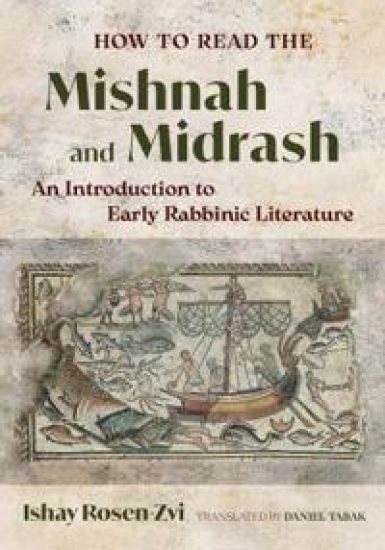
How to Read the Mishnah and Midrash

How to Read the Mishnah and Midrash

Ishay Rosen-Zvi

University of California Press
2026
sidottu
The early rabbinic period produced two major literary formations—the Mishnah and Midrash—which have since remained central pillars of Jewish textual tradition. How to Read the Mishnah and Midrash is the first comprehensive introduction to these two foundational works of Jewish thought in English. In many ways, all subsequent rabbinic literature emerged from the framework established by these two genres. The Mishnah presented a comprehensive legal system independent of the Bible, encompassing a remarkably broad spectrum of legal topics—from ritual law to civil disputes, capital legislation, marital status, and beyond—woven into a coherent and autonomous legal corpus. The Midrash is the first comprehensive running commentary of the Pentateuch, marked by its interpretive freedom and creative playfulness. This hands-on companion provides an intimate understanding of how the two texts function and essential tools for engaging with them in depth. With translations, close readings, and analyses of hundreds of primary source materials, this book offers readers a deeper appreciation of the structure, methodology, and enduring impact of the Mishnah and Midrash.
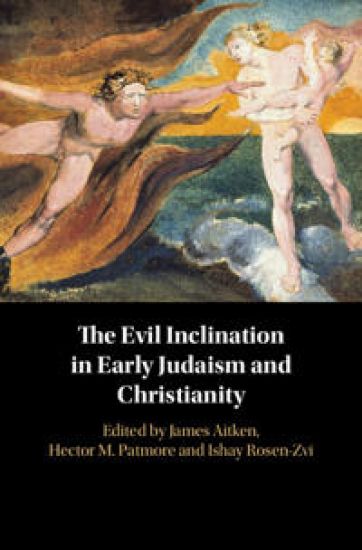
The Evil Inclination in Early Judaism and Christianity

The Evil Inclination in Early Judaism and Christianity

Ishay Rosen-Zvi

Cambridge University Press
2021
sidottu
One of the central concepts in rabbinic Judaism is the notion of the Evil Inclination, which appears to be related to similar concepts in ancient Christianity and the wider late antique world. The precise origins and understanding of the idea, however, are unknown. This volume traces the development of this concept historically in Judaism and assesses its impact on emerging Christian thought concerning the origins of sin. The chapters, which cover a wide range of sources including the Bible, the Ancient Versions, Qumran, Pseudepigrapha and Apocrypha, the Targums, and rabbinic and patristic literature, advance our understanding of the intellectual exchange between Jews and Christians in classical Antiquity, as well as the intercultural exchange between these communities and the societies in which they were situated.
Goy

Goy

Adi Ophir; Ishay Rosen-Zvi

Oxford University Press
2020
nidottu
Goy: Israel's Others and the Birth of the Gentile traces the development of the term and category of the goy from the Bible to rabbinic literature. Adi Ophir and Ishay Rosen-Zvi show that the category of the goy was born much later than scholars assume; in fact not before the first century CE. They explain that the abstract concept of the gentile first appeared in Paul's Letters. However, it was only in rabbinic literature that this category became the center of a stable and long standing structure that involved God, the Halakha, history, and salvation. The authors narrate this development through chronological analyses of the various biblical and post biblical texts (including the Dead Sea scrolls, the New Testament and early patristics, the Mishnah, and rabbinic Midrash) and synchronic analyses of several discursive structures. Looking at some of the goy's instantiations in contemporary Jewish culture in Israel and the United States, the study concludes with an examination of the extraordinary resilience of the Jew/goy division and asks how would Judaism look like without the gentile as its binary contrast.
Goy

Goy

Adi Ophir; Ishay Rosen-Zvi

Oxford University Press
2018
sidottu
Goy: Israel's Others and the Birth of the Gentile traces the development of the term and category of the goy from the Bible to rabbinic literature. Adi Ophir and Ishay Rosen-Zvi show that the category of the goy was born much later than scholars assume; in fact not before the first century CE. They explain that the abstract concept of the gentile first appeared in Paul's Letters. However, it was only in rabbinic literature that this category became the center of a stable and long standing structure that involved God, the Halakha, history, and salvation. The authors narrate this development through chronological analyses of the various biblical and post biblical texts (including the Dead Sea scrolls, the New Testament and early patristics, the Mishnah, and rabbinic Midrash) and synchronic analyses of several discursive structures. Looking at some of the goy's instantiations in contemporary Jewish culture in Israel and the United States, the study concludes with an examination of the extraordinary resilience of the Jew/goy division and asks how would Judaism look like without the gentile as its binary contrast.
The Mishnaic Sotah Ritual

The Mishnaic Sotah Ritual

Ishay Rosen-Zvi

BRILL
2012
erikoissidos
This study analyzes the specific textual formation of Mishna Sotah. Diverging significantly from its origins in the book of Numbers, the Mishnaic ritual was traditionally read by scholars as an "ancient Mishna", narrating an actual ritual practiced in the second temple. In contrast to this generally accepted view, this book claims that while Sotah does contain some traditions, its overall composition has a clear ideological and academic form. Furthermore, comparisons with parallel Tannaitic sources reveal the ideological redaction, which carefully selected only those opinions which support its rewriting of the ritual as a public punitive ritual, while rejecting all reservations and opposition to its specific punitive character – even ignoring the possibility of innocence of the suspected adulteress. The author’s groundbreaking conclusion is that, regardless of the form the real ritual did or did not take at the temple, the specific Mishnaic ritual was (re)invented by the rabbis in the second century C. E. From its very inception, it was purely textual, reflecting rabbinic imagination rather than memory.
Demonic Desires

Demonic Desires

Ishay Rosen-Zvi

University of Pennsylvania Press
2011
sidottu
In Demonic Desires, Ishay Rosen-Zvi examines the concept of yetzer hara, or evil inclination, and its evolution in biblical and rabbinic literature. Contrary to existing scholarship, which reads the term under the rubric of destructive sexual desire, Rosen-Zvi contends that in late antiquity the yetzer represents a general tendency toward evil. Rather than the lower bodily part of a human, the rabbinic yetzer is a wicked, sophisticated inciter, attempting to snare humans to sin. The rabbinic yetzer should therefore not be read in the tradition of the Hellenistic quest for control over the lower parts of the psyche, writes Rosen-Zvi, but rather in the tradition of ancient Jewish and Christian demonology. Rosen-Zvi conducts a systematic and comprehensive analysis of the some one hundred and fifty appearances of the evil yetzer in classical rabbinic literature to explore the biblical and postbiblical search for the sources of human sinfulness. By examining the yetzer within a specific demonological tradition, Demonic Desires places the yetzer discourse in the larger context of a move toward psychologization in late antiquity, in which evil-and even demons-became internalized within the human psyche. The book discusses various manifestations of this move in patristic and monastic material, from Clement and Origin to Antony, Athanasius, and Evagrius. It concludes with a consideration of the broader implications of the yetzer discourse in rabbinic anthropology.