Kirjojen hintavertailu – 12 859 824 kirjaa ja 27 kauppaa

Kirjailija

Ismail Albayrak

Kirjat ja teokset yhdessä paikassa: 6 kirjaa, julkaisuja vuosilta 2015–2025, suosituimpiin kuuluu Approaches to Ibadi Exegetical Tradition. Vertaile teosten hintoja ja tarkista saatavuus suomalaisista kirjakaupoista.

6 kirjaa

Kirjojen julkaisuvuodet: 2015–2025.

A Contemporary Turkish Prison Diary

A Contemporary Turkish Prison Diary

Ismail Albayrak

SPRINGER VERLAG, SINGAPORE
2025
nidottu
This book explores the religious experiences of two notable figures who endured severe trials under authoritarian regimes: Bediuzzaman Said Nursi (1877–1960) within the Islamic tradition, and Aleksander Solzhenitsyn (1918–2008) within the Russian Orthodox Christian tradition. Against the tumultuous backdrop of the twentieth century’s spiritual, social, political, and intellectual upheavals, both Nursi and Solzhenitsyn grappled with immense hardships because of their beliefs. Despite immense tribulations, both individuals demonstrated unwavering faith and resilience in the face of adversity, continuing their scholarly and literary activities. The current study centers on the dichotomy of spiritual confinement and expansiveness, illustrating how people can experience spiritual distress even without physical restraints. It explores the historical and conceptual aspects of imprisonment within Christian and Muslim perspectives, explores the reasons for Nursi and Solzhenitsyn's incarceration, examines their coping mechanisms in the face of hardship, and underscores the role of faith and spirituality. The author integrates personal experiences, particularly his own incarceration during the aftermath of the 2016 Turkish staged coup attempt, within the context of the narratives of Nursi and Solzhenitsyn. The book addresses court proceedings, release, departure from Turkey, and resettlement in Australia. Throughout, the author draws parallels between their own observations and those of Nursi and Solzhenitsyn, contributing to the broader discourse on individual spirituality and collective consciousness. The book offers insights into spiritual resilience in the face of adversity, utilizing the lives of these figures to illuminate shared human experiences. A unique collation of personal narration and scholarly reflection, it is relevant to academics and students in history, political science, sociology, Islamic and Middle Eastern studies, and to social scientists researchingthe phenomenon of exile and prison in different countries across the world. It also speaks to the work of activists and policymakers in human rights.
A Contemporary Turkish Prison Diary

A Contemporary Turkish Prison Diary

Ismail Albayrak

SPRINGER VERLAG, SINGAPORE
2024
sidottu
This book explores the religious experiences of two notable figures who endured severe trials under authoritarian regimes: Bediuzzaman Said Nursi (1877–1960) within the Islamic tradition, and Aleksander Solzhenitsyn (1918–2008) within the Russian Orthodox Christian tradition. Against the tumultuous backdrop of the twentieth century’s spiritual, social, political, and intellectual upheavals, both Nursi and Solzhenitsyn grappled with immense hardships because of their beliefs. Despite immense tribulations, both individuals demonstrated unwavering faith and resilience in the face of adversity, continuing their scholarly and literary activities. The current study centers on the dichotomy of spiritual confinement and expansiveness, illustrating how people can experience spiritual distress even without physical restraints. It explores the historical and conceptual aspects of imprisonment within Christian and Muslim perspectives, explores the reasons for Nursi and Solzhenitsyn's incarceration, examines their coping mechanisms in the face of hardship, and underscores the role of faith and spirituality. The author integrates personal experiences, particularly his own incarceration during the aftermath of the 2016 Turkish staged coup attempt, within the context of the narratives of Nursi and Solzhenitsyn. The book addresses court proceedings, release, departure from Turkey, and resettlement in Australia. Throughout, the author draws parallels between their own observations and those of Nursi and Solzhenitsyn, contributing to the broader discourse on individual spirituality and collective consciousness. The book offers insights into spiritual resilience in the face of adversity, utilizing the lives of these figures to illuminate shared human experiences. A unique collation of personal narration and scholarly reflection, it is relevant to academics and students in history, political science, sociology, Islamic and Middle Eastern studies, and to social scientists researchingthe phenomenon of exile and prison in different countries across the world. It also speaks to the work of activists and policymakers in human rights.

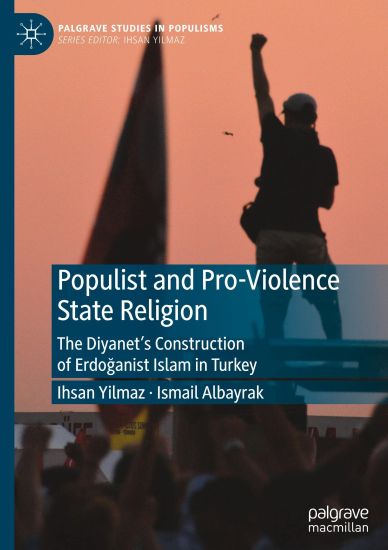
Populist and Pro-Violence State Religion

Populist and Pro-Violence State Religion

Ihsan Yilmaz; Ismail Albayrak

SPRINGER VERLAG, SINGAPORE
2023
nidottu
This book explores state–religion relations under a populist authoritarian ruling party in Turkey. In doing so, it investigates how the ruling Justice and Development Party (AKP) instrumentalizes state-controlled religion to further, defend, legitimatize and propagate its authoritarian populist political agenda in a constitutionally secular nation-state. To exemplify this, the authors examine the Friday sermons delivered weekly in every mosque in Turkey by the Turkish State’s Directorate of Religious Affairs (Diyanet). By analyzing all sermons delivered between 2010-2021, the book shows how the Diyanet has enthusiastically adopted AKP’s increasingly Islamist, authoritarian, civilisationist, militarist and pro-violence populism since 2010, and how it has tried to socially engineer beliefs in line with this ideology.
Populist and Pro-Violence State Religion

Populist and Pro-Violence State Religion

Ihsan Yilmaz; Ismail Albayrak

SPRINGER VERLAG, SINGAPORE
2022
sidottu
This book explores state–religion relations under a populist authoritarian ruling party in Turkey. In doing so, it investigates how the ruling Justice and Development Party (AKP) instrumentalizes state-controlled religion to further, defend, legitimatize and propagate its authoritarian populist political agenda in a constitutionally secular nation-state. To exemplify this, the authors examine the Friday sermons delivered weekly in every mosque in Turkey by the Turkish State’s Directorate of Religious Affairs (Diyanet). By analyzing all sermons delivered between 2010-2021, the book shows how the Diyanet has enthusiastically adopted AKP’s increasingly Islamist, authoritarian, civilisationist, militarist and pro-violence populism since 2010, and how it has tried to socially engineer beliefs in line with this ideology.
Approaches to Ibadi Exegetical Tradition

Approaches to Ibadi Exegetical Tradition

Ismail Albayrak

Harrassowitz
2020
nidottu
Ibadis are a minority Muslim group whose history goes back to the early period of Islam. Today they mainly live in Oman, Zanzibar, and some parts of North Africa (Algeria, Tunisia and Libya). A long-lasting cliche that associates Ibadis with early Kharijites (puritans and fanatics) creates a great impediment in understanding this group. Although in recent years literature about the origins, socio-economic, political, theological and intellectual history of the Iba?is has been growing rapidly, there are very few studies on their history of Qur'an exegesis. This study by Ismail Albayrak analyzes various approaches to Ibadi exegetical tradition to find an answer to the following questions: How different are Ibadi exegeses compared to mainstream Muslim exegetical tradition? Can one talk about particular Ibadi exegetical methodologies? Why Ibadis have produced so little in this genre? How diverse is the Ibadi exegetical tradition with special reference to the notion of 'return of Jesus'? Using the main and updated Ibadi sources, the book contributes not only to the exegetical and theological understanding of Ibadism but also to its history, politics, culture, geography, sociology, folklore and anthropology. Beyond that, the study shows that Ibadi groups were not immune to the pressures of modernity and reacted in a similar manner as other Muslim communities regarding many issues.