Kirjojen hintavertailu – 12 903 735 kirjaa ja 27 kauppaa

Kirjailija

Israr Ahmad

Kirjat ja teokset yhdessä paikassa: 15 kirjaa, julkaisuja vuosilta 2011–2023, suosituimpiin kuuluu The Obligation Muslims Owe to the Quran. Vertaile teosten hintoja ja tarkista saatavuus suomalaisista kirjakaupoista.

15 kirjaa

Kirjojen julkaisuvuodet: 2011–2023.

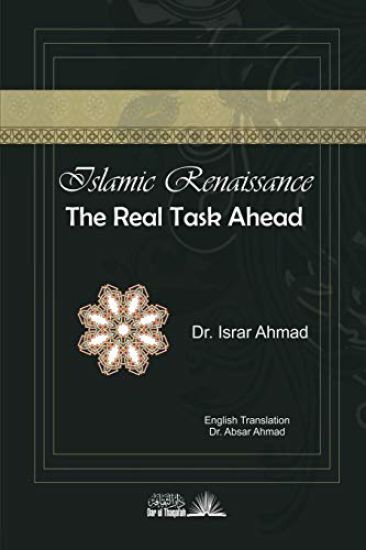
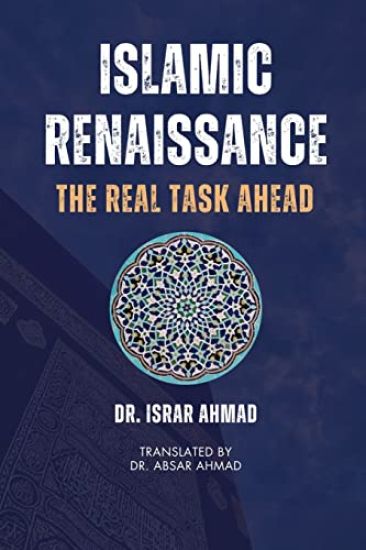
Islamic Renaissance - The Real Task Ahead
The contents of this monograph was first published in the editorial columns of the June, 1967 issue of Monthly "Meesaq". Later on, in May 1968, it was published in booklet form by Darul- Ishat-e-Islamia, Lahore. Since then it has been brought out many times. In this monograph, the author have tried to present, to the best of my ability and comprehension, an in-depth analysis of the current religious and cultural attitude of Muslims all over the world. The author has also discussed the nature of various movements working for the renaissance of Islam, their achievements and their shortcomings. On the basis of his analysis, he also suggests a basic programme. As an immediate concrete step towards the realization of an Islamic revival, the plan for the establishment of a Qur'an Academy has been presented in detail. ContentGlobal Domination of Western Thought The Fundamental Point of View. Political and Ideological Onslaught of the West on the Islamic World. The Early Defensive Attempts and Their Achievements The Development of the Social Sciences The Idea of an "Islamic Way of Life" and the Twentieth Century Islamic Movements The Error of their Interpretation of IslamRevitalization of Faith: The Necessary Precondition of an Islamic Renaissance The Real Task AheadA Blueprint for Action
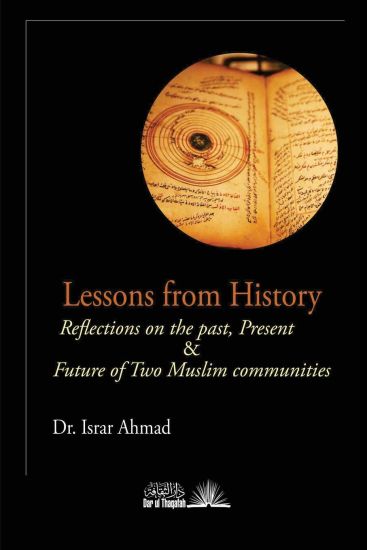
Lessons from History

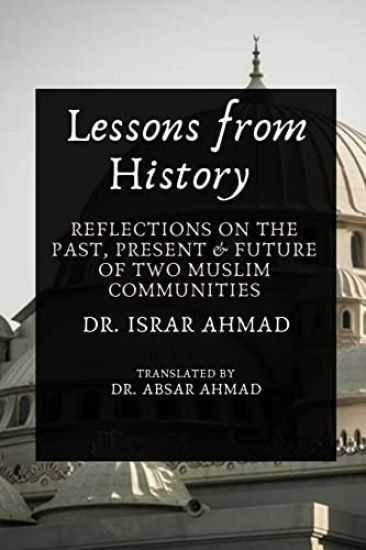
Lessons from History

Israr Ahmad

Dar Ul Thaqafah
2023
pokkari
The substance of this book is based on the ideas published by Dr. Israr Ahmad in 1993 in the columns of the Urdu daily Nawa-e-Waqt of Lahore. The series of write-ups continued for a few months and were widely read with interest. The entire material, after slight editing, was published in a book form in October 1993 under the title Sabiqa aur Maujuda Musalman Ummatun ka Mazi, Haal, aur Mustaqbil, and has since gone through many re-prints. Dr. Ahmed Afzaal rendered these ideas into English and part of it was serialized in 1995-96 in the monthly Hikmat-e-Qur'an published by the Markazi Anjuman Khuddam-ul-Qur'an Lahore. For putting it into a compact book, he further revised the entire material, added his own sub-titles, and made it more authentic by giving quotations from the Old and New Testaments. Indeed, he took great pains to make the citations of quite a few historical events and landmarks, particularly of early Jewish history, more authentic by giving dates and references from reliable sources. Moreover, he suggested a much more telling title for the book - Lessons from History - and the sub-title - Reflections on the Past, Present, and Future of Two Muslim Communities - puts in a capsule form the whole spectrum of ideas covered in the book. ContentForeword. Prologue Traveling Through Time The Humiliated Ummah. History is the Key. The Wrath of Almighty Allah (swt) Privileges & Obligations The Present and former Muslim Ummah. Common Denominators The difference between Us & Them.. A backward Glance Early Jewish History. Israels Golden Age First Period of Decline Reform & Revival the Maccabees The second Era of Decline Two of a kind. 61The Muslim Golden Age First Period of Decline Life After Death. Second Period of Decline Back to the present Moving Upwards First stage of Revival Second Dimension. Islamic Ressurgence Jewish Revival Third of the Trinity - The christians ABC of Christianity. Five points of Convergence Innovations by Paul The Myth of Crucifixion. Allies of one another Before the Doomsday. The Ascendancy of Islam. The Ascent of Humanity. The way to Gods kingdom. Armageddon Dajjalain system of Life The identity of Dajjal About Prophet Isa (as) From dishonor to Exhaltation. The state of our Affairs The impending Doom.. Repentance: The only way to Salvation.
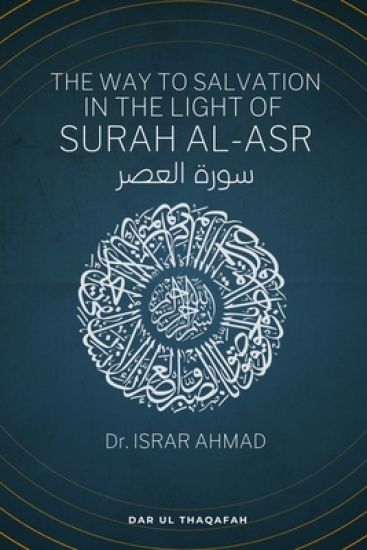
The way to Salvation in the light of Surah Al Asr
This booklet includes two papers on the same topic. The first one was published in the monthly 'MEESAQ' Lahore in 1966. The second is a speech which was delivered before a gathering of the staff and senior students of Aitchison College, Lahore (Pakistan). These articles are based on the sole aim, that is: to explain to Muslims the correct doctrine of eternal salvation and deliverance and the practical demands of the Islamic faith. About The AuthorDr. Israr Ahmed, the founder of "Markazi Anjuman Khuddam-ul-Quran Lahore" Pakistan, completed his M. B. B. S. from King Edward Medical College in 1954. From 1952-53 he was Nazim-l-Ala of Islamic Jamiat-l-Tulaba; and in 1954 he joined Jamat-i-Islami. He, however, dissociated from it in 1957. During a brief stay at Karachi, he completed his M. A. in Islamic studies in 1965 from Karachi University. In 1972 he founded Markazi Anjuman Khuddam-ul-Quran and in 1975 Tanzeemi-lslami for establishing the 'Deen' through a truely revolutionary process. The Anjuman brings out two monthly magazines "Meesaque" and "Hikmat-e-Quran". Table of ContentsThe Way To Salvation In The Light Of Surah Al-'AsrBig ImpactChangesDestruction. Truth. Two SidesTruth. Unity. ConditionsKindnessStruggleCommentary On Surah Al-'AsrThe Two Levels of Understanding Quran: The English Translation of Surah AI-'Asr: Analysis of the TranslationThe Criterion of Success and FailureThe Minimum Conditions and Essential prerequisites of SalvationAll the four Conditions are indispensableEloquence with categorical EmphasisThe Real Meaning of "Wal-'Asr"The Inter-relation of the First Two VersesThe Real Meaning of 'Iman' or FaithThe Real Meaning of Righteous DeedsThe Meaning of Mutual ExhortationThe Meaning of 'Haqq' or TruthThe Meaning of PatienceExhortation to Truth and Exhortation to Patience are co-essentialThe Interrelation of Faith, Righteous Deeds and Mutual ExhortationIts relation to the surahs before and after
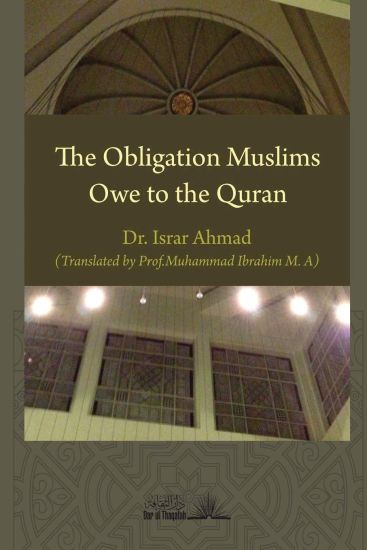
The Obligation Muslims Owe to the Quran

The Obligation Muslims Owe to the Quran

Israr Ahmad

Createspace Independent Publishing Platform
2018
nidottu
This booklet, which appeared in Urdu under the title Musalmanon per Qur'an-e-Majeed Kay Huqooq, is based on two addresses delivered by Dr. Israr Ahmad to the Congregations in Jami'ah Khazra, Samanabad (Lahore) on two consecutive Fridays in January 1968, at a time when the Muslims of Pakistan were celebrating the 1400th anniversary of the commencement of the Revelation of the Holy Qur'an to Prophet Muhammad (saw). During the following month, speeches on similar topics were delivered by Dr. Israr Ahmad at the Ajmal Bagh College, Sadiqabad, Ta'meer-e-Millat High School, Sukkur, and Government College, Jhang. The text of these addresses and speeches was edited and published in the monthly Meesaq in its May and June issues of the same year. In November 1969, it appeared in the form of a booklet under the title mentioned above, and in July 1972 its second edition of ten thousand copies was published by the Markazi Anjuman Khuddam-ul-Qur'an, Lahore. Musalmanon per Qur'an-e-Majeed Kay Huqooq is an impassioned call to the Muslims "to return to the Qur'an," to rededicate themselves to its study, and make it the sole guide for their livesABOUT THE AUTHORDr. Israr Ahmed, the founder of "Markazi Anjuman Khuddam-ul-Quran Lahore" Pakistan, completed his M. B. B. S. from King Edward Medical College in 1954. From 1952-53 he was Nazim-l-Ala of Islamic jamiat-l-Tulaba; and in 1954 he joined jamat-i-Islami. He, however, dissociated from it in 1957. During a brief stay at Karachi, he completed his M. A. in Islamic studies in 1965 from Karachi University. In 1972 he founded Markazi Anjuman Khuddam-ul-Quran and in 1975 Tanzeemi-lslami for establishing the 'Deen' through a truely revolutionary process. The Anjuman brings out two monthly magazines "Meesaque" and "Hikmat-iQuran".
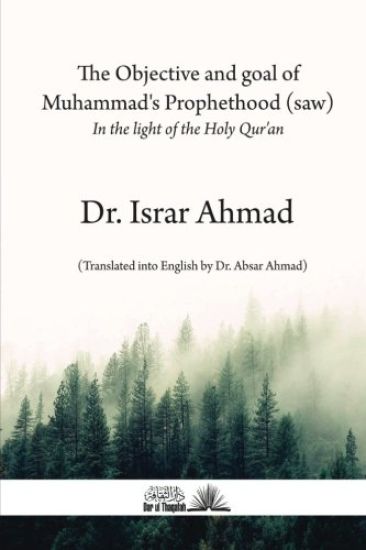
The Objective and Goal of Muhammad's Prophethood (Saw): In the Light of the Holy Quran
The present booklet consists of the English translation of a highly significant paper, entitled The Objective and Goal of Muhammad's Prophethood (saw), in the light of the Holy Qur'an . This was originally presented by Dr. Israr Ahmad, Ameer of Tanzeem-e-Islami and the Founder-President of the Markazi Anjuman Khuddam-ul-Qur'an Lahore, in the fifth session of the second annual "Qur'an Conference" held on March 26, 1975, at Jinnah Hall, Lahore. It was later published in two issues of the monthly Meesaq, and then, along with another related paper, as an Urdu booklet. The present English translation has already appeared in the quarterly journal The Qur'anic Horizons, and now it is being presented in the form of a booklet. The significance of this treatise lies in the fact that it delineates, in a clear, cogent, and lucid manner, the Divinely ordained target or aim of the strenuous struggle carried out by Prophet Muhammad (saw) and his devoted Companions. It is of utmost importance for all those groups and movements which are endeavoring for the revival and domination of Islam to realize the importance of this struggle in the overall system of Islamic thought, as well as the theoretical relationship of this struggle with the fundamental Islamic beliefs in the unity of God, the Prophethood, and the Hereafter. At the same time, this paper also demonstrates the relevance of the dynamic concept of Islam, as compared to the narrow and static outlook which has come to dominate the Islamic world during the last few centuries. Moreover, various theosophical issues relating to the dynamics of qulb, nafs, and ruh have also been dealt with in the light of the Qur'anic teachings. ABOUT THE AUTHORDr. Israr Ahmed, the founder of "Markazi Anjuman Khuddam-ul-Quran Lahore" Pakistan, completed his M. B. B. S. from King Edward Medical College in 1954. From 1952-53 he was Nazim-l-Ala of Islamic jamiat-l-Tulaba; and in 1954 he joined jamat-i-Islami. He, however, dissociated from it in 1957. During a brief stay at Karachi, he completed his M. A. in Islamic studies in 1965 from Karachi University. In 1972 he founded Markazi Anjuman Khuddam-ul-Quran and in 1975 Tanzeemi-lslami for establishing the 'Deen' through a truely revolutionary process. The Anjuman brings out two monthly magazines "Meesaque" and "Hikmat-iQuran".
Baiyah - The Basis for Organisation of a Revivalist Party in Islam

Baiyah - The Basis for Organisation of a Revivalist Party in Islam

Israr Ahmad

Createspace Independent Publishing Platform
2018
nidottu
The author has made it clear elsewhere that no revivalist party can claim for itself the status of Al-Jama'ah, a term applicable only to the collective organization of the entire Muslim Ummah under a single leader or ameer. Although ideal from the Islamic perspective, this unified state of the Muslim Ummah does not exist in the real world. The author believes that the internal discipline of a revivalist party that is working to re-establish Islam should be based on the Islamic ideal of "listening and obeying" to the ameer, a discipline that can only be achieved by following the Prophetic model of baiy'ah. He is firmly of the opinion that an amorphous (and anonymous ) body of Islamic workers, scattered all over the world and without a well-defined leadership, hardly merits the expression "the Islamic movement." It is at best a hypothetical entity. Going beyond "creating a New Civilization of Islam," The author aimed at a concentrated, centralized, and concerted effort to establish Islamic socio-politico order in toto, initially in Pakistan and then in other states. For this he is following the prophetic model of organization in the form of bai'yah and well-disciplined party structure.
The Way to Salvation in the Light of Surah Al ASR

The Way to Salvation in the Light of Surah Al ASR

Israr Ahmad

Createspace Independent Publishing Platform
2018
nidottu
This booklet includes two papers on the same topic. The first one was published in the monthly 'MEESAQ' Lahore in 1966. The second is a speech which was delivered before a gathering of the staff and senior students of Aitchison College, Lahore (Pakistan). These articles are based on the sole aim, that is: to explain to Muslims the correct doctrine of eternal salvation and deliverance, and the practical demands of the Islamic faith.
Islamic Renaissance - The Real Task Ahead

Islamic Renaissance - The Real Task Ahead

Israr Ahmad

Createspace Independent Publishing Platform
2018
nidottu
The contents of this monograph was first published in the editorial columns of the June, 1967 issue of Monthly "Meesaq". Later on, in May 1968, it was published in booklet form by Darul- Ishat-e-Islamia, Lahore. Since then it has been brought out many times. In this monograph, the author have tried to present, to the best of my ability and comprehension, an in-depth analysis of the current religious and cultural attitude of Muslims all over the world. The author has also discussed the nature of various movements working for the renaissance of Islam, their achievements and their shortcomings. On the basis of his analysis, he also suggests a basic programme. As an immediate concrete step towards the realization of an Islamic revival, the plan for the establishment of a Qur'an Academy has been presented in detail.
Lessons from History: Reflections on the Past, Present & Future of Two Muslim Communities
The substance of this book is based on the ideas published by Dr. Israr Ahmad in 1993 in the columns of the Urdu daily Nawa-e-Waqt of Lahore. The series of write-ups continued for a few months and were widely read with interest. The entire material, after slight editing, was published in a book form in October 1993 under the title Sabiqa aur Maujuda Musalman Ummatun ka Mazi, Haal, aur Mustaqbil, and has since gone through many re-prints. Dr. Ahmed Afzaal rendered these ideas into English and part of it was serialized in 1995-96 in the monthly Hikmat-e-Qur'an published by the Markazi Anjuman Khuddam-ul-Qur'an Lahore. For putting it into a compact book, he further revised the entire material, added his own sub-titles, and made it more authentic by giving quotations from the Old and New Testaments. Indeed, he took great pains to make the citations of quite a few historical events and landmarks, particularly of early Jewish history, more authentic by giving dates and references from reliable sources. Moreover, he suggested a much more telling title for the book - Lessons from History - and the sub-title - Reflections on the Past, Present, and Future of Two Muslim Communities - puts in a capsule form the whole spectrum of ideas covered in the book.
Rise and Decline of the Muslim Ummah: With a Comparision to Jewish History and a Brief Survey of the Present Efforts Towards the Resurgence of Islam
Histories of the Jews and the Muslims, being typically woven around divine revelation, provide a scholar ground for a thoughtful and perceptive comparative study of them. Though in the present day political climate, Jews and Muslims form two totally divergent people, yet striking similarities in their temporal histories are found and pointed out. In particular there is a strong parallelism regarding the two phases of rise and decline experienced by the two religious fraternities during the long course of their histories thus proving literally a tradition of the Holy Prophet Muhammad (peace be upon him) on this subject reproduced elsewhere in this monograph. The view of history in the Muslim mind is, and should be, a prophetic one. In the Qur'an over and over again the historic sequence is repeated - a warning, followed by either repentance or destruction, as God sends His messenger to one nation after another. The Qur'an provides a basis for the moral interpretation of history 'The course of history is a moral agency through which the morally superior elements rise to the top, while those who are morally inferior sink to the bottom'. That virtuous living, which is the outcome of a healthy religious faith, must inevitably lead to successABOUT THE AUTHORDr. Israr Ahmed, the founder of "Markazi Anjuman Khuddam-ul-Quran Lahore" Pakistan, completed his M. B. B. S. from King Edward Medical College in 1954. From 1952-53 he was Nazim-l-Ala of Islamic jamiat-l-Tulaba; and in 1954 he joined jamat-i-Islami. He, however, dissociated from it in 1957. During a brief stay at Karachi, he completed his M. A. in Islamic studies in 1965 from Karachi University. In 1972 he founded Markazi Anjuman Khuddam-ul-Quran and in 1975 Tanzeemi-lslami for establishing the 'Deen' through a truely revolutionary process. The Anjuman brings out two monthly magazines "Meesaque" and "Hikmat-iQuran".