Kirjojen hintavertailu – 12 903 725 kirjaa ja 27 kauppaa

Kirjailija

Italo Calvino

Kirjat ja teokset yhdessä paikassa: 101 kirjaa, julkaisuja vuosilta 1976–2026, suosituimpiin kuuluu Italo Calvino racconta l''Orlando furioso' di Ludovico Ariosto. Vertaile teosten hintoja ja tarkista saatavuus suomalaisista kirjakaupoista.

101 kirjaa

Kirjojen julkaisuvuodet: 1976–2026.

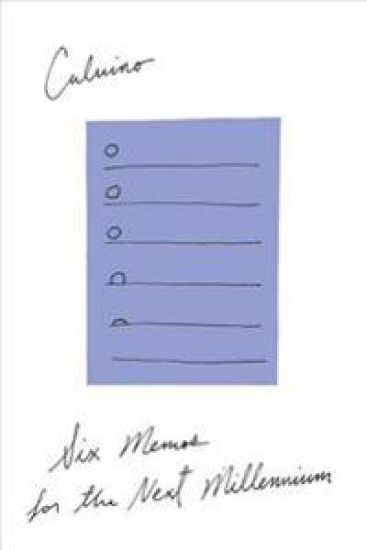
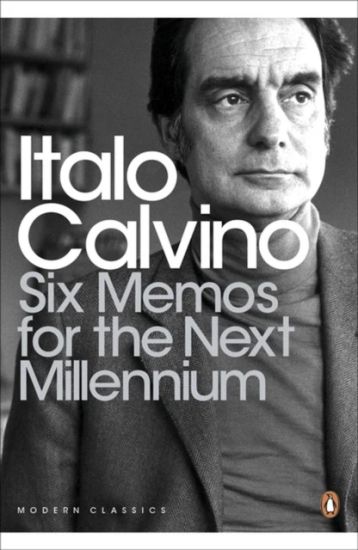
Six Memos for the Next Millennium

Six Memos for the Next Millennium

Italo Calvino

Penguin Classics
2016
pokkari

Halvin toimitettuna 16,20 €

'Words connect the visible track to the invisible thing ... like a fragile makeshift bridge cast across the void'With imagination and wit, Italo Calvino sought to define the virtues of the great literature of the past in order to shape the values of the future. His effervescent last works, left unfinished at his death, were the Charles Eliot Norton lectures, which he was due to deliver at Harvard in 1985-86. These surviving drafts explore the literary concepts closest to his heart: Lightness, Quickness, Multiplicity, Exactitude and Visibility (Constancy was to be the sixth), in serious yet playful essays that reveal his debt to the comic strip and the folktale. This collection, now in a fluent and supple new translation, is a brilliant précis of a great writer whose legacy will endure through the millennium he addressed. Translated by Geoffrey Brock 'The book I give most to people is Six Memos for the Next Millennium' Ali Smith'Wonderful . . . full of wit and erudition' Daily Telegraph

Six Memos for the Next Millennium

Six Memos for the Next Millennium

Italo Calvino

Mariner Books Classics
2016
nidottu
Italo Calvino's brilliant reflection on what makes great literature, from the classics to more contemporary works, punctuated with personal details about Calvino's own writing processes. At the time of his death, Italo Calvino was at work on six lectures setting forth the qualities in writing he most valued, and which he believed would define literature in the century to come. Here, in Six Memos for the Next Millennium, are the five lectures he completed, forming not only a stirring defense of literature, but also an indispensable guide to the writings of Calvino himself. Calvino devotes one "memo" each to the concepts of lightness, quickness, exactitude, visibility, and multiplicity, drawing examples from his vast knowledge of myth, folklore, and works both ancient and modern. Readers will be astonished by the prescience of these lectures, which have only gained in relevance as Calvino's "next millennium" has dawned.
The Complete Cosmicomics

The Complete Cosmicomics

Italo Calvino

Mariner Books Classics
2015
nidottu

Halvin toimitettuna 21,50 €

"The most joyful reading experience of your life." --Salman RushdieThe beloved and enchanting classic story collection: Italo Calvino's profound and phenomenally funny and account of the universe as a cosmic jokeNaturally, we were all there, old Qfwfq said, where else could we have been? Nobody knew then that there could be space. Or time either: what use did we have for time, packed in there like sardines? Travelers jump between the Earth and the moon. The last living dinosaur struggles to exist amid the rise of new mammals. A game of marbles is played using Hydrogen atoms. Italo Calvino's beloved cosmicomics cross planets and traverse galaxies, speed up time or slow it down to the particles of an instant. Through the eyes of an ageless guide named Qfwfq, Calvino uses a set of scientific theory and facts to tell the story of the origins of the universe. Poignant, fantastical, and wise, these thirty-four dazzling stories--collected here in one definitive anthology--relate complex scientific and mathematical concepts to our everyday world. They are an indelible and unfailingly delightful literary achievement." Nimble and often hilarious . . . Trying to describe such a diverse and entertaining mix, I have to admit, just as Calvino does so often, that my words fail here, too. There's no way I -- or anyone, really -- can muster enough of them to quite capture the magic of these stories . . . Read this book, please." -- NPR
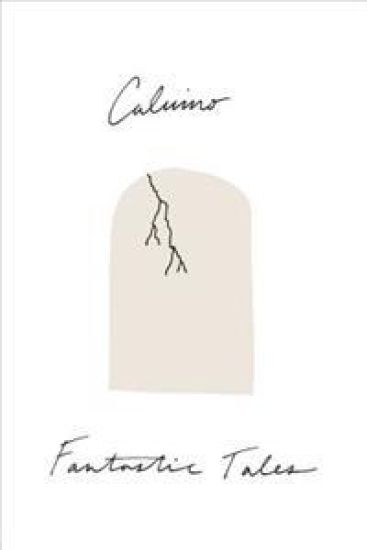
Fantastic Tales: Visionary and Everyday

Fantastic Tales: Visionary and Everyday

Italo Calvino

Mariner Books Classics
2015
nidottu
"The true theme of the nineteenth-century fantastic tale is the reality of what we see: to believe or not to believe in phantasmagoric apparitions, to glimpse another world, enchanted or infernal, behind everyday appearances." -- from Calvino's introduction to Fantastic Tales Vampires, ghosts, and other horrors abound in this collection of nineteenth-century fantastic literature, selected and edited by Italo Calvino, a twentieth-century master of the speculative. This posthumously published anthology of enchanting, uncanny, terrifying, and immortally entertaining short stories includes E. T. A. Hoffmann's "The Sandman," Nikolai Gogol's "The Nose," Edgar Allan Poe's "The Tell-Tale Heart," Robert Louis Stevenson's "The Bottle Imp," and many more, each with an introduction by Calvino. Fantastic Tales is a delight for the mind and a feast for the senses. "Impressive and utterly pleasing . . . Each story Calvino] picks is absorbing, unique, and continually surprising." -- Los Angeles Times
Why Read the Classics?

Why Read the Classics?

Italo Calvino

Mariner Books Classics
2014
nidottu
"All that can be done is for each one of us to invent our own ideal library of our classics." --from Why Read the Classics? Classics, according to Italo Calvino, are not only works of enduring cultural value, but also something much more personal: talismans, touchstones, books through which we understand our world and ourselves. In Why Read the Classics?, Calvino shares over thirty of his classics in essays of warmth, humor, and striking insight. He ranges from Homer to Jorge Luis Borges, from the Persian folklorist Nezami to Charles Dickens. Whether tracing the links between Ovid's Metamorphoses and Alain Robbe-Grillet's objectivity, discovering the origins of science fiction in the writings of Cyrano de Bergerac, or convincing us that the Italian novelist Carlo Emilio Gadda's works are like artichokes, Calvino offers a new perspective on beloved favorites and introduces us to hidden gems. "This book serves as a welcome reminder that the great works are great because they can mean so much to readers, and Calvino is a most knowledgeable guide to all the best destinations." --San Francisco Chronicle
Numbers in the Dark: And Other Stories

Numbers in the Dark: And Other Stories

Italo Calvino

Mariner Books Classics
2014
nidottu
"Everybody telephones everybody at every possible moment, and nobody can speak to anybody . . . Distance has been the warp that supports the weft of every love story." -- from Numbers in the Dark Written between 1943 and 1984, the stories in Numbers in the Dark span the career of one of fiction's modern masters: from Italo Calvino's earliest fables, to tales informed by life in World War II-era Italy, to the delightful experimentation that would define his later work. Here are speculative stories on life in the digital age, genre-bending wonders, and "impossible interviews" with the likes of Montezuma and a Neanderthal. Deftly translated by Tim Parks, Numbers in the Dark shows off Calvino's lifelong gift for subtle humor and shimmering philosophical insight. "Numbers in the Dark is a glorious grab-bag . . . with] enough gems from every phase in Calvino's career to make it feel indispensable." -- Seattle Times
Into the War

Into the War

Italo Calvino

Mariner Books Classics
2014
nidottu
Appearing here in its first English translation, Into the War contains three stories drawing on Italo Calvino's memories of the Second World War in Italy." This book deals both with a transition from adolescence into youth and with a move from peace to war: as for very many other people, for the protagonist of this book 'entry into life' and 'entry into war' coincide." -- from the Author's NoteThese three stories, set during the summer of 1940, draw on Italo Calvino's memories of his own adolescence during the Second World War, too young to be forced to fight in Mussolini's army but old enough to be conscripted into the Italian youth brigades. The callow narrator of these tales observes the mounting unease of a city girding itself for war, the looting of an occupied French town, and nighttime revels during a blackout. One of Calvino's only works of autobiographical fiction, Into the War offers both a glimpse of this writer's extraordinary life and a distilled dram of his wry, ingenious literary voice. All three stories attest to the potentially magical, transformative space of adolescence . . . The seeds of the later Calvino -- the fabulist who worked profound moral and ethical points into his narratives -- are all here." -- Joseph Luzzi, Times Literary Supplement
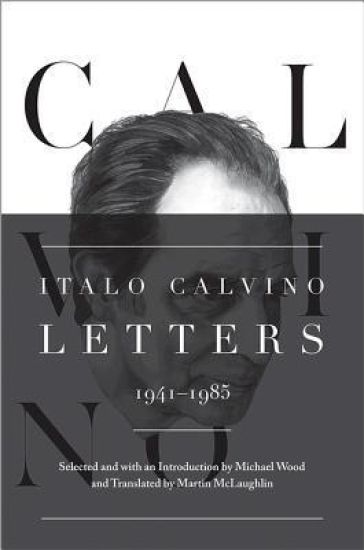
Letters 1941-1985

Letters 1941-1985

Italo Calvino

Penguin Classics
2014
pokkari
The extraordinary letters of Italo Calvino, one of the great writers of the twentieth century, translated into English for the first time by Martin McLaughlin, with an introduction by Michael Wood. Italo Calvino, novelist, literary critic and editor, was also a masterful letter writer whose correspondents included Umberto Eco, Primo Levi, Gore Vidal and Pier Paolo Pasolini. This collection of his extraordinary letters, the first in English, gives an illuminating insight into his work and life. They include correspondence with fellow authors, generous encouragement to young writers, responses to critics, thoughts on literary criticism and literature in general, as well as giving glimpses of Calvino's role in the antifascist Resistance, his disenchantment with Communism and his travels to America and Cuba. Together they reveal the searching intellect, clarity and passionate commitment of a great writer at work.'This literally marvelous collection of letters shows him to have been gregarious, puckish, funny, combative, and, above all, wonderful company, and opens a new and fascinating perspective on one of the master writers of the twentieth century. Michael Wood and Martin McLaughlin have done Calvino, and us, a great and loving service.' John Banville'A charming addition to the Planet Calvino - a place cluttered with sphinxes, chimeras, knights, spaceships and viscounts both cloven and whole' GuardianItalo Calvino, one of Italy's finest postwar writers, was born in Cuba in 1923 and grew up in San Remo, Italy. Best known for his experimental masterpieces, Invisible Cities and If on a Winter's Night a Traveller, he was also a brilliant exponent of allegorical fantasy in works such as The Complete Cosmicomics. He died in Siena in 1985.
Italo Calvino

Italo Calvino

Italo Calvino; Michael (INT) Wood; Martin (TRN) McLaughlin

Princeton University Press
2014
pokkari
This is the first collection in English of the extraordinary letters of one of the great writers of the twentieth century. Italy's most important postwar novelist, Italo Calvino (1923-1985) achieved worldwide fame with such books as Cosmicomics, Invisible Cities, and If on a Winter's Night a Traveler. But he was also an influential literary critic, an important literary editor, and a masterful letter writer whose correspondents included Umberto Eco, Primo Levi, Gore Vidal, Leonardo Sciascia, Natalia Ginzburg, Michelangelo Antonioni, Pier Paolo Pasolini, and Luciano Berio. This book includes a generous selection of about 650 letters, written between World War II and the end of Calvino's life. Selected and introduced by Michael Wood, the letters are expertly rendered into English and annotated by well-known Calvino translator Martin McLaughlin. The letters are filled with insights about Calvino's writing and that of others; about Italian, American, English, and French literature; about literary criticism and literature in general; and about culture and politics. The book also provides a kind of autobiography, documenting Calvino's Communism and his resignation from the party in 1957, his eye-opening trip to the United States in 1959-60, his move to Paris (where he lived from 1967 to 1980), and his trip to his birthplace in Cuba (where he met Che Guevara). Some lengthy letters amount almost to critical essays, while one is an appropriately brief defense of brevity, and there is an even shorter, reassuring note to his parents written on a scrap of paper while he and his brother were in hiding during the antifascist Resistance. This is a book that will fascinate and delight Calvino fans and anyone else interested in a remarkable portrait of a great writer at work.
Collection of Sand

Collection of Sand

Italo Calvino

Penguin Classics
2013
pokkari

Halvin toimitettuna 17,00 €

Italo Calvino in Collection of Sand claimed that 'the brain begins in the eye'. The essays collected here display his fascination with the visual universe, in which the things we see tell a truth about the world. With encyclopedic knowledge and engaging curiosity, Calvino writes about such diverse subjects as the imaginative pleasures of maps, bizarre exhibitions and the earliest forms of written language. Books and paintings provoke discussions of artistic motivation, while descriptions of a meticulous Japanese garden, Trajan's column crumbling to dust or a Mexican temple smothered by the jungle lead to contemplations on space, time and civilization. Surprising and profound, Collection of Sand provides a glimpse into the mind of a master of the magination. Italo Calvino, one of Italy's finest postwar writers, has delighted readers around the world with his deceptively simple, fable-like stories. Calvino was born in Cuba in 1923 and raised in San Remo, Italy; he fought for the Italian Resistance from 1943-45. He died in Siena in 1985, of a brain hemorrhage. Martin L. McLaughlin is Professor of Italian and Fiat-Serena Professor of Italian Studies at the University of Oxford where he is a Fellow of Magdalen College. He is the English translator of Umberto Eco and Italo Calvino among many others.
Italo Calvino

Italo Calvino

Italo Calvino

PRINCETON UNIVERSITY PRESS
2013
sidottu
This is the first collection in English of the extraordinary letters of one of the great writers of the twentieth century. Italy's most important postwar novelist, Italo Calvino (1923-1985) achieved worldwide fame with such books as Cosmicomics, Invisible Cities, and If on a Winter's Night a Traveler. But he was also an influential literary critic, an important literary editor, and a masterful letter writer whose correspondents included Umberto Eco, Primo Levi, Gore Vidal, Leonardo Sciascia, Natalia Ginzburg, Michelangelo Antonioni, Pier Paolo Pasolini, and Luciano Berio. This book includes a generous selection of about 650 letters, written between World War II and the end of Calvino's life. Selected and introduced by Michael Wood, the letters are expertly rendered into English and annotated by well-known Calvino translator Martin McLaughlin. The letters are filled with insights about Calvino's writing and that of others; about Italian, American, English, and French literature; about literary criticism and literature in general; and about culture and politics. The book also provides a kind of autobiography, documenting Calvino's Communism and his resignation from the party in 1957, his eye-opening trip to the United States in 1959-60, his move to Paris (where he lived from 1967 to 1980), and his trip to his birthplace in Cuba (where he met Che Guevara). Some lengthy letters amount almost to critical essays, while one is an appropriately brief defense of brevity, and there is an even shorter, reassuring note to his parents written on a scrap of paper while he and his brother were in hiding during the antifascist Resistance. This is a book that will fascinate and delight Calvino fans and anyone else interested in a remarkable portrait of a great writer at work.