

Kirjailija
Ivan Foletti
Kirjat ja teokset yhdessä paikassa: 15 kirjaa, julkaisuja vuosilta 2011–2024, suosituimpiin kuuluu Objects, Relics, and Migrants: The Basilica of Sant Ambrogio in Milan and the Cult of Its Saints (386-972). Vertaile teosten hintoja ja tarkista saatavuus suomalaisista kirjakaupoista.
15 kirjaa
Kirjojen julkaisuvuodet: 2011–2024.
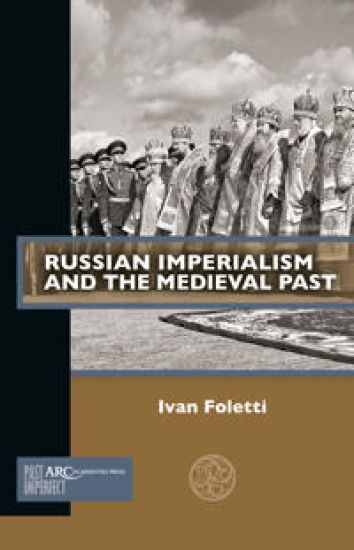
Vladimir Putin justifies his imperialist policy by use of the past. For him, Russia has always been an Empire and must remain so. The story of Russian imperialism has deep historical roots, and this book shows how Byzantium, the most powerful medieval and Christian empire, is repeatedly presented in Russian history as the source of the empire's imperial legitimacy. The author reflects on the role of art and the humanities (especially history and art history) within the power ambitions of regimes and political parties over the last two centuries as tools for the repeated reinvention of an empire's identity; an identity built on a multitude of invented pasts. Within this self-referential narrative, Byzantium becomes the ultimate authority justifying the aggression of the Russian state, and Orthodox belief becomes the bridge linking the medieval past with the present. One of the paradoxes of this narrative is the use of the same past by regimes as different as those of the last Romanovs, Stalin, and Putin, leading to a fundamental question: does this propaganda image really underlie the core identity of Russia?

Kultur Erben: Objekte - Wege - Akteure
Ivan Foletti; Lina Franken; Carlotta Fuhs
Dietrich Reimer
2022
nidottu
English summary: Who inherits cultural heritage in a globalized world? How can "shared heritage" concepts be integrated into cultural education? The authors negotiate ways of exploring and communicating cultural heritage in today's transcultural societies. Researching and mediating cultural heritage poses enormous challenges for contemporary transcultural societies: Who inherits cultural heritage-in a migration society, in a globalized world? What does participation mean? How can concepts of a heritage that is shared and has to be shared worldwide ("shared heritage") be integrated into cultural education? The volume brings together contributions from art history, art education, history, cultural anthropology, musicology and museum studies. Their common theme is the cultural interweaving of objects, paths and actors in a mobile world. German description: Kulturelles Erbe zu erforschen und zu vermitteln stellt die transkulturellen Gegenwartsgesellschaften vor enorme Herausforderungen: Wer erbt das kulturelle Erbe - in einer Migrationsgesellschaft, in einer globalisierten Welt? Was bedeutet Partizipation? Wie lassen sich Konzepte eines weltweit geteilten und zu teilenden Erbes (shared heritage) in die kulturelle Bildung integrieren? In dem Band sind Beitrage aus der bzw. den Kunstgeschichte(n), der Kunstvermittlung, Geschichtswissenschaft, Kulturanthropologie, Musikwissenschaft und den Museum Studies versammelt. Gemeinsamer Gegenstand sind die kulturellen Verflechtungen von Objekten, Wegen und Akteur_innen in einer mobilen Welt.

Le Livre Enlumine Medieval Instrument Politique
Jaume Aurell; Ivan Foletti; Eliza Garrison
Viella
2021
nidottu
Cet ouvrage reunit quatorze essais sur l'utilisation des livres enlumines medievaux dans le cadre d'actions, de comportements et de relations politiques au sein des societes europeennes, entendant ici par "politique" l'exercice du pouvoir a travers ses multiples manifestations. En analysant les liens entre le livre enlumine et le fait politique, les auteurs ont etudie les raisons des commanditaires et des concepteurs des manuscrits dans leurs contextes historiques et sociaux de realisation, la vie des livres comme objets dotes d'une valeur a la fois economique et symbolique, leur utilisation comme moyen de communication ainsi que leur posterite.

Central Europe as a Meeting Point of Visual Cultures: Circulation of Persons, Artifacts, and Ideas
Ivan Foletti; Alena Pomajzlova; Marcela Rusinko
Viella Editrice
2021
nidottu

Step by Step Towards the Sacred: Ritual, Movement, and Visual Culture in the Middle Ages
Anna Adashinskaya; Luca Capriotti; Ivan Foletti
Viella Editrice
2020
nidottu
The articles published in this volume aim to contribute to the art historical debates on the role of visual culture within medieval rituals and how the latter were experienced bodily. The studies focus on the essential importance of movement within medieval religious practice and its impact on production, conception, perception, and use of artistic objects and architecture in the Middle Ages. At their core is the moving body, individual or collective, which enters into dialogue with the surrounding architectural or urban space, artefacts, and images, thus awakening their sacred potential with each and every step. Shifting attention to the movement of the worshipers and the objects themselves, this book wishes to instigate further discussion on various medieval visual cultures.

Byzantium or Democracy?: Kondakov's Legacy in Emigration: The Institutum Kondakovianum and Andre Grabar, 1925-1952
Ivan Foletti; Adrien Palladino
Viella Editrice
2020
nidottu
The notion of "Byzantium" has for centuries been associated with autocracy, totalitarianism, and suppression of freedom. It thus became the favored model for the Russian autocracy. In the nineteenth-century, Russian scholars working under Tsarist regimes were, either explicitly or tacitly, condoning and even supporting the ruling autocracy. After the Revolution of 1917, however, many of these effectively complicit intellectuals left Russia for Western democracies. This book shows how this experience affected the lives of intellectuals who fled and transformed their scholarship. Archival materials and writings from the time reveal how scholarship can move from aspiration to reality, as it did for the Russian emigres until the crash of 1929 and the rise of Nazism in Germany. But how is this relevant today? Because it shows how scholarship and science must be understood as part of history, and because it illustrates the power of hope. As studied and presented by emigres from Tsarist totalitarianism, "Byzantium" came to be a multinational screen onto which scholars projected not only frustrations but also dreams.

Objects, Relics, and Migrants: The Basilica of Sant Ambrogio in Milan and the Cult of Its Saints (386-972)
Ivan Foletti
Viella Editrice
2020
nidottu
The Basilica of Sant'Ambrogio in Milan, originally built under Ambrose (374-397), and radically restructured at the end of the eleventh century, is an extraordinary lieu de memoire, containing the presence of medieval objects and monuments. Through the study of some of the renowned works conserved in the basilica, among which the chapel of San Vittore in Ciel d'Oro, the golden altar, and the St Ambrose ciborium, this book deals with the interaction between the building's topology and its objects, the relics around which the basilica was built, and the notion of 'migrants'. The aim, in other words, is to analyze, over the longue duree, how some objects became a reflection of the relics, and how the material sanctity stemming from them was used as an instrument of exclusion and inclusion in a problematic ethnic context. Dedicated photographic documentation, carried out specifically for this work, offers rich and sumptuous iconographic material underpinning the volume.

Inventing Medieval Czechoslovakia 1918-1968: Between Slavs, Germans, and Totalitarian Regimes
Ivan Foletti; Jan Galeta; Ondrej Jakubec
Viella Editrice
2019
nidottu

Oggetti, Reliquie, Migranti: La Basilica Ambrosiana E Il Culto Dei Suoi Santi (386-972)
Ivan Foletti
Viella
2018
nidottu
La basilica ambrosiana di Milano, edificata per la prima volta negli anni di Ambrogio (374-397) e ricostruita radicalmente alla fine dell'XI secolo, e uno straordinario luogo di memoria e di presenza di oggetti e monumenti medievali. Attraverso lo studio di alcune celebri opere in essa conservate, tra cui il sacello di San Vittore in Ciel d'Oro, l'altare d'oro e il ciborio di Sant'Ambrogio, il libro si propone di indagare l'interazione tra la topologia dell'edificio e i suoi oggetti, le reliquie attorno alle quali l'Ambrosiana e costruita, e la nozione di "migranti". In altre parole si vuole analizzare come, sulla lunga durata, alcuni oggetti diventino riflesso delle reliquie, e la santita materiale che da essi deriva venga usata come strumento di esclusione e intrusione in un contesto etnico problematico. Il volume presenta un ricchissimo apparato iconografico, frutto di un'apposita campagna fotografica.

Ritualizing the City: Collective Performances as Aspects of Urban Construction from Constantine to Mao
Ivan Foletti; Alexandra Licha; Tamara Elena Perez Hernandez
Viella Editrice
2017
nidottu
The city has always been, and remains, the ideal place of collective rituality. It is the city that has hosted, since Antiquity, collective celebrations of victory, important religious ceremonies, but also ritual consecrations of the elite. Based on these essential notions, the aim of this book is to reflect on a specific issue: the interaction between ritual and city space. Our wish is to understand, in a multidisciplinary and cross-epochal approach, how a collective liturgy, civic or religious, can unfold within the public space and transform it. In addition to sacred buildings and seizures of power, the square and the streets become in this sense important identity-shaping loci. Bringing places of power to the street or the square - which are by definition liminal spaces - means entering into a dialogue constructed between those who organise the ritual, those who perform it and those who witness it. It seems that it is in compromise between the different components of society that collective rituals can happen within the public space. Therefore, it is no surprise that the crucial question for this book is the way in which this same space is adapted to the requirements of the ritual, or, on the contrary, how the ritual adapts to the space.

From Byzantium to Holy Russia: Nikodim Kondakov (1844-1925) and the Invention of the Icon
Ivan Foletti
Viella
2017
nidottu
Tracing the life and work of Nikodim Kondakov, a pioneer in the field of late Antiquity and Byzantium in eastern Europe, this biography is a true tale of adventure. It follows the complicated and challenging events in Kondakov's life before and after the Russian Revolution, from his humble beginnings to his university studies and analyzes his inspired creation of an innovative and precocious study of art history in Russia. From a brilliant and successful career to the trauma endured during the Russian Revolution, the story becomes one of wandering and dependence; nevertheless, and in spite of the shift in history and in his own life, Kondakov's studies sketch a vast geography of Late Antique and medieval culture from the Mediterranean to the Urals. The work approaches distant horizons, giving a glimpse of the migrations from Asia and the inception of medieval Europe with its Christian values; and it travels the paths of history along trails marked by artifacts and monuments. Reconstructing the personal and existential events in Nikodim Kondakov's life contributes to the understanding of a critical phase in the founding of art history and, more broadly, the histories of Russia and of the countries the scholar traversed during a long life filled with tribulations.
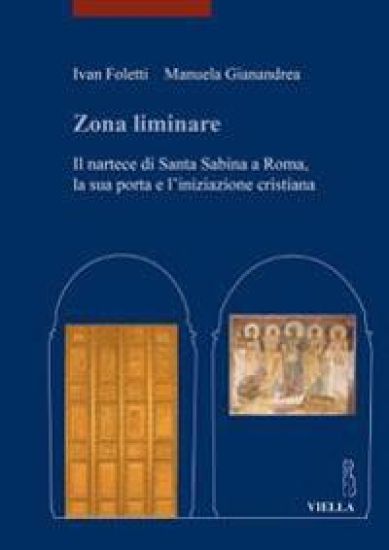
Zona Liminare: Il Nartece Di Santa Sabina a Roma, La Sua Porta E L'Iniziazione Cristiana
Ivan Foletti; Manuela Gianandrea
Viella
2015
nidottu
Sulla sommita dell'Aventino si erge la basilica di Santa Sabina, uno dei monumenti piu significativi del mondo tardoantico. Il suo ingresso principale e costituito da un ampio nartece, caratterizzato dalla presenza di opere straordinarie, quali l'antica porta lignea, la decorazione a imitazione del marmo di V secolo e l'imago altomedievale della Theotokos. Il nartece, per anni trascurato negli studi, doveva essere, in origine, uno degli ambienti di maggior fasto e importanza dell'intero edificio e, soprattutto, non un semplice spazio a servizio delle opere ma il luogo per cui queste erano state pensate. Destinato con ogni probabilita principalmente ai catecumeni e ai penitenti, doveva connotarsi come una vera e propria zona liminare, mondo tra i mondi, zona di transito fisico e spirituale. Il presente volume intende indagare questo luogo a tutto tondo, con un'attenzione particolare alla sua storiografia, all'archeologia del monumento e alle sue decorazioni, rivelandone la facies tardoantica straordinariamente conservata nella sostanza. Si vuole proporre al lettore uno sguardo sinergico, volto a mostrare come la coesistenza dei diversi media permetta una piu esaustiva comprensione dello scenario artistico tardoantico.
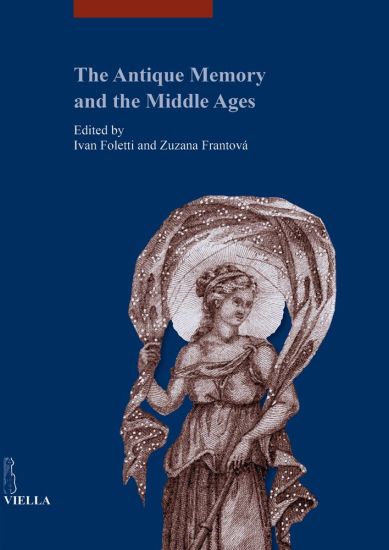
The Antique Memory and the Middle Ages
Ivan Foletti; Herbert L. Kessler; Xavier Barral I. Altet
Viella
2015
nidottu
This volume was born from a desire to leave a tangible trace of the scholarly encounters that have taken place in the past two years at the Center for Early Medieval Studies of the Department of Art History at Masaryk University in Brno. Speaking in various forums Xavier Barral i Altet, Nicolas Bock, Valentina Cantone, Herbert Kessler, Serena Romano and Elisabetta Scirocco have sparked exciting discussions of what continues to be known as a Middle Age. The common denominator that unites all of the scholarly work presented was the dialogue between the medieval "present" and the antique world: from Venice through Campania to Milan, from Constantinople to Burgundy, there emerged an intellectual and visual experience that suggests the medieval period was a uniquely fertile moment for engagement with the heritage of antiquity, filtered and mediated in different ways, but ever present. The purpose of this volume is to understand why and how patterns, images and ideas from the mythical (but visible) ancient past were received throughout the medieval millennium. We seek, that is, to understand why, hic et nunc, clients and workshops deliberately chose to speak in a "classicizing" aesthetic language, or to appropriate concepts belonging to the antique tradition wholesale.

Da Bisanzio Alla Santa Russia: Nikodim Kondakov (1844-1925) E La Nascita Della Storia Dellarte in Russia
Ivan Foletti; Serena Romano
Viella
2011
nidottu
Questo libro e una vera avventura biografica: traccia la storia della vita e dell'opera di Nikodim Kondakov, pioniere degli studi tardo antichi e bizantini nell'Europa orientale prima e dopo la Rivoluzione russa; ne segue le vicende complesse e drammatiche, dalle origini modeste agli studi, alla fondazione geniale di un intero e innovatore campo di studi: la pionieristica e precocissima storia dell'arte in Russia; alla carriera, luminosa e fortunatissima, e poi ai traumi della rivoluzione, alla vita raminga, alla precarieta e alla dipendenza dai committenti. Attraverso e nonostante queste fasi drammatiche, che sono fasi della storia, e fasi della vita dello studioso, gli studi di Kondakov disegnano una vasta geografia della cultura tardoantica e medievale tra il Mediterraneo e gli Urali; toccano orizzonti lontani, da cui si intravedono le migrazioni dei popoli asiatici e la nascita composita dell'Europa medievale con i suoi valori cristiani; percorrono i tragitti della storia servendosi delle tracce visive lasciate dal passato, dagli oggetti, e dai monumenti. Ricostruire le vicende biografiche ed esistenziali di Nikodim Kondakov e un complemento indispensabile alla comprensione di una fase critica fondatrice della storia dell'arte e anche, piu in generale, della storia della Russia e dei paesi che lo studioso attraverso nella sua lunga e tormentata vita.