Kirjojen hintavertailu – 12 903 725 kirjaa ja 27 kauppaa

Kirjailija

Ivan Katchanovski

Kirjat ja teokset yhdessä paikassa: 5 kirjaa, julkaisuja vuosilta 2006–2026, suosituimpiin kuuluu Historical Dictionary of Modern Ukraine. Vertaile teosten hintoja ja tarkista saatavuus suomalaisista kirjakaupoista.

5 kirjaa

Kirjojen julkaisuvuodet: 2006–2026.

Historical Dictionary of Modern Ukraine

Historical Dictionary of Modern Ukraine

Ivan Katchanovski

BLOOMSBURY PUBLISHING PLC
2026
sidottu
This book presents history of Ukraine from its independence in 1991 and up to and inclusive of the Russia-Ukraine war. Ukraine emerged as one of the largest countries in Europe since the break-up of the Soviet Union. Ukraine captured attention of the world during the Russia-Ukraine war, but its recent history remained terra incognita to a significant extent. Ukrainian history, politics, and conflicts in Ukraine became subjects of clashing narratives. The book entries are devoted to Ukrainian government and parliament leaders, major politicians, political parties and organizations, places, historical events, the Russia-Ukraine war, the Donbas war, the annexation of Crimea, the Maidan, and other conflicts. The dictionary also covers Ukraine’s relations with Russia, the US, the EU, NATO, the CIS, Poland, and other countries and the economy, demography, and culture of independent Ukraine. Historical Dictionary of Modern Ukraine contains a chronology, an introduction, and an extensive bibliography. The dictionary section contains cross-referenced entries on important personalities as well as aspects of the country’s politics, economy, foreign relations, religion, and culture. This book is an excellent resource for students, researchers, and anyone wanting to know more about Ukraine.
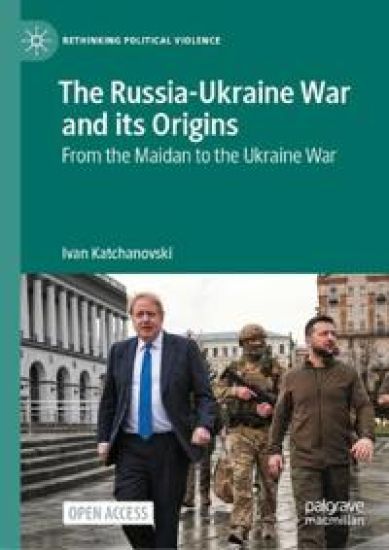
The Russia-Ukraine War and its Origins

The Russia-Ukraine War and its Origins

Ivan Katchanovski

Springer International Publishing AG
2025
sidottu

Halvin toimitettuna 68,60 €

This open access book examines the Russia-Ukraine war and its origins. Based on analysis of a large number of primary and secondary sources, it provides a systematic analysis of this crucial war, its nature, outcome, possibility of peaceful settlement, violence against civilians, and origins. The book examines the role of such factors as the NATO accession of Ukraine, Russian imperialism, democracy, genocide, and the far-right in the start of the war and traces the conflict escalation ladder, which culminated in this war, to preceding violent conflicts in Ukraine, in particular, the Euromaidan, the Maidan massacre, the Russian annexation of Crimea, and the war in Donbas. The Russia-Ukraine war is the most significant armed conflict of the 21st century in the entire world and in Europe since World War Two in terms of countries involved, casualties inflicted, and actual and potential impact in the world. This book analyzes the involvement of different conflict parties, such as the Ukrainian, Russian, and Western governments, Donbas separatists, and the far right, in this crucial war and in the Euromaidan, the Maidan massacre, the Russian annexation of Crimea, and the war in Donbas, and the nature of these conflicts. This book also examines support for pro-Western/pro-nationalist and pro-Russian/pro-communist political parties and presidential candidates and attitudes towards separatism and joining the European Union, NATO, and the union with Russia in regions of Ukraine in parliamentary and presidential elections and surveys since the Euromaidan.
The Maidan Massacre in Ukraine

The Maidan Massacre in Ukraine

Ivan Katchanovski

Springer International Publishing AG
2024
sidottu

Halvin toimitettuna 68,60 €

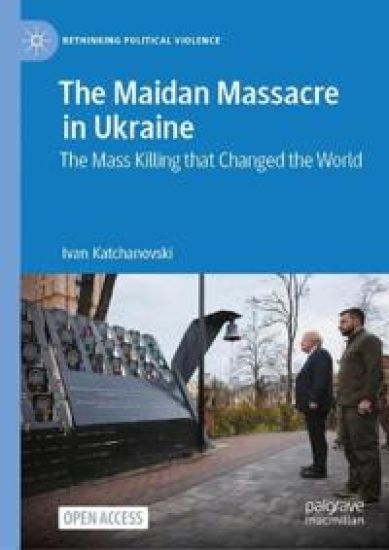
This open access book provides a comprehensive analysis of the Maidan massacre in Ukraine. It uses a theoretical framework of rational choice, moral hazard, state- repression backfire, and Weberian ideas about rational action to explore the massacre. The book draws on publicly available videos, photos and audio recordings of the massacre in English, Ukrainian, Russian, Polish and other languages, along with several hundred individual testimonies and revelations from the Ukrainian investigation and a trial and its verdict. By examining which parties were responsible for the massacre, the book analyses its implications for not only Russia’s war on Ukraine but also political developments across the globe.
Historical Dictionary of Ukraine

Historical Dictionary of Ukraine

Ivan Katchanovski; Zenon E. Kohut; Bohdan Y. Nebesio; Myroslav Yurkevich

Scarecrow Press
2013
sidottu
Although present-day Ukraine has only been in existence for something over two decades, its recorded history reaches much further back for more than a thousand years to Kyivan Rus’. Over that time, it has usually been under control of invaders like the Turks and Tatars, or neighbors like Russia and Poland, and indeed it was part of the Soviet Union until it gained its independence in 1991. Today it is drawn between its huge neighbor to the east and the European Union, and is still struggling to choose its own path… although it remains uncertain of which way to turn. Nonetheless, as one of the largest European states, with considerable economic potential, it is not a place that can be readily overlooked. The problem is, or at least was, where to find information on this huge modern Ukraine, and since 2005 the answer has been the Historical Dictionary of Ukraine in its first edition, and now even more so with this second edition. It now boasts a dictionary section of about 725 entries, these covering the thousand years of history but particularly the recent past, and focusing on significant persons, places and events, political parties and institutions as well as more broadly international relations, the economy, society and culture. The chronology permits readers to follow this history and the introduction is there to make sense of it. It also features the most extensive and up-to-date bibliography of English-language writing on Ukraine.
Cleft Countries - Regional Political Divisions and Cultures in Post-Soviet Ukraine and Moldova

Cleft Countries - Regional Political Divisions and Cultures in Post-Soviet Ukraine and Moldova

Ivan Katchanovski; Francis Fukuyama

ibidem-Verlag, Jessica Haunschild u Christian Schon
2006
nidottu
During the "Orange Revolution" in Ukraine, the second largest country in Europe came close to a violent break-up similar to that in neighboring Moldova, which witnessed a violent secession of the Transdniestria region. Numerous elections, including the hotly contested 2004 presidential elections in Ukraine, and surveys of public opinion showed significant regional divisions in these post-Soviet countries. Western parts of Ukraine and Moldova, as well as the Muslim Crimean Tatars, were vocal supporters of independence, nationalist, and pro-Western parties and politicians. In contrast, Eastern regions, as well as the Orthodox Turkic-speaking Gagauz, consistently expressed pro-Russian and pro-Communist political orientations. Which factors-historical legacies, religion, economy, ethnicity, or political leadership-could explain these divisions? Why was Ukraine able to avoid a violent break-up, in contrast to Moldova? This is the first book to offer a systematic and comparative analysis of the regional political divisions in post-Soviet Ukraine and Moldova. The study examines voting behavior and political attitudes in two groups of regions: those which were under Russian, Ottoman, and Soviet rule; and those which were under Austro-Hungarian, Polish, Romanian, and Czechoslovak rule until World War I or World War II. This book attributes the regional political divisions to the differences in historical experience. This study helps us to better understand regional cleavages and conflicts, not only in Ukraine and Moldova, but also in other cleft countries.