Kirjojen hintavertailu – 12 859 819 kirjaa ja 27 kauppaa

Kirjailija

Ivar Berg

Kirjat ja teokset yhdessä paikassa: 5 kirjaa, julkaisuja vuosilta 1987–2021, suosituimpiin kuuluu Språket som vart norsk. Vertaile teosten hintoja ja tarkista saatavuus suomalaisista kirjakaupoista.

5 kirjaa

Kirjojen julkaisuvuodet: 1987–2021.

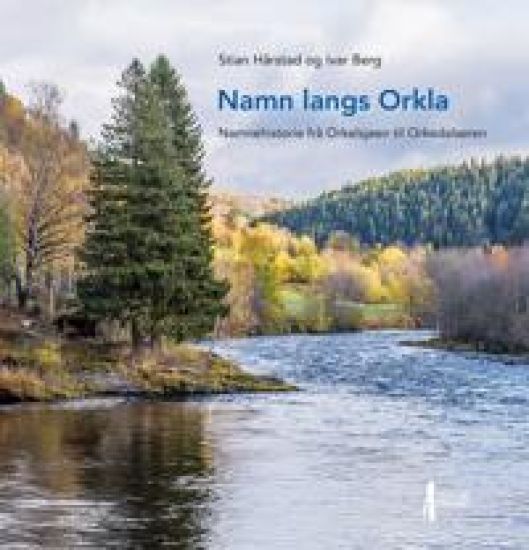
Namn langs Orkla

Namn langs Orkla

Ivar Berg; Stian Hårstad

Museumsforlaget
2021
sidottu
Orkla utgjer sjølve livåra i eit gammalt kulturlandskap, og stadnamna omkring elva gjev oss verdifulle innblikk i dei fellesskapane som har levd og verka her gjennom tidene. Denne boka byr på ei reise i tekst og bilde nedetter Orkladalen, frå Orkelsjøen på høgfjellet til osen i Orkdalsfjorden. Undervegs stoppar vi opp og ser nærare på noko av det store namnemangfaldet. Stadnamna er merkelappane folk har bruka for å orientere seg i landskapet. Med utgangspunkt i eit utval namn av mange slag - bygder, gardar, elvar og mindre stader - greier forfattarane ut om opphav og tyding og set namna i samband med allmennhistoria. Lesaren kan møte kjende og ukjende stader og lære meir om dialekt, kvar namna kjem frå, og korleis norsk heng saman med andre språk. Båe forfattarane har vakse opp nokre steinkast frå Orkla og arbeider som professorar i nordisk språkvitskap på Noregs teknisk-naturvitskaplege universitet (NTNU) i Trondheim. Ivar Berg (fødd i Meldalen i 1982) har arbeidd særleg med eldre språkhistorie, mens Stian Hårstad (fødd i Rennebu i 1977) har skrive mest om språkforhold i moderne tid.

Språket som vart norsk

Språket som vart norsk

Ivar Berg

Universitetsforlaget
2019
nidottu
Ei kortfatta, engasjert innføring i språkhistoria frå urnordisk til 1800-talet. Denne boka fortel historia om språket me kallar norsk. Ho byrjar på eit tidspunkt då det slett ikkje er opplagt at det var same språket som me snakkar i dag, og fylgjer det fram til 1800-talet og dei tradisjonelle dialektane. Forfattaren gjev ei innføring i språkhistorie som fagdisiplin, korleis me kan finna ut noko om eldre språk, og korleis språkhistoria kan forklara trekk ved moderne norsk. Framstillinga fylgjer hovudlinene i utviklinga av både skrift og tale, med ekstra vekt på gamalnorsk og språket i den norrøne litteraturen, og mellomnorsk, då mange av endringane til dei norske dialektane skjedde. Boka er studentvenleg med gode forklaringar av sentrale omgrep, refleksjonsspørsmål og ei rekkje tekstdøme. Dimed høver ho godt som pensum på emne i norsk ved universitet og høgskular. Ivar Berg er professor i nordisk språkvitskap ved Institutt for språk og litteratur, NTNU. Han forskar på korleis norsk språk har utvikla seg gjennom historia og underviser i bl.a. språkhistorie, grammatikk og dialektar. Berg har gjeve ut ei rekkje vitskaplege artiklar om ulike sider ved norsk språkhistorie.«[S]jøl om en som anmelder kan ha noen kommentarer, må det likevel sies at dette i det stor og heile virker som ei vellykka framstilling. Dersom en kan nøye seg med ei framstilling av norsk språkhistorie som bare går fram til 1800-tallet, og en vil ha ei elementær innføring i gammalnorsk inkludert i språkhistoria, kan boka til Berg være et godt alternativ.» Endre Mørck i Maal og Minne nr. 1, 2020.
Work and Industry

Work and Industry

Arne L. Kalleberg; Ivar Berg

Springer-Verlag New York Inc.
2013
nidottu
Work occupies a pivotal role in the daily activities and over the course of a lifetime of members of modern societies. In anticipation, work influ­ ences education and training; it has much to do with shaping current earned income and status in the community; and in retrospect, it influ­ ences retirement income and activities. It is a powerful force affecting personal associations. In our society work is deeply encased in moral and religious values: As Poor Richard says, A Life of Leisure and a Life of Laziness are two Things. Do you imagine that Sloth will afford you more Comfort than Labour? No, for as Poor Richard says: ... Industry gives Comfort, and Plenty and Respect. Study to show thyself approved unto God a workman that needeth not to be ashamed. But few words have as many different meanings and nuances as "work": to forge or to shape, to stir or to knead, to solve, to exploit, to practice trickery for some end, to excite or to provoke, to persuade or to influence, to toil, and the like. A need for precision in meaning is requisite with respect to work, not only in common discourse, but, even more so, in scholarly communication.
Education and Jobs

Education and Jobs

Ivar Berg

Eliot Werner Publications Inc
2003
nidottu
In this famous study, selected by the New York Times Book Review as one of the most important social science books of 1971, the author argues that the familiar correlation between educational training and job performance is a myth and that the upgrading of the supply of labor is meaningless unless we reconsider the nature of the demand. A lengthy new introduction by the author extends his critique into the 1990s. Originally published by Praeger in 1970. From the Foreword: '[P]rovides the reader with rich fare. . . . Berg has opened up important new questions and has cast serious doubts upon accepted answers to old questions . . . . In attacking the hallowed beliefs of statesmen, employers, economists, and educators, he has let in new light where light has long been needed. And he has done so with scholarly acumen, stylistic grace, and a saving sense of humor—qualities all too rare in academe.' Eli Ginzberg, Columbia University
Work and Industry

Work and Industry

Arne L. Kalleberg; Ivar Berg

Kluwer Academic/Plenum Publishers
1987
sidottu
Work occupies a pivotal role in the daily activities and over the course of a lifetime of members of modern societies. In anticipation, work influ­ ences education and training; it has much to do with shaping current earned income and status in the community; and in retrospect, it influ­ ences retirement income and activities. It is a powerful force affecting personal associations. In our society work is deeply encased in moral and religious values: As Poor Richard says, A Life of Leisure and a Life of Laziness are two Things. Do you imagine that Sloth will afford you more Comfort than Labour? No, for as Poor Richard says: ... Industry gives Comfort, and Plenty and Respect. Study to show thyself approved unto God a workman that needeth not to be ashamed. But few words have as many different meanings and nuances as "work": to forge or to shape, to stir or to knead, to solve, to exploit, to practice trickery for some end, to excite or to provoke, to persuade or to influence, to toil, and the like. A need for precision in meaning is requisite with respect to work, not only in common discourse, but, even more so, in scholarly communication.