Kirjojen hintavertailu – 12 903 725 kirjaa ja 27 kauppaa

Kirjailija

Iven Mareels

Kirjat ja teokset yhdessä paikassa: 6 kirjaa, julkaisuja vuosilta 1996–2012, suosituimpiin kuuluu Feedback and Control for Everyone. Vertaile teosten hintoja ja tarkista saatavuus suomalaisista kirjakaupoista.

6 kirjaa

Kirjojen julkaisuvuodet: 1996–2012.

High Performance Control

High Performance Control

Teng-Tiow Tay; Iven Mareels; John B. Moore

Springer-Verlag New York Inc.
2012
nidottu
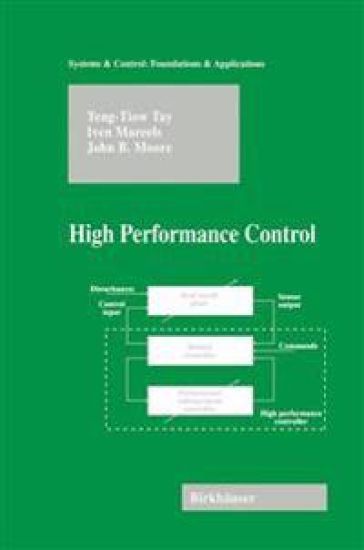
The engineering objective of high performance control using the tools of optimal control theory, robust control theory, and adaptive control theory is more achiev­ able now than ever before, and the need has never been greater. Of course, when we use the term high peiformance control we are thinking of achieving this in the real world with all its complexity, uncertainty and variability. Since we do not expect to always achieve our desires, a more complete title for this book could be "Towards High Performance Control". To illustrate our task, consider as an example a disk drive tracking system for a portable computer. The better the controller performance in the presence of eccen­ tricity uncertainties and external disturbances, such as vibrations when operated in a moving vehicle, the more tracks can be used on the disk and the more memory it has. Many systems today are control system limited and the quest is for high performance in the real world.
Adaptive Systems

Adaptive Systems

Iven Mareels; Jan Willem Polderman

Springer-Verlag New York Inc.
2012
nidottu
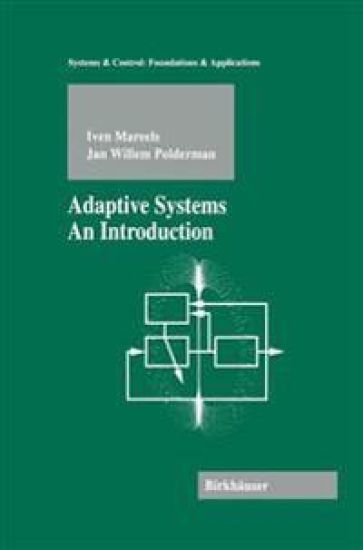
Loosely speaking, adaptive systems are designed to deal with, to adapt to, chang­ ing environmental conditions whilst maintaining performance objectives. Over the years, the theory of adaptive systems evolved from relatively simple and intuitive concepts to a complex multifaceted theory dealing with stochastic, nonlinear and infinite dimensional systems. This book provides a first introduction to the theory of adaptive systems. The book grew out of a graduate course that the authors taught several times in Australia, Belgium, and The Netherlands for students with an engineering and/or mathemat­ ics background. When we taught the course for the first time, we felt that there was a need for a textbook that would introduce the reader to the main aspects of adaptation with emphasis on clarity of presentation and precision rather than on comprehensiveness. The present book tries to serve this need. We expect that the reader will have taken a basic course in linear algebra and mul­ tivariable calculus. Apart from the basic concepts borrowed from these areas of mathematics, the book is intended to be self contained.
Epileptic Seizures and the EEG

Epileptic Seizures and the EEG

Andrea Varsavsky; Iven Mareels; Mark Cook

CRC Press Inc
2010
sidottu
Analysis of medical data using engineering tools is a rapidly growing area, both in research and in industry, yet few texts exist that address the problem from an interdisciplinary perspective. Epileptic Seizures and the EEG: Measurement, Models, Detection and Prediction brings together biology and engineering practices and identifies the aspects of the field that are most important to the analysis of epilepsy. Analysis of EEG recordsThe book begins by summarizing the physiology and the fundamental ideas behind the measurement, analysis and modeling of the epileptic brain. It introduces the EEG as a measured signal and explains its use in the study of epilepsy. Next, it provides an explanation of the type of brain activity likely to register in EEG measurements, offering quantitative analysis of the populations of neurons that contribute to both scalp and cortical EEG and discussing the limitations and effects that choices made in the recording process have on the data. The book provides an overview of how these EEG records are and have been analyzed in the past, concentrating on the mathematics relevant to the problem of classification of EEG. The authors use these extracted features to differentiate between or classify inter-seizure, pre-seizure and seizure EEG. The challenge of seizure predictionThe book focuses on the problem of seizure detection and surveys the physiologically based dynamic models of brain activity. Finally, the book addresses the fundamental question: can seizures be predicted? Through analysis of epileptic activity spanning from 3 hours to 25 years, it is proposed that seizures may be predictable, but the amount of data required is greater than previously thought. Based on the authors’ extensive research, the book concludes by exploring a range of future possibilities in seizure prediction.
Feedback and Control for Everyone

Feedback and Control for Everyone

Pedro Albertos; Iven Mareels

Springer-Verlag Berlin and Heidelberg GmbH Co. K
2010
nidottu
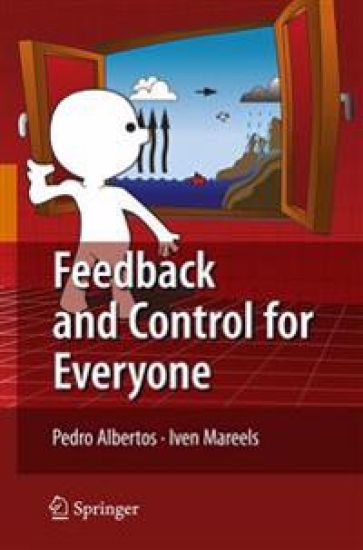
Vertrouwen hebben is goed, in controle zijn is beter! Confidence is good, but to be in control is better! La confianza esta bien, !pero el control es mejor...! La informacion suele ser buena, !la realimentacion es esencial! Information is important but feedback is essential! Informatie is belangrijk, maar feedback is essentieel! Our journey to write a general introduction to control and feedback started with the realisation that in our chosen field of study the proponents have taken little time to project the main ideas outside the community of the initiated. We are constantly - minded of the fact that there is no general awareness of control engineering, or c- trol technology, despite its ubiquity when we try to introduce ourselves as control engineers. Invariably this leads to A what engineer? response. We suspect that most control engineers do not even try to introduce themselves as such. It certainly is a poor communication starter. Colleagues, friends, collaborators often ask rather natural questions like So, what do you study in control? Is there a non-specialist introduction to the field? Can I read something to get a feel about this field of systems theory? What questions do you try to answer? What are the key results? In reply we can point to a wealth of technical lite- ture, rooted in mathematics, quite acceptable to some engineers or mathematics gra- ates, but rather too formidable a hurdle for most.
High Performance Control

High Performance Control

Teng-Tiow Tay; Iven Mareels; John B. Moore

Birkhauser Boston Inc
1997
sidottu
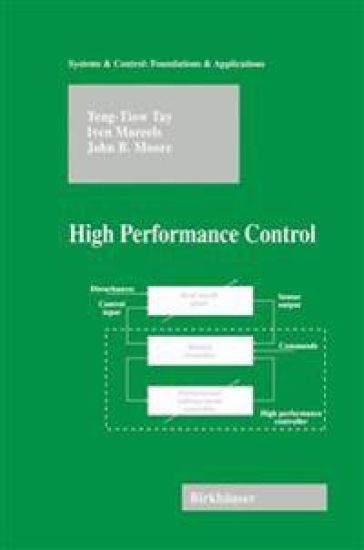
The engineering objective of high performance control using the tools of optimal control theory, robust control theory, and adaptive control theory is more achiev­ able now than ever before, and the need has never been greater. Of course, when we use the term high peiformance control we are thinking of achieving this in the real world with all its complexity, uncertainty and variability. Since we do not expect to always achieve our desires, a more complete title for this book could be "Towards High Performance Control". To illustrate our task, consider as an example a disk drive tracking system for a portable computer. The better the controller performance in the presence of eccen­ tricity uncertainties and external disturbances, such as vibrations when operated in a moving vehicle, the more tracks can be used on the disk and the more memory it has. Many systems today are control system limited and the quest is for high performance in the real world.

Adaptive Systems

Adaptive Systems

Iven Mareels; Jan Willem Polderman

Birkhauser Boston Inc
1996
sidottu
Loosely speaking, adaptive systems are designed to deal with, to adapt to, chang­ ing environmental conditions whilst maintaining performance objectives. Over the years, the theory of adaptive systems evolved from relatively simple and intuitive concepts to a complex multifaceted theory dealing with stochastic, nonlinear and infinite dimensional systems. This book provides a first introduction to the theory of adaptive systems. The book grew out of a graduate course that the authors taught several times in Australia, Belgium, and The Netherlands for students with an engineering and/or mathemat­ ics background. When we taught the course for the first time, we felt that there was a need for a textbook that would introduce the reader to the main aspects of adaptation with emphasis on clarity of presentation and precision rather than on comprehensiveness. The present book tries to serve this need. We expect that the reader will have taken a basic course in linear algebra and mul­ tivariable calculus. Apart from the basic concepts borrowed from these areas of mathematics, the book is intended to be self contained.