Kirjojen hintavertailu – 12 859 824 kirjaa ja 27 kauppaa
Kirjailija
J. Bradley Cousins
Kirjat ja teokset yhdessä paikassa: 6 kirjaa, julkaisuja vuosilta 1994–2016, suosituimpiin kuuluu The SAGE International Handbook of Educational Evaluation. Vertaile teosten hintoja ja tarkista saatavuus suomalaisista kirjakaupoista.
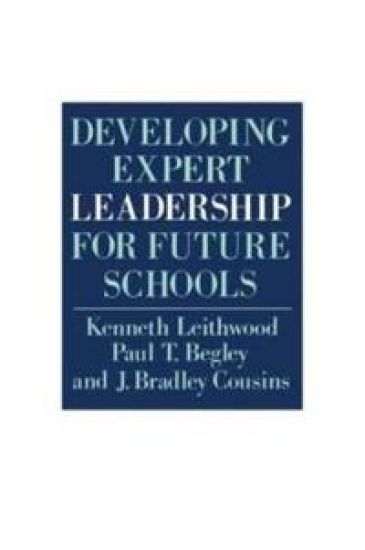
Based on the authors' research on the behaviour and thinking of school leaders, this volume presents arguments about the natue of expert school leadership. It parallels developments in the field from the early 1980s when the emphasis was on identifying the behaviours of effective principals, to the early 1990s, when the focus shifted to understanding the thinking underlying those behaviours. The ideas contained in this book should be useful in helping practising educationalists develop the skills involved in school leadership.
This one-of-a-kind book fills a gap in the literature by providing readers with a systematic approach to monitoring and evaluation (M&E) training for programs and projects. Bridging theoretical concepts with practical, how-to knowledge, authors Scott Chaplowe and J. Bradley Cousins draw upon the scholarly literature, applied resources, and over 50 years of combined experience to provide expert guidance that can be tailored to different M&E training needs and contexts, including those for novices, professionals, organizations and their staff, community members, and other groups with a desire to learn and sustain sound M&E practices.
Empiricism provides the backbone of knowledge creation within social science disciplines (e.g., psychology, sociology) and applied domains of study (e.g., education, administration) alike. Yet, relative to such domains of inquiry, comparatively little empirical research on evaluation has occurred, and the research knowledge base been infrequently synthesized and integrated to influence theory and practice. The proposed book aims to fill this void with regard to participatory evaluation, a set of collaborative approaches to evaluation that is receiving considerable attention of late, including a growing body of empirical studies. The authors begin in Part 1 with the delineation of a widely known and familiar conceptual framework for participatory evaluation. They then use the framework in Part 2 as a guide to conducting an extensive review of the extant empirical knowledge base in participatory evaluation, culminating in a thematic analysis of what we know about the approach. In Part 3 the authors focus on methodological considerations of doing research on participatory evaluation through a critique of existing studies and an explication of design choices drawn from their own research program. The book concludes in Part 4 with implications for moving the field forward in terms of important research questions, methodological direction and evaluation practice. This book will be of central interest to evaluation theorists and to those who choose to conduct research on evaluation; appeal will be conceptual and methodological. It will provide excellent supplementary reading for graduate students, many of whom seek to develop empirical studies on evaluation as part of their graduate programs. Rife with examples of participatory evaluation in practice, and practical implications, the book will also benefit evaluation practitioners with an interest in evaluation capacity building and participatory and collaborative approaches to practice.
Empiricism provides the backbone of knowledge creation within social science disciplines (e.g., psychology, sociology) and applied domains of study (e.g., education, administration) alike. Yet, relative to such domains of inquiry, comparatively little empirical research on evaluation has occurred, and the research knowledge base been infrequently synthesized and integrated to influence theory and practice. The proposed book aims to fill this void with regard to participatory evaluation, a set of collaborative approaches to evaluation that is receiving considerable attention of late, including a growing body of empirical studies. The authors begin in Part 1 with the delineation of a widely known and familiar conceptual framework for participatory evaluation. They then use the framework in Part 2 as a guide to conducting an extensive review of the extant empirical knowledge base in participatory evaluation, culminating in a thematic analysis of what we know about the approach. In Part 3 the authors focus on methodological considerations of doing research on participatory evaluation through a critique of existing studies and an explication of design choices drawn from their own research program. The book concludes in Part 4 with implications for moving the field forward in terms of important research questions, methodological direction and evaluation practice. This book will be of central interest to evaluation theorists and to those who choose to conduct research on evaluation; appeal will be conceptual and methodological. It will provide excellent supplementary reading for graduate students, many of whom seek to develop empirical studies on evaluation as part of their graduate programs. Rife with examples of participatory evaluation in practice, and practical implications, the book will also benefit evaluation practitioners with an interest in evaluation capacity building and participatory and collaborative approaches to practice.
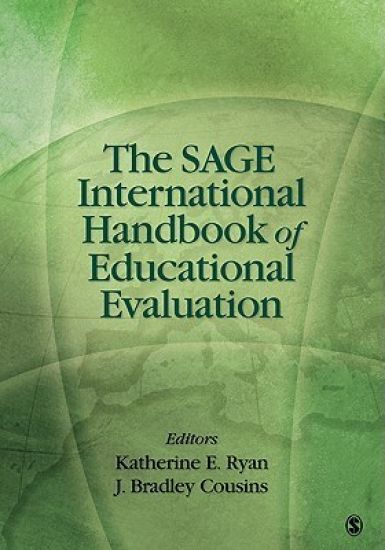
Bringing together the expertise of top evaluation leaders from around the world, The SAGE International Handbook of Educational Evaluation addresses methods and applications in the field, particularly as they relate to policy- and decision-making in an era of globalization. The comprehensive collection of articles in the Handbook compels readers to consider globalization influences on educational evaluation within distinct genres or families of evaluation approaches. Key FeaturesDiscusses substantive issues surrounding globalization, and its implication for educational policy and practice and ultimately evaluation;Includes state-of-the-art theory chapters and method chapters within scientific, accountability-oriented, learning-oriented, and political genres of evaluation approaches;Provides real-world case exemplar chapters to illustrate core concepts within genres;Extends dialogue on controversial topics and contemporary educational evaluation tensions in the context of globalization;Summarizes, by means of an integration chapter, the issues, tensions and dilemmas confronting educational evaluators in an era of globalization. Serving as a state-of-the-art resource on educational evaluation, this volume is designed for graduate students, evaluation scholars and researchers and professional evaluation practitioners with an interest in educational program and policy evaluation.
Based on the authors' research on the behaviour and thinking of school leaders, this volume presents arguments about the natue of expert school leadership. It parallels developments in the field from the early 1980s when the emphasis was on identifying the behaviours of effective principals, to the early 1990s, when the focus shifted to understanding the thinking underlying those behaviours. The ideas contained in this book should be useful in helping practising educationalists develop the skills involved in school leadership.