
Kirjojen hintavertailu – 12 903 725 kirjaa ja 27 kauppaa

Kirjailija

J.C. Barnes

Kirjat ja teokset yhdessä paikassa: 3 kirjaa, julkaisuja vuosilta 2014–2022, suosituimpiin kuuluu Criminological Theory. Vertaile teosten hintoja ja tarkista saatavuus suomalaisista kirjakaupoista.

3 kirjaa

Kirjojen julkaisuvuodet: 2014–2022.

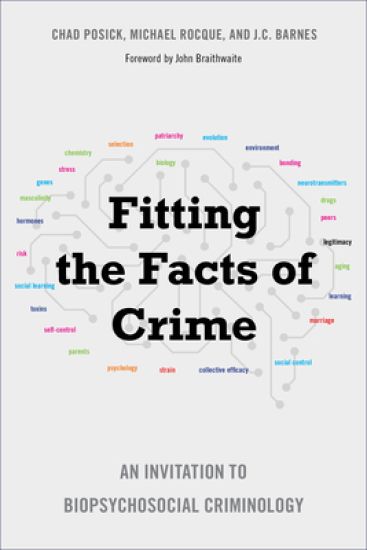
Fitting the Facts of Crime

Fitting the Facts of Crime

Chad Posick; Michael Rocque; J.C. Barnes; John Braithwaite

Temple University Press,U.S.
2022
sidottu
Biosocial criminology-and biosocial criminologists-focuses on both the environmental and biological factors that contribute to antisocial behavior. Importantly, these two domains are not separate parts of an equation but pieces of the same puzzle that fit together for a complete picture of the causes of crime/antisocial behavior. Fitting the Facts of Crime applies a biopsychosocial lens to the “13 facts of crime” identified by John Braithwaite in his classic book, Crime, Shame and Reintegration. The authors unpack established facts-about gender and sex, age, environment, education, class, social bonds and associations, stress, and other influences-providing both empirical research and evidence from biopsychosocial criminology to address the etiology behind these facts and exactly how they are related to deviant behavior. With their approach, the authors show how biopsychosocial criminology can be a unifying framework to enrich our understanding of the most robust and well-established topics in the field. In so doing, they demonstrate how biological and psychological findings can be responsibly combined with social theories to lend new insight into existing inquiries and solutions. Designed to become a standard text for criminology in general, Fitting the Facts of Crime introduces key concepts and applies them to real-world situations.
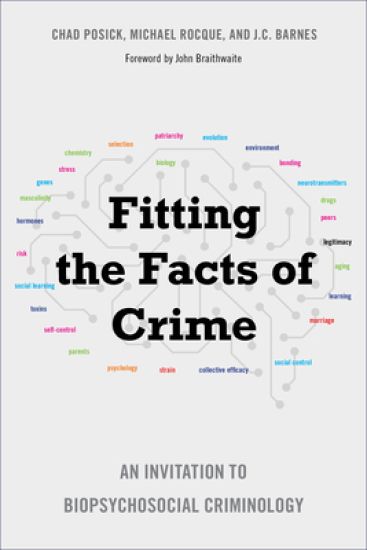
Fitting the Facts of Crime

Fitting the Facts of Crime

Chad Posick; Michael Rocque; J.C. Barnes; John Braithwaite

Temple University Press,U.S.
2021
nidottu

Halvin toimitettuna 33,40 €

Biosocial criminology-and biosocial criminologists-focuses on both the environmental and biological factors that contribute to antisocial behavior. Importantly, these two domains are not separate parts of an equation but pieces of the same puzzle that fit together for a complete picture of the causes of crime/antisocial behavior. Fitting the Facts of Crime applies a biopsychosocial lens to the “13 facts of crime” identified by John Braithwaite in his classic book, Crime, Shame and Reintegration. The authors unpack established facts-about gender and sex, age, environment, education, class, social bonds and associations, stress, and other influences-providing both empirical research and evidence from biopsychosocial criminology to address the etiology behind these facts and exactly how they are related to deviant behavior. With their approach, the authors show how biopsychosocial criminology can be a unifying framework to enrich our understanding of the most robust and well-established topics in the field. In so doing, they demonstrate how biological and psychological findings can be responsibly combined with social theories to lend new insight into existing inquiries and solutions. Designed to become a standard text for criminology in general, Fitting the Facts of Crime introduces key concepts and applies them to real-world situations.
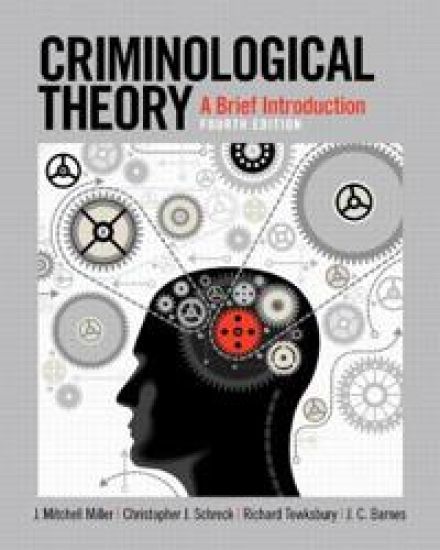
Criminological Theory

Criminological Theory

J. Mitchell Miller; Christopher Schreck; Richard Tewksbury; J.C. Barnes

Pearson
2014
nidottu
This concise, up-to-date text provides student-friendly examples of all theoretical approaches that emphasize the complex relationships between 21st century social structures, cultures, and crime. Criminological Theory: A Brief Introduction, 4e provides students and instructors with a concise, up-to-date, and thorough discussion and explication of major criminological schools of thought. The text focuses on providing students with understandings of not only what the central tenets are of criminological theories but also focuses on providing real-life examples and implications for criminal justice policy and practice. The various theories examined across the chapters are illustrated through examples drawing upon contemporary cultural developments of particular interest to college age students that increase interest and engagement. Teaching and Learning Experience This book offers an accessible discussion of the major theories of crime, delinquency, social deviance and social control with an objective and neutral approach. It provides: Expanded coverage of theory development, assessment, and integration: Provides thorough yet concise coverage Theories grouped by type and subtype: Gives students an appreciation of the historical development of theoretical criminology and the significance of classical statements to contemporary perspectives Strong pedagogical support: Reinforces chapter information to ensure mastery