
Kirjailija
J C Ryle
Kirjat ja teokset yhdessä paikassa: 178 kirjaa, julkaisuja vuosilta 1887–2025, suosituimpiin kuuluu Der Bischof, der Pastor und der Prediger. Vertaile teosten hintoja ja tarkista saatavuus suomalaisista kirjakaupoista.
Nimi esiintyy myös muodoissa: J. C. Ryle, J. -C Ryle
178 kirjaa
Kirjojen julkaisuvuodet: 1887–2025.
After providing a short history of the Anglican Church, J. C. Ryle presents the biographies of some of the most influential English Reformers and detractors, some of whom are little known. Light From Old Times includes the biographies of John Wycliffe, John Rogers, John Hooper, Rowland Taylor, Hugh Latimer, John Bradford, Nichols Ridley, Samuel Ward, Archbishop Laud, Richard Baxter, William Gurnall, and James II.

「但我断不以别的夸口,只夸我们主耶稣基督的十字架。」(加六14) 那么,保罗是什么意思呢?他宣称,除了耶稣基督被钉在十字架上,赦免了他的罪并拯救了他的灵魂之外,他别无信靠,这就是他的意思。要是有人愿意到别处去寻找拯救,就随他们去吧;要是有人真这么定意去信靠别的东西以求得赦免和平安,也就随他们去吧。但是就保罗自己而言,这位使徒定意不立足于任何别的东西之上,他不依靠于任何别的东西,他的盼望也不本于任何别的事物,他的自信也不建立在任何其他事物之上,他断不以别的夸口,只夸我们的主耶稣基督的十字架。 读者啊,请让我来跟你谈谈这个题目。相信我,这是一个有着最深远的重要性的题目,绝非什么简单的争议的问题;绝非什么人们认为尽可以言人人殊,同时却觉得对他们进不进天堂并无大碍的观点。"你怎么看基督的十字架?"每个人都必须对这个问题有正确的答案,否则他就永远失丧。对这个问题的答案将决定:天堂或地狱,幸福或悲苦,生命或死亡,末日的祝福或咒诅,也就是说,将决定一切。让我来告诉你:1. 使徒保罗断不以什么夸口2. 使徒保罗以什么夸口3. 为什么所有的基督徒都应像使徒保罗那样思考和感受到十字架 I am crucified with Christ; nevertheless I live; yet not I, but Christ lives in me, and the life which I now live in the flesh I live by the faith of the Son of God, who loved me and gave himself for me. - Galatians 2:20I want to tell you what perhaps the greatest Christian who ever lived (the Apostle Paul) thought of the cross of Christ. Believe me, the cross is of deepest importance. This is no mere question of controversy; this is not one of those points on which men may agree to differ and feel that differences will not shut them out of heaven. A man must be right on this subject, or he is lost forever. Heaven or hell, happiness or misery, life or death, blessing or cursing in the last day - all hinges on the answer to this question: "What do you think about the cross of Christ?" Let me show you: 1. What the apostle Paul did not glory in.2. What Paul did glory in.3. Why all Christians should think and feel about the cross like Paul.
Except you repent, you will all likewise perish. - Luke 13:5It is indifference that leaves people alone and allows them to go their own way. It is love, tender love, that warns them and raises the cry of alarm. The cry of "Fire Fire " at midnight might sometimes rudely, harshly, and unpleasantly startle a person out of his sleep, but who would complain if that cry was the means of saving his life? The words Except you repent, you will all likewise perish might at first seem stern and severe, but they are words of love, and they could be the means of delivering precious souls from hell. The nature of repentance: What is it? The necessity of repentance: Why is repentance needful? The encouragements to repentance: What is there to lead people to repent?
This volume consists of a series of papers, systematically arranged, on the leading truths of Christianity which are "necessary to salvation." Few, probably, will deny that there are some things in religion about which we may think other people hold very erroneous views, and are, notwithstanding, in no danger of being finally lost. About baptism and the Lord's Supper, -about the Christian ministry, -about forms of prayer and modes of worship, -about the union of Church and State, -about all these things it is commonly admitted that people may differ widely, and yet be finally saved. No doubt there are always bigots and extreme partisans, who are ready to excommunicate every one who cannot pronounce their Shibboleth on the above-named points. But, speaking generally, to shut out of heaven all who disagree with us about these things, is to take up a position which most thoughtful Christians condemn as unscriptural, narrow, and uncharitable. On the other hand, there are certain great truths of which some knowledge, by common consent, appears essential to salvation. Such truths are the immortality of the soul, -the sinfulness of human nature, -the work of Christ for us as our Redeemer, -the work of the Holy Ghost in us, -forgiveness, -justification, -conversion, -faith, -repentance, -the marks of a right heart, -Christ's invitations, -Christ's intercession, -and the like. If truths like these are not absolutely necessary to salvation, it is difficult to understand how any truths whatever can be called necessary. If people may be saved without knowing anything about these truths, it appears to me that we may throw away our Bibles altogether, and proclaim that the Christian religion is of no use. From such a miserable conclusion I hope most people will shrink back with horror. To open out and explain these great necessary truths, -to confirm them by Scripture, -to enforce them by home appeals to the conscience of all who read this volume, -this is the simple object of the series of papers which is now offered to the public.
In this series of articles J. C. Ryle directly asks the Christian to consider the commands of the Bible toward Holiness, to remember Lot, and to take an honest and reflective account to determine whether they are alive or dead in regards to the Spirit. This work will push you toward Christ and away from sin and the unfulfilling things this world offers.
Attempting to "untie some theological knots," J. C. Ryle's nineteen essays approach doctrinal controversies of the nineteenth century from an evangelical perspective. Written in Ryle's customary direct, plain-language, and filled with insightful commentary, this volume is comprised of Ryle's observations on baptism, regeneration, confessions, the Sabbath, and more. This is a key work for understanding the debates within the English Church after the Reformation.
It seemed fitting for me as well, having investigated everything carefully from the beginning, to write it out for you in consecutive order, most excellent Theophilus; so that you may know the exact truth about the things you have been taught. - Luke 1:3-4Wisdom, encouragement, and exhortation is contained in these pages. Not because of the author's brilliance, but because of the words of truth contained in the gospel of John. And just as the Apostle John didn't draw any attention to himself, so also J. C. Ryle clearly and wonderfully directs his words and our thoughts towards the inspired words of scripture. If we truly love God, we will love His word; and the more study His word, the more we will love God.
Reprint of the original, first published in 1869.
Reprint of the original, first published in 1869.
Reprint of the original, first published in 1869.
Reprint of the original, first published in 1869.
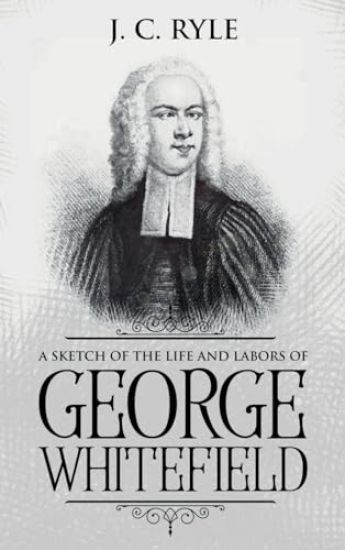
George Whitefield was a popular Calvinist circuit preacher of England and frontier America who along with John Wesley, Charles Wesley, and Jonathan Edwards was very influential in the American Great Awakening of the mid-18th century. In a brief life of fifty-seven years, Whitefield shared Jesus and the Gospel with more messages to more people than any other minister of his day. This excellent summary of his life brings the reader to a crossroads between total commitment to Jesus or a compromised life with the things of self and the world. This is not a research work, but a defense of Whitefield's ministry, which suffered unduly harsh criticism from the so-called "old lights," those Anglican and Congregational clergymen who thought the Great Awakening, and Whitefield's ministry, to be steeped in hyper-emotionalism and experience-based religious effects. In this still relevant book, J. C. Ryle goes to work defending Whitefield in terms of the substance of Whitefield's preaching, which he contends was Scriptural to the core.
In "The Duties of Parents," J. C. Ryle explores the best ways to raise children with Christ in their hearts, and the duties all Christian parents have toward those God has entrusted to them. Ryle gives helpful advice on how to raise children, and shows how we can love our children without spoiling them. Though written in 1888, this book contains timeless truths based on God's wisdom. Ryle perfectly balanced love and discipline in this approach to raising godly children. This book is essential reading for every parent who seeks to raise their children in the instruction of God, one that will be turned to over and over again. It is short, powerful, easy to comprehend, and one of the best resources for parenting outside of the Bible. Those who truly seek Biblical parenting should not be without this book.
"Thoughts for Young Men," by J. C. Ryle, is a short yet passionate appeal that, a hundred years after it was written, remains relevant for today. Replete with warnings, exhortations, and instruction about this life's many trials, temptations, and common pitfalls, Ryle's classic is biblical, practical, timeless, and wise. The first chapter of the book covers five reasons, divided into sections, why Ryle believes that young men are in need of special exhortation. The second chapter deals with five special dangers to young men, which are once again divided into separate, easy-to-read, sections. The six sections of Chapter Three offer special counsel to young men on topics ranging from setting priorities and getting to know Jesus to the possibility of true godliness, friend selection, and the importance of the Bible as a guide in life, Chapter Four covers five "Rules for Young Men" that, if followed, would help many a young man steer clear of trouble and sin. The "Conclusion", or fifth chapter, offers a stirring appeal based on solid logic and the truth of the Scriptures. The four great temptations that plague most young men: sloth, lust, love of pleasure, and peer pressure, are well covered within this book. One of the last great Puritans, Ryle tackles each subject with unsurpassed tenderness and tact. Readers will chuckle at some of the exhortations to stay away from books and newspapers that lead to sin. If only Ryle could see us now, with TVs blaring and gaming consoles in hand With its stirring appeal based on solid logic and the truth of the Scriptures, this book is an excellent read for men of any age, but especially adolescent or teenage boys. Its encouragement to choose the high path of integrity rather than yielding to the many temptations to stray from that path, will, if followed, help many to live a more full and obedient life. This short but incredibly wise book is the perfect springboard for a youth group, small group study, or father and son discussion. At the conclusion of each chapter section you will find a carefully prepared study guide to assist in reading comprehension and discussion, enough for 21 conversations in all. The language has also been lightly updated in this edition.
In this thought-provoking book, J. C. Ryle covers the gamut of theological issues facing the Church of England in his day. Though written in 1877, "Knots Untied" sounds eerily familiar to issues in more modern times. Many of the correctives which Ryle asserts are just the remedy needed in our day of pluralistic religion. Ryle's straightforward and Biblically reasoned arguments, which read like a sermon, are simple to understand. With explanations, illustrations, and practical applications, he takes to task any who would place the traditions of men above the Word of God. Ryle, who delighted in exalting the Gospel of God's grace, makes a thoroughly Biblical plea. Convinced of the authority of the Scripture himself, he in turn is able to convince others. As an Anglican, Ryle argues that the purest historical form of this tradition is Reformed in theology and evangelical in its ethos, pathos, and logos. For those who are leery as to the current and future state of the Anglican and Episcopal churches worldwide, Ryle is irrefutably persuasive as a beacon for a historical, orthodox, Biblical foundation of the Church of England. All in all, Knots Untied is a great book for Christians who want a deeper, clearer understanding of major doctrinal points from a Protestant point of view. In this slightly abridged edition, spelling has been updated and the focus is on the Evangelical and devotional depth of Ryle's message.
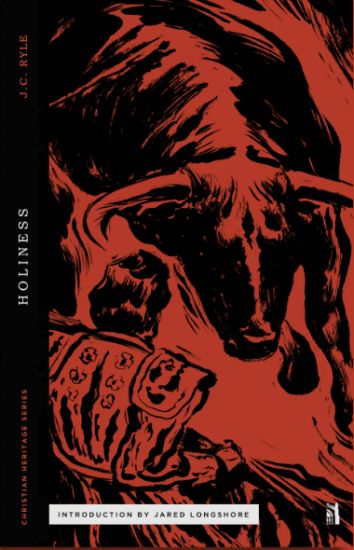
In Holiness, J. C. Ryle speaks to the heart and soul of every man. In a winning, approachable style, he wields the sword of the Spirit like a skillful surgeon, piercing to the division of soul and spirit, of joints and marrow. He addresses hard and trying subjects which most modern evangelicals have chosen to ignore: the power and depth of indwelling sin, the necessity of a holy life, the struggle and fight of faith, counting the cost of following Christ... and that's only in the first five chapters Ryle's treatment of the texts which head the chapters is based on plain interpretation, common-sense exegesis and practical application. He does not side-step the difficult issues, but takes them head-on, making Christian theology and the principles of holy living seem so simple, obvious and straight-forward that readers will wonder what other Bible truths they've been missing all these years. Christian, read J. C. Ryle. You will not regret it. He is a man who first and foremost loved the Lord Jesus Christ. This is the vital center of all his teaching and writing and the sole reason for his great power in ministry. Whether you are an erudite scholar or a hard-laboring farmer, a pastor or a layman, a spiritual elder or a babe in Christ-no matter where you are-Ryle's writings are for you. The love of Christ and the faith of this great 18th century saint cling to every page like an aromatic perfume.
J. C. Ryle was well known for his warm, plain-spoken candor, the kind which appeals to all souls regardless of rank or title, and this short book is no different. Bold, encouraging, and affectionate, "A Call to Prayer" is just as the title says-an earnest invitation for all children of God to come before Him in prayer. Read it, be edified, and have hope: you have access to the Maker of heaven and earth who can do all things. In this classic book, Ryle charges the reader with the necessity of prayer. He cuts through the excuses and the pretense with the simple question: "Do you pray?" Ryle's style is concise and imminently readable. He argues that prayer or the lack of prayer is the single greatest barometer for a person's status before the Lord, for "to be prayerless is to be without Christ, without God, without grace, without hope, and without heaven." Ryle goes beyond the question to the meat of the issue, giving strong arguments for why prayer is so necessary for the spiritual well-being of an individual. Once he has made his point, Ryle turns his attention to how a person should pray. This work of prayer, according to Ryle, is so often neglected because it is such an arduous task cutting against the flesh and standing (or kneeing in this case) in direct opposition and defiance of Satan himself. Ryle encourages the Christian to pray with reverence and humility, spiritually, as a regular part of their business of life, with all perseverance, in earnestness, in faith, with boldness, with fullness, on behalf of others, with thankfulness and with watchfulness over one's prayers. In one of the many quotable phrases from this book, Ryle challenged readers to "tell me what a man's prayers are, and I will soon tell you the state of his soul," concluding that "prayer is the spiritual pulse." This book is a wonderful and encouraging read for any Christian desiring to walk more closely with God through prayer.
" Ryle] was a beast. His sturdy frame stood well over six foot. He was an accomplished oarsman and co-captain of a cricket team. And he wasn't just athletically disciplined-he excelled in academics, always near the top of his class. His physical and intellectual prowess is all the more impressive when you consider that he came from a wealthy family. He could have chosen to live as a mollycoddled rich boy, but instead he pursued a life of rigor. Ryle was tough by choice. Ministry wasn't a way for him to escape manliness, but rather to exercise it." from Michael Foster's IntroductionSolomon says that the glory of young men is their strength (Prov. 20:29). Young men have so much to give the Church, but sadly the modern Church has taught them nothing about how to exercise their strength in a godly way. This book by 19th century pastor J. C. Ryle is short, but gives young men what they need: straight talk about being a Christian man. Ryle does not mince words when describing the temptations to pride, lust, laziness, and more. The devil is like a roaring lion who wants to devour young men, and the only way to defeat him is to fight sin and be like Jesus. This classic is a powerful reminder from a wise man about how to be strong in the Lord and to give no opportunity to the devil. Read it and go, fight, win." Young men, this enemy is working hard for your destruction, however little you may think it. You are the prize for which he is specially contending for. He foresees you must either be the blessings or the curses of your day, and he is trying hard to effect a place in your hearts early in your life, in order that you may help advance his kingdom each day.... Whether you will hear or not, I cannot, dare not, leave you alone." J. C. Ryle