Kirjojen hintavertailu – 12 903 725 kirjaa ja 27 kauppaa
Kirjailija
J D Mitchell
Kirjat ja teokset yhdessä paikassa: 4 kirjaa, julkaisuja vuosilta 2018–2024, suosituimpiin kuuluu Springtide Harvest. Vertaile teosten hintoja ja tarkista saatavuus suomalaisista kirjakaupoista.
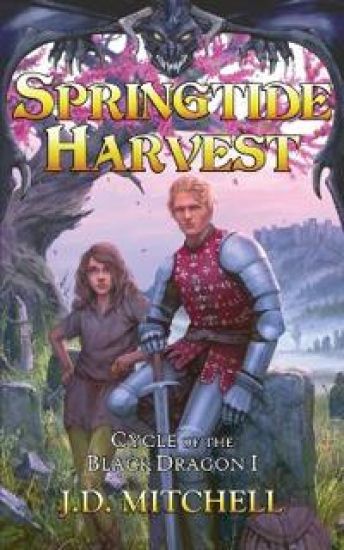
Haskell wants to be a legend, a hero like his grandfather who broke the orcish hordes. Froba just wants to survive. She knows what Haskell doesn't: that the deck is stacked against them, and there are no heroes in the world. After assembling a band of misfits, Haskell must face a labyrinthine dungeon, an exploitative, monster-hunting guild, and his own failings, while Froba must decide where her loyalties lie-with her na ve mark or corrupt master. If traitors and woodland monsters don't murder them first.
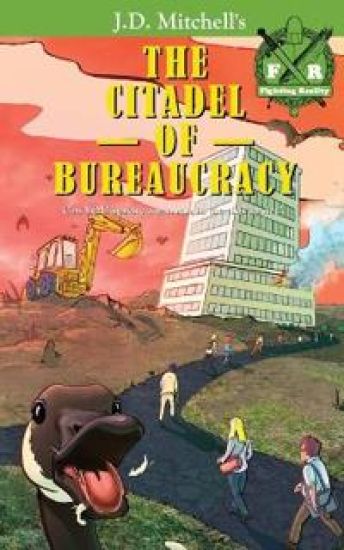
Part story, part game, this is a book in which YOU make all the decisions The Citadel of Bureaucracy holds dark and dangerous perils for civil servants unprepared for its labyrinthine cubicle walls, but enter you must. The Albatross Pay System has shorted you, money's tight, and long hours have left you ragged and in desperate need of a vacation. You've just got to make it through one more day. But it won't be easy. Packed with asbestos, bad wiring, and with air quality equivalent to a dank, rat-infested dungeon, the Darby Complex, known as "The Citadel" to its hapless inmates, is riddled with appalling hazards and frantic civil servants to test you beyond all reasonable limits. Working against the clock, you must fight unreliable transit, dodgy I. T., the dreaded Canada goose, and a rising sense of nihilism in an effort to get paid and clear your desk before your vacation. YOU decide which paths to take, which dangers to risk, and which colleagues to confront. May the blessings of the Janus-faced God of Finance and H. R. be with you, for you'll find little succour in the Citadel's unhallowed halls.
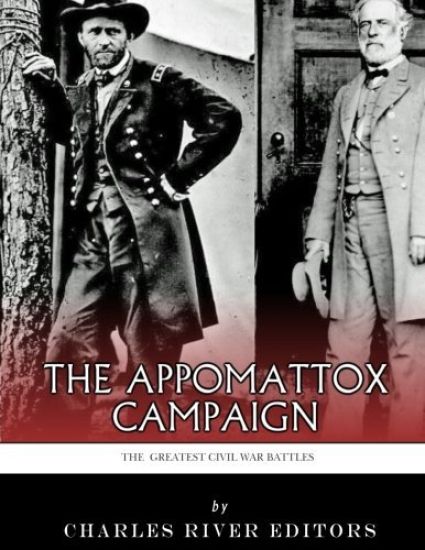
*Includes pictures *Includes accounts of the fighting and surrender by generals on both sides *Includes footnotes and a bibliography for further reading Of all the dramatic events that transpired during the Civil War, the end of the war in April 1865 brought perhaps the most remarkable of them all, and they came in such quick succession that it's still hard to believe nearly 150 years later. On April 2, the long siege of Petersburg by Ulysses S. Grant ended with Robert E. Lee's Army of Northern Virginia finally having its line broken, forcing Lee to retreat and give up Richmond in the process. Lee's battered army began stumbling toward a rail depot in the hopes of avoiding being surrounded by Union forces and picking up much needed food rations. While Grant's army continued to chase Lee's retreating army westward, the Confederate government sought to escape across the Deep South. On April 4, President Lincoln entered Richmond and toured the home of Confederate President Jefferson Davis. Fittingly, the food rations Lee moved toward did not arrive as anticipated, and on April 7, 1865, Grant sent Lee the first official letter demanding Lee's surrender. In it Grant wrote, "The results of the last week must convince you of the hopelessness of further resistance on the part of the Army of Northern Virginia in this struggle. I feel it is so, and regret it as my duty to shift myself from the responsibility of any further effusion of blood by asking of you the surrender of that portion of the Confederate States army known as the Army of Northern Virginia." Passing the note to General Longstreet, now his only advisor, Longstreet said, "Not yet." But by the following evening during what would be the final Confederate Council of War (and after one final attempt had been made to break through Union lines), Lee finally succumbed, stating regretfully, "There is nothing left me but to go and see General Grant, and I had rather die a thousand deaths." Communications continued until April 9, at which point Lee and Grant two met at Appomattox Court House. When Lee and Grant met, the styles in dress captured the personality differences perfectly. Lee was in full military attire, while Grant showed up casually in a muddy uniform. The Civil War's two most celebrated generals were meeting for the first time since the Mexican-American War. The Confederate soldiers had continued fighting while Lee worked out the terms of surrender, and they were understandably devastated to learn that they had surrendered. Some of his men had famously suggested to Lee that they continue to fight on. Porter Alexander would later rue the fact that he suggested to Lee that they engage in guerrilla warfare, which earned him a stern rebuke from Lee. As a choked-up Lee rode down the troop line on his famous horse Traveller that day, he addressed his defeated army, saying, "Men, we have fought through the war together. I have done my best for you; my heart is too full to say more." Although the surrender of the Army of Northern Virginia to Grant and the Army of the Potomac at Appomattox Courthouse did not officially end the long and bloody Civil War, the surrender is often considered the final chapter of the war. For that reason, Appomattox has captured the popular imagination of Americans ever since Lee's surrender there on April 9, 1865. The Greatest Civil War Battles: The Appomattox Campaign chronicles the final campaign between the Army of the Potomac and the Army of Northern Virginia, and the one popularly remembered as sealing the fate of the Confederacy. Along with pictures and a bibliography, you will learn about Appomattox like never before, in no time at all.
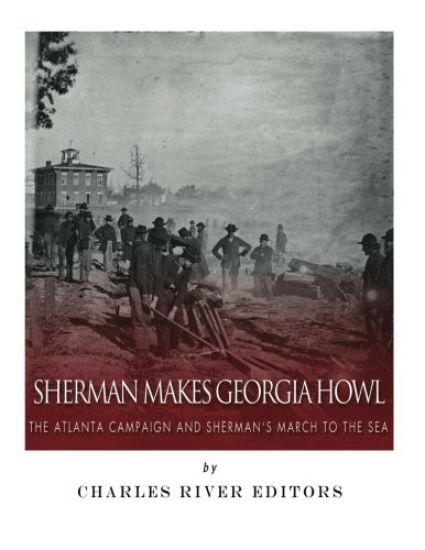
*Includes pictures of the battle's important generals. *Includes several maps of the battle. *Includes accounts of the fighting written by important generals. *Includes a Bibliography for further reading. After successfully breaking the Confederate siege at Chattanooga near the end of 1863, William Tecumseh Sherman united several Union armies in the Western theater for the Atlanta Campaign, forming one of the biggest armies in American history. After detaching troops for essential garrisons and minor operations, Sherman assembled his nearly 100,000 men and in May 1864 began his invasion of Georgia from Chattanooga, Tennessee, where his forces spanned a line roughly 500 miles wide. Sherman set his sights on the Confederacy's last major industrial city in the West and General Joseph E. Johnston's Army of Tennessee, which aimed to protect it. Atlanta's use to the Confederacy lay in its terminus for three major railroad lines that traveled across the South: the Georgia Railroad, Macon and Western, and the Western & Atlantic. U. S. Lieutenant General Ulysses S. Grant knew this, sending Major General William Tecumseh Sherman's Division of the Mississippi towards Atlanta, with specific instructions, "get into the country as far as you can, inflicting all the damage you can against the war revenues." The city's ability to send supplies to Lee's Army of Northern Virginia made Atlanta all the more important. In August 1864, Sherman moved his forces west across Atlanta and then south of it, positioning his men to cut off Atlanta's supply lines and railroads. When the Confederate attempts to stop the maneuvering failed, the writing was on the wall. On September 1, 1864, Hood and the Army of Tennessee evacuated Atlanta and torched everything of military value. On September 3, 1864, Sherman famously telegrammed Lincoln, "Atlanta is ours and fairly won." Two months later, so was Lincoln's reelection. After the Atlanta campaign, Grant explained to Sherman that the Confederates must be "demoralized and left without hope," and he instructed Sherman, "Take all provisions, forage and stock wanted for the use of your command. Such as cannot be consumed, destroy. Leave the valley so barren that crows flying over it...will have to carry their provender with them." This strategy sought the total economic collapse of the South, as well as completely disabling the South's capability of fielding armies. In addition to the wholesale plundering of Southern resources, including taking them from civilians, the Union reversed its policy of swapping prisoners, realizing it had a far bigger reserve of manpower than the South. The Atlanta Campaign was a perfect example of this, as both sides lost about the same number of casualties. By September 1864, however, Sherman still had about 80,000 men, while Hood's army was reduced to about 30,000. Thus, with his remaining forces, about 60,000 strong, Sherman decided to take the unprecedented step of cutting his own communication and supply lines and commencing a widespread march across Georgia, destroying Southern infrastructure and living off the land until his forces reached the coast and linked up with the Union navy. Aside from those plans, Sherman did not appoint a fixed time for his arrival, and the concept of the march greatly concerned the Lincoln Administration, since his men would virtually be on their own without any contact with the rest of the North as they marched straight through the heart of the Confederacy. Grant expressed his own concerns but eventually gave Sherman a simple go-ahead: "Go as you propose." Ultimately, Sherman's armies cut a path of abject destruction 60 miles wide and 300 hundred miles long from Atlanta to Savannah, which some likened to a Biblical blight. And as Sherman had intended, he did indeed made Georgia "howl."