Kirjojen hintavertailu – 12 903 725 kirjaa ja 27 kauppaa

Kirjailija

J. F. V. Keiger

Kirjat ja teokset yhdessä paikassa: 4 kirjaa, julkaisuja vuosilta 1997–2002, suosituimpiin kuuluu Algerian War and the French Army, 1954-62. Vertaile teosten hintoja ja tarkista saatavuus suomalaisista kirjakaupoista.

Nimi esiintyy myös muodoissa: J.F.V. Keiger

4 kirjaa

Kirjojen julkaisuvuodet: 1997–2002.

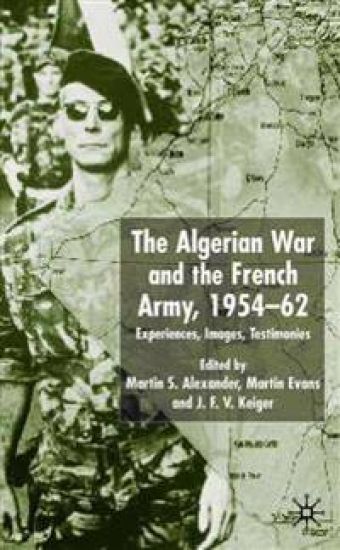
Algerian War and the French Army, 1954-62

Algerian War and the French Army, 1954-62

Martin S. Alexander; Martin Evans; J.F.V. Keiger

Palgrave Macmillan
2002
sidottu
The Algerian War 1954-62 was one of the most prolonged and violent examples of decolonization. At times horribly savage, it was an undeclared war in the sense that no formal declaration of hostilities was ever made. Bringing to an end one hundred and thirty two years of French rule, the Algerian struggle caused the fall of six French prime ministers, the collapse of the Fourth Republic and expulsion of one million French settlers. This volume, bringing together leading experts in the field, focuses on one of the key actors in the drama - the French army. They show that the Algerian War was just as much about conflicts of ideas, beliefs and loyalties as it was about simple military operations. In this way, the collection goes beyond polemic and recrimination to explore the many and varied nuances of what was one of the historically most important of the grand style colonial wars.
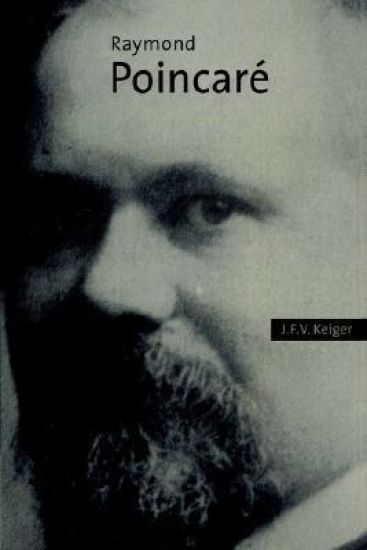
Raymond Poincaré

Raymond Poincaré

J. F. V. Keiger

Cambridge University Press
2002
pokkari
This study is a pioneering scholarly biography of one of France’s foremost political leaders. In a career which ran from the 1880s to the 1930s, one of the most formative periods of modern French history, Poincaré held the principal offices of state. He played crucial roles in France’s entry into the Great War, the organisation of the war effort, the peace settlement, the reparations question, the occupation of the Ruhr and the reorganisation of French finances in the 1920s. His life and work is surrounded by controversy and myth, from ‘Poincaré-la-guerre’ to ‘Poincaré-le-franc’, which this book dissects. Using a host of new archival material, Professor Keiger explores the historiography of the man and his times and reveals, somewhat surprisingly, how animal rights and feminism could be as important to him as party politics and public finance.
Algerian War and the French Army, 1954-62

Algerian War and the French Army, 1954-62

Martin S. Alexander; Martin Evans; J.F.V. Keiger

Palgrave Macmillan
2002
nidottu
The Algerian War 1954-62 was one of the most prolonged and violent examples of decolonization. At times horribly savage, it was an undeclared war in the sense that no formal declaration of hostilities was ever made. Bringing to an end one hundred and thirty two years of French rule, the Algerian struggle caused the fall of six French prime ministers, the collapse of the Fourth Republic and expulsion of one million French settlers. This volume, bringing together leading experts in the field, focuses on one of the key actors in the drama - the French army. They show that the Algerian War was just as much about conflicts of ideas, beliefs and loyalties as it was about simple military operations. In this way, the collection goes beyond polemic and recrimination to explore the many and varied nuances of what was one of the historically most important of the grand style colonial wars.
Raymond Poincaré

Raymond Poincaré

J. F. V. Keiger

Cambridge University Press
1997
sidottu
This study is a scholarly biography of one of France's foremost political leaders. In a career which ran from the 1880s to the 1930s, one of the most formative periods of modern French history, Poincaré held the principal offices of state. He played crucial roles in France's entry into the Great War, the organisation of the war effort, the peace settlement, the reparations question, the occupation of the Ruhr and the reorganisation of French finances in the 1920s. His life and work is surrounded by controversy and myth, from 'Poincaré-la-guerre' to 'Poincaré-le-franc', which this book dissects. Using a host of new archival material, Professor Keiger explores the historiography of the man and his times and reveals, somewhat surprisingly, how animal rights and feminism could be as important to him as party politics and public finance.