Kirjojen hintavertailu – 12 903 725 kirjaa ja 27 kauppaa

Kirjailija

J H Patterson

Kirjat ja teokset yhdessä paikassa: 25 kirjaa, julkaisuja vuosilta 1907–2023, suosituimpiin kuuluu The Man-Eating Lions Of Tsavo; Zoology (Leaflet 7). Vertaile teosten hintoja ja tarkista saatavuus suomalaisista kirjakaupoista.

Nimi esiintyy myös muodoissa: J. H. Patterson, J.H.Patterson

25 kirjaa

Kirjojen julkaisuvuodet: 1907–2023.

The Man-Eating Lions Of Tsavo; Zoology (Leaflet 7)
This book has been considered by academicians and scholars of great significance and value to literature. This forms a part of the knowledge base for future generations. So that the book is never forgotten we have represented this book in a print format as the same form as it was originally first published. Hence any marks or annotations seen are left intentionally to preserve its true nature.
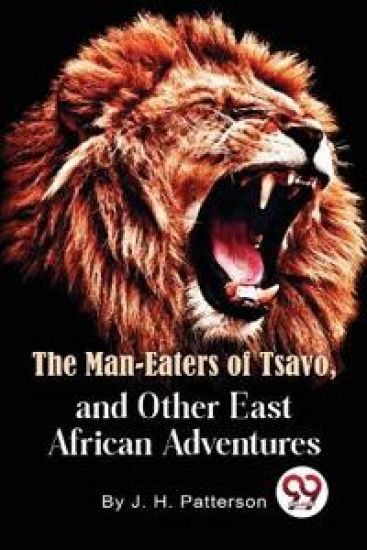
The Man -Eaters of Tsavo and Other East African Adventures

The Man -Eaters of Tsavo and Other East African Adventures

J.H.Patterson

Double 9 Books LLP
2022
nidottu

Halvin toimitettuna 26,90 €

Written by J. H. Patterson, The Man-Eaters of Tsavo and Other East African Adventures is a semi-autobiographical book. Patterson, a natural narrator, engages us in the horror of the laborers' fear and his own endeavors to track the monster, which would end up killing approximately 130 individuals before Patterson took them out. This real-life adventure will keep the fans of both fiction and non-fiction transfixed. The Man-Eaters of Tsavo describes Patterson's encounters while overseeing the development of a railroad bridge in Kenya. The title of the book comes from the lions which killed Patterson's workers and which Patterson ultimately killed. Following the demise of the lions, the book recounts the bridge's completion despite additional difficulties (like a fierce flood) as well as numerous accounts concerning local wildlife, nearby tribes, the uncovering of the man-eater's cave, and different hunting expeditions. The book has been adapted to film three times: a 1952 three-dimensional film named Bwana Fiend, a monochrome, English film of the 1950s, and a 1996 variety form called The Phantom and the Murkiness. The book also incorporates photos taken by Patterson at the time of railway construction; local tribes; the workers; landscape and wildlife; and the man-eaters.
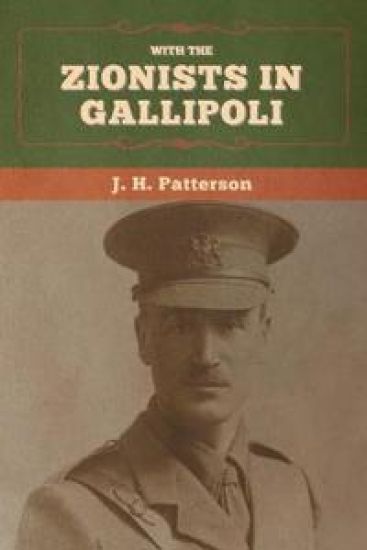
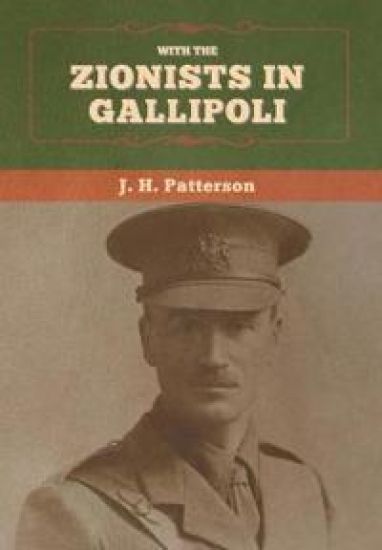
With the Zionists in Gallipoli

With the Zionists in Gallipoli

J H Patterson

Bibliotech Press
2020
pokkari
Lieutenant-Colonel John Henry Patterson, DSO (10 November 1867 - 18 June 1947), known as J. H. Patterson, was a British soldier, hunter, author and Christian Zionist, best known for his book The Man-Eaters of Tsavo (1907), which details his experiences while building a railway bridge over the Tsavo river in British East Africa (now Kenya) in 1898-99. The book has inspired three Hollywood films - Bwana Devil (1952), Killers of Kilimanjaro (1959) and The Ghost and the Darkness (1996) in which he was portrayed by Val Kilmer. In the First World War, Patterson was the commander of the Jewish Legion, "the first Jewish fighting force in nearly two millennia", and has been described as the godfather of the modern Israel Defense Forces. Lieutenant-Colonel John Henry Patterson, DSO (10 November 1867 - 18 June 1947), known as J. H. Patterson, was a British soldier, hunter, author and Christian Zionist, best known for his book The Man-Eaters of Tsavo (1907), which details his experiences while building a railway bridge over the Tsavo river in British East Africa (now Kenya) in 1898-99. The book has inspired three Hollywood films - Bwana Devil (1952), Killers of Kilimanjaro (1959) and The Ghost and the Darkness (1996) in which he was portrayed by Val Kilmer. In the First World War, Patterson was the commander of the Jewish Legion, "the first Jewish fighting force in nearly two millennia", and has been described as the godfather of the modern Israel Defense Forces. Patterson was born in 1867 in Forgney, Ballymahon, County Longford, Ireland, to a Protestant father and Roman Catholic mother. He joined the British Army at the age of seventeen and eventually attained the rank of Lieutenant-Colonel and was awarded the Distinguished Service Order (DSO). He finally retired from the military in 1920. (wikipedia.org)

The Man-Eaters of Tsavo, and Other East African Adventures
Lieutenant-Colonel John Henry Patterson, DSO (10 November 1867 - 18 June 1947), known as J. H. Patterson, was a British soldier, hunter, author and Christian Zionist, best known for his book The Man-Eaters of Tsavo (1907), which details his experiences while building a railway bridge over the Tsavo river in British East Africa (now Kenya) in 1898-99. The book has inspired three Hollywood films - Bwana Devil (1952), Killers of Kilimanjaro (1959) and The Ghost and the Darkness (1996) in which he was portrayed by Val Kilmer. In the First World War, Patterson was the commander of the Jewish Legion, "the first Jewish fighting force in nearly two millennia", and has been described as the godfather of the modern Israel Defense Forces. Lieutenant-Colonel John Henry Patterson, DSO (10 November 1867 - 18 June 1947), known as J. H. Patterson, was a British soldier, hunter, author and Christian Zionist, best known for his book The Man-Eaters of Tsavo (1907), which details his experiences while building a railway bridge over the Tsavo river in British East Africa (now Kenya) in 1898-99. The book has inspired three Hollywood films - Bwana Devil (1952), Killers of Kilimanjaro (1959) and The Ghost and the Darkness (1996) in which he was portrayed by Val Kilmer. In the First World War, Patterson was the commander of the Jewish Legion, "the first Jewish fighting force in nearly two millennia", and has been described as the godfather of the modern Israel Defense Forces. Patterson was born in 1867 in Forgney, Ballymahon, County Longford, Ireland, to a Protestant father and Roman Catholic mother. He joined the British Army at the age of seventeen and eventually attained the rank of Lieutenant-Colonel and was awarded the Distinguished Service Order (DSO). He finally retired from the military in 1920. (wikipedia.org)
Die Menschenfresser von Tsavo

Die Menschenfresser von Tsavo

J H Patterson

Books on Demand
2019
pokkari
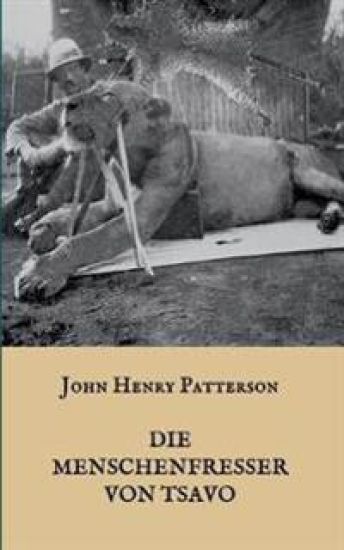
"Die Menschenfresser von Tsavo" - ein zeitloser Klassiker der Jagd- und Abenteuerliteratur. Dieses 1907 von Colonel John Henry Patterson verfasste Buch ist ein fesselnder Augenzeugenbericht der Extraklasse: Es handelt von den t dlichen Angriffen zweier L wen, die im Jahre 1898 den Bau einer Eisenbahnbr cke ber den ostafrikanischen Flu Tsavo zum Erliegen brachten, indem sie Dutzende Arbeiter verschleppten und auffra en. Colonel Patterson, der urspr nglich nur den Bau der Eisenbahnbr cke beaufsichtigen sollte, beschreibt darin seinen erbitterten Kampf gegen die beiden Bestien, die ber Monate hinweg allen Z unen, Fallen und sogar Kugeln widerstanden. 1996 wurde die Geschichte der menschenfressenden L wen von Tsavo unter dem Titel "Der Geist und die Dunkelheit" mit Val Kilmer und Michael Douglas in den Hauptrollen verfilmt.
The Man-Eaters of Tsavo

The Man-Eaters of Tsavo

J. H. Patterson

SDE Classics
2019
nidottu
"Darkness fell almost immediately, and everything became extraordinarily still. The silence of an African jungle on a dark night needs to be experienced to be realised; it is most impressive, especially when one is absolutely alone and isolated from one's fellow creatures, as I was then." In the late 19th century, the British began construction on a railway linking Uganda with the Indian Ocean. The railroad's passage through Africa crossed over the Tsavo River in Kenya, and thus the British Army brought Lieutenant-Colonel John Henry Patterson in to lead the thousands of workers as they began the bridge's construction. Throughout the next nine months, the construction site encountered a pair of lions that would stalk the campsite, drag workers from their tents, and devour those workers at nighttime. The killings occurred daily and the lions became bolder with each passing week. Nothing seemed to work for Patterson to stave off the lion attacks. Patterson published The Man-Eaters of Tsavo in 1907 to chronicle those nine months where the lion attacks intensified to the point where the bridge's construction had to be halted. Included in Patterson's account of the "Man-Eaters at Tsavo" are other stories from his time in East Africa.
The Man-Eaters of Tsavo

The Man-Eaters of Tsavo

J. H. Patterson

Createspace Independent Publishing Platform
2018
nidottu
It was towards noon on March 1, 1898, that I first found myself entering the narrow and somewhat dangerous harbour of Mombasa, on the east coast of Africa. The town lies on an island of the same name, separated from the mainland only by a very narrow channel, which forms the harbour; and as our vessel steamed slowly in, close under the quaint old Portuguese fortress built over three hundred years ago, I was much struck with the strange beauty of the view which gradually opened out before me. Contrary to my anticipation, everything looked fresh and green, and an oriental glamour of enchantment seemed to hang over the island. The old town was bathed in brilliant sunshine and reflected itself lazily on the motionless sea; its flat roofs and dazzlingly white walls peeped out dreamily between waving palms and lofty cocoanuts, huge baobabs and spreading mango trees; and the darker background of well-wooded hills and slopes on the mainland formed a very effective setting to a beautiful and, to me, unexpected picture.
The Man-eaters of Tsavo and Other East African Adventures
The Man-eaters of Tsavo is a book written by John Henry Patterson in 1907 that recounts his experiences while overseeing the construction of a railroad bridge in what would become Kenya. It is titled after a pair of lions which killed his workers, and which he eventually killed. Lieutenant-Colonel John Henry Patterson, DSO (10 November 1867 - 18 June 1947), known as J. H. Patterson, was an Irish born British soldier, hunter, author and Christian Zionist, best known for his book The Man-Eaters of Tsavo (1907), which details his experiences while building a railway bridge over the Tsavo river in British East Africa (now Kenya) in 1898-99. The book has inspired three Hollywood films - Bwana Devil (1952), Killers of Kilimanjaro (1959) and The Ghost and the Darkness (1996) in which he was portrayed by Val Kilmer. In the First World War, Patterson was the commander of the Jewish Legion, "the first Jewish fighting force in nearly two millennia," and has been described as the godfather of the modern Israel Defense Forces.
The Man-Eaters of Tsavo

The Man-Eaters of Tsavo

J H Patterson

Books on Demand
2018
pokkari
The Man-eaters of Tsavo is a book written by John Henry Patterson in 1907 that recounts his experiences while overseeing the construction of a railroad bridge in what would become Kenya. It is titled after a pair of lions which killed his workers, and which he eventually killed. Following the death of the lions, the book tells of the bridge's completion in spite of additional challenges (such as a fierce flood) as well as many stories concerning local wildlife (including other lions), local tribes, the discovery of the maneaters' cave, and various hunting expeditions. An appendix contains advice to sportsmen visiting British East Africa. The book also includes photographs taken by Patterson at the time which include the railway construction; the workers; local tribes; scenery and wildlife; and the man-eaters. Several publications about and studies of the man-eating lions of Tsavo have been inspired by Patterson's account. The book has been adapted to film three times: a monochrome, British film of the 1950s, a 1952 3-D film titled Bwana Devil, and a 1996 color version called The Ghost and the Darkness, where Val Kilmer played the daring engineer who hunts down the lions of Tsavo.
The maneaters of Tsavo and other East African adventures. By: J.H. Patterson AND Frederick Courteney Selous -/ ILLUSTRATIONS /

The maneaters of Tsavo and other East African adventures. By: J.H. Patterson AND Frederick Courteney Selous -/ ILLUSTRATIONS /

Frederick Courteney Selous; J. H. Patterson

Createspace Independent Publishing Platform
2018
nidottu
Lieutenant-Colonel John Henry Patterson, (10 November 1867 - 18 June 1947), known as J. H. Patterson, was an Irish born British soldier, hunter, author and Christian Zionist, best known for his book The Man-Eaters of Tsavo (1907), which details his experiences while building a railway bridge over the Tsavo river in British East Africa (now Kenya) in 1898-99. The book has inspired three Hollywood films - Bwana Devil (1952), Killers of Kilimanjaro (1959) and The Ghost and the Darkness (1996) in which he was portrayed by Val Kilmer. In the First World War, Patterson was the commander of the Jewish Legion, "the first Jewish fighting force in nearly two millennia", and has been described as the godfather of the modern Israel Defense Forces. Patterson was born in 1867 in Forgney, Ballymahon, County Longford, Ireland, to a Protestant father and Roman Catholic mother. He joined the British Army at the age of seventeen and eventually attained the rank of Lieutenant-Colonel 2] and was awarded the DSO. He finally retired from the military in 1920.
The Man-Eaters of Tsavo and Other East African Adventures

The Man-Eaters of Tsavo and Other East African Adventures

J. H. Patterson

Createspace Independent Publishing Platform
2017
nidottu
From the time of Herodotus until to-day, lion stories innumerable have been told and written. I have put some on record myself. But no lion story I have ever heard or read equals in its long-sustained and dramatic interest the story of the Tsavo man-eaters as told by Col. Patterson. A lion story is usually a tale of adventures, often very terrible and pathetic, which occupied but a few hours of one night; but the tale of the Tsavo man-eaters is an epic of terrible tragedies spread out over several months, and only at last brought to an end by the resource and determination of one man. It was some years after I read the first account published of the Tsavo man-eaters that I made the acquaintance of President Roosevelt. I told him all I remembered about it, and he was so deeply interested in the story-as he is in all true stories of the nature and characteristics of wild animals-that he begged me to send him the short printed account as published in The Field.