Kirjojen hintavertailu – 12 859 819 kirjaa ja 27 kauppaa

Kirjailija

J Harvey Walton

Kirjat ja teokset yhdessä paikassa: 4 kirjaa, julkaisuja vuosilta 2017–2019, suosituimpiin kuuluu Demons and Spirits in Biblical Theology. Vertaile teosten hintoja ja tarkista saatavuus suomalaisista kirjakaupoista.

Nimi esiintyy myös muodoissa: J. Harvey Walton

4 kirjaa

Kirjojen julkaisuvuodet: 2017–2019.

Demons and Spirits in Biblical Theology

Demons and Spirits in Biblical Theology

John H Walton; J Harvey Walton

Cascade Books
2019
sidottu
Some people believe that a battle of cosmic proportions is raging as Satan and his demons seek to destroy Christians and undermine God's plans. Others believe that all talk of demons in the Bible and theology only reflects pre-modern superstitions that should be re-interpreted in philosophical and psychological terms. Despite their contrasts, both believe that the Bible directly or indirectly intends to teach readers about reality. Another path is possible. What if references to demons in the Bible are similar to references about the shape and structure of the cosmos representing the beliefs familiar to the ancient audience but used only as a framework for teaching about the plans and purposes of God? This approach is here worked out through detailed examination of hermeneutical method, the ancient Near Eastern and Greco-Roman contexts, each of the biblical terms and passages, and the essentials of biblical and systematic theology. Unlike many scholarly treatments of demons, readers will not find an assessment of the metaphysical realities. Instead they will be introduced to a hermeneutical, exegetical, and theological feast regarding what the Bible, understood in its ancient context, teaches. ""The authors argue against two diametrically opposed interpretations of demons in the Bible: demythologizing and reifying. They present a third approach, understanding references to the demonic within the cultural framework and mindset of each of the biblical authors. Their book is an original and cogent contribution to biblical scholarship, and absolutely essential for the scholarly study of the Devil."" --Jeffrey Burton Russell, Professor of History, emeritus, University of California, Santa Barbara ""This is a timely and critically needed resource that I really hope church leaders--and as many people as possible--will read. We need to have a correct understanding of the nature and schemes of evil today more than ever."" --Dan Kimball, on staff at Vintage Faith Church and the ReGeneration Project ""Demons and Spirits in Biblical Theology is a sophisticated yet very readable assessment of the problem of good and evil and how appeals to demons and evil spirits have played a role in the debate. This well researched and well-thought-out book makes major contributions to discussions about Conflict Theology, Prosperity Theology, and Open Theism. The authors wisely conclude that the Bible contains no theology of demons as such, only references to beliefs found in some contexts and settings. I strongly recommend this book."" --Craig A. Evans, Professor of Christian Origins, Houston Baptist University ""In Demons and Spirits in Biblical Theology, the authors develop in a new direction the long-term Waltonian program that is designed to make us better Bible-readers by helping us to read Scripture in its ancient contexts. Readers may not agree with every conclusion that arises from their important distinction between reference and affirmation in the Bible. They should, however, recognize the utility of the method in helping us to ensure that, on the matter of demons and spirits, we are people of biblical faith rather than (in reality) polytheists or practical atheists. I warmly commend this book to all who need help in thinking this matter through."" --Iain Provan, Professor of Biblical Studies, Regent College John H. Walton is Professor of Old Testament at Wheaton College. He has authored or edited over twenty-five books, including The Zondervan Illustrated Bible Backgrounds Commentary: Old Testament (2009), Ancient Near Eastern Thought and the Old Testament (2006), The Lost World of Adam and Eve (2015), Old Testament Theology for Christians (2017), and commentaries on Genesis (2001) and Job (2012). J. Harvey Walton is pursuing graduate studies at St. Andrews University and has been involved in various editing and writing projects.
Demons and Spirits in Biblical Theology

Demons and Spirits in Biblical Theology

John H Walton; J Harvey Walton

Cascade Books
2019
pokkari
Some people believe that a battle of cosmic proportions is raging as Satan and his demons seek to destroy Christians and undermine God's plans. Others believe that all talk of demons in the Bible and theology only reflects pre-modern superstitions that should be re-interpreted in philosophical and psychological terms. Despite their contrasts, both believe that the Bible directly or indirectly intends to teach readers about reality. Another path is possible. What if references to demons in the Bible are similar to references about the shape and structure of the cosmos representing the beliefs familiar to the ancient audience but used only as a framework for teaching about the plans and purposes of God? This approach is here worked out through detailed examination of hermeneutical method, the ancient Near Eastern and Greco-Roman contexts, each of the biblical terms and passages, and the essentials of biblical and systematic theology. Unlike many scholarly treatments of demons, readers will not find an assessment of the metaphysical realities. Instead they will be introduced to a hermeneutical, exegetical, and theological feast regarding what the Bible, understood in its ancient context, teaches. ""The authors argue against two diametrically opposed interpretations of demons in the Bible: demythologizing and reifying. They present a third approach, understanding references to the demonic within the cultural framework and mindset of each of the biblical authors. Their book is an original and cogent contribution to biblical scholarship, and absolutely essential for the scholarly study of the Devil."" --Jeffrey Burton Russell, Professor of History, emeritus, University of California, Santa Barbara ""This is a timely and critically needed resource that I really hope church leaders--and as many people as possible--will read. We need to have a correct understanding of the nature and schemes of evil today more than ever."" --Dan Kimball, on staff at Vintage Faith Church and the ReGeneration Project ""Demons and Spirits in Biblical Theology is a sophisticated yet very readable assessment of the problem of good and evil and how appeals to demons and evil spirits have played a role in the debate. This well researched and well-thought-out book makes major contributions to discussions about Conflict Theology, Prosperity Theology, and Open Theism. The authors wisely conclude that the Bible contains no theology of demons as such, only references to beliefs found in some contexts and settings. I strongly recommend this book."" --Craig A. Evans, Professor of Christian Origins, Houston Baptist University ""In Demons and Spirits in Biblical Theology, the authors develop in a new direction the long-term Waltonian program that is designed to make us better Bible-readers by helping us to read Scripture in its ancient contexts. Readers may not agree with every conclusion that arises from their important distinction between reference and affirmation in the Bible. They should, however, recognize the utility of the method in helping us to ensure that, on the matter of demons and spirits, we are people of biblical faith rather than (in reality) polytheists or practical atheists. I warmly commend this book to all who need help in thinking this matter through."" --Iain Provan, Professor of Biblical Studies, Regent College John H. Walton is Professor of Old Testament at Wheaton College. He has authored or edited over twenty-five books, including The Zondervan Illustrated Bible Backgrounds Commentary: Old Testament (2009), Ancient Near Eastern Thought and the Old Testament (2006), The Lost World of Adam and Eve (2015), Old Testament Theology for Christians (2017), and commentaries on Genesis (2001) and Job (2012). J. Harvey Walton is pursuing graduate studies at St. Andrews University and has been involved in various editing and writing projects.
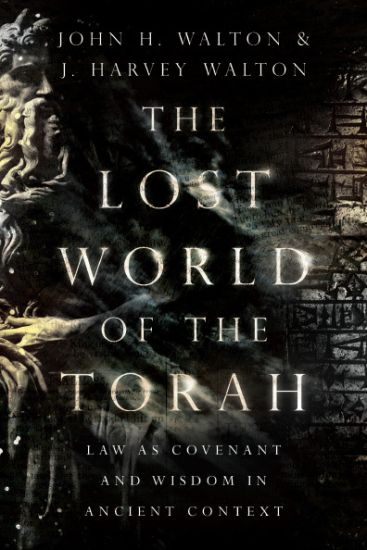
The Lost World of the Torah – Law as Covenant and Wisdom in Ancient Context

The Lost World of the Torah – Law as Covenant and Wisdom in Ancient Context

John H. Walton; J. Harvey Walton

IVP Academic
2019
nidottu

Halvin toimitettuna 33,10 €

Our handling of what we call biblical law veers between controversy and neglect. On the one hand, controversy arises when Old Testament laws seem either odd beyond comprehension (not eating lobster) or positively reprehensible (executing children). On the other, neglect results when we consider the law obsolete, no longer carrying any normative power (tassels on clothing, making sacrifices). Even readers who do attempt to make use of the Old Testament "law" often find it either irrelevant, hopelessly laden with "thou shalt nots," or simply so confusing that they throw up their hands in despair. Despite these extremes, people continue to propose moral principles from these laws as "the biblical view" and to garner proof texts to resolve issues that arise in society. The result is that both Christians and skeptics regularly abuse the Torah, and its true message often lies unheard. Walton and Walton offer in The Lost World of the Torah a restorative vision of the ancient genre of instruction for wisdom that makes up a significant portion of the Old Testament. In the ancient Near East, order was achieved through the wisdom of those who governed society. The objective of torah was to teach the Israelites to be wise about the kind of order needed to receive the blessings of God’s favor and presence within the context of the covenant. Here readers will find fresh insight on this fundamental genre of the Old Testament canon. The books in the Lost World Series follow the pattern set by Bible scholar John H. Walton, bringing a fresh, close reading of the Hebrew text and knowledge of ancient Near Eastern literature to an accessible discussion of the biblical topic at hand using a series of logic-based propositions.
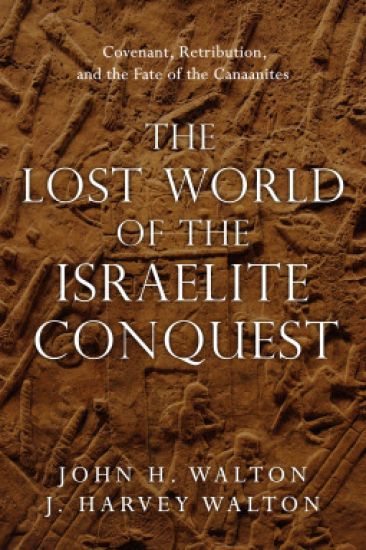
The Lost World of the Israelite Conquest – Covenant, Retribution, and the Fate of the Canaanites

The Lost World of the Israelite Conquest – Covenant, Retribution, and the Fate of the Canaanites

John H. Walton; J. Harvey Walton

Inter-Varsity Press,US
2017
nidottu

Halvin toimitettuna 30,80 €

Biblical Foundations Award Winner Holy warfare is the festering wound on the conscience of Bible-believing Christians. Of all the problems the Old Testament poses for our modern age, this is the one we want to avoid in mixed company. But do the so-called holy war texts of the Old Testament portray a divinely inspired genocide? Did Israel slaughter Canaanites at God's command? Were they enforcing divine retribution on an unholy people? These texts shock us. And we turn the page. But have we rightly understood them? In The Lost World of the Israelite Conquest, John Walton and J. Harvey Walton take us on an archaeological dig, excavating the layers of translation and interpretation that over time have encrusted these texts and our perceptions. What happens when we take new approaches, frame new questions? When we weigh again their language and rhetoric? Were the Canaanites punished for sinning against the covenanting God? Does the Hebrew word herem mean "devote to destruction"? How are the Canaanites portrayed and why? And what happens when we backlight these texts with their ancient context? The Lost World of the Israelite Conquest keenly recalibrates our perception and reframes our questions. While not attempting to provide all the answers, it offers surprising new insights and clears the ground for further understanding. The books in the Lost World Series follow the pattern set by Bible scholar John H. Walton, bringing a fresh, close reading of the Hebrew text and knowledge of ancient Near Eastern literature to an accessible discussion of the biblical topic at hand using a series of logic-based propositions.