Kirjojen hintavertailu – 12 859 828 kirjaa ja 27 kauppaa

Kirjailija

J.J. Brody

Kirjat ja teokset yhdessä paikassa: 3 kirjaa, julkaisuja vuosilta 1990–2005, suosituimpiin kuuluu Pueblo Indian Painting. Vertaile teosten hintoja ja tarkista saatavuus suomalaisista kirjakaupoista.

Nimi esiintyy myös muodoissa: J. J. Brody

3 kirjaa

Kirjojen julkaisuvuodet: 1990–2005.

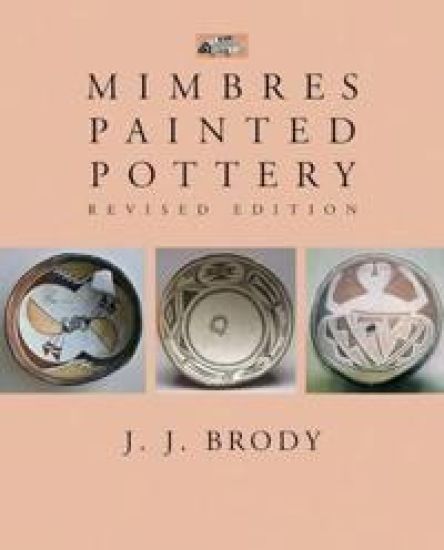
Mimbres Painted Pottery, Revised Edition

Mimbres Painted Pottery, Revised Edition

J.J. Brody

School of American Research Press,U.S.
2005
nidottu
The Mimbres cultural florescence between about AD 1000 and AD 1140 remains one of the most visually astonishing and anthropologically intriguing questions in Southwest prehistory. In this revised edition, noted Mimbres scholar Dr. J. J. Brody incorporates the extensive fieldwork done since the original publication in 1977, updating his discussion of village life, the larger world in which the Mimbres people lived, and how the art that they practiced illuminates these wider issues. He addresses human and animal iconography, the importance of perspective and motion in perceivingMimbres artistry, and the technology used to produce the ceramics. This lively, engaging work will interest archaeologists, art historians, and all people who enjoy the beauty of Mimbres pottery. Featuring over one hundred new illustrations and insights drawn from a lifetime of study and contemplation, this book is much more than a revised edition; it establishes a new standard for the artistic interpretation of a classic Southwestern culture for the new century.
Pueblo Indian Painting

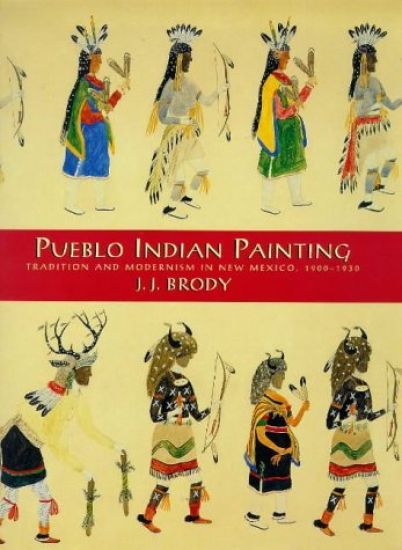
Pueblo Indian Painting

J.J. Brody

School of American Research Press,U.S.
1997
nidottu
A new tradition of Pueblo fine art painting arose in the first three decades of the twentieth century, born out of a dynamic encounter between the Pueblo and Euro-American communities in and around Santa Fe, New Mexico. Traditional Pueblo art supported community values and was integral to the ritual and daily life of the people, but the painting style that developed after 1900 was novel in every way, involving new subject matter, new media, and a new audience of Euro-American artists, intellectuals, and art patrons. The young Pueblo artists who created the new genre merged their Pueblo traditions with the aesthetic principles of Euro-American modernism to create an entirely new art form emblematic of the changing relationship between the two cultures. In Pueblo Indian Painting, art historian J. J. Brody presents the first complete history of this vibrant art. Based on the extensive Pueblo painting collections of the School of American Research and richly illustrated in color and black and white, the book examines the achievements of seven artists who were key to the evolution of Pueblo painting: Fred Kabotie and Otis Polelonema of Hopi, Velino Shije Herrera of Zia, and Crescencio Martinez (Ta'E), Tonita PeOa (Quah Ah), Alfonso Roybal (Awa Tsireh), and Abel Sanchez (Oqwa Pi) of San Ildefonso. Brody also explores the role played by the patrons who supported and promoted the Pueblo artists' work, individuals such as Mary Austin, Alice Corbin Henderson, Edgar Lee Hewett, Oliver La Farge, Mabel Dodge Luhan, John Sloan, and Amelia Elizabeth White. Pueblo Indian Painting places this important but under-appreciated fine art tradition squarely within the contexts of Pueblo culture and Euro-American modernism, bringing long-overdue recognition to the tradition and its preeminent practitioners as a vital part of American art history.
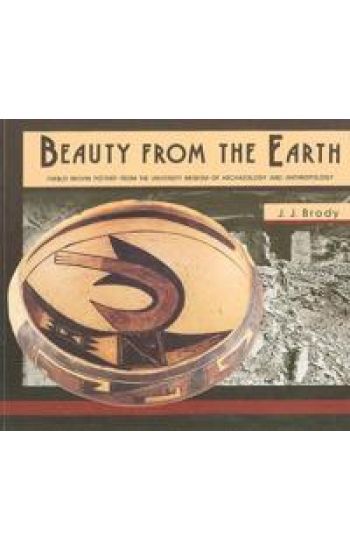
Beauty From the Earth – Pueblo Indian Pottery from the University Museum of Archaeology and Anthropology
The major essay by renowned art historian J. J. Brody traces the development of southwestern pottery from the prehistoric Anasazi through modern Pueblo. A section on pottery technology examines the different types of clays and details the pottery-makings process. Rebecca Allen has contributed an essay on the history of the Museum's southwestern collection, providing insights into the personalities of the collectors and the ways their personal tastes affected the contents of their collections. The catalogue includes a compendium of the 104 objects in the exhibition, each accompanied by a photograph.