Kirjailija
J. M. Barrie
Kirjat ja teokset yhdessä paikassa: 446 kirjaa, julkaisuja vuosilta 1911–2026, suosituimpiin kuuluu Peter Pan. Vertaile teosten hintoja ja tarkista saatavuus suomalaisista kirjakaupoista.
Nimi esiintyy myös muodoissa: J M Barrie, J.M. Barrie, J. M Barrie, J.M Barrie
446 kirjaa
Kirjojen julkaisuvuodet: 1911–2026.

J. M. Barrie wrote the humorous theater drama The Admirable Crichton in 1902. James Crichton, a polymath, and athlete who lived in the 16th century, was a fellow Scot who earned the nickname. Barrie adopted it as his own. The epigram-loving Ernest is presumably a parody of The Importance of Being Earnest by Oscar Wilde's main character. The plot may have been inspired by Ludwig Fulda's Robinson's Eiland, a German play written in 1896. A group of Berlin officials-including a capitalist, a professor, and a journalist-are shipwrecked on an island where a secretary named Arnold naturally assumes the role of a group leader. The story is described as "a satire upon modern super-culture in its relation to primal nature." However, the modern critic Arthur Bingham Walkley dismissed the association as little more than gossip, saying, "I feel absolutely indifferent as to its truth." Barrie had considered a more contentious conclusion, especially one that saw Crichton and Lady Mary rekindling their romance, but she had determined that "the stalls wouldn't stand it." Charles Frohman was in charge of the production, which debuted on November 4 at the Duke of York's Theatre in London and ran for 828 exceedingly well-received performances.

J. M. Barrie created Peter and Wendy, also referred to as Peter Pan, as a 1904 play and a 1911 book. Both versions depict Peter Pan as a cheeky youngster with the ability to fly who has numerous adventures on the mythical island of Neverland, home to mermaids, fairies, "Indians" (American-Indians), pirates, and other fantastical creatures. The characters Wendy Darling and her brothers John and Michael, Tinker Bell, Peter's fairy, the Lost Boys, and Captain Hook also appear in the Peter Pan stories. Barrie's acquaintance with the Llewelyn Davies family served as the basis for both the play and the book. After the play's initial performance, Barrie continued to make revisions until the play's script was published in 1928. The play's world premiere took place at the Duke of York's Theatre in London on December 27, 1904, with Nina Boucicault, the playwright's daughter, playing the main character. In 1905, a Broadway show starring Maude Adams was presented. Later, it was brought back with actors like Marilyn Miller and Eva Le Gallienne. HodderStoughton in the UK and Charles Scribner's Sons in the US both released the book for the first time in 1911.

Four short stories about families touched by World War I are included in this book. Each of the stories takes place within a single scenario, and they are all so well written. These really do seem to be miniature works of art. The first one involved an elderly woman who is alone and "adopts" a man who is going to go to war on impulse. The second concerns a father's connection with his son who is joining the military as an officer. In the third tale, a dementia-stricken old man tries to make sense of the changes taking place all around him. The final story concerns a father and son who are attempting to move on after the son's passing. The interactions between fathers and sons are a fascinating motif in these tales. The society in which this piece was created did not value father-son relationships. Wonderfully poignant little book from 1918 that tells four stories about common households during the Great War.

One of several books about the imaginary village of Thrums, which is supposed to be based on Barrie's hometown of Kirriemuir, is A Window in Thrums, which tells the tale of the "untrue son." Barrie was a novelist and playwright from Scotland. He is well known for his play Peter Pan, a fantastical tale about a kid who defied adolescence. Son of a weaver, Barrie pursued his education at the University of Edinburgh. He began a journalism career, worked for a Nottingham daily, and contributed to many London publications before moving to London in 1885. Scottish life is fictionalized in his earliest works, Auld Licht Idylls (1889) and A Window in Thrums (1889). The publication of The Little Minister cemented his status as a novelist (1891). Barrie continued to write novels for the next ten years, but with time his focus shifted to the theatre. He served as chancellor of the University of Edinburgh from 1930 until his death.

One can tell the protagonist is Barrie himself from the remarkable 1800s Scots accent of the secluded one-room home teacher who is struggling to make ends meet while receiving a meager stipend from the people and facing review due to low enrollment. The rambling story reads like a diary of everyday life in the weaving community of Thrums, which is brought to life by the residents' vehement opposition to other churches in the area. Tragic stories like the one about the young guy who went to a nearby town and fell in love, but when he returned to Thrums, he couldn't remember her name or the name and place of his love, and so he passed away in old age unfulfilled in his fantasy. The town of Thrums and, more specifically, the members of one of its four churches, are at the center of the entire collection of tales. The Auld Licht Kirk, at the time, contained more ardent Calvinists than any other organization in Scotland. This community, its practices, and customs demonstrate that it is possible to lead a disciplined, hardworking life and still manage to scrape by.

John S. Robertson is the director of the 1921 American silent drama movie Sentimental Tommy. Although Mary Astor's portions were cut before the film's release, it featured her in one of her earliest roles. The plot is based on the book by James M. Barrie. Gareth Hughes starred in the movie, which is now regarded as a lost movie. Grizel (McAvoy) is the Painted Lady's (Taliaferro) daughter, who, according to a movie publication, is convinced that her beloved would one day return. The other youngsters in the town shun Grizel. Elspeth Frost and Tommy Sandys (Hughes) visit the community. Although Tommy is amiable, Elspeth keeps her distance. Dr. Gemmell (Greene), after the Painted Lady passes away, hires Grizel as his housekeeper. After the doctor passes away, Grizel, who is now 21 years old, falls in love with Tommy, a writer in London. While in town, Tommy struggles with his feelings for Grizel. After Tommy leaves for London, Grizel becomes insane because she believes Tommy doesn't love her. Even though Tommy is convinced that Grizel would despise him when she recovers, he goes back and marries her.
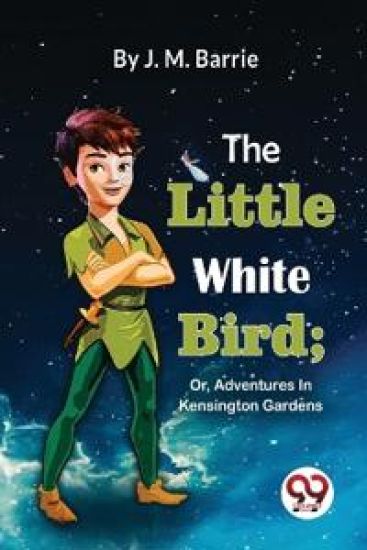
The Scottish author J. M. Barrie's book The Little White Bird has a variety of moods, from fantasy and whimsy to social humor with dark, violent overtones. The first chapters of the novel are set in London, contemporaneous with Barrie's writing of them. They involve some brief time travel and other fantastical aspects while remaining in the London setting. All perambulators lead to Kensington Gardens is how the renowned London park is presented in the middle chapters, which ultimately became Peter Pan in Kensington Gardens. Particularly after ""Lock-Out Time,"" which Barrie describes as the time at the end of the day when the park gates are closed to the public and the fairies and other magical inhabitants of the park can move about more freely than during the daylight when they must hide from ordinary people, the Kensington Gardens chapters include detailed descriptions of the features of the Gardens as well as fantasy names given to the locations by the story's characters. Following the chapters about Kensington Gardens, the third half of the book is once more mostly set in London, but there are a few brief visits to the Gardens that are not related to the Peter Pan story.
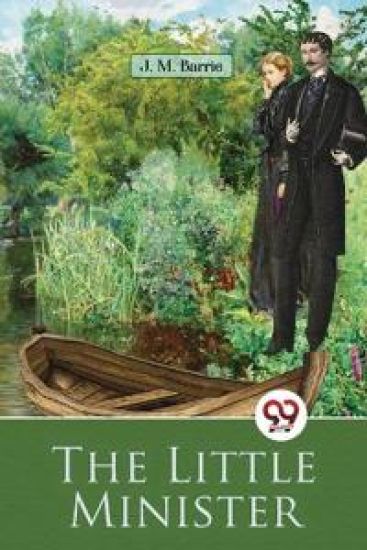
J. M. Barrie's The Little Minister, a well-known emotional book, was first published in 1891 and was later dramatized in 1897. The Little Pastor follows Gavin Dishart, a young, destitute minister serving his first flock, and is set in Thrums, a Scottish weaving community modeled after Barrie's hometown. Soon after, the weavers he serves riot in opposition to salary cuts and unfavorable working conditions. The weavers get ready for battle after Babbie, a stunning and enigmatic Gypsy, informs them that the local laird, Lord Rintoul, has called the militia. Babbie is saved by Dishart from the troops in the subsequent brawl. Dishart and Babbie fall in love, and he has no idea that she is a well-bred woman who is compelled to marry the elderly Lord Rintoul. The two finally achieve happiness after numerous obstacles.
The star-studded production of the timeless classic, which Charles Frohman staged on Christmas Day 1905 at the Criterion Theatre in New York, has always been a spectacular showcase for the acting prowess of the greatest female actors, from Ethel Barrymore to Helen Hayes. The main character, Alice, returns from India to England with her husband and struggles to acclimatize to the house and kids she left behind. Amy, her intelligent and creative daughter, misinterprets her mother's flirtatious comments to a close family friend and thinks she is planning a meeting with him. Amy resolves to offer herself as a sacrifice in a great gesture and first meets "the lover." Alice is shocked to discover her daughter's glove at the friend's apartment, and now both mother and daughter are in danger while the poor friend is hopelessly lost. Alice's husband is also. But they manage to resolve the incorrect relationship without hurting Amy's delicate imagination. The main themes of the novel-children believing they are smarter than their elders and adults having to learn how to use their life experience to be effective parents-remain relevant today, despite the fact that the story is very much a period piece.
J. M. Barrie wrote the four-act drama What Every Woman Knows. At the Duke of York's Theatre in London, showman Charles Frohman gave it its debut performance. Maggie Wylies, a plain young woman who they worry will stay a spinster, is the daughter of a wealthy but ignorant Scottish family. The Wylies learn one night that John Shand, a responsible young university student, has been breaking into their house to read books from their extensive collection. Shand is indigent and unable to afford to purchase the textbooks he needs for law school. Maggie Wylie and John Shand agree: if he agrees to marry her after five years, her family would pay for his schooling. Maggie utilizes her skills and contacts to quietly work behind the scenes to help John win the election after realizing her husband's desire to become a member of parliament. She keeps advancing his career without ever letting him realize that she is the driving force behind his success. In the end, he marries Lady Sybil Lazenby, a young Englishwoman who is stunning, elegant, and well-born.
Better Dead is a book written by J. M. Barrie and it relates the tale of a writer who finds himself on trial for membership in a secret society that kills those it believes would be, as the title implies, "Better Dead." I wanted "Better Dead" to be taken off the shelves in the UK, and I would have liked not to see it there because it is in no way deserving of the exquisite clothing Messrs. He recently made the attempt in cold blood and returned shaking, but the author had read enough to have the most profound cause for declining to reveal what the book is about. This infantile effort is a field of prickles into which none may be advised to approach. Nevertheless, he has a sentimental attachment to "Better Dead" because it was my first and was released when he had little prospect of persuading any conventions to accept Scotch. There was also a week when he cherished having it in my pocket and did not consider it to be a burden. He once came close to witnessing it sell. She was a gorgeous girl, and the book was on a shelf. She smiled as she read a few pages, took a break, then returned to start the next chapter.
J. M. Barrie's fantasy drama Dear Brutus from 1917 depicts the characters' transition through alternate universes and eventual return to the real world. The phrase "The fault, dear Brutus, is not in our stars but in ourselves" is taken from Shakespeare's Julius Caesar and is referenced in the title. Between 17 October 1917 and 24 August 1918, the drama was presented at Wyndham's Theatre in the West End for 363 performances. The play's central question is whether people might benefit from living their lives over again and making new decisions. The characters are unhappy spouses who all believe their lives have gone in the wrong direction. The group is escorted to the residence of an elderly man with the Shakespearean name Lob, who is referred to as "all that is left of Merry England." The philanderer is found trying a new conquest, much to the amusement of his wife and his mistress; an elderly man who had yearned for a second youth proposes again to his faithful spouse; the artist and his wife are reconciled; and the dream child of Act 2 has almost become real to both of them and lives on in their hearts.
J. M. Barrie wrote a biography on his mother and family in Scotland in the late 19th century titled Margaret Ogilvy: Life Is a Long Lesson in Humility. It was the seventh-best-selling book in the US in 1897, according to The Bookman. The book features family memories and was written as an homage to Barrie's mother. In the book, Barrie describes his mother telling him stories about her youth and attributes his passion for reading to her. The biography of her Scottish-born mother and family by J. M. Barrie is titled Margaret Ogilvy: Life Is a Long Lesson in Humility. It was the seventh-best selling in the US in 1897, according to The Bookman. The best-known work by Scottish author and playwright Sir James Matthew Barrie, 1st Baronet, is Peter Pan. He was grown and born in Scotland before relocating to London to pen a number of well-liked books and plays.
Margaret Ogilvy has been regarded as significant work throughout human history, and in order to ensure that this work is never lost, we have taken steps to ensure its preservation by republishing this book in a contemporary format for both current and future generations. This entire book has been retyped, redesigned, and reformatted. Since these books are not made from scanned copies, the text is readable and clear.