Kirjailija
J. Michael Martinez
Kirjat ja teokset yhdessä paikassa: 25 kirjaa, julkaisuja vuosilta 2007–2026, suosituimpiin kuuluu A Long Dark Night. Vertaile teosten hintoja ja tarkista saatavuus suomalaisista kirjakaupoista.
25 kirjaa
Kirjojen julkaisuvuodet: 2007–2026.
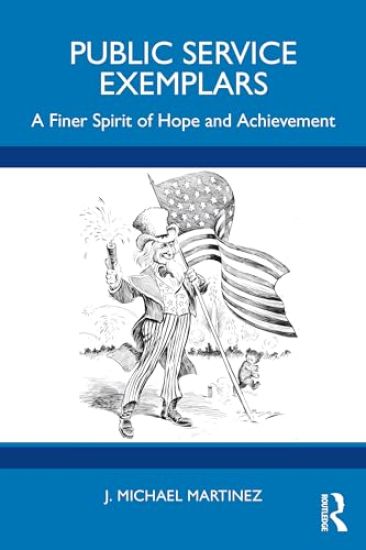
Understanding and encouraging the development of good leaders are so important that schools of business administration, public administration, public policy, and organizational development teach courses in leadership. Within the public administration literature, scholars have discussed the value of studying outstanding individuals who have been uniquely effective in fulfilling their formal duties, as well as ethical in leading their organizations. Public Service Exemplars is the first book to highlight the decision-making styles of American public servants who serve as models of excellence in public service. While the roles they held, eras in which they served, formal training for the job, personalities, and relative levels of fame differ widely, the figures profiled in this book are united in their strong belief in the efficacy of government service and a willingness to employ innovative methods for accomplishing objectives. Examining three theories of decision-making by effective leaders (autocratic leadership, democratic leadership, and delegative leadership), this book explores the way that unelected leaders working within public agencies—and, in a couple of cases, the US military—reached decisions that are widely considered to be highly effective. Profiling leaders as diverse as Robert Moses, Frances Perkins, James Webb, Colin Powell, and Anthony Fauci, to name a few, Public Service Exemplars questions whether great leadership truly is, as it is often assumed, an elusive, almost indefinable quality. Can it be taught? Are effective leaders born, made, or a combination thereof? This book will be of keen interest to both current and future public service leaders, including students enrolled in public administration and nonprofit management courses.

A suite of poems that channels the legendary singer-songwriter Ritchie Valens to examine and question mid-twentieth-century conceptions of race and art, identity and desire Ragged and raging across the spectrums of cognition, race, and gender, Tarta Americana lyrically envisions forms of survival outside neuronormative perceptions and histories. Against the recent tide of white nationalism in the United States, Tarta Americana finds a rhinestone in Ritchie Valens, the rock and roll legend, surfacing across time and bodies, genders and sounds, displacing the linear unfolding of desire and biography. Valens, the embodiment of corporeal transcendence, guides Martinez as he expresses his own neurodiversity, his struggles and triumphs, interrogating memory, gender, and race, traversing pain in search of compassion and joy. Tarta Americana, tarred and glittering, melodic in its screams, overdrives text and space in chase of American politics that could, at last, harmonize love with redemption.
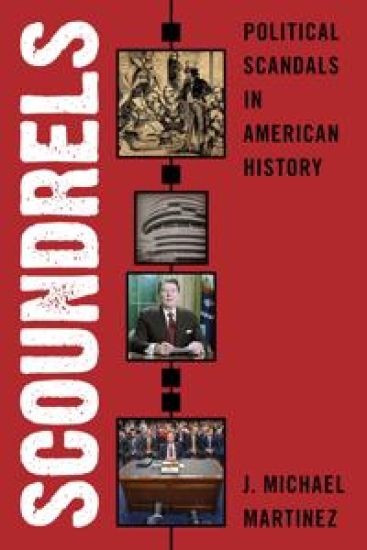
“Scandal,” defined as an action or event causing public outrage and regarded as morally or legally reprehensible by the standards and mores of the time, has been a part of the US political landscape since the founding of the republic. Americans prefer to think that their public officials’ misbehavior as the exception rather than the rule, but the record of political corruption and coverups, spanning the entire history of the United States, is too lengthy to suggest that these actions are uncommon occurrences, merely freakish outliers to be discounted as “black swan” events. Strongly associated with the concept of scandal is a “scoundrel,” defined as a dishonest or disreputable person. According to this definition, a scoundrel is someone who engages in dishonest behavior, eventually leading to the loss of a good reputation. Scoundrels: Political Scandals in American History is about scoundrels who were caught in scandals, specifically political scandals. Often the original behavior was outrageous, but the subsequent cover-up is worse. The 1972 Watergate break-in, for example, may have been a “third-rate burglary”—although that point is debatable—but the Nixon administration’s attempted coverup led to impeachment proceedings and the president’s resignation. Political corruption almost always stems from calculations of self-interest before, during, and after the fact. The calculations may be legally and ethically misguided, factually inaccurate, and/or blind to political realities, but nonetheless they are almost always deliberate and premeditated. Political corruption can involve lone individuals acting on their own accord or they can implicate systemic corruption with a large group, sometimes within a presidential administration. Scoundrels: Political Scandals in American History examines 13 of the most famous (or infamous) and not-so-famous scandals in American history, including the Teapot Dome case from the 1920s, the Watergate break-in and cover-up in the 1970s, the Iran-Contra affair of the 1980s, and Russian interference in the 2016 elections.
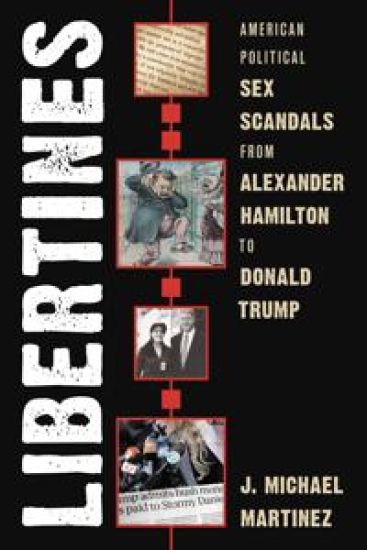
Historian Michael Martinez surveys political sex scandals in American history, from the earliest years of the Republic to today, to explore how these events impacted the politics of the day and the legacy they left for future generations of American leaders.
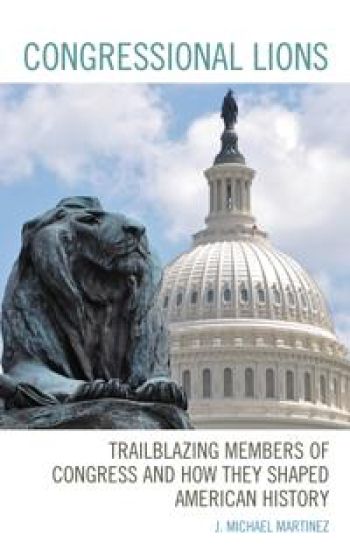
In some periods of American history, members of the legislative branch have been as influential, and sometimes more influential, than a particular president in crafting public policy and reacting to world events. Congressional Lions examines twelve influential members of Congress throughout American history to understand their role in shaping the life of the nation. The book does not focus exclusively on the biographical details of these lawmakers, although biography invariably plays a role in recalling their triumphs and tragedies. Instead, the book highlights members’ legislative accomplishments as well as the circumstances surrounding their congressional service.
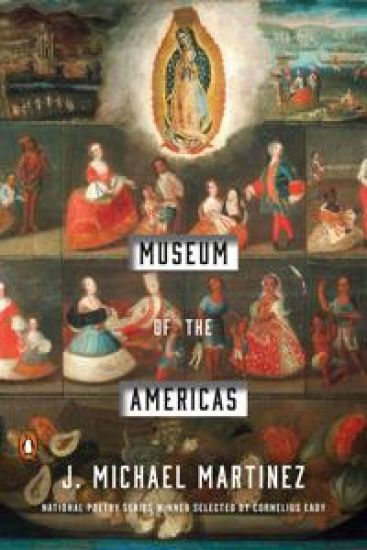
Winner of the 2017 National Poetry Series Competition, selected by Cornelius Eady--an exploration in verse of imperial appropriation and Mexican American cultural identity The poems in J. Michael Martinez's third collection of poetry circle around how the perceived body comes to be allegorically coded with the transhistorical consequences of an imperial sociopolitical narrative. Engaging eighteenth-century Mexican casta paintings, the morbid lynching postcards of William Horne, the Treaty of Guadalupe Hidalgo, and Martinez's own family lineage, Museum of the Americas traces an aesthetic out of racialized scenes of corporeal excess. Hybrid in form, Museum of the Americas voices itself in theory, poetry, and creative nonfiction. Throughout, Martinez questions how "knowledge" of the body is organized through an observer's visual perception of that body. For Martinez, the corporeal always serves as a repository of the human situation, a nexus of culture. His work revives and repurposes the persecuted ethnic body from the biopolitical appropriations that render it a disposable aesthetic object.
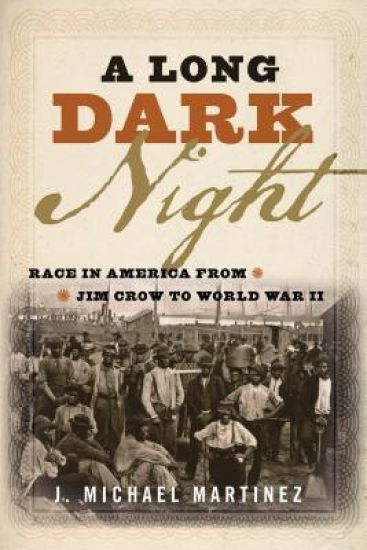
For a brief time following the end of the U. S. Civil War, American political leaders had an opportunity—slim, to be sure, but not beyond the realm of possibility—to remake society so that black Americans and other persons of color could enjoy equal opportunity in civil and political life. It was not to be. With each passing year after the war—and especially after Reconstruction ended during the 1870s—American society witnessed the evolution of a new white republic as national leaders abandoned the promise of Reconstruction and justified their racial biases based on political, economic, social, and religious values that supplanted the old North-South/slavery-abolitionist schism of the antebellum era. A Long Dark Night provides a sweeping history of this too often overlooked period of African American history that followed the collapse of Reconstruction—from the beginnings of legal segregation through the end of World War II. Michael J. Martinez argues that the 1880s ushered in the dark night of the American Negro—a night so dark and so long that the better part of a century would elapse before sunlight broke through. Combining both a “top down” perspective on crucial political issues and public policy decisions as well as a “bottom up” discussion of the lives of black and white Americans between the 1880s and the 1940s, A Long Dark Night will be of interest to all readers seeking to better understand this crucial era that continues to resonate throughout American life today.
This fascinating book recounts the compelling stories behind 14 of the most important criminal procedure cases in American legal history. Many constitutional protections that Americans take for granted today—the right to exclude illegally obtained evidence, the right to government-financed counsel, and the right to remain silent, among others—were not part of the original Bill of Rights, but were the result of criminal trials and judicial interpretations. The untold stories behind these cases reveal circumstances far more interesting than any legal dossier can evoke. Author J. Michael Martinez provides a brief introduction to the drama and intrigue behind 14 leading court cases in American law. This engaging text presents a short summary of high-profile legal proceedings from the late 19th century through recent times and includes key landmark cases in which the court established the parameters of probable cause for searches, the features of due process, and the legality of electronic surveillance. The work offers concise explanations and analysis of the facts as well as the lasting significance of the cases to criminal procedure.
American Environmentalism
J. Michael Martinez
Routledge Member of the Taylor and Francis Group
2013
sidottu
Protecting the natural environment and promoting sustainability have become important objectives, but achieving such goals presents myriad challenges for even the most committed environmentalist. American Environmentalism: Philosophy, History, and Public Policy examines whether competing interests can be reconciled while developing consistent, coherent, effective public policy to regulate uses and protection of the natural environment without destroying the national economy. It then reviews a range of possible solutions. The book delves into key normative concepts that undergird American perspectives on nature by providing an overview of philosophical concepts found in the western intellectual tradition, the presuppositions inherent in neoclassical economics, and anthropocentric (human-centered) and biocentric (earth-centered) positions on sustainability. It traces the evolution of attitudes about nature from the time of the Ancient Greeks through Europeans in the Middle Ages and the Renaissance, the Enlightenment and the American Founders, the nineteenth and twentieth centuries, and up to the present. Building on this foundation, the author examines the political landscape as non-governmental organizations (NGOs), industry leaders, and government officials struggle to balance industrial development with environmental concerns. Outrageous claims, silly misrepresentations, bogus arguments, absurd contentions, and overblown prophesies of impending calamities are bandied about by many parties on all sides of the debate—industry spokespeople, elected representatives, unelected regulators, concerned citizens, and environmental NGOs alike. In lieu of descending into this morass, the author circumvents the silliness to explore the crucial issues through a more focused, disciplined approach. Rather than engage in acrimonious debate over minutiae, as so often occurs in the context of "green" claims, he recasts the issue in a way that provides a cohesive look at all sides. This effort may be quixotic, but how else to cut the Gordian knot?
Public Administration Ethics for the 21st Century
J. Michael Martinez
Praeger Publishers Inc
2009
sidottu
This volume establishes a foundation for a uniform code of professional ethics for public administrators in the United States. Public Administration Ethics for the 21st Century lays the ethical foundations for a uniform professional code of ethics for public administrators, civil servants, and non-profit administrators in the US. Martinez synthesizes five disparate schools of ethical thought as to how public administrators can come to know the good and behave in ways that advance the values of citizenship, equity, and public interest within their respective organizations. Using case studies, he teaches American administrators how to combine the approaches of all five schools to evaluate and resolve complex ethical dilemmas within the constraints of the U. S. democratic values set. Martinez enunciates the common ethical principles that guide public administrators in their practice within the specific ethical parameters and organizational cultures of a myriad entities at the federal, state, and local levels of government in the United States, as well as in non-profit organizations. Along the way, Martinez addresses a number of crucial issues, including personal gain, conflict of interest, transparency, democratic impartiality, hiring, hierarchical discipline, media relations, partisan pressure, appointments by elected officials, and whistle-blowing. The striking, high-profile case studies—Nathan Bedford Forrest, Adolph Eichmann, Lieutenant William Calley, and Mary Ann Wright—illustrate ethical dilemmas where, for better or worse, the individual was at odds with the organization.
Carpetbaggers, Cavalry, and the Ku Klux Klan
J. Michael Martinez
Rowman Littlefield Publishers
2007
sidottu
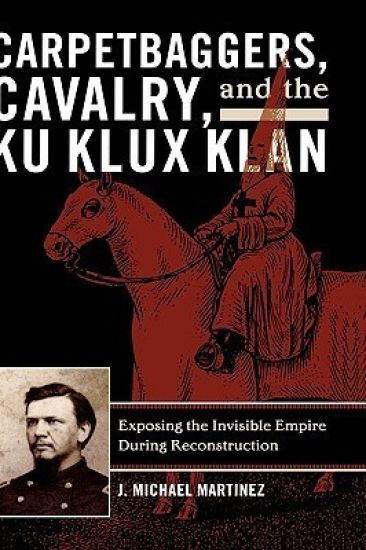
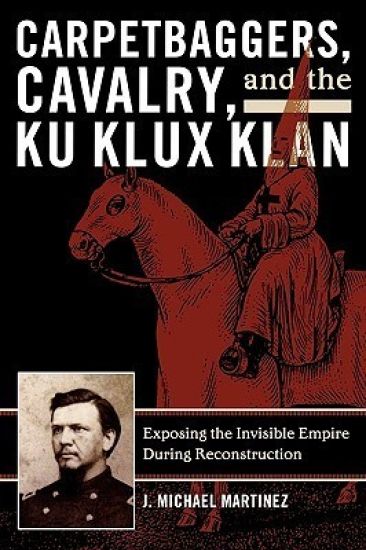
In some places, the Ku Klux Klan (KKK) was a social fraternity whose members enjoyed sophomoric hijinks and homemade liquor. In other areas, the KKK was a paramilitary group intent on keeping former slaves away from white women and Republicans away from ballot boxes. South Carolina saw the worst Klan violence and, in 1871, President Grant sent federal troops under the command of Major Lewis Merrill to restore law and order. Merrill did not eradicate the Klan, but they arguably did more than any other person or entity to expose the identity of the Invisible Empire as a group of hooded, brutish, homegrown terrorists. In compiling evidence to prosecute the leading Klansmen and by restoring at least a semblance of order to South Carolina, Merrill and his men demonstrated that the portrayal of the KKK as a chivalric organization was at best a myth, and at worst a lie. This is the story of the rise and fall of the Reconstruction-era Klan, focusing especially on Major Merrill and the Seventh Cavalry's efforts to expose the secrets of the Ku Klux Klan to the light of day.
Carpetbaggers, Cavalry, and the Ku Klux Klan
J. Michael Martinez
Rowman Littlefield Publishers
2007
nidottu
In some places, the Ku Klux Klan (KKK) was a social fraternity whose members enjoyed sophomoric hijinks and homemade liquor. In other areas, the KKK was a paramilitary group intent on keeping former slaves away from white women and Republicans away from ballot boxes. South Carolina saw the worst Klan violence and, in 1871, President Grant sent federal troops under the command of Major Lewis Merrill to restore law and order. Merrill did not eradicate the Klan, but they arguably did more than any other person or entity to expose the identity of the Invisible Empire as a group of hooded, brutish, homegrown terrorists. In compiling evidence to prosecute the leading Klansmen and by restoring at least a semblance of order to South Carolina, Merrill and his men demonstrated that the portrayal of the KKK as a chivalric organization was at best a myth, and at worst a lie. This is the story of the rise and fall of the Reconstruction-era Klan, focusing especially on Major Merrill and the Seventh Cavalry's efforts to expose the secrets of the Ku Klux Klan to the light of day.
Race and enslavement were the major issues confronting the Christian Church in the United States throughout the nineteenth century. During the antebellum era, churches debated whether their scriptures condoned race-based slavery. To understand better how these Southern churches evaluated and made their choices in postwar nineteenth-century America, this book examines the lives and careers of three white Episcopal clergy from South Carolina: Peter Fayssoux Stevens (1830-1910), A. Toomer Porter (1828-1902), and William Porcher DuBose (1836-1918). These men present illuminating case studies because they were contemporaries and their early lives were remarkably similar, yet their responses to how the Southern church welcomed or rejected freed Blacks significantly diverged following the Civil War. Each of these representative figures was born in antebellum South Carolina, reared in the Protestant Episcopal Church (PEC), and called to ministry. Porter and DuBose hailed from families made wealthy by the labor of enslaved persons. When war erupted in 1861, each man served the Confederate States of America (CSA). After the war, however, their attitudes toward race sharply differed. Their responses to the end of the Civil War, Reconstruction, and Jim Crow can be understood within the context of the men’s lives and careers. That three white South Carolina Episcopalians born within a decade of each other would pursue divergent paths in subsequent years highlights the contradictions, complexities, and hypocrisies of faith and racial attitudes in the nineteenth-century Protestant church. The book contributes to Southern religious history, church history, and American religious history. Studying these figures tells a larger story about how the Christian church, and the South, understood faith commitments in the context of social and religious racism—racism that, sadly, remains in evidence in the church today.
Congressional Pathfinders: “First” Members of Congress and How They Shaped American History discusses those men and women whose service in the United States Congress, as improbable as it was, marked a turning point in history. To be the first black American or the first woman to serve in a largely white, male-dominated institution requires a level of moral courage seldom found in ordinary people. To be openly gay, to subscribe to the Muslim faith in a nation often fearful and ignorant of Islam, or to navigate the hallways of power with physical disabilities is to be cognizant of one’s separateness. To be an “other” is to feel the stigma of that difference, and yet to persevere is to forge a path for later generations of others to follow. The service of these courageous men and women forever changed Congress and, by extension, the nation: they truly were congressional pathfinders. Nancy Pelosi, Daniel Inouye, Margaret Chase Smith, Shirley Chisholm, Ilhan Omar, and Hillary Clinton are among the many figures profiled in Congressional Pathfinders.
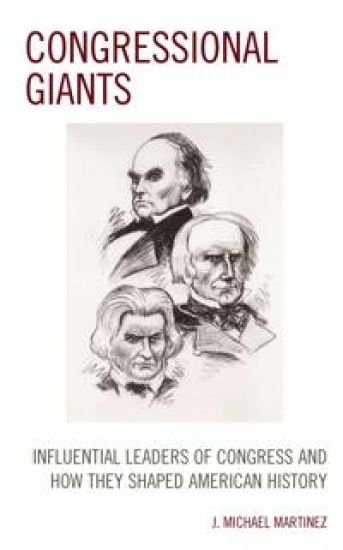
The Congress of the United States operates in the shadow of the American presidency, which can make the legislative branch appear less important than the executive in our constitutional system of government. And yet Congress is a co-equal branch of government, deriving its powers from Article I of the United States Constitution. Love it or hate it, the institution is a source of incredible power. It behooves all Americans to learn more about Congress. Although a single slender volume cannot provide information on all there is to know about Congress, it can begin the journey. In Congressional Giants, political scientist J. Michael Martinez explores the careers and achievements of 14 influential leaders of Congress—men who either held formal positions within the chambers of Congress, such as speaker of the House of Representatives or Senate majority leader, or who served on important committees--to determine how they shaped the course of American history.
Environmental Sustainability and American Public Administration
J. Michael Martinez
Lexington Books
2018
nidottu
Protecting the natural environment and promoting environmental sustainability have become important objectives for U. S. policymakers and public administrators at the dawn of the twenty-first century. Institutions of American government, especially at the federal level, and the public administrators who work inside of those institutions, play a crucial role in developing and implementing environmental sustainability policies. This book explores these salient issues logically. First, it explores fundamental concepts such as what it means to be environmentally sustainable, how economic issues affect environmental policy, and the philosophical schools of thought about what policies ought to be considered sustainable. From there, it focuses on processes and institutions affecting public administration and its role in the policy process. Accordingly, it summarizes the rise of the administrative state in the United States and then reviews the development of federal environmental laws and policies with an emphasis on late twentieth century developments. This book also discusses the evolution of American environmentalism by outlining the history of the environmental movement and the growth of the environmental lobby. Finally, this book synthesizes the information to discuss how public administration can promote environmental sustainability.
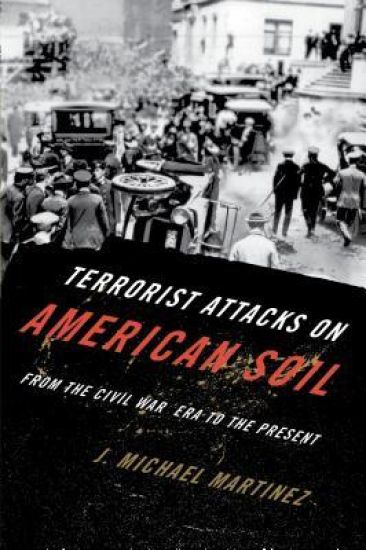
Understanding the context of terrorism requires a trek through history, in this case the history of terrorist activity in the United States since the Civil War. Because the topic is large and complex, Terrorists Attacks on American Soil: From the Civil War to the Present does not claim to be an exhaustive history of terrorism or the definitive account of how and why terrorists do what they do. Instead, this book takes a representative sampling of the most horrific terrorist attacks on U. S. soil in an effort to understand the context in which they occurred and the lessons that can be learned from these events.