
Kirjailija
J. P. Losty
Kirjat ja teokset yhdessä paikassa: 4 kirjaa, julkaisuja vuosilta 2013–2020, suosituimpiin kuuluu Court and Courtship:. Vertaile teosten hintoja ja tarkista saatavuus suomalaisista kirjakaupoista.
Nimi esiintyy myös muodoissa: J P Losty, J.P. Losty
4 kirjaa
Kirjojen julkaisuvuodet: 2013–2020.

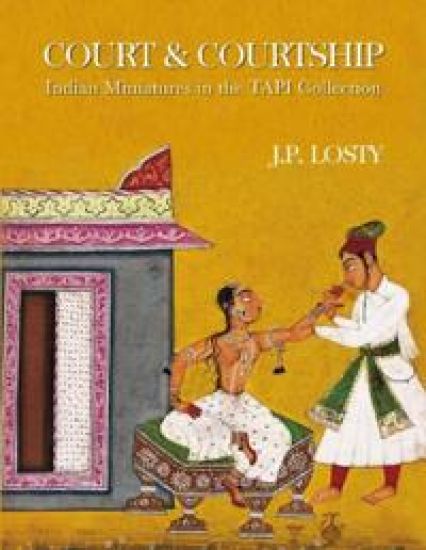
Defining a distinct style of painting produced in India during the British period and influenced by European artistic norms, this catalogue of Company Paintings in the TAPI (Textiles & Art of the People of India) Collection is a unique illustration of the social milieu prevailing in India in the nineteenth century. Tracing the origins and evolution of this genre of painting, the volume shines a fresh beam on subjects commissioned to be painted by officials of the East India Company, such as occupations, customs, dress, bazaars, festivals and daily life of ordinary people, a world removed from the elite and princely environment that was the chosen subject of Indian miniature artists. The catalogue of the TAPI Collection of Company Paintings highlights works from the major regions where such paintings were produced - Murshidabad, Calcutta, Patna, Lucknow, Delhi, Punjab, Kutch, Tanjore, Trichinopoly, Madras, Kerala and the Andhra Coast. It comprises a rich and accurate record of the diverse modes of dress and manners of the people before the advent of photography. This catalogue documents the first-ever exhibition on the subject to be held in India, being a collaboration between TAPI and CSMVS (Chhatrapati Shivaji Maharaj Vastu Sangrahalaya, formerly the Prince of Wales Museum of Western India).
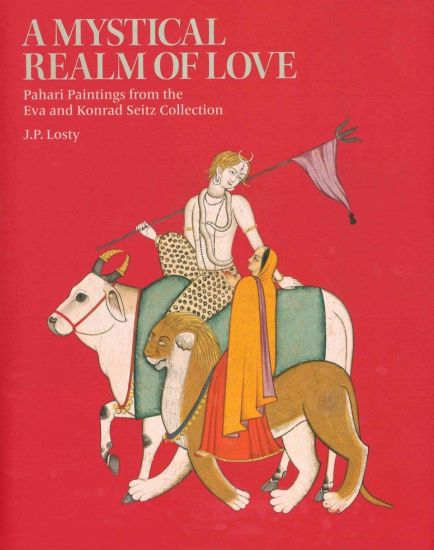
Eva and Konrad Seitz have put together over many years an outstanding collection of some of the most famous and important of all 18th century Pahari paintings, including miniatures commissioned by the Rajput rulers of the Punjab Hill states (1650-1850). This profusely illustrated book with meticulous research by J. P. Losty (curator emeritus British Library), designed by Misha Anikst and published by Francesca Galloway, London, gives the reader the opportunity to see the collection in its entirety. Pahari paintings have been the focus of Eva and Konrad Seitz’s collection since the couple first went to India in the late 1960s for Konrad to take up his position as a young diplomat at the German embassy in Delhi. They were drawn to Rajput paintings (Indian miniatures from the Hindu schools of North India and Rajasthan) which were then available in Delhi and Mumbai, and later in New York, as several princely collections were being dispersed. Eva and Konrad were part of a small group of pioneer collectors who recognised the importance of Rajput painting at a time when Mughal and Persian painting was far more sought after in the West. The Seitz collection lures you into the enchanted domain of the Hindu gods, their epics and the never-ending trials and tribulations of divine and erotic love. What attracted and intrigued Seitz to Rajput paintings in particular was their ability to induce in the viewer a kind of poetic trance – which he saw as distinct from a more Western tradition of descriptive realism. A Mystical Realm of Love is not only an opportunity to explore Pahari painting through one couple’s lifelong passion and dedication to the subject, but represents a major addition to the scholarship through Losty’s pioneering research. He attempts a new approach in documenting their role as parts of illustrated manuscripts of religious and poetic texts, and also puts forward a revised view of the development and chronology of Pahari painting.
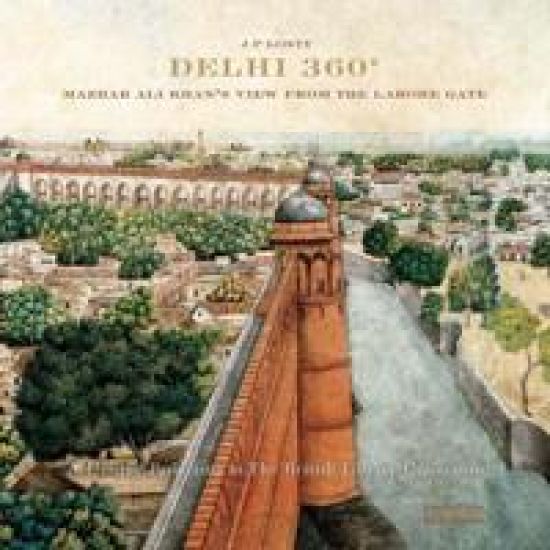
"This publication features the panorama in detail, with 94 close-up photographs of the sites, an overview of the historical context, information on the patron and artist, as well as a section devoted to the inscriptions and commentary on each building featured in this view" South Asian Studies, Volume 28, Issue 2, 2012 Made in 1846, the painting commonly known as 'The Delhi Panorama' by the famous topographical artist Mazhar Ali Khan is the finest artistic rendering of Shahjahanabad ever made. It also affords a unique glimpse into the heart of the imperial palace in the Red Fort before much of it was destroyed after the 1857 Uprising. The 360° view of Delhi along with its extraordinary detailing of the cityscape makes the panorama not just an important historical document but also the masterpiece of its artist. The 5-metre long panorama, which has been in the collection of the British Library since 1981, along with all the Persian and Urdu inscriptions has never before been published complete. Its publication here is accompanied by essays that put the panorama in its historical and artistic context with a commentary on the inscriptions that brings it to life. Delhi 360° will appeal to scholars of Indian history especially Mughal history; anyone with a deep interest in the art, architecture, and history of Mughal India; and all Dilliwallas. Contents: Preface; Delhi in 1846: The Panorama in Context; Mazhar Ali Khan: The Artist and His Studio; The Panorama of Delhi; Notes on the Inscriptions; Glossary; Bibliography. Standard edition also available: Delhi 360° ISBN: 9788174368607 £19.95