Kirjojen hintavertailu – 12 903 725 kirjaa ja 27 kauppaa

Kirjailija

J. P. Verma

Kirjat ja teokset yhdessä paikassa: 17 kirjaa, julkaisuja vuosilta 2012–2024, suosituimpiin kuuluu Papel del Peetvaratika bhasma en la fractura de Asthibhagna Colles. Vertaile teosten hintoja ja tarkista saatavuus suomalaisista kirjakaupoista.

Nimi esiintyy myös muodoissa: J.P. Verma, J P Verma, J. P Verma

17 kirjaa

Kirjojen julkaisuvuodet: 2012–2024.

Understanding Structural Equation Modeling

Understanding Structural Equation Modeling

J.P. Verma; Priyam Verma

Springer International Publishing AG
2024
nidottu
This book presents a comprehensive overview of Structural Equation Modeling and how it can be applied to address research issues in different disciplines. The authors employ a ‘simple to complex’ approach. The book reviews topics such as variance, covariance, correlation, multiple regression, mediation, moderation, path analysis, and confirmatory factor analysis. The authors then discuss the initial steps for performing structural equation modeling, including model specification, model identification, model estimation, model testing, and model modification. The book includes an introduction to the IBM SPSS and IBM SPSS Amos software. The authors the explain how this software can be utilized for developing measurement, structural models, and SEM models. The book provides conceptual clarity in understanding the models and discusses practical approaches to solving them. The authors also highlight how these techniques can be applied to various disciplines, including psychology, education,sociology, business, medicine, political science, and biological sciences.
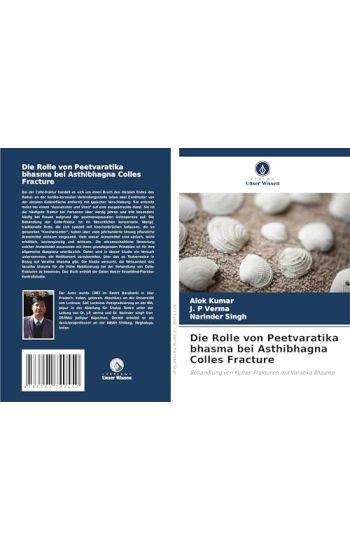
Rôle du Peetvaratika bhasma dans la fracture du col de l'Asthibhagna

Rôle du Peetvaratika bhasma dans la fracture du col de l'Asthibhagna

Alok Kumar; J P Verma; Narinder Singh

Editions Notre Savoir
2024
pokkari
La fracture de Colle est une fracture de l'extr mit distale du radius, sa jonction cortico-canc reuse ( environ deux centim tres de la surface articulaire distale) avec un d placement typique. Elle r sulte le plus souvent d'une "chute" sur une main tendue. Il s'agit de la fracture la plus fr quente chez les personnes g es de plus de quarante ans, et elle est particuli rement fr quente chez les femmes en raison de l'ost oporose post-m nopausique. Le traitement de la fracture de Colle est essentiellement conservateur. Quelques praticiens traditionnels sp cialis s dans les fractures, appel s "Bone setters", utilisent efficacement des m dicaments base de plantes depuis de nombreux si cles. L' valuation scientifique de ces m dicaments et de leurs principes fondamentaux est essentielle pour leur acceptation universelle. L' valuation scientifique de ces m dicaments et de leurs principes fondamentaux est essentielle leur acceptation universelle. Cette tude tente donc de pr parer un m dicament pour lequel il existe des r f rences textuelles concernant Varatika bhasma. L' tude a tent de prouver l'efficacit de Varatika bhasma pour la mobilisation pr coce dans la gestion des fractures du coll ge. Le livre contient les donn es de cette tude de contr le placebo en simple aveugle. Le livre contient suffisamment d'informations relatives la gestion des fractures par l'Ayurveda.
Papel do Peetvaratika bhasma na fratura do Colles de Asthibhagna

Papel do Peetvaratika bhasma na fratura do Colles de Asthibhagna

Alok Kumar; J P Verma; Narinder Singh

Edicoes Nosso Conhecimento
2024
pokkari
A fratura de Colle uma fratura na extremidade distal do r dio, na sua jun o c rtico-cancelar (a cerca de dois cent metros da superf cie articular distal) com deslocamento t pico. Na maioria dos casos, resulta de um "escorreg o e queda" sobre uma m o estendida. a fratura mais frequente em pessoas com mais de quarenta anos de idade e particularmente comum nas mulheres devido osteoporose p s-menopausa. O tratamento da fratura de Colle essencialmente conservador. Poucos m dicos tradicionais que se ocupam especificamente de fracturas, designados por "fixadores de ossos", t m vindo a utilizar eficazmente medicamentos base de plantas ao longo de muitos s culos. Muitos destes medicamentos s o simples, facilmente dispon veis, econ micos e potentes. A avalia o cient fica destes medicamentos, juntamente com os seus princ pios fundamentais, essencial para a sua aceita o universal. Neste estudo, tentou-se preparar um medicamento sobre o qual existem refer ncias textuais relativas ao Varatika bhasma. O estudo tentou provar a efic cia do Varatika bhasma para a mobiliza o precoce na gest o da fratura de um colega. O livro cont m os dados deste estudo cego nico de controlo com placebo. O livro tem informa o suficiente relacionada com a gest o de fracturas pela Ayurveda.
Ruolo del Peetvaratika bhasma nella frattura di Asthibhagna Colles

Ruolo del Peetvaratika bhasma nella frattura di Asthibhagna Colles

Alok Kumar; J P Verma; Narinder Singh

Edizioni Sapienza
2024
pokkari
La frattura di Colle una frattura dell'estremit distale del radio, in corrispondenza della giunzione cortico-cancellosa (a circa due cm dalla superficie articolare distale) con tipico spostamento. Nella maggior parte dei casi dovuta a una "scivolata e caduta" su una mano tesa. la frattura pi comune nelle persone di et superiore ai quarant'anni ed particolarmente frequente nelle donne a causa dell'osteoporosi post-menopausale. Il trattamento della frattura di Colle essenzialmente conservativo. Pochi praticanti tradizionali che si occupano specificamente di fratture, detti "Bone setter", hanno utilizzato efficacemente le droghe vegetali per molti secoli. Molte di queste droghe sono semplici, facilmente disponibili, economiche e potenti. La valutazione scientifica di queste droghe e dei loro principi fondamentali essenziale per la loro accettazione universale. In questo studio si quindi cercato di preparare un farmaco di cui esistono riferimenti testuali riguardanti il Varatika bhasma. Lo studio ha cercato di dimostrare l'efficacia del Varatika bhasma per la mobilizzazione precoce nella gestione delle fratture del colle. Il libro contiene i dati di questo studio in singolo cieco con controllo placebo. il libro contiene sufficienti informazioni relative alla gestione delle fratture da parte dell'Ayurveda.
Understanding Structural Equation Modeling

Understanding Structural Equation Modeling

J.P. Verma; Priyam Verma

Springer International Publishing AG
2023
sidottu
This book presents a comprehensive overview of Structural Equation Modeling and how it can be applied to address research issues in different disciplines. The authors employ a ‘simple to complex’ approach. The book reviews topics such as variance, covariance, correlation, multiple regression, mediation, moderation, path analysis, and confirmatory factor analysis. The authors then discuss the initial steps for performing structural equation modeling, including model specification, model identification, model estimation, model testing, and model modification. The book includes an introduction to the IBM SPSS and IBM SPSS Amos software. The authors the explain how this software can be utilized for developing measurement, structural models, and SEM models. The book provides conceptual clarity in understanding the models and discusses practical approaches to solving them. The authors also highlight how these techniques can be applied to various disciplines, including psychology, education,sociology, business, medicine, political science, and biological sciences.
Determining Sample Size and Power in Research Studies

Determining Sample Size and Power in Research Studies

J. P. Verma; Priyam Verma

SPRINGER VERLAG, SINGAPORE
2021
nidottu
This book addresses sample size and power in the context of research, offering valuable insights for graduate and doctoral students as well as researchers in any discipline where data is generated to investigate research questions. It explains how to enhance the authenticity of research by estimating the sample size and reporting the power of the tests used. Further, it discusses the issue of sample size determination in survey studies as well as in hypothesis testing experiments so that readers can grasp the concept of statistical errors, minimum detectable difference, effect size, one-tail and two-tail tests and the power of the test. The book also highlights the importance of fixing these boundary conditions in enhancing the authenticity of research findings and improving the chances of research papers being accepted by respected journals. Further, it explores the significance of sample size by showing the power achieved in selected doctoral studies. Procedure has been discussed to fix power in the hypothesis testing experiment. One should usually have power at least 0.8 in the study because having power less than this will have the issue of practical significance of findings. If the power in any study is less than 0.5 then it would be better to test the hypothesis by tossing a coin instead of organizing the experiment. It also discusses determining sample size and power using the freeware G*Power software, based on twenty-one examples using different analyses, like t-test, parametric and non-parametric correlations, multivariate regression, logistic regression, independent and repeated measures ANOVA, mixed design, MANOVA and chi-square.
Determining Sample Size and Power in Research Studies

Determining Sample Size and Power in Research Studies

J. P. Verma; Priyam Verma

Springer Verlag, Singapore
2020
sidottu
This book addresses sample size and power in the context of research, offering valuable insights for graduate and doctoral students as well as researchers in any discipline where data is generated to investigate research questions. It explains how to enhance the authenticity of research by estimating the sample size and reporting the power of the tests used. Further, it discusses the issue of sample size determination in survey studies as well as in hypothesis testing experiments so that readers can grasp the concept of statistical errors, minimum detectable difference, effect size, one-tail and two-tail tests and the power of the test. The book also highlights the importance of fixing these boundary conditions in enhancing the authenticity of research findings and improving the chances of research papers being accepted by respected journals. Further, it explores the significance of sample size by showing the power achieved in selected doctoral studies. Procedure has been discussed to fix power in the hypothesis testing experiment. One should usually have power at least 0.8 in the study because having power less than this will have the issue of practical significance of findings. If the power in any study is less than 0.5 then it would be better to test the hypothesis by tossing a coin instead of organizing the experiment. It also discusses determining sample size and power using the freeware G*Power software, based on twenty-one examples using different analyses, like t-test, parametric and non-parametric correlations, multivariate regression, logistic regression, independent and repeated measures ANOVA, mixed design, MANOVA and chi-square.
Statistics and Research Methods in Psychology with Excel
This book, specifically developed for students of psychology, covers a wide range of topics in statistics and research designs taught in psychology, in particular, and other disciplines like management, sociology, education, home science, and nutrition, in general, in most universities. It explains how to use Excel to analyze research data by elaborating statistical concepts. Each chapter contains sections like “Check you Computing skill” and “Check your Statistical Concepts” to enable students to assess their knowledge in a graded manner. The book addresses one of the major challenges in psychology research, viz., how to measure subjective phenomenon like attitude, desire, and preferences of an individual. Separate emphasis has been given to the measurement techniques which are essential tools to assess these subjective parameters in numerical form, required for statistical analysis to draw meaningful conclusions. The book is equally helpful to students of humanities, life sciences and other applied areas. Consisting of 14 chapters, the book covers all relevant topics of statistics and research designs which are important for students to plan and complete their research work.
Testing Statistical Assumptions in Research

Testing Statistical Assumptions in Research

J. P. Verma; Abdel-Salam G. Abdel-Salam

Wiley-Blackwell
2019
sidottu
Comprehensively teaches the basics of testing statistical assumptions in research and the importance in doing so This book facilitates researchers in checking the assumptions of statistical tests used in their research by focusing on the importance of checking assumptions in using statistical methods, showing them how to check assumptions, and explaining what to do if assumptions are not met. Testing Statistical Assumptions in Research discusses the concepts of hypothesis testing and statistical errors in detail, as well as the concepts of power, sample size, and effect size. It introduces SPSS functionality and shows how to segregate data, draw random samples, file split, and create variables automatically. It then goes on to cover different assumptions required in survey studies, and the importance of designing surveys in reporting the efficient findings. The book provides various parametric tests and the related assumptions and shows the procedures for testing these assumptions using SPSS software. To motivate readers to use assumptions, it includes many situations where violation of assumptions affects the findings. Assumptions required for different non-parametric tests such as Chi-square, Mann-Whitney, Kruskal Wallis, and Wilcoxon signed-rank test are also discussed. Finally, it looks at assumptions in non-parametric correlations, such as bi-serial correlation, tetrachoric correlation, and phi coefficient. An excellent reference for graduate students and research scholars of any discipline in testing assumptions of statistical tests before using them in their research studyShows readers the adverse effect of violating the assumptions on findings by means of various illustrationsDescribes different assumptions associated with different statistical tests commonly used by research scholarsContains examples using SPSS, which helps facilitate readers to understand the procedure involved in testing assumptionsLooks at commonly used assumptions in statistical tests, such as z, t and F tests, ANOVA, correlation, and regression analysis Testing Statistical Assumptions in Research is a valuable resource for graduate students of any discipline who write thesis or dissertation for empirical studies in their course works, as well as for data analysts.
Sports Research with Analytical Solution using SPSS
A step-by-step approach to problem-solving techniques using SPSS® in the fields of sports science and physical education Featuring a clear and accessible approach to the methods, processes, and statistical techniques used in sports science and physical education, Sports Research with Analytical Solution using SPSS® emphasizes how to conduct and interpret a range of statistical analysis using SPSS. The book also addresses issues faced by research scholars in these fields by providing analytical solutions to various research problems without reliance on mathematical rigor. Logically arranged to cover both fundamental and advanced concepts, the book presents standard univariate and complex multivariate statistical techniques used in sports research such as multiple regression analysis, discriminant analysis, cluster analysis, and factor analysis. The author focuses on the treatment of various parametric and nonparametric statistical tests, which are shown through the techniques and interpretations of the SPSS outputs that are generated for each analysis. Sports Research with Analytical Solution using SPSS® also features: Numerous examples and case studies to provide readers with practical applications of the analytical concepts and techniquesPlentiful screen shots throughout to help demonstrate the implementation of SPSS outputsIllustrative studies with simulated realistic data to clarify the analytical techniques coveredEnd-of-chapter short answer questions, multiple choice questions, assignments, and practice exercises to help build a better understanding of the presented conceptsA companion website with associated SPSS data files and PowerPoint® presentations for each chapter Sports Research with Analytical Solution using SPSS® is an excellent textbook for upper-undergraduate, graduate, and PhD-level courses in research methods, kinesiology, sports science, medicine, nutrition, health education, and physical education. The book is also an ideal reference for researchers and professionals in the fields of sports research, sports science, physical education, and social sciences, as well as anyone interested in learning SPSS.
Repeated Measures Design for Empirical Researchers
Introduces the applications of repeated measures design processes with the popular IBM® SPSS® software Repeated Measures Design for Empirical Researchers presents comprehensive coverage of the formation of research questions and the analysis of repeated measures using IBM SPSS and also includes the solutions necessary for understanding situations where the designs can be used. In addition to explaining the computation involved in each design, the book presents a unique discussion on how to conceptualize research problems as well as identify appropriate repeated measures designs for research purposes. Featuring practical examples from a multitude of domains including psychology, the social sciences, management, and sports science, the book helps readers better understand the associated theories and methodologies of repeated measures design processes. The book covers various fundamental concepts involved in the design of experiments, basic statistical designs, computational details, differentiating independent and repeated measures designs, and testing assumptions. Along with an introduction to IBM SPSS software, Repeated Measures Design for Empirical Researchers includes: A discussion of the popular repeated measures designs frequently used by researchers, such as one-way repeated measures ANOVA, two-way repeated measures design, two-way mixed design, and mixed design with two-way MANOVACoverage of sample size determination for the successful implementation of designing and analyzing a repeated measures studyA step-by-step guide to analyzing the data obtained with real-world examples throughout to illustrate the underlying advantages and assumptionsA companion website with supplementary IBM SPSS data sets and programming solutions as well as additional case studies Repeated Measures Design for Empirical Researchers is a useful textbook for graduate- and PhD-level students majoring in biostatistics, the social sciences, psychology, medicine, management, sports, physical education, and health. The book is also an excellent reference for professionals interested in experimental designs and statistical sciences as well as statistical consultants and practitioners from other fields including biological, medical, agricultural, and horticultural sciences. J. P. Verma, PhD, is Professor of Statistics and Director of the Center for Advanced Studies at Lakshmibai National Institute of Physical Education, India. Professor Verma is an active researcher in sports modeling and data analysis and has conducted many workshops on research methodology, research designs, multivariate analysis, statistical modeling, and data analysis for students of management, physical education, social science, and economics. He is the author of Statistics for Exercise Science and Health with Microsoft® Office Excel®, also published by Wiley.
Data Analysis in Management with SPSS Software

Data Analysis in Management with SPSS Software

J.P. Verma

Springer, India, Private Ltd
2015
nidottu
This book provides readers with a greater understanding of a variety of statistical techniques along with the procedure to use the most popular statistical software package SPSS. It strengthens the intuitive understanding of the material, thereby increasing the ability to successfully analyze data in the future. The book provides more control in the analysis of data so that readers can apply the techniques to a broader spectrum of research problems. This book focuses on providing readers with the knowledge and skills needed to carry out research in management, humanities, social and behavioural sciences by using SPSS.
Statistics for Exercise Science and Health with Microsoft Office Excel
This book introduces the use of statistics to solve a variety of problems in exercise science and health and provides readers with a solid foundation for future research and data analysis. Statistics for Exercise Science and Health with Microsoft Office Excel: Aids readers in analyzing their own data using the presented statistical techniques combined with ExcelFeatures comprehensive coverage of hypothesis testing and regression models to facilitate modeling in sports scienceUtilizes Excel to enhance reader competency in data analysis and experimental designsIncludes coverage of both binomial and poison distributions with applications in exercise science and healthProvides solved examples and plentiful practice exercises throughout in addition to case studies to illustrate the discussed analytical techniquesContains all needed definitions and formulas to aid readers in understanding different statistical concepts and developing the needed skills to solve research problems
Data Analysis in Management with SPSS Software

Data Analysis in Management with SPSS Software

J.P. Verma

Springer, India, Private Ltd
2012
sidottu
This book provides readers with a greater understanding of a variety of statistical techniques along with the procedure to use the most popular statistical software package SPSS. It strengthens the intuitive understanding of the material, thereby increasing the ability to successfully analyze data in the future. The book provides more control in the analysis of data so that readers can apply the techniques to a broader spectrum of research problems. This book focuses on providing readers with the knowledge and skills needed to carry out research in management, humanities, social and behavioural sciences by using SPSS.