Kirjojen hintavertailu – 12 859 819 kirjaa ja 27 kauppaa

Kirjailija

J.R. Burgmann

Kirjat ja teokset yhdessä paikassa: 3 kirjaa, julkaisuja vuosilta 2020–2023, suosituimpiin kuuluu Science Fiction and Climate Change. Vertaile teosten hintoja ja tarkista saatavuus suomalaisista kirjakaupoista.

3 kirjaa

Kirjojen julkaisuvuodet: 2020–2023.

Children of Tomorrow

Children of Tomorrow

J.R. Burgmann

Great Plains Publications Ltd
2023
nidottu
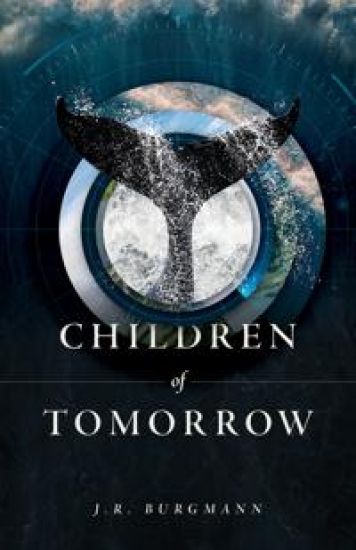
Children of Tomorrow depicts an all-too-real future history, rushing on at an unstoppable speed and fracturing the lives of its many characters, the effects of which ripple throughout subsequent generations and the earth they inherit. Children of Tomorrow is an episodic saga, a sweeping history of family and friendship, spanning multiple generations and geographies across the twenty-first century. Beginning in 2016, Arne Bakke witnesses the historic devastation of that summer's bushfires across the ancient wilderness of Tasmania. Elsewhere, Londoner Evie Weatherall witnesses extreme climate events in her travels. They each see a dangerous future forming. When their paths collide in Melbourne, Australia, where they are both enrolled in a PhD, they and their group of close friends are set on course to witness and struggle together against the coming century, an age of great individual and planetary loss. Children of Tomorrow depicts an all-too-real future history, rushing on at an unstoppable speed and fracturing the lives of its many characters, the effects of which ripple throughout subsequent generations and the earth they inherit.
Science Fiction and Climate Change

Science Fiction and Climate Change

Andrew Milner; J.R. Burgmann

LIVERPOOL UNIVERSITY PRESS
2022
nidottu
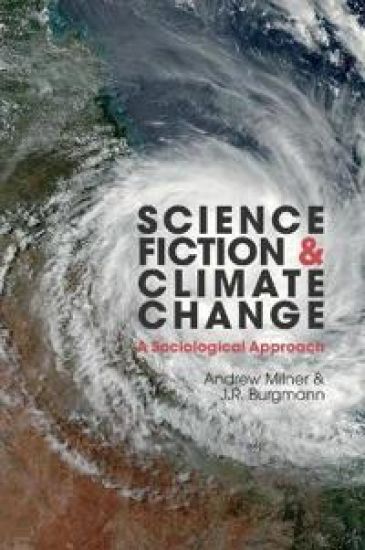
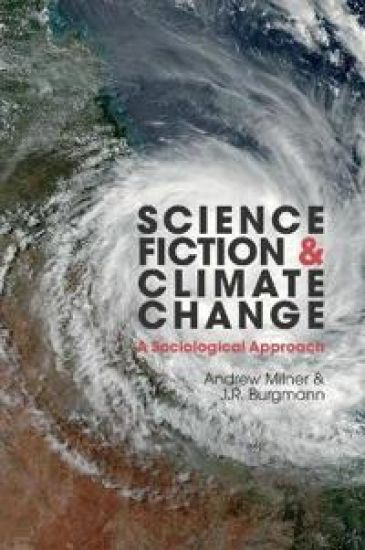
An Open Access edition of this book is available on the Liverpool University Press website and through Knowledge Unlatched. Shortlisted for the British Science Fiction Association Best Non-Fiction Award 2020 Shortlisted for the Locus Science Fiction Foundation Non-Fiction Award 2021 Despite the occasional upsurge of climate change scepticism amongst Anglophone conservative politicians and journalists, there is still a near-consensus amongst climate scientists that current levels of atmospheric greenhouse gas are sufficient to alter global weather patterns to disastrous effect. The resultant climate crisis is simultaneously both a natural and a socio-cultural phenomenon and in this book Milner and Burgmann argue that science fiction occupies a critical location within this nature/culture nexus. Science Fiction and Climate Change takes as its subject matter what Daniel Bloom famously dubbed ‘cli-fi’. It does not, however, attempt to impose a prescriptively environmentalist aesthetic on this sub-genre. Rather, it seeks to explain how a genre defined in relation to science finds itself obliged to produce fictional responses to the problems actually thrown up by contemporary scientific research. Milner and Burgmann adopt a historically and geographically comparatist framework, analysing print and audio-visual texts drawn from a number of different contexts, especially Australia, Britain, Canada, China, Finland, France, Germany, Japan and the United States. Inspired by Williams's cultural materialism, Bourdieu's sociology of culture and Moretti's version of world systems theory, the book builds on Milner’s own Locating Science Fiction to produce a powerfully persuasive study in the sociology of literature.
Science Fiction and Climate Change

Science Fiction and Climate Change

Andrew Milner; J.R. Burgmann

Liverpool University Press
2020
sidottu
An Open Access edition of this book is available on the Liverpool University Press website and through Knowledge Unlatched. Shortlisted for the British Science Fiction Association Best Non-Fiction Award 2020 Shortlisted for the Locus Science Fiction Foundation Non-Fiction Award 2021 Despite the occasional upsurge of climate change scepticism amongst Anglophone conservative politicians and journalists, there is still a near-consensus amongst climate scientists that current levels of atmospheric greenhouse gas are sufficient to alter global weather patterns to disastrous effect. The resultant climate crisis is simultaneously both a natural and a socio-cultural phenomenon and in this book Milner and Burgmann argue that science fiction occupies a critical location within this nature/culture nexus. Science Fiction and Climate Change takes as its subject matter what Daniel Bloom famously dubbed ‘cli-fi’. It does not, however, attempt to impose a prescriptively environmentalist aesthetic on this sub-genre. Rather, it seeks to explain how a genre defined in relation to science finds itself obliged to produce fictional responses to the problems actually thrown up by contemporary scientific research. Milner and Burgmann adopt a historically and geographically comparatist framework, analysing print and audio-visual texts drawn from a number of different contexts, especially Australia, Britain, Canada, China, Finland, France, Germany, Japan and the United States. Inspired by Williams's cultural materialism, Bourdieu's sociology of culture and Moretti's version of world systems theory, the book builds on Milner’s own Locating Science Fiction to produce a powerfully persuasive study in the sociology of literature.