Kirjojen hintavertailu – 12 903 724 kirjaa ja 27 kauppaa
Kirjailija
J. Ranga
Kirjat ja teokset yhdessä paikassa: 27 kirjaa, julkaisuja vuosilta 2020–2021, suosituimpiin kuuluu Modelado y simulación de un híbrido basado en energías renovables de alta fiabilidad. Vertaile teosten hintoja ja tarkista saatavuus suomalaisista kirjakaupoista.
Energy is essential to everyone's life no matter when and where they are. This is especially true in this new century, where people keep pursuing higher quality of life. Among different types of energy, electric energy is one of the most important that people need every day. It is now a globally accepted reality that electrical energy is fundamental for social and economic development. Unfortunately still one third of the world's population lives in developing and threshold countries and have no access to electricity . It has been estimated that the world population will reach 8 billion by 2020 . The statistic shows that the population growth is mostly in developing countries where most of the people live in remote and rural areas. So, to supply the electricity requirements for them, the extension of utility grid is complicated and expensive due to geographical, economical and social barriers. Up to now, mostly diesel generator sets are used for rural electrification. This is not a good solution since, the fuel, maintenance cost is expensive, and it is also not environment friendly. In such circumstances, an alternative is to use locally available renewable energy sources.
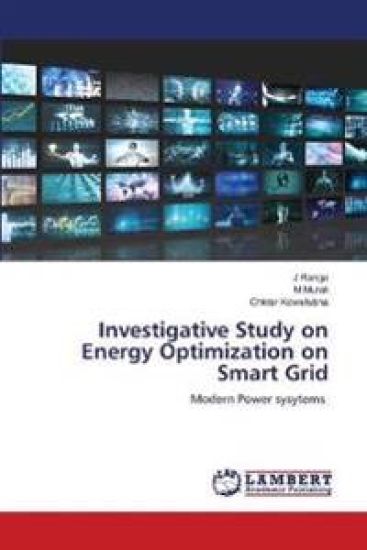
The application of smart grid technology guarantees to give profit to electricity consumers and our economies by better utilizing electric system assets to safely fulfill customer energy demands at a lower monetary and environmental cost. This report reviews the status of the sending of smart grid technologies within APEC economies, and specifically, examines the potential application of this technology to enhance the integration of renewable energy and to progress more noteworthy levels of energy efficiency. Smart grid technology utilizes digital technology and communication to coordinate the activities of intelligent gadgets and systems all through the electricity system: from extensive scale era networked with transmission infrastructure, to the distribution of energy to consumers (production lines, business buildings, and homes), and down into the equipment and systems that utilization electricity in these offices. Through automation, better information, and coordination, smart grid technology can assist give the adaptability expected to integrate variable era that is a normal for some renewable resources, for example, wind and solar generators.
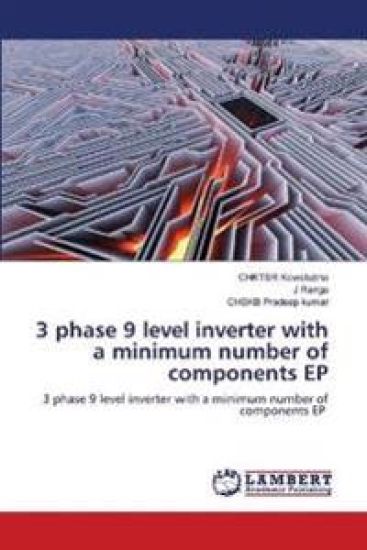
Multilevel inverter has become more famous over previous years in high power electric applications without the usage of a transformer and filters. Multi-level inverters consist of a group of switching devices and DC voltage supplies, the output of which produces voltage with stepped waveform. Multilevel technology has started with the three-level converter followed by numerous multilevel converter typologies. Multilevel inverters can be categorized into three typologies they are, diode-clamped, flying-capacitor cell and cascaded H-bridge. Apart from these three main typologies, the voltage deviating of neutral-point voltage-clamped at Transistor, the unbalanced voltage in the DC link of the PC, and the large number of separated DC supplies in CHB are considered the main drawback of these typologies. Apart from these asymmetrical and hybrid multistage typologies are becoming one of the most interested research area. At the asymmetrical configurations, the magnitudes of DC voltage supplies are unequal. These typologies reduce the cost and size of the inverter and improve the reliability since a minimum number of power electronic components, capacitors and DC supplies are used.