Kirjojen hintavertailu – 12 903 724 kirjaa ja 27 kauppaa

Kirjailija

J S Grewal

Kirjat ja teokset yhdessä paikassa: 11 kirjaa, julkaisuja vuosilta 1991–2025, suosituimpiin kuuluu Social and Cultural History of the Punjab. Vertaile teosten hintoja ja tarkista saatavuus suomalaisista kirjakaupoista.

Nimi esiintyy myös muodoissa: J.S. Grewal, J. S. Grewal

11 kirjaa

Kirjojen julkaisuvuodet: 1991–2025.

Social and Cultural History of the Punjab

Social and Cultural History of the Punjab

J. S. Grewal

Manohar Publishers and Distributors
2025
sidottu
The ‘Punjab’ of this book is a metaphor for the geographical region sur­rounded by the Himalayas, the Great Indian Desert, the Aravali hills and the river Jamuna. During a period of about 4000 years up to ad 1000, the cultural boundaries of this region did not coincide with its geographical boundaries and there were sub-regional differences as well. There was a great deal of interaction with the outside world and between sub-regions. The socio-cultural dynamics of the region are well reflected in the different periods?of?its?history. Seen from the regional angle, the Harappan civilization reveals sub-regional diversities and continuation in a rural setting. The Rigvedic culture appears to be a regional rather than an ethnic articulation. The formation of states within the region and its incorporation in empires set the stage for trade and urbanization, and for new socio-cultural formations. For the first time the great importance of Buddhism in the region gets under­scored. Gradually, however, it was replaced by Shaivism, Vaishnavism and Shaktism. Changes in religious history are related to the changing contexts of polity and economy in their bearing on the social order, languages, literature and the arts. This book should be of equal interest to the student, the professional?historian?and?the?general?reader.
Guru Gobind Singh (1666-1708)

Guru Gobind Singh (1666-1708)

J.S. Grewal

OUP India
2020
sidottu
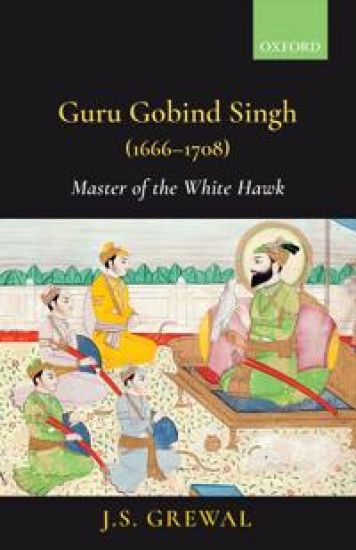
The unifying theme in the life of Guru Gobind Singh was confrontation with the Mughals, which culminated in a struggle for political power. This fact is brought into sharp focus when we consider the Guru's life and legacy simultaneously in the contexts of the Mughal Empire, its feudatory states in the hills, and the Sikh movement. The creation of the Khalsa in 1699 as a political community with the aspiration to rule made conciliation or compromise with the Mughal state almost impossible. Their long struggle ended eventually in the declaration of Khalsa Raj in 1765. Using contemporary and near contemporary sources in Gurmukhi, Persian, and English, J. S. Grewal presents a comprehensive study of this era of Sikh history. The volume elaborates on the life and legacy of Guru Gobind Singh and explores the ideological background of the institution of the Khalsa and its larger political context. Grewal, however, emphasizes that the legacy of the Khalsa was also social and cultural. This authoritative volume on the tenth Guru is a significant addition to the field of Sikh studies..
A Political Biography of Maharaja Ripudaman Singh of Nabha
Maharaja Ripudaman Singh of Nabha (1883-1942) was an exceptional ruler, a princely 'rebel' who resisted the paramount power in different ways. Forced to abdicate in 1923 ostensibly on account of 'maladministration', Ripudaman Singh was sent to Kodaikanal in 1928, where he died after 14 years in captivity without any recourse to judicial appeal. Set against the backdrop of Indian nationalism, Sikh resurgence, and British paramountcy, J. S. Grewal and Indu Banga trace the Maharaja's political career, revealing the devious ways in which the paramount power dealt with traditional nobility. They explore his career, education, and upbringing to explain his ideological stance, appreciation for Indian nationalism, and his active involvement in the Sikh reformist movement. Moved by Panthic and nationalist concerns, the Maharaja of Nabha bridged 'Indian India' and British India through the concerns he affirmed, reforms he introduced, and the causes he espoused as a patriot.
Master Tara Singh in Indian History
This is the first comprehensive study of the life and work of Master Tara Singh (1885-1967), Akali leader, freedom fighter, and arguably the foremost leader of the Sikhs. Master Tara Singh's vision of the 'Indian National State' was fundamentally different from that of Jawaharlal Nehru and the Indian National Congress. The partition of British Punjab and the formation of Punjabi Suba are the lasting legacies of his determined efforts to protect Sikh interests. Employing new and a broad variety of sources in English and Punjabi, J. S. Grewal weaves a comprehensive biography of Master Tara Singh. Divided into two parts, the first deals with Master Tara Singh's anti-British activity in colonial India, while the second traces the political and religious trajectories of the movements led by him in pursuit of a unilingual Punjab state. Lending unity to the two parts is Master Tara Singh's politics based on Sikh identity as a source of confrontation with the colonial state and the Congress government. Revealing new facts, ideas, and perspectives on Master Tara Singh, this book throws fresh light on the freedom struggle, the Akali movement, the politics of partition, and the working of the Congress governments in the states and at the Centre during a tumultuous and transformative period of Indian history.
History, Literature, And Identity;
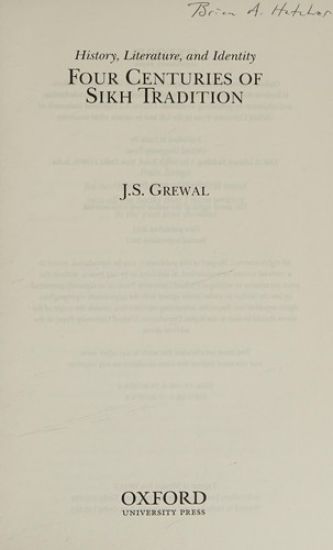
This book examines the entire range of Sikh sacred literature produced between the sixteenth- and nineteenth century to give a comprehensive account of the Sikh tradition. Divided into five parts, it discusses the historical context of the production of Sikh literature and also the development of Sikh identity. The first part of the book (1500-1605) explores the compositions of the first five Gurus and the next analyses the literary genre characterizing the 'phase of confrontation' with the state (1606-75). The third (1675-1708) reveals how Sikhism responded to the external threats and the fourth part (1765-1849) discusses Guru Gobind Singh and literature produced during the period of Khalsa Raj. The last deals with works which have gained entry into the Sikh panth during the colonial period.
The Sikhs of the Punjab

The Sikhs of the Punjab

J. S. Grewal

Cambridge University Press
1998
pokkari
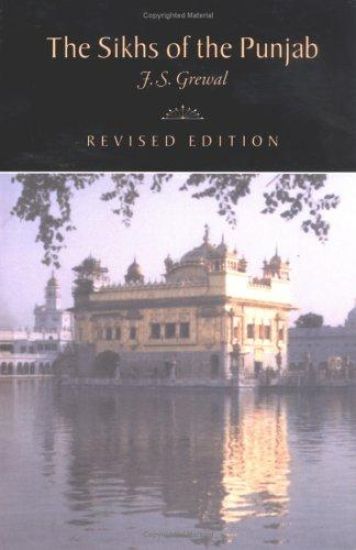
In a revised edition of his original book, J. S. Grewal brings the history of the Sikhs from its beginnings in the time of Guru Nanak, the founder of Sikhism, right up to the present day. Against the background of the history of the Punjab, the volume surveys the changing pattern of human settlements in the region until the fifteenth century and the emergence of the Punjabi language as the basis of regional articulation. Subsequent chapters explore the life and beliefs of Guru Nanak, the development of his ideas by his successors and the growth of his following. The book offers a comprehensive statement on one of the largest and most important communities in India today.
The Sikhs of the Punjab

The Sikhs of the Punjab

J. S. Grewal

Cambridge University Press
1991
sidottu
In a revised edition of his original book, J. S. Grewal brings the history of the Sikhs from its beginnings in the time of Guru Nanak, the founder of Sikhism, right up to the present day. Against the background of the history of the Punjab, the volume surveys the changing pattern of human settlements in the region until the fifteenth century and the emergence of the Punjabi language as the basis of regional articulation. Subsequent chapters explore the life and beliefs of Guru Nanak, the development of his ideas by his successors and the growth of his following. The book offers a comprehensive statement on one of the largest and most important communities in India today.