Kirjojen hintavertailu – 12 903 725 kirjaa ja 27 kauppaa

Kirjailija

J. Thomas Rimer

Kirjat ja teokset yhdessä paikassa: 11 kirjaa, julkaisuja vuosilta 2001–2016, suosituimpiin kuuluu Collected Writings of J. Thomas Rimer. Vertaile teosten hintoja ja tarkista saatavuus suomalaisista kirjakaupoista.

11 kirjaa

Kirjojen julkaisuvuodet: 2001–2016.

Toward a Modern Japanese Theatre

Toward a Modern Japanese Theatre

J. Thomas Rimer

Princeton University Press
2016
sidottu
Long accustomed to writing in the tradition of the flamboyant kabuki, Japanese dramatists had a more difficult struggle in modernizing their art than did writers of fiction and poetry. The work of Kishida Kunio, however, established and matured modern Japanese drama, modeled on the western psychological drama of Ibsen and Chekhov. J. Thomas Rimer traces the initial modernization efforts undertaken by the first generation of Japanese playwrights of the shingeki, or "New Theatre.'" His study then concentrates on the work of Kishida Kunio, the most important figure in the Japanese theatre of the 1930s and 1940s. Kishida, who studied with the well-known French director Jacques Copeau in 1921, returned to Japan with the goal of establishing a modern drama of psychological dimensions for the Japanese theatre. His work demonstrated his talent as a playwright and laid the foundation for later modern Japanese playwrights. Originally published in 1974. The Princeton Legacy Library uses the latest print-on-demand technology to again make available previously out-of-print books from the distinguished backlist of Princeton University Press. These editions preserve the original texts of these important books while presenting them in durable paperback and hardcover editions. The goal of the Princeton Legacy Library is to vastly increase access to the rich scholarly heritage found in the thousands of books published by Princeton University Press since its founding in 1905.
Modern Japanese Fiction and Its Traditions

Modern Japanese Fiction and Its Traditions

J. Thomas Rimer

Princeton University Press
2016
sidottu
Thomas Rimer's book seeks to explain the background, structural principles, and development of pre-modem and modern Japanese fiction in a way that is comprehensive, methodical, and accessible to the general reader. Originally published in 1978. The Princeton Legacy Library uses the latest print-on-demand technology to again make available previously out-of-print books from the distinguished backlist of Princeton University Press. These editions preserve the original texts of these important books while presenting them in durable paperback and hardcover editions. The goal of the Princeton Legacy Library is to vastly increase access to the rich scholarly heritage found in the thousands of books published by Princeton University Press since its founding in 1905.
Toward a Modern Japanese Theatre

Toward a Modern Japanese Theatre

J. Thomas Rimer

Princeton University Press
2015
pokkari
Long accustomed to writing in the tradition of the flamboyant kabuki, Japanese dramatists had a more difficult struggle in modernizing their art than did writers of fiction and poetry. The work of Kishida Kunio, however, established and matured modern Japanese drama, modeled on the western psychological drama of Ibsen and Chekhov. J. Thomas Rimer traces the initial modernization efforts undertaken by the first generation of Japanese playwrights of the shingeki, or "New Theatre.'" His study then concentrates on the work of Kishida Kunio, the most important figure in the Japanese theatre of the 1930s and 1940s. Kishida, who studied with the well-known French director Jacques Copeau in 1921, returned to Japan with the goal of establishing a modern drama of psychological dimensions for the Japanese theatre. His work demonstrated his talent as a playwright and laid the foundation for later modern Japanese playwrights. Originally published in 1974. The Princeton Legacy Library uses the latest print-on-demand technology to again make available previously out-of-print books from the distinguished backlist of Princeton University Press. These editions preserve the original texts of these important books while presenting them in durable paperback and hardcover editions. The goal of the Princeton Legacy Library is to vastly increase access to the rich scholarly heritage found in the thousands of books published by Princeton University Press since its founding in 1905.
Modern Japanese Fiction and Its Traditions

Modern Japanese Fiction and Its Traditions

J. Thomas Rimer

Princeton University Press
2014
pokkari
Thomas Rimer's book seeks to explain the background, structural principles, and development of pre-modem and modern Japanese fiction in a way that is comprehensive, methodical, and accessible to the general reader. Originally published in 1978. The Princeton Legacy Library uses the latest print-on-demand technology to again make available previously out-of-print books from the distinguished backlist of Princeton University Press. These editions preserve the original texts of these important books while presenting them in durable paperback and hardcover editions. The goal of the Princeton Legacy Library is to vastly increase access to the rich scholarly heritage found in the thousands of books published by Princeton University Press since its founding in 1905.
The Columbia Anthology of Modern Japanese Literature

The Columbia Anthology of Modern Japanese Literature

J. Thomas Rimer

Columbia University Press
2011
sidottu
Featuring choice selections from the core anthologies The Columbia Anthology of Modern Japanese Literature: From Restoration to Occupation, 1868-1945, and The Columbia Anthology of Modern Japanese Literature: From 1945 to the Present, this collection offers a concise yet remarkably rich introduction to the fiction, poetry, drama, and essays of Japan's modern encounter with the West. Spanning a period of exceptional invention and transition, this volume is not only a critical companion to courses on Japanese literary and intellectual development but also an essential reference for scholarship on Japanese history, culture, and interactions with the East and West. The first half covers the three major styles of literary expression that informed Japanese writing and performance in the late nineteenth and early twentieth centuries: classical Japanese fiction and drama, Chinese poetry, and Western literary representation and cultural critique. Their juxtaposition brilliantly captures the social, intellectual, and political challenges shaping Japan during this period, particularly the rise of nationalism, the complex interaction between traditional and modern forces, and the encroachment of Western ideas and writing. The second half conveys the changes that have transformed Japan since the end of the Pacific War, such as the heady transition from poverty to prosperity, the friction between conflicting ideologies and political beliefs, and the growing influence of popular culture on the country's artistic and intellectual traditions. Featuring sensitive translations of works by Nagai Kafu, Natsume Soseki, Oe Kenzaburo, Kawabata Yasunari, Mishima Yukio, and many others, this anthology relates an essential portrait of Japan's dynamic modernization.
The Columbia Anthology of Modern Japanese Literature

The Columbia Anthology of Modern Japanese Literature

J. Thomas Rimer

Columbia University Press
2011
pokkari
Featuring choice selections from the core anthologies The Columbia Anthology of Modern Japanese Literature: From Restoration to Occupation, 1868-1945, and The Columbia Anthology of Modern Japanese Literature: From 1945 to the Present, this collection offers a concise yet remarkably rich introduction to the fiction, poetry, drama, and essays of Japan's modern encounter with the West. Spanning a period of exceptional invention and transition, this volume is not only a critical companion to courses on Japanese literary and intellectual development but also an essential reference for scholarship on Japanese history, culture, and interactions with the East and West. The first half covers the three major styles of literary expression that informed Japanese writing and performance in the late nineteenth and early twentieth centuries: classical Japanese fiction and drama, Chinese poetry, and Western literary representation and cultural critique. Their juxtaposition brilliantly captures the social, intellectual, and political challenges shaping Japan during this period, particularly the rise of nationalism, the complex interaction between traditional and modern forces, and the encroachment of Western ideas and writing. The second half conveys the changes that have transformed Japan since the end of the Pacific War, such as the heady transition from poverty to prosperity, the friction between conflicting ideologies and political beliefs, and the growing influence of popular culture on the country's artistic and intellectual traditions. Featuring sensitive translations of works by Nagai Kafu, Natsume Soseki, Oe Kenzaburo, Kawabata Yasunari, Mishima Yukio, and many others, this anthology relates an essential portrait of Japan's dynamic modernization.
The Columbia Anthology of Modern Japanese Literature

The Columbia Anthology of Modern Japanese Literature

J. Thomas Rimer; Van Gessel

Columbia University Press
2007
pokkari
This comprehensive anthology collects works of fiction, poetry, drama, and essay-writing from a pivotal time in Japanese history. In addition to their literary achievements, the texts reflect the political, social, and intellectual changes that occurred in Japanese society during this period, including exposure to Western ideas and literature, the rise of nationalism, and the complex interaction of traditional and modern forces. The volume offers outstanding, often new translations of classic texts by such celebrated writers as Nagai Kafu, Shimazaki Toson, Natsume Soseki, Kawabata Yasunari, and Yosano Akiko. The editors have also unearthed works from lesser-known women writers, many of which have never been available in English. Organized chronologically and by genre within each period, the volume reveals the major influences in the development of modern Japanese literature: the Japanese classics themselves, the example of Chinese poetry, and the encounter with Western literature and culture. Modern Japanese writers reread the classics of Japanese literature, infused them with contemporary language, and refashioned them with an increased emphasis on psychological elements. They also reinterpreted older aesthetic concepts in light of twentieth-century mentalities. While modern ideas captured the imagination of some Japanese writers, the example of classical Chinese poetry remained important for others. Meiji writers continued to compose poetry in classical Chinese and adhere to a Confucian system of thought. Another factor in shaping modern Japanese literature was the example of foreign works, which offered new literary inspiration and opportunities for Japanese readers and writers. Divided into four chapters, the anthology begins with the early modern texts of the 1870s, continues with works written during the years of social change preceding World War I and the innovative writing of the interwar period, and concludes with texts from World War II. Each chapter includes a helpful critical introduction, situating the works within their literary, political, and cultural contexts. Additionally, there are biographical introductions for each writer.
The Columbia Anthology of Modern Japanese Literature

The Columbia Anthology of Modern Japanese Literature

J. Thomas Rimer

Columbia University Press
2007
sidottu
In Volume 2 of Columbia's comprehensive anthology of modern Japanese literature, thoughtfully selected and carefully translated readings portray the vast changes that have transformed Japanese culture since the end of the Pacific War. Beginning with the Allied Occupation in 1945 and concluding with the early twenty-first century, these stories, poems, plays, and essays reflect Japan's heady transition from poverty to prosperity, its struggle with conflicting ideologies and political beliefs, and the growing influence of popular culture on the country's artistic and intellectual traditions. Organized chronologically and by genre within each period, readings include fiction by Hayashi Fumiko and Oe Kenzaburo; poems by Ayukawa Nobuo, Katsura Nobuko, and Saito Fumi; plays by Mishima Yukio and Shimizu Kunio; and a number of essays, among them Eto Jun on Natsume Soseki and his brilliant novel Kokoro (The Heart of Things), and Kawabata Yasunari on the shape of his literary career and the enduring influence of classical Japanese literature. Some authors train a keen eye on the contemporary world, while others address the historical past and its relationship to modern culture. Some adopt an even broader scope and turn to European models for inspiration, while others look inward, exploring psychological and sexual terrain in new, often daring ways. Spanning almost six decades, this anthology provides a thorough introduction to a profound period of creative activity.
The Columbia Anthology of Modern Japanese Literature

The Columbia Anthology of Modern Japanese Literature

J. Thomas Rimer; Van Gessel

Columbia University Press
2005
sidottu
This comprehensive anthology collects works of fiction, poetry, drama, and essay-writing from a pivotal time in Japanese history. In addition to their literary achievements, the texts reflect the political, social, and intellectual changes that occurred in Japanese society during this period, including exposure to Western ideas and literature, the rise of nationalism, and the complex interaction of traditional and modern forces. The volume offers outstanding, often new translations of classic texts by such celebrated writers as Nagai Kafu, Shimazaki Toson, Natsume Soseki, Kawabata Yasunari, and Yosano Akiko. The editors have also unearthed works from lesser-known women writers, many of which have never been available in English. Organized chronologically and by genre within each period, the volume reveals the major influences in the development of modern Japanese literature: the Japanese classics themselves, the example of Chinese poetry, and the encounter with Western literature and culture. Modern Japanese writers reread the classics of Japanese literature, infused them with contemporary language, and refashioned them with an increased emphasis on psychological elements. They also reinterpreted older aesthetic concepts in light of twentieth-century mentalities. While modern ideas captured the imagination of some Japanese writers, the example of classical Chinese poetry remained important for others. Meiji writers continued to compose poetry in classical Chinese and adhere to a Confucian system of thought. Another factor in shaping modern Japanese literature was the example of foreign works, which offered new literary inspiration and opportunities for Japanese readers and writers. Divided into four chapters, the anthology begins with the early modern texts of the 1870s, continues with works written during the years of social change preceding World War I and the innovative writing of the interwar period, and concludes with texts from World War II. Each chapter includes a helpful critical introduction, situating the works within their literary, political, and cultural contexts. Additionally, there are biographical introductions for each writer.
Collected Writings of J. Thomas Rimer

Collected Writings of J. Thomas Rimer

J. Thomas Rimer

RoutledgeCurzon
2004
sidottu
Widely acknowledged as the doyen of twentieth-century Japanese literature, fine art and the performing arts, as well as being renowned for his translations of Zeami and Mori Ogai. Collected Writings of J. Thomas Rimer brings together in whole or in part much of Rimer's prodigious output in these fields over the past forty years, including some of his milestone (fully illustrated) essays on Japanese Art, especially 'Tokyo in Paris/ Paris in Tokyo' (Japan Foundation, 1987).
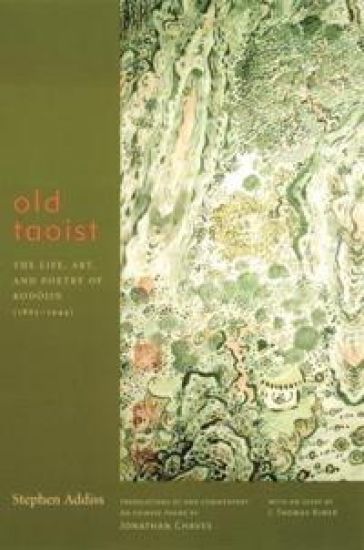
Old Taoist

Old Taoist

Stephen Addiss; Jonathan Chaves; J. Thomas Rimer

Columbia University Press
2001
pokkari
In the literary and artistic milieu of early modern Japan the Chinese and Japanese arts flourished side by side. Kodojin, the "Old Taoist" (1865-1944), was the last of these great poet-painters in Japan. Under the support of various patrons, he composed a number of Taoist-influenced Chinese and Japanese poems and did lively and delightful ink paintings, continuing the tradition of the poet-sage who devotes himself to study of the ancients, lives quietly and modestly, and creates art primarily for himself and his friends. Portraying this last representative of a tradition of gentle and refined artistry in the midst of a society that valued economic growth and national achievement above all, this beautifully illustrated book brings together 150 of Kodojin's Chinese poems (introduced and translated by Jonathan Chaves), more than 100 of his haiku and tanka (introduced and translated by Stephen Addiss), and many examples of his calligraphy and ink paintings. Addiss's in-depth introduction details the importance of the poet-painter tradition, outlines the life of Kodojin, and offers a critical appraisal of his work, while J. Thomas Rimer's essay puts the literary work of the Old Taoist in context.