Kirjojen hintavertailu – 12 903 725 kirjaa ja 27 kauppaa
Kirjailija
J. W. Goethe
Kirjat ja teokset yhdessä paikassa: 8 kirjaa, julkaisuja vuosilta 1882–2025, suosituimpiin kuuluu Lives of Caspar David Friedrich. Vertaile teosten hintoja ja tarkista saatavuus suomalaisista kirjakaupoista.
Nimi esiintyy myös muodoissa: J W Goethe, J.W. Goethe
J. W. Goethe; Carl Gustav Carus; Clemens Brentano; Caspar David Friedrich; Heinrich Meyer; Heinrich Kleist; Vasily Andreyevich Zhukowski; Gotthilf Heinrich Schubert; Achim Arnim
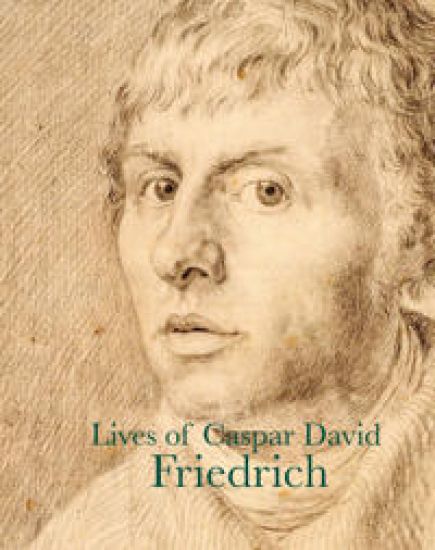
Caspar David Friedrich (1774-1840), one of the great visionaries of European art, spent all his life in Northern Germany, apart from four years studying in Copenhagen, and his output appears to consist almost entirely of German landscapes. But far from being parochial, he was, in the words of the French sculptor David d’Angers, the artist who ‘discovered the tragic in landscape’. His paintings assemble minutely observed elements of nature into compositions that celebrate the riches and the melancholy of a cosmos fully imbued with the divine, while never losing an almost hallucinatory engagement with reality. For all their clarity, they are the quintessence of Romanticism. Almost too familiar today, to Friedrich’s contemporaries these extraordinary paintings were astonishing and challenging. This volume records the reactions of some of the most prominent figures of German Romanticism: Kleist, Brentano and Arnim (in a witty series of dialogues between gallery visitors alternately bewitched and bewildered by Friedrich’s Monk by the Sea), the painter and physiologist Carus, the psychologist Schubert, the Russian poet and translator Zhukovsky. A piece by Goethe and his colleague Heinrich Meyer records the somewhat baffled admiration of the earlier generation; and Friedrich’s own Commandments of Art breathes the almost overwhelming passion with which he approached his vocation. An introduction by the leading scholar Johannes Grave situates Friedrich’s art and its reception in the context of the Romantic movement both in Germany and in Europe as a whole.
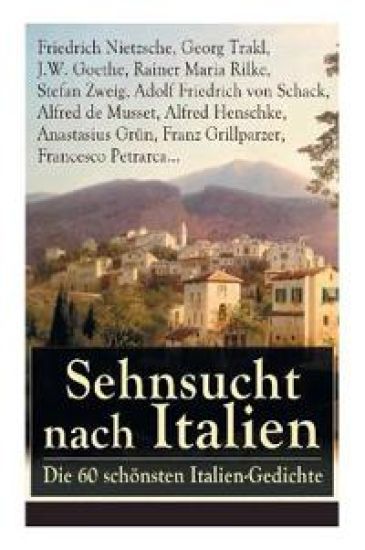
Inhalt: - Italien (Adolf Friedrich von Schack) - Erinnerung an Italien (Alfred de Musset) - Venedig (Alfred de Musset) - Berliner in Italien (Alfred Henschke) - Deutscher in Italien (Alfred Henschke) - Venedig (Alfred Henschke) - China in Italien (Anastasius Gr n) - Venedig (Anastasius Gr n) - In Verona (Alfred Mei ner) - N rdliches und s dliches Italien (August von Platen) - Venedig (August von Platen) - Italien im Fr hling (August von Platen) - Venedigs erster Tag (Conrad Ferdinand Meyer) - In Italien (Demetrius Schrutz) - Abendfeier in Venedig (Emanuel Geibel) - Aus Venedig (Emil Peschkau) - Das mittelalterliche Italien (Franz Binhack) - Italien (Franz Grillparzer) - Venedig (Franz von Werner) - Zwar, mein Italien, bleiben, was wir sagen (Francesco Petrarca) - Venedig (Friedrich Hebbel) - Venedig (Friedrich Nietzsche) - Abschied von Italien (Georg Friedrich Treitschke) - In Venedig (Georg Trakl) - An Italien (Giacomo Leopardi) - Italien (Gustav Pfizer) - In Italien (Heinrich Lersch) - Fragment aus Italien (Heinrich Leuthold) - Im Feldspitale zu Verona (Hermann von Gilm zu Rosenegg) - Mein Venedig (Isabelle Kaiser) - Italien (Isolde Kurz) - Das ist Italien, das ich verlie ... (J. W. Goethe) - Abschied von Italien (Johann Gottfried Kinkel) - Italien (Josef Huggenberger) - Durst in Venedig (Joseph Victor von Scheffel) - An Italien (Karl Henckell) - Auf die Wiederkunft des Kaisers aus Italien (Karl Mastalier) - Das Amphitheater in Verona (Karl Zettel) - Venedig - VIII. (Moritz Graf von Strachwitz) - Rom und Italien (Paul de Lagarde) - Verona (Paul Heyse) - Venedig (Paul Heyse) - Ancona (Paul Heyse) - Parma (Paul Heyse) - Pisa (Paul Heyse) - Venedig (Rainer Maria Rilke) - Goethes letzte Nacht in Italien (Stefan George) - Sonnenaufgang in Venedig (Stefan Zweig) - Der Traum von Venedig (Theodor D ubler) - Oh Farbenstadt Venedig, dir zu F en (Theodor D ubler) - ...
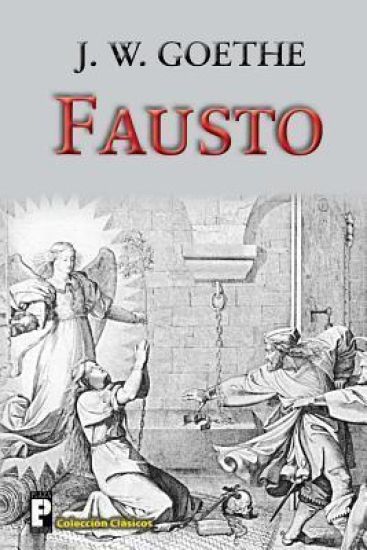
Fausto es una obra tr gica enteramente dialogada, concebida m s para ser le da que para ser representada (al estilo de La Celestina. Se trata de la obra m s famosa de Goethe y est considerada como una de las grandes obras de la literatura universal. La Primera parte fue en principio terminada por Goethe en 1806. Su publicaci n en 1808 fue seguida de una edici n revisada en 1828-1829, que ser a la ltima editada por el propio autor. Goethe termin de escribir la Segunda parte de Fausto en 1832, el a o de su muerte. A diferencia de la Primera parte, el foco de la acci n ya no est centrado en el alma de Fausto, que ha sido vendida al diablo, sino m s bien en fen menos sociales como la psicolog a, la historia y la pol tica. La segunda parte constituy la principal ocupaci n de Goethe en sus ltimos a os y apareci solo p stumamente en 1832. Tomado de es.wikipedia.org
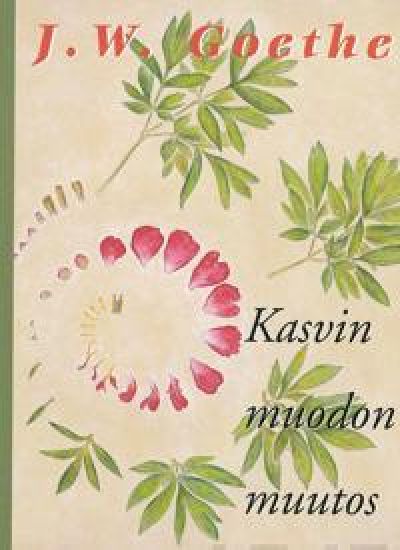
Saksalainen runoilijan ja luonnontutkijan klassikkoteos johdattelee lukijan seuraamaan kasvin muotoutumista ajassa ja tilassa. Lehdestä toiseen etenevän kehityksen tavoittaa eläytyvän, aistivan ajattelun avulla, joka on avain ihmisen luontosuhteen eheytymiseen. Siksi Goethen kokonaisvaltainen tarkastelutapa on ajankohtaisempaa kuin koskaan.