Kirjojen hintavertailu – 12 903 725 kirjaa ja 27 kauppaa

Kirjailija

Jack Dougherty

Kirjat ja teokset yhdessä paikassa: 3 kirjaa, julkaisuja vuosilta 2013–2021, suosituimpiin kuuluu Hands-On Data Visualization. Vertaile teosten hintoja ja tarkista saatavuus suomalaisista kirjakaupoista.

3 kirjaa

Kirjojen julkaisuvuodet: 2013–2021.

Hands-On Data Visualization

Hands-On Data Visualization

Jack Dougherty

O'Reilly Media, Inc, USA
2021
nidottu

Halvin toimitettuna 54,50 €

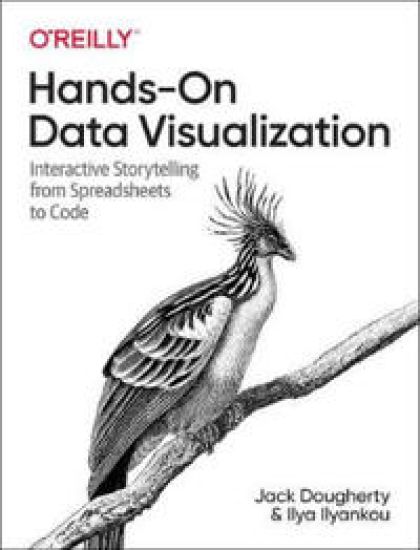
Tell your story and show it with data, using free and easy-to-learn tools on the web. This introductory book teaches you how to design interactive charts and customized maps for your website, beginning with simple drag-and-drop tools such as Google Sheets, Datawrapper, and Tableau Public. You'll also gradually learn how to edit open source code templates like Chart.js, Highcharts, and Leaflet on GitHub. Hands-On Data Visualization takes you step-by-step through tutorials, real-world examples, and online resources. This hands-on resource is ideal for students, nonprofit organizations, small business owners, local governments, journalists, academics, and anyone who wants to take data out of spreadsheets and turn it into lively interactive stories. No coding experience is required. Build interactive charts and maps and embed them in your website Understand the principles for designing effective charts and maps Learn key data visualization concepts to help you choose the right tools Convert and transform tabular and spatial data to tell your data story Edit and host Chart.js, Highcharts, and Leaflet map code templates on GitHub Learn how to detect bias in charts and maps produced by others
Writing History in the Digital Age

Writing History in the Digital Age

Jack Dougherty; Kristen Nawrotzki

The University of Michigan Press
2013
sidottu
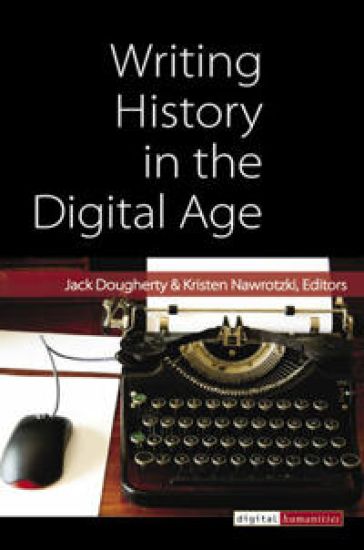
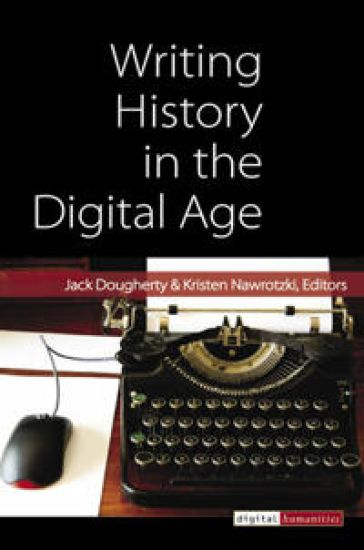
Writing History in the Digital Age began as a “what-if” experiment by posing a question: How have Internet technologies influenced how historians think, teach, author, and publish? To illustrate their answer, the contributors agreed to share the stages of their book-in-progress as it was constructed on the public web. To facilitate this innovative volume, editors Jack Dougherty and Kristen Nawrotzki designed a born-digital, open-access, and open peer review process to capture commentary from appointed experts and general readers. A customized WordPress plug-in allowed audiences to add page- and paragraph-level comments to the manuscript, transforming it into a socially networked text. The initial six-week proposal phase generated over 250 comments, and the subsequent eight-week public review of full drafts drew 942 additional comments from readers across different parts of the globe. The finished product now presents 20 essays from a wide array of notable scholars, each examining (and then breaking apart and reexamining) if and how digital and emergent technologies have changed the historical profession.
Writing History in the Digital Age

Writing History in the Digital Age

Jack Dougherty; Kristen Nawrotzki

The University of Michigan Press
2013
nidottu
Writing History in the Digital Age began as a “what-if” experiment by posing a question: How have Internet technologies influenced how historians think, teach, author, and publish? To illustrate their answer, the contributors agreed to share the stages of their book-in-progress as it was constructed on the public web. To facilitate this innovative volume, editors Jack Dougherty and Kristen Nawrotzki designed a born-digital, open-access, and open peer review process to capture commentary from appointed experts and general readers. A customized WordPress plug-in allowed audiences to add page- and paragraph-level comments to the manuscript, transforming it into a socially networked text. The initial six-week proposal phase generated over 250 comments, and the subsequent eight-week public review of full drafts drew 942 additional comments from readers across different parts of the globe. The finished product now presents 20 essays from a wide array of notable scholars, each examining (and then breaking apart and reexamining) if and how digital and emergent technologies have changed the historical profession.