Kirjojen hintavertailu – 12 903 729 kirjaa ja 27 kauppaa

Kirjailija

Jack E. Davis

Kirjat ja teokset yhdessä paikassa: 14 kirjaa, julkaisuja vuosilta 1982–2023, suosituimpiin kuuluu Zack Files 02: Through the Medicine Cabinet. Vertaile teosten hintoja ja tarkista saatavuus suomalaisista kirjakaupoista.

14 kirjaa

Kirjojen julkaisuvuodet: 1982–2023.

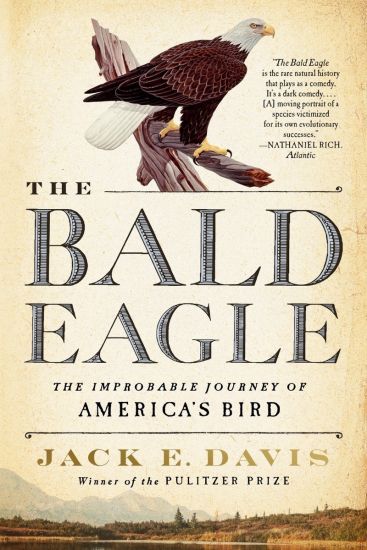
The Bald Eagle

The Bald Eagle

Jack E. Davis

WW NORTON CO
2023
nidottu
The bald eagle is regal but fearless, a bird you’re not inclined to argue with. For centuries, Americans have celebrated it as “majestic” and “noble,” yet savaged the living bird behind their national symbol as a malicious predator of livestock and, falsely, a snatcher of babies. Taking us from before the nation’s founding through inconceivable resurgences of this enduring all-American species, Jack E. Davis contrasts the age when native peoples lived beside it peacefully with that when others, whether through hunting bounties or DDT pesticides, twice pushed Haliaeetus leucocephalus to the brink of extinction. Filled with spectacular stories of Founding Fathers, rapacious hunters, heroic bird rescuers, and the lives of bald eagles themselves—monogamous creatures, considered among the animal world’s finest parents—The Bald Eagle is a much-awaited cultural and natural history that demonstrates how this bird’s wondrous journey may provide inspiration today, as we grapple with environmental peril on a larger scale.
The Bald Eagle

The Bald Eagle

Jack E. Davis

WW NORTON CO
2022
sidottu
The bald eagle is regal but fearless, a bird you’re not inclined to argue with. For centuries, Americans have celebrated it as “majestic” and “noble” yet savaged the living bird behind their national symbol as a malicious predator of livestock and, falsely, a snatcher of babies. Taking us from before the United States’ founding through inconceivable resurgences of this enduring all-American species, Jack E. Davis contrasts the age when native peoples lived beside it peacefully with that when others, whether through hunting bounties or DDT pesticides, twice pushed Haliaeetus leucocephalus to the brink of extinction. Filled with spectacular stories of Founding Fathers, rapacious hunters, heroic bird rescuers and the lives of bald eagles themselves—monogamous creatures, considered among the animal world’s finest parents—The Bald Eagle is a much-awaited cultural and natural history that demonstrates how this bird’s wondrous journey may provide inspiration today, as we grapple with environmental peril on a larger scale.
The Eagle on My Arm

The Eagle on My Arm

Dava Guerin; Terry Bivens; Jack E. Davis; Floyd Scholz

The University Press of Kentucky
2020
sidottu
In October 1967, eighteen-year-old Patrick Bradley enlisted in the US Army and was later deployed to North Vietnam as a special operator with missions to kill high-value targets. Combat left him physically and psychologically wounded, as it does many veterans, and Bradley struggled to adjust when he returned home. He seemed destined for military prison after an altercation in which he broke a superior officer's jaw, but his life changed forever when a psychiatrist recommended a unique path for healing. Thanks to a program sponsored by the Canadian government, Bradley traveled to Canada to study bald eagles and document their behavior. He found himself recovering while living alone in the wild with minimal supplies or human contact. At the same time, his work was paving the way for groundbreaking research, including the discovery of a link between the use of the pesticide DDT and a decrease in southern bald eagle populations. Later, he forged a successful career training and managing wild animals and committed himself to helping other wounded warriors by cofounding the Avian Veteran Alliance, a nonprofit that pairs veterans suffering from PTSD and physical injuries with injured birds of prey. The Eagle on My Arm tells Bradley's inspirational story for the first time. This moving account reveals how a soldier became a dedicated healer, using his years of study and solitude to face his demons and turn his pain into a lifelong passion for helping others.
Engineering Eden

Engineering Eden

Jordan Fisher Smith; Jack E. Davis

The Experiment LLC
2019
nidottu
In the summer of 1972, 25-year-old Harry Eugene Walker hitchhiked away from his family’s northern Alabama dairy farm to see America. Nineteen days later he was killed by an endangered grizzly bear in Yellowstone National Park. The ensuing civil trial, brought against the US Department of the Interior for alleged mismanagement of the park’s grizzly population, emerged as a referendum on how America’s most beloved wild places should be conserved. Two of the twentieth century’s greatest wildlife biologists testified—on opposite sides. Moving across decades and among Yellowstone, Yosemite, Glacier, and Sequoia National Parks, author and former park ranger Jordan Fisher Smith has crafted an epic, emotionally wrenching account of America’s fraught, century-and-a-half-long attempt to remake Eden—in the name of saving it.
The Gulf

The Gulf

Jack E. Davis

Liveright Publishing Corporation
2018
nidottu
Hailed as a “nonfiction epic . . . in the tradition of Jared Diamond’s best-seller Collapse, and Simon Winchester’s Atlantic” (Dallas Morning News), Jack E. Davis’s The Gulf is “by turns informative, lyrical, inspiring and chilling for anyone who cares about the future of ‘America’s Sea’ ” (Wall Street Journal). Illuminating America’s political and economic relationship with the environment from the age of the conquistadors to the present, Davis demonstrates how the Gulf’s fruitful ecosystems and exceptional beauty empowered a growing nation. Filled with vivid, untold stories from the sportfish that launched Gulfside vacationing to Hollywood’s role in the country’s first offshore oil wells, this “vast and welltold story shows how we made the Gulf . . . [into] a ‘national sacrifice zone’ ” (Bill McKibben). The first and only study of its kind, The Gulf offers “a unique and illuminating history of the American Southern coast and sea as it should be written” (Edward O. Wilson).
An Everglades Providence

An Everglades Providence

Jack E. Davis

University of Georgia Press
2011
pokkari
No one did more than Marjory Stoneman Douglas to transform the Everglades from the country's most maligned swamp into its most beloved wetland. By the late twentieth century, her name and her classic The Everglades: River of Grass had become synonymous with Everglades protection. The crusading resolve and boundless energy of this implacable elder won the hearts of an admiring public while confounding her opponents—growth merchants intent on having their way with the Everglades. Douglas's efforts ultimately earned her a place among a mere handful of individuals honored as a namesake of a national wilderness area. In the first comprehensive biography of Douglas, Jack E. Davis explores the 108-year life of this compelling woman. Douglas was more than an environmental activist. She was a suffragist, a lifetime feminist and supporter of the ERA, a champion of social justice, and an author of diverse literary talent. She came of age literally and professionally during the American environmental century, the century in which Americans mobilized an unprecedented popular movement to counter the equally unprecedented liberties they had taken in exploiting, polluting, and destroying the natural world. The Everglades were a living barometer of America's often tentative shift toward greater environmental responsibility. Reconstructing this larger picture, Davis recounts the shifts in Douglas's own life and her instrumental role in four important developments that contributed to Everglades protection: the making of a positive wetland image, the creation of a national park, the expanding influence of ecological science, and the rise of the modern environmental movement. In the grand but beleaguered Everglades, which Douglas came to understand is a vast natural system that supports human life, she saw nature's providence.
An Everglades Providence

An Everglades Providence

Jack E. Davis

University of Georgia Press
2009
sidottu
No one did more than Marjory Stoneman Douglas to transform the Everglades from the country's most maligned swamp into its most beloved wetland. By the late twentieth century, her name and her classic The Everglades: River of Grass had become synonymous with Everglades protection. The crusading resolve and boundless energy of this implacable elder won the hearts of an admiring public while confounding her opponents—growth merchants intent on having their way with the Everglades. Douglas's efforts ultimately earned her a place among a mere handful of individuals honored as a namesake of a national wilderness area. In the first comprehensive biography of Douglas, Jack E. Davis explores the 108-year life of this compelling woman. Douglas was more than an environmental activist. She was a suffragist, a lifetime feminist and supporter of the ERA, a champion of social justice, and an author of diverse literary talent. She came of age literally and professionally during the American environmental century, the century in which Americans mobilized an unprecedented popular movement to counter the equally unprecedented liberties they had taken in exploiting, polluting, and destroying the natural world. The Everglades were a living barometer of America's often tentative shift toward greater environmental responsibility. Reconstructing this larger picture, Davis recounts the shifts in Douglas's own life and her instrumental role in four important developments that contributed to Everglades protection: the making of a positive wetland image, the creation of a national park, the expanding influence of ecological science, and the rise of the modern environmental movement. In the grand but beleaguered Everglades, which Douglas came to understand is a vast natural system that supports human life, she saw nature's providence.
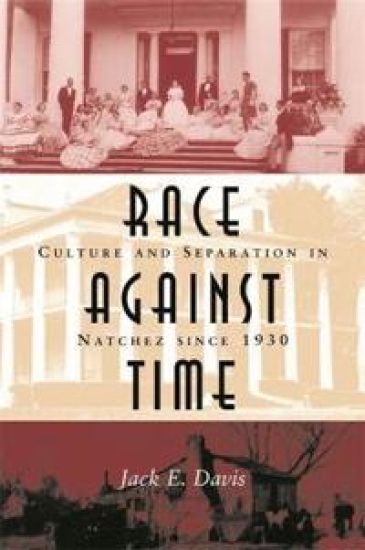
Race Against Time

Race Against Time

Jack E. Davis

Louisiana State University Press
2004
nidottu
While many studies of race relations have focused on the black experience, Race against Time strives to unravel the emotional and cultural foundations of race in the white mind. Jack E. Davis combed primary documents in Natchez, Mississippi, and absorbed the town's oral history to understand white racial attitudes there over the past seven decades, a period rich in social change, strife, and reconciliation. What he found in this community that cultivates for profit a romantic view of the Old South challenges conventional assumptions about racial prejudice. Davis engagingly and effortlessly weaves between nineteenth and twentieth centuries, white observations and black, to describe patterns of social interaction in Natchez in the workplace, education, politics, religion, and daily life. It was not, he discovers, false notions of biological differences reinforced by class and economic conflict that lay at the heart of the town's racial divide but rather the perception of a black/white cultural divergence -- in values in education, work, and family. White culture was deemed superior, a presumption manifested through a hierarchy of old-family elite and other white citizens. Since 1930, Natchez has developed a major tourist industry, downsized sharecropping, expanded its manufacturing sector, and participated in the struggles for civil rights, school desegregation, and black political empowerment. Yet the collective white perception of a mythic past has continued, reinforced through the sum of Natchez's public history -- social memory, school textbooks, breathtaking antebellum mansions, and world-famous Pilgrimage. In Race against Time, Davis sensitively lays bare the need for shared control of the town's history and the acknowledgment of intercultural dependence to effect true racial equality. Building upon the 1941 classic Deep South: A Social Anthropological Study of Caste and Class, Davis brings tremendous passion and insight to the demanding issue of race as he fathoms the contours of Natchez's distinctive racial dynamics in recent decades.