Kirjojen hintavertailu – 12 903 725 kirjaa ja 27 kauppaa

Kirjailija

Jack Fuller

Kirjat ja teokset yhdessä paikassa: 9 kirjaa, julkaisuja vuosilta 1991–2021, suosituimpiin kuuluu News Values. Vertaile teosten hintoja ja tarkista saatavuus suomalaisista kirjakaupoista.

9 kirjaa

Kirjojen julkaisuvuodet: 1991–2021.

The Imagination Machine

The Imagination Machine

Martin Reeves; Jack Fuller

Harvard Business Review Press
2021
pokkari
A guide for mining the imagination to find powerful new ways to succeed. We need imagination now more than ever—to find new opportunities, rethink our businesses, and discover paths to growth. Yet too many companies have lost their ability to imagine. What is this mysterious capacity? How does imagination work? And how can organizations keep it alive and harness it in a systematic way? The Imagination Machine answers these questions and more. Drawing on the experience and insights of CEOs across several industries, as well as lessons from neuroscience, computer science, psychology, and philosophy, Martin Reeves of Boston Consulting Group's Henderson Institute and Jack Fuller, an expert in neuroscience, provide a fascinating look into the mechanics of imagination and lay out a process for creating ideas and bringing them to life:The Seduction: How to open yourself up to surprisesThe Idea: How to generate new ideas The Collision: How to rethink your idea based on real-world feedbackThe Epidemic: How to spread an evolving idea to othersThe New Ordinary: How to turn your novel idea into an accepted realityThe Encore: How to repeat the process—again and again. Imagination is one of the least understood but most crucial ingredients of success. It's what makes the difference between an incremental change and the kinds of pivots and paradigm shifts that are essential to transformation—especially during a crisis. The Imagination Machine is the guide you need to demystify and operationalize this powerful human capacity, to inject new life into your company, and to head into unknown territory with the right tools at your disposal.
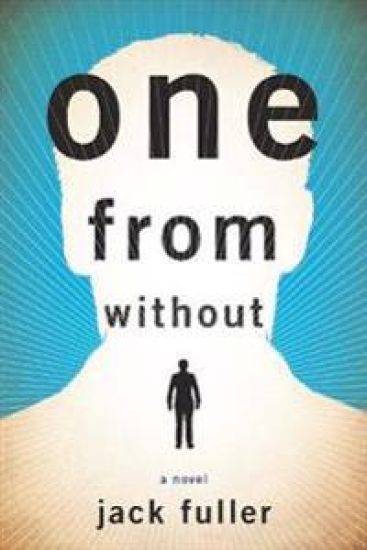
One from Without

One from Without

Jack Fuller

Unbridled Books
2016
pokkari
A large credit reporting company sees the era of Big Data coming. Its CEO dreams of knowing so much about the people it tracks that it will be able to predict what they will do. With the data, he believes, the company will know people better than they know themselves. Meantime, his chief financial officer has come to the corporate world in order to hide in the numbers on his spreadsheets, trying to escape a dark, ambiguous experience from his past in the CIA. Suddenly a hacker breaks into the company's consumer database and alters individual files. This threatens not only the company future but its very existence. As senior executives struggle with what to do next, they find out who they really are.
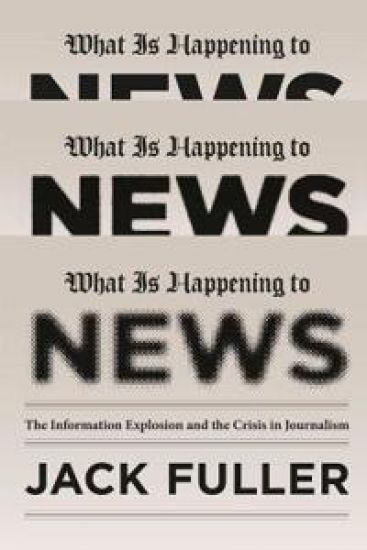
What Is Happening to News

What Is Happening to News

Jack Fuller

University of Chicago Press
2013
nidottu
Across America, newspapers that have defined their cities for over a century are rapidly failing, their circulations plummeting even as opinion-soaked Web outlets thrive. Meanwhile, nightly news programs shock viewers with stories of horrific crime and celebrity scandal, while the smug sarcasm of shouting pundits dominates cable television. In the face of these problems, "What Is Happening to News" explores the crucial question of how journalism lost its way - and who is responsible for the ragged retreat from its great traditions. Veteran editor and newspaperman Jack Fuller locates the surprising sources of change where no one has thought to look before: in the collision between a revolutionary new information age and a human brain that is still wired for the threats faced by our prehistoric ancestors. Drawing on the dramatic recent discoveries of neuroscience, Fuller explains why the information overload of contemporary life makes us dramatically more receptive to sensational news, while rendering the staid, objective voice of standard journalism ineffective, and the result is a toxic mix that threatens to prove fatal to journalism as we know it. For every reader troubled by what has become of news - and worried about what the future may hold - "What Is Happening to News" not only offers unprecedented insight into the causes of change but also clear guidance, strongly rooted in the precepts of ethical journalism.
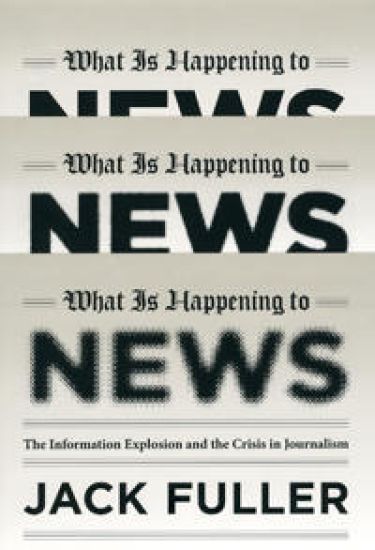
What Is Happening to News

What Is Happening to News

Jack Fuller

University of Chicago Press
2010
sidottu
Across America, newspapers that have defined their cities for over a century are rapidly failing, their circulations plummeting even as opinion-soaked Web outlets like the Huffington Post thrive. Meanwhile, nightly news programs shock viewers with stories of horrific crime and celebrity scandal, while the smug sarcasm and shouting of pundits like Glenn Beck and Keith Olbermann dominate cable television. Is it any wonder that young people are turning away from the news entirely, trusting comedians like Jon Stewart as their primary source of information on current events? In the face of all the problems plaguing serious news, "What Is Happening to News" explores the crucial question of how journalism lost its way - and what is responsible for the ragged retreat from its great traditions. Veteran editor and newspaperman Jack Fuller locates the surprising sources of change where no one has thought to look before: in the collision between a revolutionary new information age and a human brain that is still wired for the threats faced by our prehistoric ancestors. Drawing on the recent discoveries of neuroscience, Fuller explains why the information overload of contemporary life makes us dramatically more receptive to sensational news, while rendering the staid, objective voice of standard journalism ineffective. Throw in a growing distrust of experts and authority, ably capitalized on by blogs and other interactive media, and the result is a toxic mix that threatens to prove fatal to journalism as we know it. For every reader troubled by what has become of news-and worried about what the future may hold - "What Is Happening to News" not only offers unprecedented insight into the causes of change but also clear guidance, strongly rooted in the precepts of ethical journalism, on how journalists can adapt to this new environment while still providing the information necessary to a functioning democracy.
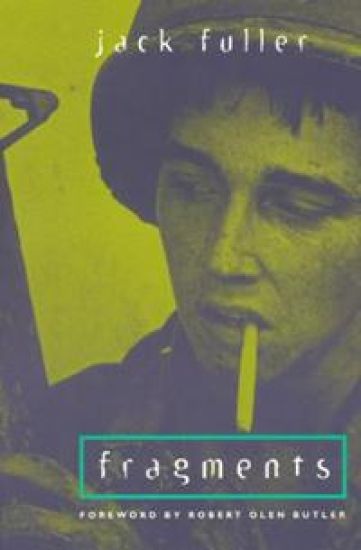
Fragments

Fragments

Jack Fuller

University of Chicago Press
1997
nidottu
Fragments is a story about how war can make everything explosive--even love--and how two friends try to put the pieces of their lives together again. "[Fragments] makes the usual semi-autobiographical account [of the Vietnam War] ...seem flimsy and discursive in comparison... The shapeliness and sense of larger design [is] so elegantly executed in Fragments."--Michiko Kakutani, New York Times "The plot is believable, the characters sharply drawn, the prose clean and distinctive... Stand[s] with Tim O'Brien's Going After Cacciato, James Webb's Fields of Fire, Josiah Bunting's The Lionheads and John Del Vecchio's The 13th Valley... A strong, compelling novel."--Marc Leepson, Washington Post "There have been many books on Vietnam, and there will be many others. This is more a novel than the rest... Fuller has reassembled the exploded grenade."--Bob MacDonald, Boston Sunday Globe "Should our children ask about Vietnam, we would not go wrong to place this book in their hands...[Fragments] purveys more than information--it gives the war a literary form."--David Myers, New York Times "The best novel yet about the Vietnam War... It ranks with Norman Mailer's The Naked and the Dead and James Jones's From Here to Eternity. "--Daniel Kornstein, Wall Street Journal
News Values

News Values

Jack Fuller

University of Chicago Press
1997
nidottu
News Values is a concise, powerful statement of the fundamental issues, ethical and practical, confronting newspapers today. Jack Fuller not only makes those issues clear, but offers a provocative new perspective on questions journalists should be asking themselves now in order to prepare for tomorrow." Every talk show host should read this book. So should every newsroom cynic. . . . 'Pursuit of truth is not a license to be a jerk.' In all too many newsrooms, that statement would resound like a three-bell bulletin."—Martin F. Nolan, New York Times Book Review"[News Values] ought to be required reading not just for those who work for newspapers, but for all those who read and care about them. . . . [This book] seems destined to become one of those slim but important volumes people read for a long time to come."—Richard J. Tofel, Wall Street Journal"Fuller stays above the fray [of the many books on the media]: His is a deeply intellectual approach, one that provides serious context to the highly complicated issue of how the news 'works.'"—Duncan McDonald, Chicago Tribune Books"News Values has the touch and feel of knowledgeable, authentic caring about the kind of journalism than can help make society more cohesive, even human." —"Monitor's Pick," Christian Science Monitor
News Values

News Values

Jack Fuller

University of Chicago Press
1996
sidottu
A powerful statement of the fundamental issues, ethical and practical, confronting newspapers today. "Chicago Tribune" president and publisher Jack Fuller tackles the most pressing questions facing journalists in the 90s: What kind of truth do they claim to communicate? To what end? Should journalists lead or follow their communities? How are decisions about what makes "news" related to marketing? What is the future of newspapers? Drawing on 30 years of experience, from police reporter to editorial writer, war correspondent to editor, Fuller looks at what journalism should do in a free society and why. Focusing on tensions central to modern-day newspaper publishing - the duty to truth versus the obligation to sources; the push for diversity versus the need for coherence; the responsibility to reflect and, when necessary, oppose the community one serves - Fuller argues that intellectually honest "news-values" do exist and can continue to guide journalists even in today's competitive marketplace. Finally, Fuller examines advances in digital technology merging text, audio, and video and asks whether the new interactive electronic media will hasten newspapers' demise or stimulate their revival? The answer, he discovers, depends not only on whether print journalists master the new medium but also on whether they make it serve the basic values of journalism. To do that, they first must be clear about what those basic values are.
Convergence

Convergence

Jack Fuller

University of Chicago Press
1991
nidottu
"A brilliant achievement. . . . Like the best work of Greene and Le Carré, it is more than genre fiction; it is literature. . . .[Convergence] is the most plausible, and perhaps the best spy novel ever written by an American." —Arthur Maling, Chicago Tribune"An intelligent, readable novel about two kinds of intrigue—international and bureaucratic. He succeeds admirably at both tasks."—Ross Thomas, Washington Post"A solid, provocative first novel about the 'deadly game of espionage' . . . Thoughtfulness and human frailty take precedence over action and suspense. Irony is the prevailing mode. . . . Fuller depicts intelligence work—its technical minutiae and its vaunted goals—convincingly. And he subtly weaves various parallels into complementary layers of potential convergence."—Jeffrey Burke, Wall Street Journal"A fast-moving, dramatic, thinking person's spy novel."—Nelson DeMille, Newsday