Kirjojen hintavertailu – 12 903 725 kirjaa ja 27 kauppaa

Kirjailija

Jack Goldsmith

Kirjat ja teokset yhdessä paikassa: 7 kirjaa, julkaisuja vuosilta 2006–2026, suosituimpiin kuuluu Liberties Journal of Culture and Politics. Vertaile teosten hintoja ja tarkista saatavuus suomalaisista kirjakaupoista.

7 kirjaa

Kirjojen julkaisuvuodet: 2006–2026.

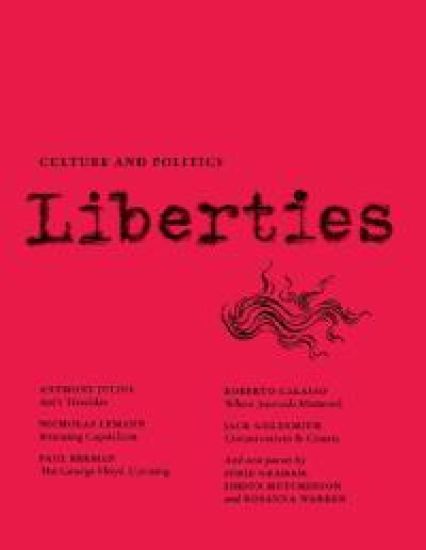
Liberties Journal of Culture and Politics

Liberties Journal of Culture and Politics

Anthony Julius; Nicholas Lemann; Alfred Brendel; Paul Berman; Jorie Graham; Fouad Ajami; Jack Goldsmith; Edward Luttwak; Roberto Calasso; Ishion Hutchinson; Walter Sheidel; Helen Vendler; Robert Alter; Daryl Michael Scott; Rosanna Warren; Alastair Macaulay; David Greenberg

Liberties Journal Foundation
2021
pokkari
Liberties – A Journal of Culture and Politics features original essays and poetry from some of today’s best writers and artists to inspire and impact the intellectual and creative lifeblood of culture and politics. This issue of Liberties includes: Anthony Julius on censorship of the arts; Nicholas Lemann on rescuing capitalism; Alfred Brendel on playing Beethoven; Paul Berman on the George Floyd uprising; Fouad Ajami’s story of an honor killing; Jack Goldsmith on conservatives and the courts; Edward Luttwak on understanding China; Roberto Calasso on when journals mattered; Walter Scheidel on life after covid; Helen Vendler on the poet Robert Hayden; Robert Alter on Lolita today; Daryl Michael Scott on the 13th Amendment; Alastair Macaulay on Balanchine; David Greenberg on renaming our heritage; new poetry from Jorie Graham, Ishion Hutchinson, and Rosanna Warren; and, Leon Wieseltier (editor) and Celeste Marcus (managing editor).
The Unraveling

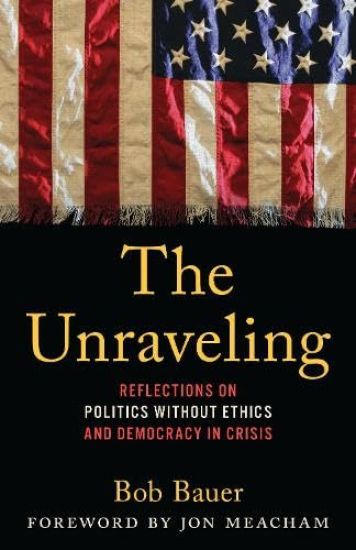
The Unraveling

Bob Bauer; Jon Meacham; Jack Goldsmith

BLOOMSBURY PUBLISHING PLC
2026
nidottu
Now with a new foreword by Harvard Law Professor and former Assistant Attorney General Jack Goldsmith, and with a new concluding chapter from the author on the unprecedented ethical challenges in the first year of Trump 2.0. Essential reading for anyone interested in modern American politics, get the book that former President Barack Obama on X calls "a deeply thoughtful book" and says, "couldn’t be a more timely read." Part memoir, part rumination on the declining moral compass of the American political class, The Unraveling is the first book to place restoring political ethics at the center of the renewal of American democracy. Politics is a brutal game, but Bauer asks where does the line fall between the “hardball” of politics and attacks on the very foundation of democracy? Looking back on 46 years in the political arena, Bauer tries to better grasp what has gone wrong and to understand what shaped his own decisions and actions. He offers anecdotes, perspectives, and insights that are vitally relevant in our world today, including efforts in 2020 (and 2024) to defend our democratic system of elections from attack and distrust, and the struggles with social media, such as Meta, to combat disinformation in a post-truth politics. The expanded paperback edition includes a new concluding chapter highlighting the ethical failures of public institutions under the the second Trump administration—law firms, universities, and the media, as well as the Trump administration itself—and the imperative to do better in order to preserve the consent of the governed in American democracy. He writes about the various personal experiences along the way—the highs, the lows, and the absurd. Bauer presents a smart and serious look at our political culture and the role that he has played in shaping it. The Unraveling will be essential reading for anyone interested in American politics of the last 50 years--and the next.
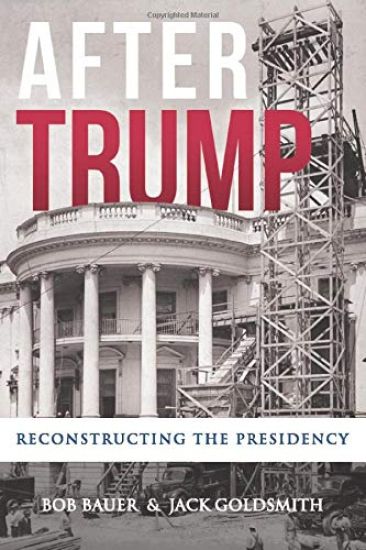
After Trump: Reconstructing the Presidency

After Trump: Reconstructing the Presidency

Bob Bauer; Jack Goldsmith

Lawfare Press
2020
nidottu
In After Trump: Reconstructing the Presidency, Bob Bauer and Jack Goldsmith provide a comprehensive roadmap for reform of the presidency in the post-Trump era. In fourteen chapters they offer more than fifty concrete proposals concerning presidential conflicts of interest, foreign influence on elections, pardon power abuse, assaults on the press, law enforcement independence, Special Counsel procedures, FBI investigations of presidents and presidential campaigns, the role of the White House Counsel, war powers, control of nuclear weapons, executive branch vacancies, domestic emergency powers, how one administration should examine possible crimes by the president of a prior administration, and more. Each set of reform proposals is preceded by rich descriptions of relevant presidential history, and relevant background law and norms, that place the proposed reforms in context. All of the proposals are prefaced by a chapter that explains how Trump--and, in some cases, his predecessors--conducted the presidency in ways that justify these reforms. After Trump will thus be essential reading for the coming debate on how to reconstruct the laws and norms that constitute and govern the world's most powerful office. It's hard to imagine two better co-authors for the task. Both served in senior executive branch positions-in the administrations of Barack Obama and George W. Bush, respectively-and have written widely on the presidency. Bob Bauer served from 2010-2011 as White House Counsel to President Barack Obama, who in 2013 named Bauer to be Co-Chair of the Presidential Commission on Election Administration. He is a Professor of Practice and Distinguished Scholar in Residence at New York University School of Law, as well as the co-director of its Legislative and Regulatory Process Clinic. Jack Goldsmith served as Assistant Attorney General, Office of Legal Counsel from 2003-2004, and Special Counsel to the Department of Defense from 2002-2003. He is the Learned Hand Professor at Harvard Law School, co-founder of Lawfare, and a Senior Fellow at the Hoover Institution.Together, in this book, they set the terms for the national discussion to come about the presidency, its powers, and its limits.
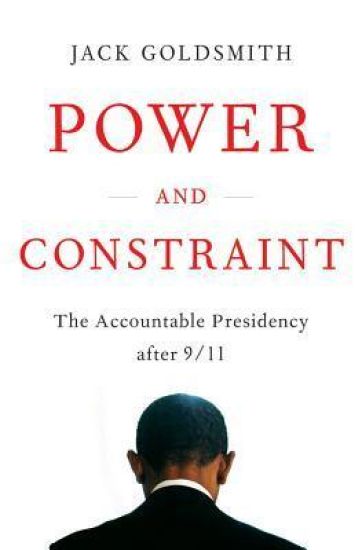
Power and Constraint

Power and Constraint

Jack Goldsmith

WW Norton Co
2012
sidottu
Conventional wisdom holds that 9/11 sounded the death knell for presidential accountability. In fact, the opposite is true. The novel powers that our post-9/11 commanders in chief assumed—endless detentions, military commissions, state secrets, broad surveillance, and more—are the culmination of a two-century expansion of presidential authority. But these new powers have been met with thousands of barely visible legal and political constraints—enforced by congressional committees, government lawyers, courts, and the media—that have transformed our unprecedentedly powerful presidency into one that is also unprecedentedly accountable. These constraints are the key to understanding why Obama continued the Bush counterterrorism program, and in this light, the events of the last decade should be seen as a victory, not a failure, of American constitutional government. We have actually preserved the framers’ original idea of a balanced constitution, despite the vast increase in presidential power made necessary by this age of permanent emergency.
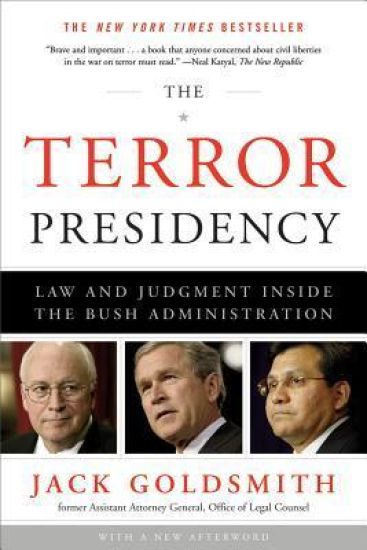
The Terror Presidency

The Terror Presidency

Jack Goldsmith

WW Norton Co
2009
nidottu
Jack Goldsmith’s duty as head of the Office of Legal Counsel was to advise President Bush on what he could and could not do . . . legally. Immediately after taking the job in October 2003, Goldsmith began to see that the work of his predecessors, whose opinions were the legal framework governing the conduct of the military and intelligence agencies in the war on terror, were deeply flawed. Goldsmith is a conservative lawyer who understands the imperative of averting another 9/11. But his unflinching insistence that we abide by the law put him on a collision course with powerful figures in the administration. In The Terror Presidency he shows how Bush damaged his own presidency and compromised the ability of his successors to respond forcefully in times of crisis.
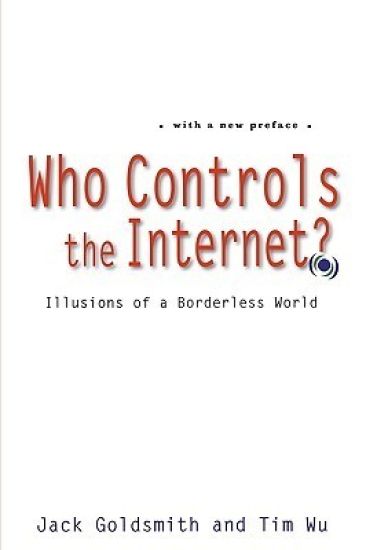
Who Controls the Internet?

Who Controls the Internet?

Jack Goldsmith; Tim Wu

Oxford University Press Inc
2008
nidottu
Is the Internet erasing national borders? Will the future of the Net be set by Internet engineers, rogue programmers, the United Nations, or powerful countries? Who's really in control of what's happening on the Net? In this provocative new book, Jack Goldsmith and Tim Wu tell the fascinating story of the Internet's challenge to governmental rule in the 1990s, and the ensuing battles with governments around the world. It's a book about the fate of one idea--that the Internet might liberate us forever from government, borders, and even our physical selves. We learn of Google's struggles with the French government and Yahoo's capitulation to the Chinese regime; of how the European Union sets privacy standards on the Net for the entire world; and of eBay's struggles with fraud and how it slowly learned to trust the FBI. In a decade of events the original vision is uprooted, as governments time and time again assert their power to direct the future of the Internet. The destiny of the Internet over the next decades, argue Goldsmith and Wu, will reflect the interests of powerful nations and the conflicts within and between them. While acknowledging the many attractions of the earliest visions of the Internet, the authors describe the new order, and speaking to both its surprising virtues and unavoidable vices. Far from destroying the Internet, the experience of the last decade has lead to a quiet rediscovery of some of the oldest functions and justifications for territorial government. While territorial governments have unavoidable problems, it has proven hard to replace what legitimacy governments have, and harder yet to replace the system of rule of law that controls the unchecked evils of anarchy. While the Net will change some of the ways that territorial states govern, it will not diminish the oldest and most fundamental roles of government and challenges of governance. Well written and filled with fascinating examples, including colorful portraits of many key players in Internet history, this is a work that is bound to stir heated debate in the cyberspace and globalization communities.
Who Controls the Internet?

Who Controls the Internet?

Jack Goldsmith; Tim Wu

Oxford University Press Inc
2006
sidottu
Will cyberanarchy rule the net? And if we do find a way to regulate our cyberlife will national borders dissolve as the Internet becomes the first global state? In this provocative new work, Jack L. Goldsmith and Tim Wu dismiss the fashionable talk of both a 'borderless' net and of a single governing 'code'. Territorial governments can and will, they contend, exercise significant control over all aspects of Internet communications. Examining policy puzzles from e-commerce to privacy, speech and pornography, intellectual property, and cybercrime, Who Controls the Internet demonstrates that individual governments rather than private or global bodies will play that dominant role in regulation. Accessible and controversial, this work is bound to stir comment.