Kirjojen hintavertailu – 12 903 737 kirjaa ja 27 kauppaa

Kirjailija

Jack L. August

Kirjat ja teokset yhdessä paikassa: 5 kirjaa, julkaisuja vuosilta 2005–2021, suosituimpiin kuuluu Senator Dennis Deconcini. Vertaile teosten hintoja ja tarkista saatavuus suomalaisista kirjakaupoista.

5 kirjaa

Kirjojen julkaisuvuodet: 2005–2021.

Senator Dennis Deconcini

Senator Dennis Deconcini

Dennis DeConcini; Jack L. August

University of Arizona Press
2006
sidottu
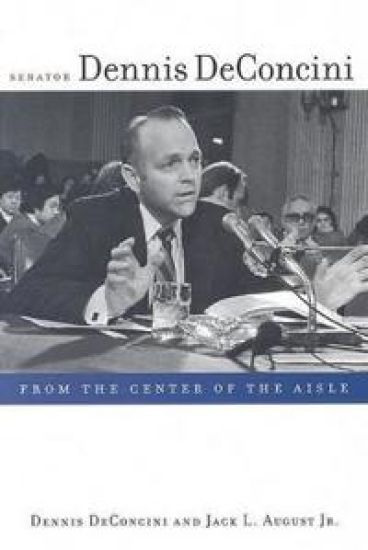
Dennis DeConcini, a contemporary of Arizona greats like Sandra Day O Connor, Barry Goldwater, and Rose Mofford, is an Arizona icon in his own right. Starting his public career as the Pima County Attorney, DeConcini orchestrated an unprecedented rise to a seat in the U. S. Senate, which he held for eighteen years. His political memoir, co-authored with historian Jack L. August Jr., reaches beyond typical reflections to provide the reader with penetrating and revealing insights into the inner workings and colorful characters of Arizona politics and the United States Senate. A vigilant centrist, who got results by building coalitions on both sides of the aisle, Senator DeConcini's approach was not bound to strict party alliances but was deeply rooted in the independent political environment of Arizona. During his career, he sponsored legislation limiting the sale of assault weapons, which provoked the National Rifle Association. He confounded Democratic Party regulars by supporting Clarence Thomas during the controversial confirmation hearings and again split with his party in his support for William Rehnquist's nomination to Chief Justice. In 1980 he voted for Ronald Reagan, but in 1993 he cast the swing vote for President Bill Clinton's tax bill, which was strongly opposed by Republicans in Arizona. This political memoir will be of interest to anyone concerned with the inner workings of the U. S. Senate or Arizona politics and offers relevant insights into today's political climate.
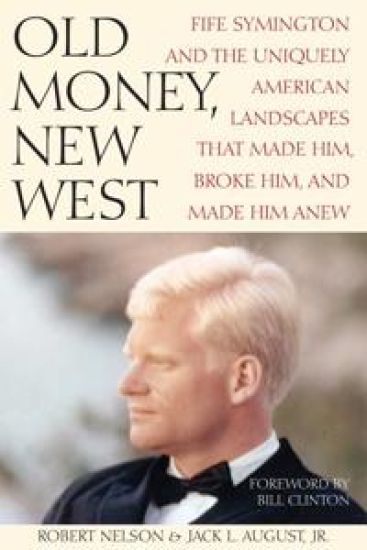
Old Money, New West

Old Money, New West

Bob Nelson; Jack L. August

Texas Christian University Press,U.S.
2021
sidottu
By 1994, Arizona Governor Fife Symington was arguably the hottest young star in the Republican Party—a lively, articulate voice for a new breed of culturally moderate conservatives perfectly positioned for a US Senate run and perhaps a shot at the presidency in 2000. Instead, earlier decisions and mistakes he made as his real estate empire collapsed amid the Savings and Loan Crisis would torpedo his political career, bankrupt him, and place him at the doorstep of federal prison. Then a new century—along with a preemptive presidential pardon from Clinton—brought new hope and opportunities as well as international fame in the world of UFO research. While unique, Symington’s story is also an American story. Born into one of the wealthiest families in America, Symington could have hunkered down in old-money leisure. Instead, he left the country to fight in Southeast Asia and then, like millions of Americans before him, went to make his name amid yet another real estate boom in the American West. He brought his old-school conservative fiscal philosophies with him, but soon found himself at war with the cultural conservatives within his own party, particularly on issues of immigration and the environment. Symington was an early pioneer in successfully navigating what is now an existential threat for moderates in the Republican Party: how to govern with conservative-leaning values without kowtowing to the worst instincts of the radicalized, nativist right.
Adversity is My Angel

Adversity is My Angel

Raul H. Castro; Jack L. August

Texas Christian University Press,U.S.
2009
nidottu
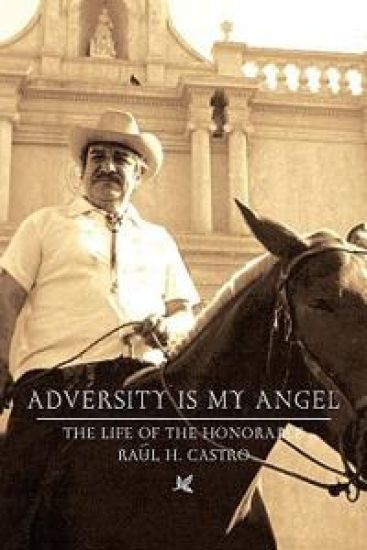
Raul H. Castro was the first Hispanic governor of Arizona, ambassador to El Salvador, Bolivia, and Argentina, lawyer, judge, and teacher. Born in Mexico in 1916, he moved with his family to a small mining community in Arizona in 1926. His earliest memories include collecting cactus fruit in the desert for food. His childhood served as a metaphor for Mexican and American attitudes of mutual suspicion and distrust. Castro, nevertheless, defied the odds and, thanks to an athletic scholarship, entered Arizona State Teachers College where he graduated in 1939. By then an American citizen, he worked for the U. S. State Department as a foreign service officer at Agua Prieta, Sonora and then entered the University of Arizona College of Law. He was admitted to the Arizona bar in 1949. After practicing law in Tucson for several years, he became deputy Pima County attorney. In 1954, he was elected county attorney and served until 1958, when he became a Pima County Superior Court Judge. President Lyndon Johnson appointed Castro U. S. ambassador to Salvador in 1964 and to Bolivia in 1969. Castro was elected governor on the Democratic Party ticket in 1974 but an appointment as ambassador to Argentina interrupted his term. Raul Castro's story suggests much about the human spirit, the ability to overcome institutional and personal prejudice, and the hope inherent in the American dream.
Dividing Western Waters

Dividing Western Waters

Jack L. August

Texas Christian University Press,U.S.
2007
sidottu
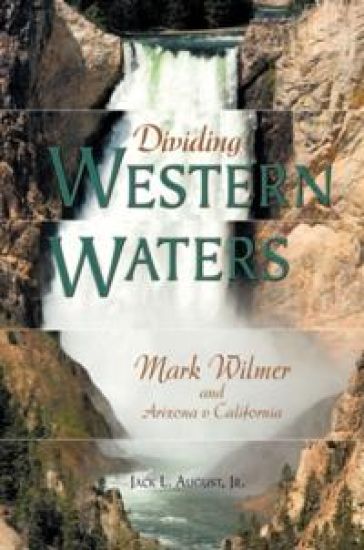
The Scopes Monkey Trial, the Sacco and Vanzetti case, Brown v. Board of Education, and even subsequent televised high-profile murder trials pale in comparison to Arizona v. California, argues author Jack August in ""Dividing Western Waters"", August's look at Arizona's herculean legal and political battle for an equitable share of the Colorado River. To this day Arizona v. California is still influential. By the time Mark Wilmer settled in the Salt River Valley in the early 1930s, he realized that four basic commodities made possible civilization in the arid West: land, air, sunshine, and water. For Arizona, the seminal water case, Arizona v. California, the longest Supreme Court case in American history (1952-1963), constituted an important step in the construction of the Central Arizona Project (CAP), a plan crucial for the development of Arizona's economic livelihood. The unique qualities of water framed Wilmer's role in the history of the arid Southwest and defined his towering professional career. Wilmer's analysis of the Supreme Court case caused him to change legal tactics and, in so doing, he changed the course of the history of the American West.
Vision in the Desert

Vision in the Desert

Jack L. August

Texas Christian University Press,U.S.
2005
nidottu
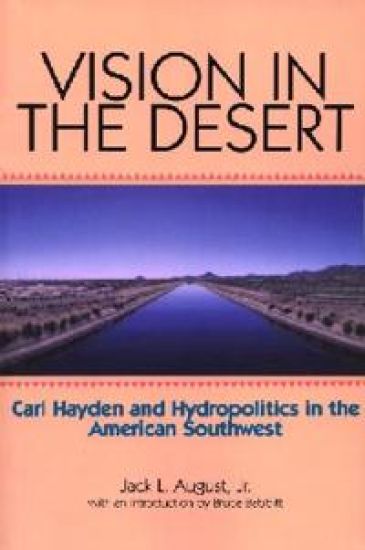
Set in both the arid lands of Arizona and the political backdrop of Washington, D. C., Vision in the Desert documents the life and career of longtime Arizona senator, Carl Hayden. One of the most powerful figures in the United States Congress, Hayden's public service career, centered on water and it's distribution, is inseparable from the history of the West and the development of arid lands. Elected to the House of Representatives in 1911, Hayden began a fifty-seven-year career in the U. S. Congress, serving as a Democratic House Representative for fifteen years and then as a Senator from 1927 to 1969. The issues of the development of the Colorado River occupied the majority of Hayden's congressional work. The authorization of the Central Arizona Project (CAP) in 1968, at the end of the senator's long career, highlights all of Hayden's efforts concerning this life stream of the Southwest, making possible the distribution of water to the growing urban areas of Phoenix and Tucson.