Kirjojen hintavertailu – 12 859 824 kirjaa ja 27 kauppaa

Kirjailija

Jack London

Kirjat ja teokset yhdessä paikassa: 4 103 kirjaa, julkaisuja vuosilta 1903–2026, suosituimpiin kuuluu Il richiamo della foresta / Erämaan kutsu. Vertaile teosten hintoja ja tarkista saatavuus suomalaisista kirjakaupoista.

4 103 kirjaa

Kirjojen julkaisuvuodet: 1903–2026.

White fang, by Jack London A NOVEL: John Griffith "Jack" London

White fang, by Jack London A NOVEL: John Griffith "Jack" London

Jack London

Createspace Independent Publishing Platform
2016
nidottu
White Fang is a novel by American author Jack London (1876-1916) - and the name of the book's eponymous character, a wild wolfdog. The story begins before the three-quarters wolf-dog hybrid is born, with two men and their sled dog team on a journey to deliver a coffin to a remote town named Fort McGurry in the higher area of the Yukon Territory, Canada. The men, Bill and Henry, are stalked by a large pack of starving wolves over the course of several days. Finally, after all of their dogs and Bill have been eaten, four more teams find Henry trying to escape from the wolves; the wolf pack scatters when they hear the large group of people coming. The story then follows the pack, which has been robbed of its last prey. When the pack finally brings down a moose, the famine is ended; they eventually split up, and the story now follows a she-wolf and her mate, One Eye. The she-wolf gives birth to a litter of five cubs by the Mackenzie River, and all but one die from hunger. One Eye is killed by a lynx while trying to rob her den for food for the she-wolf and her cub; his mate later discovers his remains near the lynx's den. The surviving cub and the she-wolf are left to fend for themselves. Shortly afterward (possibly as revenge), the she-wolf kills all the lynx's kittens to feed her cub, prompting the lynx to track her down, and a vicious fight breaks out. The she-wolf eventually kills the lynx but suffers severe injury; the lynx carcass is devoured over a period of seven days as the she-wolf recovers from her injuries. The cub comes across five Native Americans one day, and the she-wolf comes to his rescue. One man, Grey Beaver, recognizes the she-wolf as Kiche, his brother's wolfdog, who left during a famine. Grey Beaver's brother is dead, so he takes Kiche and her cub and christens the cub White Fang. White Fang has a harsh life in the Indian camp; the current puppy pack, seeing him as a wolf, immediately attacks him. The Indians save him, but the pups never accept him, and the leader, Lip-lip, singles him out for persecution. White Fang grows to become a savage, callous, morose, solitary, and deadly fighter, "the enemy of his kind". It is at this time that White Fang is separated from his mother who is sold off to another Indian Camp. He realizes how hard life in the wild is when he runs away from camp and earns the respect of Gray Beaver when he saves his son Mit-Sah from a gang of bullies. When a famine occurs, he runs away into the woods and reunites with his mother Kiche, only for her to chase him away for she has a new litter of Cubs (as they meet again and again, the cubs all die). He also encounters Lip-Lip whom he fights and kills before returning to the camp. When White Fang is five years old, he is taken to Fort Yukon so that Grey Beaver can trade with the gold-hunters. There, he is bought with several bottles of whiskey by a dog-fighter, Beauty Smith, who gets Grey Beaver addicted to alcohol. White Fang defeats all opponents pitted against him, including several wolves and a lynx, until a bulldog called Cherokee is brought in to fight him. Cherokee has the upper hand in the fight when he grips the skin and fur of White Fang's neck and begins to throttle him. White Fang nearly suffocates but is rescued when a rich, young gold hunter, Weedon Scott, stops the fight and forcefully buys White Fang from Beauty Smith. Scott attempts to tame White Fang, and after a long, patient effort, he succeeds. When Scott attempts to return to California alone, White Fang pursues him, and Scott decides to take the dog with him back home. In Sierra Vista, White Fang must adjust to the laws of the estate. At the end of the book, a murderous criminal, Jim Hall, tries to kill Scott's father, Judge Scott, for sentencing him to prison, not knowing that Hall was "railroaded". White Fang kills Hall and is nearly killed himself but survives.

L'Appel de la foret

L'Appel de la foret

Jack London

Createspace Independent Publishing Platform
2016
nidottu
Un des chefs d'oeuvre de Jack London, un grand classique de la litt rature de jeunesse. Buck, un crois de terre-neuve et de colley g de 4 ans et demi et pesant 70 kg, appartient un magistrat de la vall e de Santa Clara (Haute-Californie). Loin d'avoir une vie de chien, Buck coule une existence heureuse dans la famille du juge Miller. Mais tout bascule le jour o , victime de la tra trise d'un homme, il se retrouve vendu un conducteur de tra neau dans le Grand Nord am ricain
Der Gott seiner Väter und andere Erzählungen - Großdruck

Der Gott seiner Väter und andere Erzählungen - Großdruck

Kay Oelschlager; Jack London

Createspace Independent Publishing Platform
2016
nidottu
Gro druck Mit den Erz hlungen: Die gro e Frage, Was sie nie vergessen, Siwash, Der Mann mit der Schmarre, Jan, der Unverbesserliche, Frauenmut, Wo die Wege sich trennen, Eine Tochter des Nordlichts, Am Ende des Regenbogens, Krieg der Frauen, Der Gott seiner V ter Weitere Klassiker unter: www.buch-klassiker.de
John Barleycorn (1913), by Jack London Illustrated by H.T. Dunn

John Barleycorn (1913), by Jack London Illustrated by H.T. Dunn

Jack London

Createspace Independent Publishing Platform
2016
nidottu
John Barleycorn is an autobiographical novel by Jack London dealing with his enjoyment of drinking and struggles with alcoholism. It was published in 1913. The title is taken from the British folksong "John Barleycorn". In this memoir, there are the themes of masculinity and male friendship. London discusses various life experiences he has had with alcohol, and at widely different stages in his life. Key stages are his late teen years when he earned money as a sailor and later in life when he was a wealthy, successful writer. Alcohol plays a big role in facilitating the themes listed above. The book is about the social facilitation of alcohol, but is also a cautionary tale about the addictive powers of alcohol and its deleterious effects on health. London describes the effects of alcohol along both optimistic and pessimistic lines, insisting at some points that it helped him in his developmental process towards becoming a man as he understood the idea and a writer and at other points that it limited in developing him in a healthy way. Alcohol was, during his period, not recognized as it is in the post-2000 period. It remains an important and enduring milestone of his authorial career and of many of the writers of his period, as well as the milestone of many of the social historians of his period. London insisted that historical literature was always more important in his life than alcohol, however. At the beginning of the book, Jack London gives a quick tease of "White Logic," mentioning the "white light of alcohol" and how alcohol presented to his mind the concept of White Logic. It is only until the final five chapters that the nihilism of White Logic is finally revealed and pitted against the "lesser truth" that "makes life possible to persist." John Griffith "Jack" London (born John Griffith Chaney, January 12, 1876 - November 22, 1916)was an American novelist, journalist, and social activist. A pioneer in the then-burgeoning world of commercial magazine fiction, he was one of the first fiction writers to obtain worldwide celebrity and a large fortune from his fiction alone. Some of his most famous works include The Call of the Wild and White Fang, both set in the Klondike Gold Rush, as well as the short stories "To Build a Fire", "An Odyssey of the North", and "Love of Life". He also wrote of the South Pacific in such stories as "The Pearls of Parlay" and "The Heathen", and of the San Francisco Bay area in The Sea Wolf. London was part of the radical literary group "The Crowd" in San Francisco and a passionate advocate of unionization, socialism, and the rights of workers. He wrote several powerful works dealing with these topics, such as his dystopian novel The Iron Heel, his non-fiction expos The People of the Abyss, and The War of the Classes.
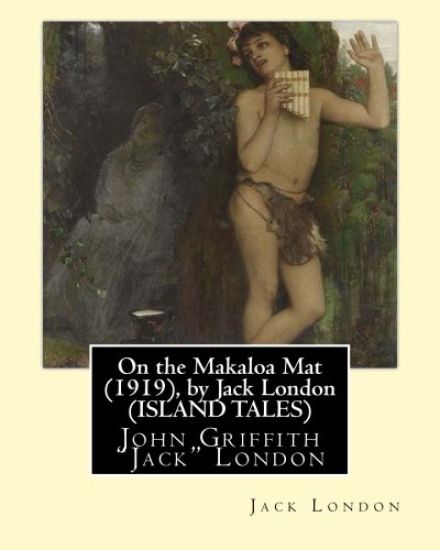
On the Makaloa Mat (1919), by Jack London (ISLAND TALES): John Griffith "Jack" London
John Griffith "Jack" London (born John Griffith Chaney, January 12, 1876 - November 22, 1916) was an American novelist, journalist, and social activist. A pioneer in the then-burgeoning world of commercial magazine fiction, he was one of the first fiction writers to obtain worldwide celebrity and a large fortune from his fiction alone. Some of his most famous works include The Call of the Wild and White Fang, both set in the Klondike Gold Rush, as well as the short stories "To Build a Fire", "An Odyssey of the North", and "Love of Life". He also wrote of the South Pacific in such stories as "The Pearls of Parlay" and "The Heathen", and of the San Francisco Bay area in The Sea Wolf. London was part of the radical literary group "The Crowd" in San Francisco and a passionate advocate of unionization, socialism, and the rights of workers. He wrote several powerful works dealing with these topics, such as his dystopian novel The Iron Heel, his non-fiction expos The People of the Abyss, and The War of the Classes. London was born near Third and Brannan Streets in San Francisco. The house burned down in the fire after the 1906 San Francisco earthquake; the California Historical Society placed a plaque at the site in 1953. Although the family was working class, it was not as impoverished as London's later accounts claimed citation needed]. London was largely self-educated citation needed]. In 1885, London found and read Ouida's long Victorian novel Signa. He credited this as the seed of his literary success. 11] In 1886, he went to the Oakland Public Library and found a sympathetic librarian, Ina Coolbrith, who encouraged his learning. (She later became California's first poet laureate and an important figure in the San Francisco literary community). In 1889, London began working 12 to 18 hours a day at Hickmott's Cannery. Seeking a way out, he borrowed money from his foster mother Virginia Prentiss, bought the sloop Razzle-Dazzle from an oyster pirate named French Frank, and became an oyster pirate. In his memoir, John Barleycorn, he claims also to have stolen French Frank's mistress Mamie. After a few months, his sloop became damaged beyond repair. London hired on as a member of the California Fish Patrol. In 1893, he signed on to the sealing schooner Sophie Sutherland, bound for the coast of Japan. When he returned, the country was in the grip of the panic of '93 and Oakland was swept by labor unrest. After grueling jobs in a jute mill and a street-railway power plant, London joined Kelly's Army and began his career as a tramp. In 1894, he spent 30 days for vagrancy in the Erie County Penitentiary at Buffalo, New York. In The Road, he wrote: Man-handling was merely one of the very minor unprintable horrors of the Erie County Pen. I say 'unprintable'; and in justice I must also say undescribable. They were unthinkable to me until I saw them, and I was no spring chicken in the ways of the world and the awful abysses of human degradation. It would take a deep plummet to reach bottom in the Erie County Pen, and I do but skim lightly and facetiously the surface of things as I there saw them. After many experiences as a hobo and a sailor, he returned to Oakland and attended Oakland High School. He contributed a number of articles to the high school's magazine, The Aegis. His first published work was "Typhoon off the Coast of Japan", an account of his sailing experiences.
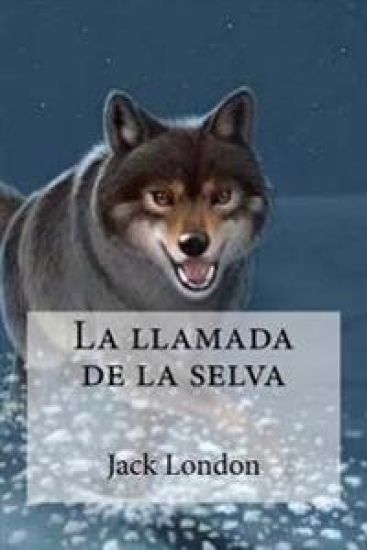
La llamada de la selva

La llamada de la selva

Jack London

Createspace Independent Publishing Platform
2016
nidottu
Esta historia tiene como protagonista a un perro llamado Buck que en el oto o de 1894, cuando el descubrimiento de los yacimientos aur feros de Klondike arrastra hacia los hielos de Alaska a hombres de todas partes del globo, Buck es productivamente vendido y enviado al Norte. Sin ser ya acariciado ni respetado, en un pa s salvaje y hostil, se ve obligado a doblegarse a la ley primitiva del bast n y el l tigo
Croc-Blanc

Croc-Blanc

Jack London

Createspace Independent Publishing Platform
2016
nidottu
Croc-Blanc (1906) est un roman de l' crivain am ricain Jack London. Le titre original est White Fang. L'histoire commence avant la naissance de Croc-Blanc, un chien loup. Le roman suit la meute d'o il vient et ses premi res semaines de vie sauvage, sa lutte pour la vie; manger ou tre mang .
Skriet från vildmarken (lättläst)

Skriet från vildmarken (lättläst)

Jack London

Akelius Språkkurs
2016
nidottu
Buck bor i dalen Santa Clara i Kalifornien. Buck kommer till norra Amerika. Han blir draghund åt män som vill hitta guld. Texten är förenklad av Alf Isemo. E-bok finns på Youtube eller via språkkursen på akelius.seDär finns förklaringar till svåra ord. Lättlästa böcker från Akelius Anne Franks dagbok – Anne FrankDen fula ankungen – H. C. AndersenDen lille prinsen – Antoine de Saint-ExupéryHansel och Gretel – Bröderna GrimmLeka svenska Nisse Holgersson – Selma LagerlöfProcessen – Franz KafkaRobinson Crusoe – Daniel DefoeRöda rummet – August StrindbergRödluvan – Charles PerraultSkriet från vildmarken – Jack LondonSnövit – Bröderna GrimmTom Sawyer – Mark Twain Tre män i en båt – Jerome K. Jerome