
Kirjailija
Jack London
Kirjat ja teokset yhdessä paikassa: 4 103 kirjaa, julkaisuja vuosilta 1903–2026, suosituimpiin kuuluu Il richiamo della foresta / Erämaan kutsu. Vertaile teosten hintoja ja tarkista saatavuus suomalaisista kirjakaupoista.
4 103 kirjaa
Kirjojen julkaisuvuodet: 1903–2026.

"Drei Sonnen am Himmel" ist eine Sammlung von zwischen 1904 und 1907 erschienenden Erz hlungen des US-amerikanischen Schriftsteller und Journalisten Jack London. Die englischen Originaltitel lauten "The Faith of Men and Other Stories" und "Love of Life and Other Stories". Inhaltsverzeichnis: - Drei Sonnen am Himmel - Die Heirat der Lit-Lit - Jees Uck - Braunwolf - Bastard - Negore, der Feigling - Quartier f r einen Tag - Der K nig und sein Schamane

"Die gl cklichen Inseln" ist eine 1919 erschienende Sammlung von Erz hlungen des US-amerikanischen Schriftsteller und Journalisten Jack London. Der englische Originaltitel lautet "On the Makaloa Mat: Island Tales". Inhaltsverzeichnis: - Auf der Makaloa-Matte - Die Gebeine Kahekilis - Koolau, der Auss tzige - Leb wohl Jack - Aloha Oe - Der Sheriff von Kona - Das Haus des Stolzes - Die Tr nen Ah Kims - Chun Ah Chun

"An der wei en Grenze" ist ein 1902 erschienender Roman des US-amerikanischen Schriftsteller und Journalisten Jack London. Der englische Originaltitel lautet "A Daughter of the Snows".

"Der Sohn des Wolfs" ist eine 1900 erschienende Sammlung von Erz hlungen des US-amerikanischen Schriftsteller und Journalisten Jack London. Der englische Originaltitel lautet "The Son of the Wolf". Inhaltsverzeichnis: - Das wei e Schweigen - Der Sohn des Wolfs - Die M nner von Forty-Mile - In fernem Lande - Auf der Rast - Das Vorrecht des Priesters - Die Weisheit der Reise - Das Weib eines K nigs - Eine Odyssee des Nordens - Der Seebauer

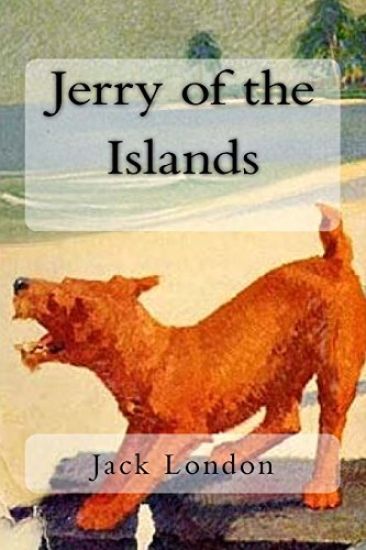
'Jerry of the Islands' is a novel written by Jack London. It is set in the Solomon Archipelago and, as it can be read in the author's foreword, was based on real-life events. Jerry is an Irish terrier bred in the Solomon Islands by Mister Haggins, a white trader. Since puppyhood, he has been taught to do only one thing - chase niggers, the native inhabitants of the region. And so he does. He excels in his job and is soon given to another trader, Captain Van Horn, who quickly becomes Jerry's beloved, one and only 'white-god'. As they travel from island to island and from bay to bay, Jerry's love for his owner grows stronger every day. This peaceful time ends when Van Horn's ship, Arangi, gets attacked by the natives of Somo. None of the crew members survive and Jerry is suddenly left all alone amongst the people he once treated as his biggest enemies. While living with cannibals, Jerry is handed over from one person to another until he finally finds a new master - the black-god. But he isn't happy. He misses his life aboard the Arangi. He misses chasing niggers. And as he thinks that nothing will ever change his poor existence, a new ship appears on the horizon.


About this Edition: In this Edition, Larvae publish the original version of "The Call of The Wild" by Jack London. About This Book: Life is good for Buck in Santa Clara Valley, where he spends his days eating and sleeping in the golden sunshine. But one day a treacherous act of betrayal leads to his kidnap, and he is forced into a life of toil and danger. Dragged away to be a sledge dog in the harsh and freezing cold Yukon, Buck must fight for his survivial. Can he rise above his enemies and become the master of his realm once again?

All my life I have had an awareness of other times and places. I have been aware of other persons in me.-Oh, and trust me, so have you, my reader that is to be. Read back into your childhood, and this sense of awareness I speak of will be remembered as an experience of your childhood. You were then not fixed, not crystallized. You were plastic, a soul in flux, a consciousness and an identity in the process of forming-ay, of forming and forgetting. You have forgotten much, my reader, and yet, as you read these lines, you remember dimly the hazy vistas of other times and places into which your child eyes peered. They seem dreams to you to-day. Yet, if they were dreams, dreamed then, whence the substance of them? Our dreams are grotesquely compounded of the things we know. The stuff of our sheerest dreams is the stuff of our experience.
This book is a result of an effort made by us towards making a contribution to the preservation and repair of original classic literature. In an attempt to preserve, improve and recreate the original content, we have worked towards: 1. Type-setting & Reformatting: The complete work has been re-designed via professional layout, formatting and type-setting tools to re-create the same edition with rich typography, graphics, high quality images, and table elements, giving our readers the feel of holding a 'fresh and newly' reprinted and/or revised edition, as opposed to other scanned & printed (Optical Character Recognition - OCR) reproductions. 2. Correction of imperfections: As the work was re-created from the scratch, therefore, it was vetted to rectify certain conventional norms with regard to typographical mistakes, hyphenations, punctuations, blurred images, missing content/pages, and/or other related subject matters, upon our consideration. Every attempt was made to rectify the imperfections related to omitted constructs in the original edition via other references. However, a few of such imperfections which could not be rectified due to intentional\unintentional omission of content in the original edition, were inherited and preserved from the original work to maintain the authenticity and construct, relevant to the work. We believe that this work holds historical, cultural and/or intellectual importance in the literary works community, therefore despite the oddities, we accounted the work for print as a part of our continuing effort towards preservation of literary work and our contribution towards the development of the society as a whole, driven by our beliefs. We are grateful to our readers for putting their faith in us and accepting our imperfections with regard to preservation of the historical content. HAPPY READING

The House of Pride, and Other Tales of Hawaii
Jack London
Createspace Independent Publishing Platform
2018
nidottu

La llamada de la selva
Lms Editors; Jack London
Createspace Independent Publishing Platform
2018
nidottu
Esta historia tiene como protagonista a un perro llamado Buck que en el oto o de 1894, cuando el descubrimiento de los yacimientos aur feros de Klondike arrastra hacia los hielos de Alaska a hombres de todas partes del globo, Buck es productivamente vendido y enviado al Norte. Sin ser ya acariciado ni respetado, en un pa s salvaje y hostil, se ve obligado a doblegarse a la ley primitiva del bast n y el l tigo.

The Road is Jack London's collection of stories from his life as a hobo. In this entertaining collection of tales and autobiographical essays, London relates every aspect of the hobo's life -- from catching a train to cadging a meal. The wealth of experiences and the necessity of having to lie for a living brought depth London's subsequent stories. In "The Road," Jack London relates the tricks that hobos used to evade train crews, and reminisces about his travels with Kelly's Army. Jack London later credited his story-telling skill to the hobo's necessity of concocting tales to coax meals from sympathetic strangers.

I. For Frederick Travers hated ostentation. The machine that waited outside for him under the porte-coch re was sober black. It was the most expensive machine in the county, yet he did not care to flaunt its price or horse-power in a red flare across the landscape, which also was mostly his, from the sand dunes and the everlasting beat of the Pacific breakers, across the fat bottomlands and upland pastures, to the far summits clad with redwood forest and wreathed in fog and cloud. A rustle of skirts caused him to look over his shoulder. Just the faintest hint of irritation showed in his manner. Not that his daughter was the object, however. Whatever it was, it seemed to lie on the desk before him. "What is that outlandish name again?" she asked. "I know I shall never remember it. See, I've brought a pad to write it down." Her voice was low and cool, and she was a tall, well-formed, clear-skinned young woman.

"Parables don't lie, but liars will parable."-Lip-King. Old Long-Beard paused in his narrative, licked his greasy fingers, and wiped them on his naked sides where his one piece of ragged bearskin failed to cover him. Crouched around him, on their hams, were three young men, his grandsons, Deer-Runner, Yellow-Head, and Afraid-of-the-Dark. In appearance they were much the same. Skins of wild animals partly covered them. They were lean and meagre of build, narrow-hipped and crooked-legged, and at the same time deep- chested, with heavy arms and enormous hands. There was much hair on their chests and shoulders, and on the outsides of their arms and legs. Their heads were matted with uncut hair, long locks of which often strayed before their eyes, beady and black and glittering like the eyes of birds. They were narrow between the eyes and broad between the cheeks, while their lower jaws were projecting and massive. It was a night of clear starlight, and below them, stretching away remotely, lay range on range of forest-covered hills.

THE way led along upon what had once been the embankment of a railroad. But no train had run upon it for many years. The forest on either side swelled up the slopes of the embankment and crested across it in a green wave of trees and bushes. The trail was as narrow as a man's body, and was no more than a wild-animal runway. Occasionally, a piece of rusty iron, showing through the forest-mould, advertised that the rail and the ties still remained. In one place, a ten-inch tree, bursting through at a connection, had lifted the end of a rail clearly into view. The tie had evidently followed the rail, held to it by the spike long enough for its bed to be filled with gravel and rotten leaves, so that now the crumbling, rotten timber thrust itself up at a curious slant. Old as the road was, it was manifest that it had been of the mono-rail type. An old man and a boy travelled along this runway. They moved slowly, for the old man was very old, a touch of palsy made his movements tremulous, and he leaned heavily upon his staff. A rude skull-cap of goat-skin protected his head from the sun. From beneath this fell a scant fringe of stained and dirty-white hair.

From the first the voyage was going wrong. Routed out of my hotel on a bitter March morning, I had crossed Baltimore and reached the pier- end precisely on time. At nine o'clock the tug was to have taken me down the bay and put me on board the Elsinore, and with growing irritation I sat frozen inside my taxicab and waited. On the seat, outside, the driver and Wada sat hunched in a temperature perhaps half a degree colder than mine. And there was no tug. Possum, the fox-terrier puppy Galbraith had so inconsiderately foisted upon me, whimpered and shivered on my lap inside my greatcoat and under the fur robe. But he would not settle down. Continually he whimpered and clawed and struggled to get out. And, once out and bitten by the cold, with equal insistence he whimpered and clawed to get back. His unceasing plaint and movement was anything but sedative to my jangled nerves. In the first place I was uninterested in the brute.

When God Laughs & Other Stories
Jack London
Createspace Independent Publishing Platform
2018
nidottu
"The gods, the gods are stronger; time Falls down before them, all men's knees Bow, all men's prayers and sorrows climb Like incense toward them; yea, for these Are gods, Felise." Carquinez had relaxed finally. He stole a glance at the rattling windows, looked upward at the beamed roof, and listened for a moment to the savage roar of the south-easter as it caught the bungalow in its bellowing jaws. Then he held his glass between him and the fire and laughed for joy through the golden wine. "It is beautiful," he said. "It is sweetly sweet. It is a woman's wine, and it was made for gray-robed saints to drink." "We grow it on our own warm hills," I said, with pardonable California pride. "You rode up yesterday through the vines from which it was made." It was worth while to get Carquinez to loosen up. Nor was he ever really himself until he felt the mellow warmth of the vine singing in his blood.

Jack London lived for a time within the grim and grimy world of the East End of London, where half a million people scraped together hardly enough on which to survive. Even if they were able to work, they were paid only enough to allow them a pitiful existence. He grew to know and empathise with these forgotten (or ignored) people as he spoke with them and tasted the workhouse, life on the streets, ... and the food, which was cheap, barely nutritious, and foul. He writes about his experiences in a fluid and narrative style, making it very clear what he thinks of the social structures which created the Abyss, and of the millionaires who live high on the labours of a people forced to live in squalor. "... The food this managing class eats, the wine it drinks, ... the fine clothes it wears, are challenged by eight million mouths which have never had enough to fill them, and by twice eight million bodies which have never been sufficiently clothed and housed."