Kirjojen hintavertailu – 12 903 725 kirjaa ja 27 kauppaa

Kirjailija

Jack Lynch

Kirjat ja teokset yhdessä paikassa: 9 kirjaa, julkaisuja vuosilta 2002–2024, suosituimpiin kuuluu English Language. Vertaile teosten hintoja ja tarkista saatavuus suomalaisista kirjakaupoista.

9 kirjaa

Kirjojen julkaisuvuodet: 2002–2024.

Hardly Harmless Drudgery

Hardly Harmless Drudgery

Bryan A. Garner; Jack Lynch

DAVID R. GODINE PUBLISHER INC
2024
sidottu
“A delight”—BooklistA richly illustrated historical account of English-language dictionaries, and the people who made them, from the dawn of printing to the present day. Dictionaries are repositories of erudition, monuments to linguistic authority, and battlefields in cultural and political struggles. For centuries, they were also works of almost superhuman endurance, produced by people who devoted themselves for years, even decades, to the wearisome labor of corralling, recording, and defining the vocabulary of a language. Dictionaries also are often beautiful objects: typographically innovative, designed to project learning and authority. Painstakingly collected and lovingly presented, here are the stories behind great works of scholarship and the people who produced them—their prodigious endurance, their nationalist fervor, their philological elucubrations haphazardly mixed with crackpot theories, their petty rivalries, their need for sales, and their sometimes irrational conduct and visceral hatreds. Readers will find towering figures of English lexicography—Samuel Johnson, the American patriot Noah Webster, the Oxford English Dictionary’s James Murray—and many more obscure lexicographers whose achievements and biographies are no less fascinating. For one, meet Ann Fisher, England’s first female lexicographer, whose dictionary in 1773 introduced the radical innovation of alphabetically separating the letter pairs I and J and U and V (reacting against her predecessors who had “ever blended and confounded them”). The lesser-known works here include the small, unassuming 1604 book that is generally regarded as the “first English dictionary”; the early representatives of the “hard word” tradition as it evolves into attempts to cover the whole vocabulary; and the vast Century Dictionary—an American enterprise that rivaled the original OED. As the quest for completeness placed a dictionary beyond one author’s ability (or lifespan), editors and publishers adapted. For the OED, in 1918, J. R. R. Tolkien was hired to define select words beginning with W (and he tackled warm, wash, wasp, water, wick, and winter). Later in the 20th century, the Random House Dictionary of the English Language was marketed as relying not on famous literary figures or educators, but instead on computers for exactitude. However they may have been written and compiled, dictionaries induce us to ask about the basis of authority. Who gets to say what is an English word and what is not, what words mean, and how words should be used? The 19th century saw a craze for nonstandard, regional dialect, the collection of which led to crowdsourcing before that word had even been coined (the same basic method continues today with the Urban Dictionary website). In 1944, the first dictionary by a Black American (of slang “hepster jive”) appeared. The first gay dictionary emerged in the early 1970s, followed in the 1980s by the first dictionary for feminists and the first for hackers. Meanwhile, the form of dictionaries has changed—especially since 1995 and the start-up website Dictionary.com. Today, the future of the printed dictionary is in question, but the central relevance of dictionaries, whatever their format, to communication and culture endures. Hardly Harmless Drudgery is a long-overdue celebration of all those who toiled in service of language and meaning. It covers more than half a millennium, from the 15th century to the 21st, with biographical and bibliographical information, correspondence, and engrossing details never before published. Profusely illustrated with 750 photographs of books and ephemera, this is nothing less than a glorious celebration of words and the people who love them.
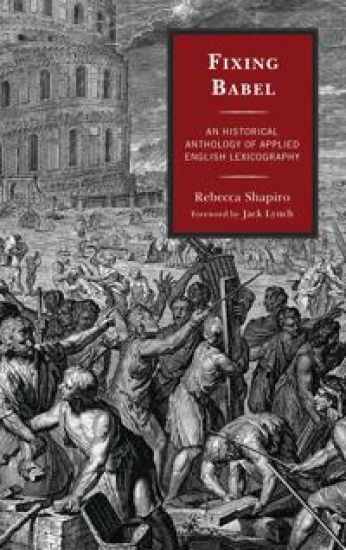
Fixing Babel

Fixing Babel

Rebecca Shapiro; Jack Lynch

Bucknell University Press
2016
sidottu
We all think we know what a dictionary is for and how to use one, so most of us skip the first pages—the front matter—and go right to the words we wish to look up. Yet dictionary users have not always known how English “works” and my book reproduces and examines for the first time important texts in which seventeenth- and eighteenth-century dictionary authors explain choices and promote ideas to readers, their “end users.” Unlike French, Spanish, and Italian dictionaries compiled during this time and published by national academies, the goal of English dictionaries was usually not to “purify” the language, though some writers did attempt to regularize it. Instead, English lexicographers aimed to teach practical ways for their users to learn English, improve their language skills, even transcend their social class. The anthology strives to be comprehensive in its coverage of the first phase of this tradition from the early seventeenth century—from Robert Cawdrey’s (1604) A Table Alphabeticall, to Samuel Johnson’s Dictionary of the English Language (1755), and finally, to Noah Webster’s An American Dictionary of the English Language (1828). The book puts English dictionaries in historical, national, linguistic, literary, cultural contexts, presenting lexicographical trends and the change in the English language over two centuries, and examines how writers attempted to control it by appealing to various pedagogical and legal authorities. Moreover, the development of dictionary and attempts to codify English language and grammar coincided with the arc of the British Empire; the promulgation of “proper” English has been a subject of debate and inquiry for centuries and, in part, dictionaries and the teaching of English historically have been used to present and support ideas about what is correct, regardless of how and where English is actually used. The authors who wrote these texts apply ideas about capitalism, nationalism, sex and social status to favor one language theory over another. I show how dictionaries are not neutral documents: they challenge or promote biases. The book presents and analyzes the history of lexicography, demonstrating how and why dictionaries evolved into the reference books we now often take for granted and we can see that there is no easy answer to the question of “who owns English.”
Deception and Detection in Eighteenth-Century Britain
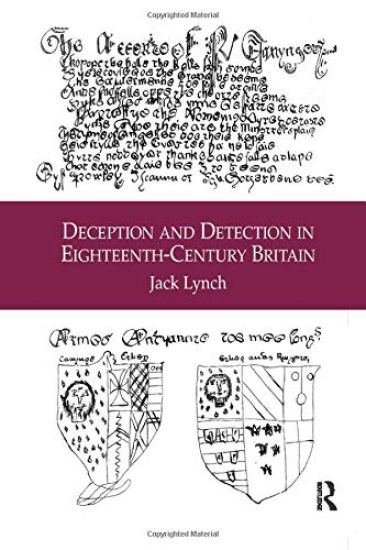
In the first extended treatment of the debates surrounding public deception in eighteenth-century Britain, Jack Lynch contends that forgery, fakery, and fraud make explicit the usually unspoken grounds on which Britons made sense of their world. Confrontations with inauthenticity, in other words, bring tacitly understood conceptions of reality to the surface. Drawing on a wide range of contemporary print and manuscript sources”not only books and pamphlets, but ballads, comic prints, legal proceedings, letters, and diaries”Lynch focuses on the debates they provoked, rather than the forgers themselves. He offers a comprehensive treatment of the criticism surrounding fraud in most of the noteworthy controversies of the long eighteenth century. To this end, his study is structured around topics related to the arguments over deception in Britain, whether they concerned George Psalmanazar's Formosan hoax at the beginning of the eighteenth century or William Henry Ireland's Shakespearean imposture at the end. Beginning with the question of what constitutes deception and ending with an illuminating chapter on what was at stake in these debates for eighteenth-century British thinkers, Lynch's accessibly written study takes the reader through the means”whether simple, sophisticated, or tortuously argued”by which partisans on both sides struggled to define which of the apparent contradictions were sufficient to disqualify a claim to authenticity. Fakery, Lynch persuasively argues, transports us to the heart of eighteenth-century notions of the value of evidence, of the mechanisms of perception and memory, of the relationship between art and life, of historicism, and of human motivation.
Bragg V1

Bragg V1

Jack Lynch

Cutting Edge Publishing
2014
pokkari
BRAGG V1The first three, powerhouse novels in Jack Lynch's Edgar Award-nominated and two-time Shamus Award-nominated Bragg series. Private investigator Peter Bragg learns that The Dead Never Forget when he's hired by a retired mobster to find out who is threatening his eleven-year-old daughter. Bragg's relentless search for The Missing and the Dead pits him against a brilliant serial killer obsessed with the expressions of death on his victim's faces. Edgar Award FinalistBragg becomes the hunter and the hunted as killers descend on the city to find thirty-two Pieces of Death -- gem-encrusted chess pieces smuggled out of China that are worth a staggering fortune. Shamus Award Finalist"Tough, taut and terse... literate without being lofty, not unlike the work of Hammett himself," The Thrilling Detective"First-rate, well-plotted," 101 Knights: A Survey of American Detective Fiction"Bragg is authentic, gripping, gritty," San Francisco Examiner
The Age of Elizabeth in the Age of Johnson

The Age of Elizabeth in the Age of Johnson

Jack Lynch

Cambridge University Press
2010
pokkari
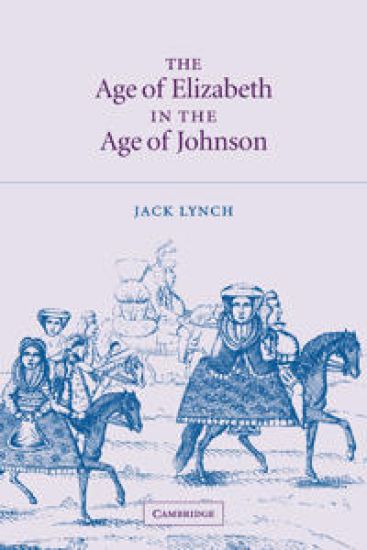
In The Age of Elizabeth in the Age of Johnson, Jack Lynch explores eighteenth-century British conceptions of the Renaissance, and the historical, intellectual, and cultural uses to which the past was put during the period. Scholars, editors, historians, religious thinkers, linguists and literary critics of the period all defined themselves in relation to 'the last age' or 'the age of Elizabeth'. Seventeenth- and eighteenth-century thinkers reworked older historical schemes to suit their own needs, turning to the ages of Petrarch and Poliziano, Erasmus and Scaliger, Shakespeare, Spenser, and Queen Elizabeth to define their culture in contrast to the preceding age. They derived a powerful sense of modernity from the comparison, which proved essential to the constitution of a national character. This interdisciplinary study will be of interest to cultural as well as literary historians of the eighteenth century.
Deception and Detection in Eighteenth-Century Britain

Deception and Detection in Eighteenth-Century Britain

Jack Lynch

Ashgate Publishing Limited
2008
sidottu
In the first extended treatment of the debates surrounding public deception in eighteenth-century Britain, Jack Lynch contends that forgery, fakery, and fraud make explicit the usually unspoken grounds on which Britons made sense of their world. Confrontations with inauthenticity, in other words, bring tacitly understood conceptions of reality to the surface. Drawing on a wide range of contemporary print and manuscript sources”not only books and pamphlets, but ballads, comic prints, legal proceedings, letters, and diaries”Lynch focuses on the debates they provoked, rather than the forgers themselves. He offers a comprehensive treatment of the criticism surrounding fraud in most of the noteworthy controversies of the long eighteenth century. To this end, his study is structured around topics related to the arguments over deception in Britain, whether they concerned George Psalmanazar's Formosan hoax at the beginning of the eighteenth century or William Henry Ireland's Shakespearean imposture at the end. Beginning with the question of what constitutes deception and ending with an illuminating chapter on what was at stake in these debates for eighteenth-century British thinkers, Lynch's accessibly written study takes the reader through the means”whether simple, sophisticated, or tortuously argued”by which partisans on both sides struggled to define which of the apparent contradictions were sufficient to disqualify a claim to authenticity. Fakery, Lynch persuasively argues, transports us to the heart of eighteenth-century notions of the value of evidence, of the mechanisms of perception and memory, of the relationship between art and life, of historicism, and of human motivation.
English Language

English Language

Jack Lynch

Focus Publishing/r Pullins C
2007
pokkari
Updated and expanded from one of the most popular grammar sites on the web, this book provides a modern guide to English usage for the 21st century. With topics arranged alphabetically and written in an enjoyable and readable tone, The English Language: A User's Guide will help students and writers understand the nature of the language, explaining the 'why' of the rules as well as what constitutes good grammar and style. Going beyond the prescriptive wrong /right examples, Jack Lynch includes examples of weak/strong, good/better, disputed/preferred, and informal/formal usage.
Samuel Johnson's Dictionary

Samuel Johnson's Dictionary

Jack Lynch

Atlantic Books
2004
sidottu
Samuel Johnson's 1755 two volume, 2,300 page dictionary marked a milestone in language. The work of a great reader and writer, and an earnest compiler, it was England's definitive dictionary for over 150 years until it was superseded by The Oxford English Dictionary. This new edition contains more than 3,100 selections faithfully adapted from the original. Bristling with quotations, the Dictionary offers a treasury of memorable passages on subjects ranging from books and critics to dreams and ethics. For those who appreciate literature and love language, this is a browser's delight - an encyclopaedia of the age and a dictionary for the ages.fribbler n.s. [from the verb.] A trifler A fribbler is one who professes rapture for the woman, and dreads her consent. Spectator No. 288to lisp v.n. [hlisp, Saxon.] To speak with too frequent applauses of the tongue to the teeth or palate, like children. Come, I cannot cog, and say, thou art this and that, like a many of these lisping hawthorn buds, that come like women in mens apparel and smell like Bucklersbury in sampling time. Shakespeare's Merry Wives of Windsorurinátor n.s. [Urinateur, Fr. Urinator, Lat.] A diver; one who searches under water. The precious things that grow there, as pearl, may be much more easily fetched up by the help of this, than by any other way of urinators. Wilkins Math. Magic.abnórmous adj. [abnormis, Lat. Our of rule] Irregular, misshapen. Afterclap n.s. Unexpected events happening after an affair is supposed to be at an end.
The Age of Elizabeth in the Age of Johnson

The Age of Elizabeth in the Age of Johnson

Jack Lynch

Cambridge University Press
2002
sidottu
In The Age of Elizabeth in the Age of Johnson, Jack Lynch explores eighteenth-century British conceptions of the Renaissance, and the historical, intellectual, and cultural uses to which the past was put during the period. Scholars, editors, historians, religious thinkers, linguists and literary critics of the period all defined themselves in relation to 'the last age' or 'the age of Elizabeth'. Seventeenth- and eighteenth-century thinkers reworked older historical schemes to suit their own needs, turning to the ages of Petrarch and Poliziano, Erasmus and Scaliger, Shakespeare, Spenser, and Queen Elizabeth to define their culture in contrast to the preceding age. They derived a powerful sense of modernity from the comparison, which proved essential to the constitution of a national character. This interdisciplinary study will be of interest to cultural as well as literary historians of the eighteenth century.