Kirjojen hintavertailu – 12 903 724 kirjaa ja 27 kauppaa

Kirjailija

Jack M. Balkin

Kirjat ja teokset yhdessä paikassa: 8 kirjaa, julkaisuja vuosilta 2009–2024, suosituimpiin kuuluu Democracy and Dysfunction. Vertaile teosten hintoja ja tarkista saatavuus suomalaisista kirjakaupoista.

Nimi esiintyy myös muodoissa: Jack M Balkin

8 kirjaa

Kirjojen julkaisuvuodet: 2009–2024.

Memory and Authority

Memory and Authority

Jack M. Balkin

YALE UNIVERSITY PRESS
2024
pokkari
From one of the nation’s preeminent constitutional scholars, a sweeping rethinking of the uses of history in constitutional interpretation Fights over history are at the heart of most important constitutional disputes in America. The Supreme Court’s current embrace of originalism is only the most recent example of how lawyers and judges try to use history to establish authority for their positions. Jack M. Balkin argues that fights over constitutional interpretation are often fights over collective memory. Lawyers and judges construct—and erase—memory to lend authority to their present-day views; they make the past speak their values so they can then claim to follow it. The seemingly opposed camps of originalism and living constitutionalism are actually mirror images of a single phenomenon: how lawyers use history to adapt an ancient constitution to a constantly changing world. Balkin shows how lawyers and judges channel history through standard forms of legal argument that shape how they use history and even what they see in history. He explains how lawyers and judges invoke history selectively to construct authority for their claims and undermine the authority of opposing views. And he elucidates the perpetual quarrel between historians and lawyers, showing how the two can best join issue in legal disputes. This book is a sweeping rethinking of the uses of history in constitutional interpretation.
Memory and Authority

Memory and Authority

Jack M. Balkin

YALE UNIVERSITY PRESS
2024
sidottu
From one of the nation’s preeminent constitutional scholars, a sweeping rethinking of the uses of history in constitutional interpretation Fights over history are at the heart of most important constitutional disputes in America. The Supreme Court’s current embrace of originalism is only the most recent example of how lawyers and judges try to use history to establish authority for their positions. Jack M. Balkin argues that fights over constitutional interpretation are often fights over collective memory. Lawyers and judges construct—and erase—memory to lend authority to their present-day views; they make the past speak their values so they can then claim to follow it. The seemingly opposed camps of originalism and living constitutionalism are actually mirror images of a single phenomenon: how lawyers use history to adapt an ancient constitution to a constantly changing world. Balkin shows how lawyers and judges channel history through standard forms of legal argument that shape how they use history and even what they see in history. He explains how lawyers and judges invoke history selectively to construct authority for their claims and undermine the authority of opposing views. And he elucidates the perpetual quarrel between historians and lawyers, showing how the two can best join issue in legal disputes. This book is a sweeping rethinking of the uses of history in constitutional interpretation.
The Cycles of Constitutional Time

The Cycles of Constitutional Time

Jack M. Balkin

Oxford University Press Inc
2020
sidottu
What will happen to American democracy? The nation's past holds vital clues for understanding where we are now and where we are headed. In The Cycles of Constitutional Time, the eminent constitutional theorist Jack Balkin explains how America's constitutional system changes through the interplay among three cycles: the rise and fall of dominant political parties, the waxing and waning of political polarization, and alternating episodes of constitutional decay and constitutional renewal. If America's politics seems especially fraught today, it is because we are nearing the end of the Republican Party's political dominance, at the height of a long cycle of political polarization, and suffering from an advanced case of what he calls "constitutional rot." In fact, when people talk about constitutional crisis, Balkin explains, they are usually describing constitutional rot--the historical process through which republics become less representative and less devoted to the common good. Brought on by increasing economic inequality and loss of trust, constitutional rot threatens our constitutional system. But Balkin offers a message of hope: We have been through these cycles before, and we will get through them again. He describes what our politics will look like as polarization lessens and constitutional rot recedes. Balkin also explains how the cycles of constitutional time shape the work of the federal courts and theories about constitutional interpretation. He shows how the political parties have switched sides on judicial review not once but twice in the twentieth century, and what struggles over judicial review will look like in the coming decades. Drawing on literatures from history, law, and political science, this is a fascinating ride through American history with important lessons for the present and the future.
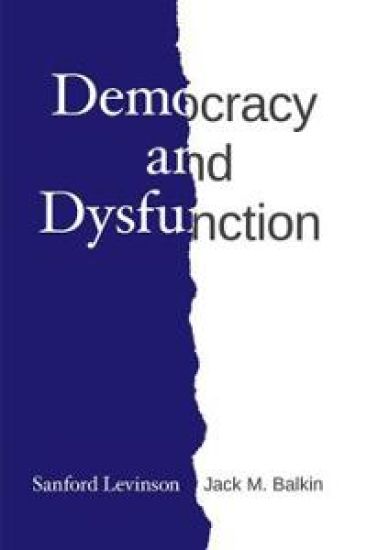
Democracy and Dysfunction

Democracy and Dysfunction

Sanford Levinson; Jack M Balkin

University of Chicago Press
2019
pokkari
It is no longer controversial that the American political system has become deeply dysfunctional. Today, only slightly more than a quarter of Americans believe the country is heading in the right direction, while sixty-three percent believe we are on a downward slope. The top twenty words used to describe the past year include "chaotic," "turbulent," and "disastrous." Donald Trump's improbable rise to power and his 2016 Electoral College victory placed America's political dysfunction in an especially troubling light, but given the extreme polarization of contemporary politics, the outlook would have been grim even if Hillary Clinton had won. The greatest upset in American presidential history is only a symptom of deeper problems of political culture and constitutional design. Democracy and Dysfunction brings together two of the leading constitutional law scholars of our time, Sanford Levinson and Jack M. Balkin, in an urgently needed conversation that seeks to uncover the underlying causes of our current crisis and their meaning for American democracy. In a series of letters exchanged over a period of two years, Levinson and Balkin travel--along with the rest of the country--through the convulsions of the 2016 election and Trump's first year in office. They disagree about the scope of the crisis and the remedy required. Levinson believes that our Constitution is fundamentally defective and argues for a new constitutional convention, while Balkin, who believes we are suffering from constitutional rot, argues that there are less radical solutions. As it becomes dangerously clear that Americans--and the world--will be living with the consequences of this pivotal period for many years to come, it is imperative that we understand how we got here--and how we might forestall the next demagogue who will seek to beguile the American public.
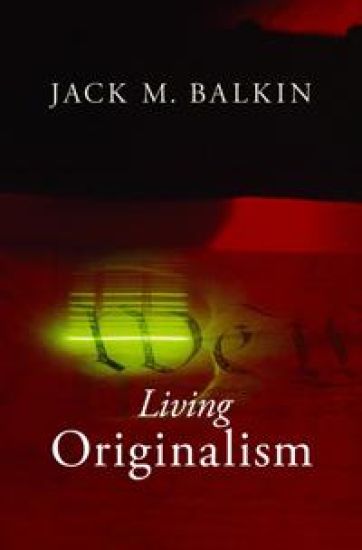
Living Originalism

Living Originalism

Jack M. Balkin

The Belknap Press
2014
nidottu
Originalism and living constitutionalism, so often understood to be diametrically opposing views of our nation’s founding document, are not in conflict—they are compatible. So argues Jack Balkin, one of the leading constitutional scholars of our time, in this long-awaited book. Step by step, Balkin gracefully outlines a constitutional theory that demonstrates why modern conceptions of civil rights and civil liberties, and the modern state’s protection of national security, health, safety, and the environment, are fully consistent with the Constitution’s original meaning. And he shows how both liberals and conservatives, working through political parties and social movements, play important roles in the ongoing project of constitutional construction. By making firm rules but also deliberately incorporating flexible standards and abstract principles, the Constitution’s authors constructed a framework for politics on which later generations could build. Americans have taken up this task, producing institutions and doctrines that flesh out the Constitution’s text and principles. Balkin’s analysis offers a way past the angry polemics of our era, a deepened understanding of the Constitution that is at once originalist and living constitutionalist, and a vision that allows all Americans to reclaim the Constitution as their own.
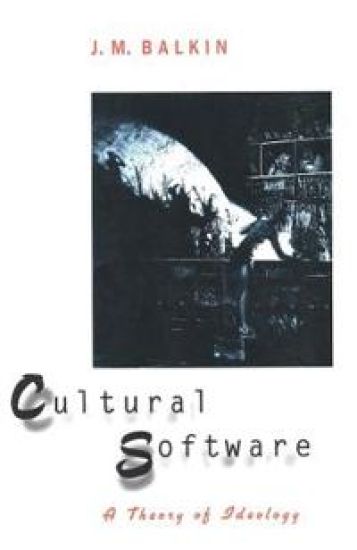
Cultural Software

Cultural Software

Jack M. Balkin

Yale University Press
2014
pokkari
In this book J. M. Balkin offers a strikingly original theory of cultural evolution, a theory that explains shared understandings, disagreement, and diversity within cultures. Drawing on many fields of study—including anthropology, evolutionary theory, cognitive science, linguistics, sociology, political theory, philosophy, social psychology, and law—the author explores how cultures grow and spread, how shared understandings arise, and how people of different cultures can understand and evaluate each other’s views. Cultural evolution occurs through the transmission of cultural information and know-how—"cultural software"—in human minds, Balkin says. Individuals embody cultural software and spread it to others through communication and social learning. Ideology, the author contends, is neither a special nor a pathological form of thought but an ordinary product of the evolution of cultural software. Because cultural understanding is a patchwork of older imperfect tools that are continually adapted to solve new problems, human understanding is partly adequate and partly inadequate to the pursuit of justice. Balkin presents numerous examples that illuminate the sources of ideological effects and their contributions to injustice. He also enters the current debate over multiculturalism, applying his theory to problems of mutual understanding between people who hold different worldviews. He argues that cultural understanding presupposes transcendent ideals and shows how both ideological analysis of others and ideological self-criticism are possible.
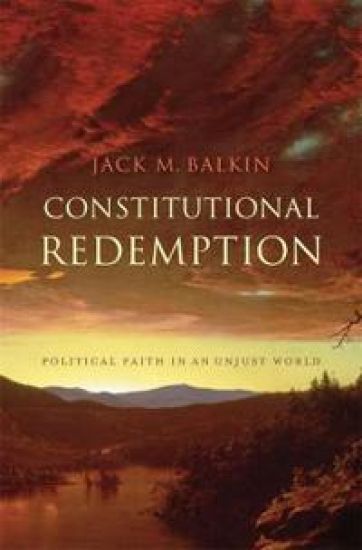
Constitutional Redemption

Constitutional Redemption

Jack M. Balkin

Harvard University Press
2011
sidottu
Political constitutions, hammered out by imperfect human beings in periods of intense political controversy, are always compromises with injustice. What makes the U. S. Constitution legitimate, argues this daring book, is Americans’ enduring faith that the Constitution’s promises can someday be redeemed, and the constitutional system be made “a more perfect union.” A leading constitutional theorist, Balkin argues eloquently that the American constitutional project is based in faith, hope, and a narrative of shared redemption. Our belief that the Constitution will deliver us from evil shows in the stories we tell one another about where our country came from and where it is headed, and in the way we use these historical touchstones to justify our fervent (and opposed) political creeds. Because Americans have believed in a story of constitutional redemption, we have assumed the right to decide for ourselves what the Constitution means, and have worked to persuade others to set it on the right path. As a result, constitutional principles have often shifted dramatically over time. They are, in fact, often political compromises in disguise. What will such a Constitution become? We cannot know. But our belief in the legitimacy of the Constitution requires a leap of faith—a gamble on the ultimate vindication of a political project that has already survived many follies and near-catastrophes, and whose destiny is still over the horizon.