Kirjojen hintavertailu – 12 859 829 kirjaa ja 27 kauppaa

Kirjailija

Jaco Gericke

Kirjat ja teokset yhdessä paikassa: 8 kirjaa, julkaisuja vuosilta 2012–2021, suosituimpiin kuuluu The Hebrew Bible and Philosophy of Religion. Vertaile teosten hintoja ja tarkista saatavuus suomalaisista kirjakaupoista.

8 kirjaa

Kirjojen julkaisuvuodet: 2012–2021.

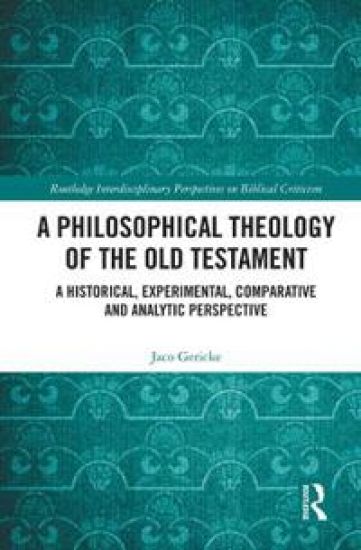
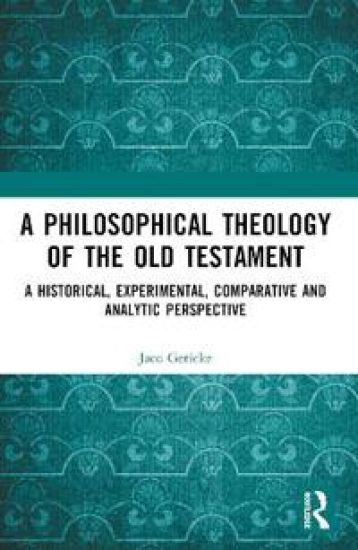
A Philosophical Theology of the Old Testament

A Philosophical Theology of the Old Testament

Jaco Gericke

TAYLOR FRANCIS LTD
2021
nidottu
Are we able to identify and compare the philosophical perspectives and questions that must be postulated as having been somehow present in the language, ideas and worldviews of the Biblical authors? This book sets out an approach to something that has been generally considered impossible: a philosophical theology of the Old Testament. It demonstrates and addresses the neglect of a descriptive and comparative philosophical clarification of concepts in Old Testament theology, and in so doing treads new ground in Biblical studies and philosophical theology. Recognizing the obvious problems with, and objections to, any form of interdisciplinary research combining philosophical and Biblical theology, this study presents itself as introductory and experimental in nature. The methodology opted for is limited to a philosophical clarification of concepts already found in Old Testament theology, while the findings are presented via the popular thematic approach found in analytic philosophical theologies; with no attempted justification or critique of the textual contents under investigation. These approaches are combined by primarily looking at the nature of Yahweh in the Old Testament. This book offers a new vision of Biblical and philosophical theology that brings them closer together in order that we might understand both more broadly and deeply. As such, it will be vital reading for scholars of Theology, Biblical Studies and Philosophy.
The Scriptures of Ancient Judaism

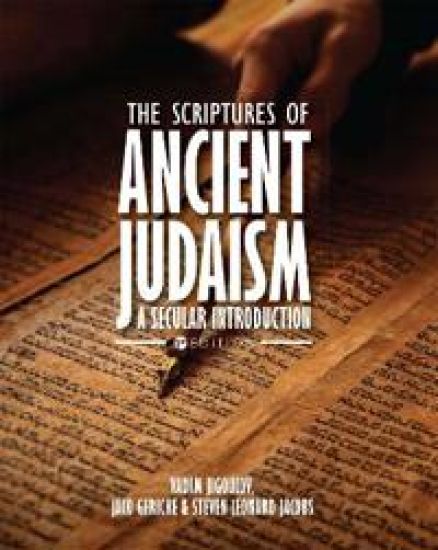
The Scriptures of Ancient Judaism

Vadim Jigoulov; Jaco Gericke; Steven Leonard Jacobs

Cognella, Inc
2020
nidottu
The Scriptures of Ancient Judaism: A Secular Introduction provides students with a scholarly exploration of the literature and themes of the Old Testament/Hebrew Bible and cognate Near Eastern materials. The text features diverse interdisciplinary and methodological points of view from secular biblical scholars, offering readers a comprehensive, thoughtful, and accessible point of entry to the study of the ancient world and the religious heritage of Judaism. The text approaches the scriptures of ancient Judaism without religious bias or dogmatic intent. Rather, the book is designed to ignite interest in the history and literature of the ancient world and to present the latest scholarship related to the Old Testament/Hebrew Bible. Students are introduced to Israelite religious traditions, their unique worldviews, and offered a primer on how to read ancient texts. Later chapters examine the histories and cultures of the ancient Near East and Jewish historiography. Legal texts, prophetic texts, biblical poetry and wisdom literature, and apocalyptic writings found within the Hebrew Bible and other related texts are analyzed. Providing students a rich and complete introduction, The Scriptures of Ancient Judaism is an ideal text for courses in biblical studies.
Scriptures of Ancient Judaism: A Secular Introduction

Scriptures of Ancient Judaism: A Secular Introduction

Vadim Jigoulov; Steven Jacobs; Jaco Gericke

Cognella Academic Publishing
2020
sidottu
The Scriptures of Ancient Judaism: A Secular Introduction provides students with a scholarly exploration of the literature and themes of the Old Testament/Hebrew Bible and cognate Near Eastern materials. The text features diverse interdisciplinary and methodological points of view from secular biblical scholars, offering readers a comprehensive, thoughtful, and accessible point of entry to the study of the ancient world and the religious heritage of Judaism. The text approaches the scriptures of ancient Judaism without religious bias or dogmatic intent. Rather, the book is designed to ignite interest in the history and literature of the ancient world and to present the latest scholarship related to the Old Testament/Hebrew Bible. Students are introduced to Israelite religious traditions, their unique worldviews, and offered a primer on how to read ancient texts. Later chapters examine the histories and cultures of the ancient Near East and Jewish historiography. Legal texts, prophetic texts, biblical poetry and wisdom literature, and apocalyptic writings found within the Hebrew Bible and other related texts are analyzed. Providing students a rich and complete introduction, The Scriptures of Ancient Judaism is an ideal text for courses in biblical studies. Vadim Jigoulov holds a Ph. D. in Near Eastern studies from the University of Michigan. He is a lecturer in the Department of Philosophy & Religious Studies at Morgan State University. Steven Leonard Jacobs holds a D. D. and D. H. L from the Hebrew Union College-Jewish Institute of Religion. He is a professor of religious studies and the Aaron Aronov Endowed Chair in Judaic Studies at The University of Alabama. Jaco Gericke holds a Ph. D. in Old Testament studies from the University of Pretoria. He is an associate research professor at North West University.
A Philosophical Theology of the Old Testament
Are we able to identify and compare the philosophical perspectives and questions that must be postulated as having been somehow present in the language, ideas and worldviews of the Biblical authors? This book sets out an approach to something that has been generally considered impossible: a philosophical theology of the Old Testament. It demonstrates and addresses the neglect of a descriptive and comparative philosophical clarification of concepts in Old Testament theology, and in so doing treads new ground in Biblical studies and philosophical theology. Recognizing the obvious problems with, and objections to, any form of interdisciplinary research combining philosophical and Biblical theology, this study presents itself as introductory and experimental in nature. The methodology opted for is limited to a philosophical clarification of concepts already found in Old Testament theology, while the findings are presented via the popular thematic approach found in analytic philosophical theologies; with no attempted justification or critique of the textual contents under investigation. These approaches are combined by primarily looking at the nature of Yahweh in the Old Testament. This book offers a new vision of Biblical and philosophical theology that brings them closer together in order that we might understand both more broadly and deeply. As such, it will be vital reading for scholars of Theology, Biblical Studies and Philosophy.
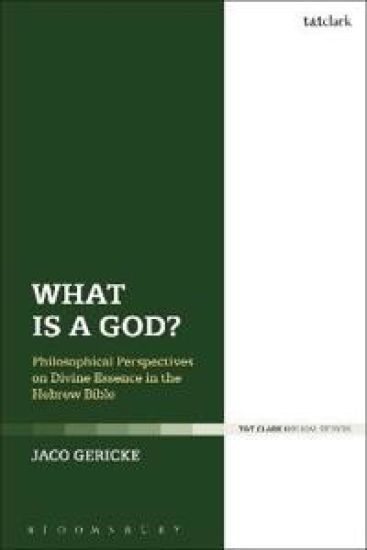
What is a God?

What is a God?

Jaco Gericke

T. T.Clark Ltd
2018
nidottu
In this book Jaco Gericke is concerned with different ways of approaching the question of what, according to the Hebrew Bible, a god was assumed to be. As a supplement to the tradition of predominantly linguistic, historical, literary, comparative, social-scientific and related ways of looking at the research problem, Gericke offers a variety of experimental philosophical perspectives that aim to take a step back from the scholarly discussion as it has unfolded hitherto in order to provide a new type of worry when looking at the riddle of what the biblical texts assumed made a god divine. Consisting of a brief history of philosophical interpretations of the concepts of whatness and essence from Socrates to Derrida, the relevant ideas are adapted and reapplied to look at some interesting metaphysical oddities arising from generic uses of elohim/el/eloah as common noun in the Hebrew Bible. As such the study seeks to be a prolegomenon to all future research in that, instead of answering the question regarding a supposed nature of divinity, it aims to complicate it beyond expectation. In this way a case is made for a more nuanced and indeterminate manner of constructing the problem of what it meant to call something a god.
What is a God?

What is a God?

Jaco Gericke

T. T.Clark Ltd
2017
sidottu
In this book Jaco Gericke is concerned with different ways of approaching the question of what, according to the Hebrew Bible, a god was assumed to be. As a supplement to the tradition of predominantly linguistic, historical, literary, comparative, social-scientific and related ways of looking at the research problem, Gericke offers a variety of experimental philosophical perspectives that aim to take a step back from the scholarly discussion as it has unfolded hitherto in order to provide a new type of worry when looking at the riddle of what the biblical texts assumed made a god divine. Consisting of a brief history of philosophical interpretations of the concepts of whatness and essence from Socrates to Derrida, the relevant ideas are adapted and reapplied to look at some interesting metaphysical oddities arising from generic uses of elohim/el/eloah as common noun in the Hebrew Bible. As such the study seeks to be a prolegomenon to all future research in that, instead of answering the question regarding a supposed nature of divinity, it aims to complicate it beyond expectation. In this way a case is made for a more nuanced and indeterminate manner of constructing the problem of what it meant to call something a god.